

The Omega Speedmaster is not just another Swiss chronograph. It is one of the most storied tool watches ever made, and if you are serious about watches as assets, you already know the name. In 2026, the Speedmaster sits at the center of Omega’s value proposition and ranks among the most consistently performing investment watches under $10,000. Its reputation is built on the Moonwatch legacy, decades of mechanical credibility, carefully paced limited editions, and strong secondary market liquidity that most competitors in this price range simply cannot match.
Unlike trend-driven pieces that spike and fade, the Omega Speedmaster has shown a real ability to retain and grow in value across long time horizons. That staying power is rare, and it matters when you are thinking about where to put your money.
In 2026, key references like the Speedmaster Professional Hesalite, the Snoopy Award editions, and the Caliber 321 reissue are seeing genuine demand spikes. Limited retail supply is tightening things further, and a rising wave of younger collectors who want pieces with story, substance, and long-term value logic is pushing that demand even higher.
For top-tier Speedmasters, average resale premiums are commonly cited in the 12% to 18% range. Where you land in that band depends on the edition, the condition, and whether your set includes the box, papers, and service records. A complete set with strong provenance will always command the upper end.

Table of Contents
Key Takeaways & The 5Ws
- The Omega Speedmaster remains one of the strongest sub-$10,000 investment watches in 2026, pairing Moonwatch heritage, proven mechanical credibility, and deep global brand recognition.
- Core demand is being driven by the Speedmaster Professional Hesalite, Snoopy editions, and the modern Caliber 321 reissue, supported by limited retail supply and younger, story-driven collectors.
- Across key models, well-bought Speedmasters commonly deliver roughly 6% to 14% annualized returns, with top-tier references often trading around 12% to 18% above retail when full sets and excellent condition are present.
- Unlike trend pieces that rely on hype cycles, the Speedmaster’s space legacy, manual-wind tool-watch identity, and strong secondary liquidity create a durable, cycle-resilient investment profile.
- Who is buying for value?
- Collectors drawn to history and tool-watch authenticity, first-time luxury buyers in the $6,000–$15,000 range, and seasoned investors targeting Snoopy editions, Caliber 321 pieces, and strong vintage references for long-term holds.
- What is the asset?
- A family of manual-wind and automatic chronographs led by the Professional Moonwatch line, where NASA/Apollo narrative, constrained special editions, and liquid core references combine into one of the most reliable value-retention platforms in modern watch collecting.
- When did the investment story form?
- Introduced in 1957, flight-qualified by NASA in 1965, worn on the Moon in 1969, and continuously evolved through Caliber 861, 1861, and 3861 eras, with modern catalysts like the 2019-on Caliber 321 reissue and the 2003/2015/2020 Snoopy editions shaping the 2010s–2020s market narrative.
- Where does liquidity show up?
- Through Omega boutiques and authorized dealers worldwide and across active secondary markets and auctions, with especially deep buyer pools in the US, Europe, and Asia for Moonwatch, Snoopy, Apollo commemoratives, and vintage “pre-Moon” references.
- Why does it hold up?
- Because the Speedmaster offers blue-chip provenance, approachable entry pricing, and a long record of stable or rising resale values, making it a core allocation for portfolio builders rather than a short-lived hype play.

What is the History of the Omega Speedmaster?
The Omega Speedmaster debuted in 1957 as part of Omega’s Professional line, originally designed for motorsport timing rather than space. The early reference CK2915 established the core visual language you still recognize today: a triple register chronograph layout, broad arrow hands, and a tachymeter scale on the bezel. That last detail was a defining design move for the entire model family and one that has never really left.
The story changed fast in the 1960s when NASA began evaluating chronographs for space use. After punishing tests covering extreme shock, vibration, vacuum conditions, temperature swings, and acceleration, the Speedmaster was the only watch that met every standard. By 1965, it was officially certified for space flight.
Then came 1969. The Speedmaster Professional reference 105.012 was on Buzz Aldrin’s wrist during the Apollo 11 moon landing, and that single moment cemented the Moonwatch identity forever. No marketing campaign could have built what that day built.
Omega preserved the core design cues across decades, keeping the manual wind chronograph experience and a case profile that stayed recognizably linked to the original professional references. Over time, Omega transitioned from the Caliber 321 column wheel movement to later calibers such as the 861 and 1861, which used a cam system and became the workhorse era of Speedmaster production. Collectors who understand this history know exactly which era they are buying into.
In 2019, Omega reintroduced the Caliber 321 in modern form to meet collector demand for a historically faithful movement architecture. If you want the closest thing to what went to the moon in terms of mechanical feel and construction, that reissue is where the conversation starts.
Special editions became a major pillar of the Speedmaster market over the years. Apollo commemoratives and the Silver Snoopy Award editions created collector cycles where narrative, production constraints, and visibility combined to produce real secondary market premiums. The 2020 Snoopy 50th Anniversary, in particular, has been widely tracked as a modern reference that often trades at significant premiums over retail. The same dynamic plays out with discontinued Rolex references, where scarcity and story consistently drive prices above what any new release can achieve.
What Are The Different Omega Speedmaster Models?
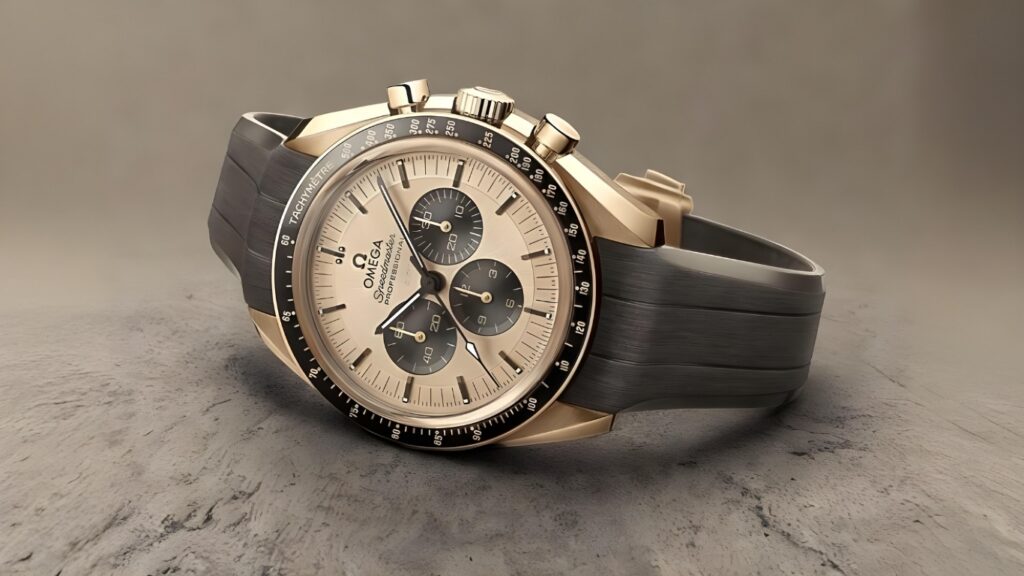
The Omega Speedmaster collection in 2026 spans core production pieces, limited editions, and heritage reissues. Each category appeals to a different collector profile, and that difference matters because it directly shapes liquidity, resale premiums, and how exposed your watch is to market cycles. Knowing which category you are buying into is half the investment decision.
- The Omega Speedmaster Professional Moonwatch with hesalite crystal remains the most direct continuation of the Apollo era template. It is manual wind, carries the familiar professional case shape, and delivers the closest modern experience to the NASA issued watches. Pre owned examples can trade strongly, and unworn full set pieces often sit at or above retail when availability tightens.
- The Omega Speedmaster Professional Sapphire Sandwich offers a more modern ownership feel with sapphire on the front and a display caseback. It appeals to collectors who want movement visibility and additional scratch resistance while still staying inside the Moonwatch identity. Resale tends to be stable, often tracking close to retail when condition and completeness are strong.
- The Omega Speedmaster 321 Ed White reissue sits in a different tier because it reintroduces the historically important Caliber 321. It is produced in limited quantities relative to the core Moonwatch line, and demand is driven by collectors who value movement architecture, hand finishing, and the historical linkage to early space era references. Secondary pricing often reflects this scarcity, with reported appreciation patterns tied to availability rather than broad marketing.
- The Omega Speedmaster Dark Side of the Moon family represents the modern ceramic Speedmaster direction. These watches emphasize contemporary materials and bolder design language, often with automatic movements. Resale behavior is typically more stable than many fashion driven luxury watches, and the strongest performers tend to be the variants with the clearest story, such as Apollo themed executions.
- The Omega Speedmaster Snoopy editions remain among the most demand heavy references in the entire lineup. The 2003, 2015, and 2020 releases created a clear ladder of desirability, and the 2020 edition has been especially visible because of its animated caseback and limited supply relative to global demand. These references are often treated as collector centerpieces and can trade well above retail depending on market cycle, condition, and full set status.
Anniversary editions such as the 50th and 60th releases offer period-correct details, commemorative positioning, and constrained production that supports collectibility over time. Premiums vary by edition, but the references with clear historical anchoring and strong execution tend to hold their resale behavior better when the broader watch market softens.
What Features Make the Omega Speedmaster Special?
The Omega Speedmaster holds a unique position because the design and the story reinforce each other rather than pulling in different directions. You are looking at a chronograph that is recognizable on sight, yet it also carries documented mission history that anchors the watch far beyond any marketing campaign. That combination is genuinely rare in this price segment.
Traditional Speedmaster Professional references use manual wind movements, and that is part of what collectors value. The Caliber 1861 era built a reputation for durability and serviceability, while the modern Caliber 3861 adds Master Chronometer certification and meaningful antimagnetic performance. Both generations have their advocates, and both hold collector interest in different ways.
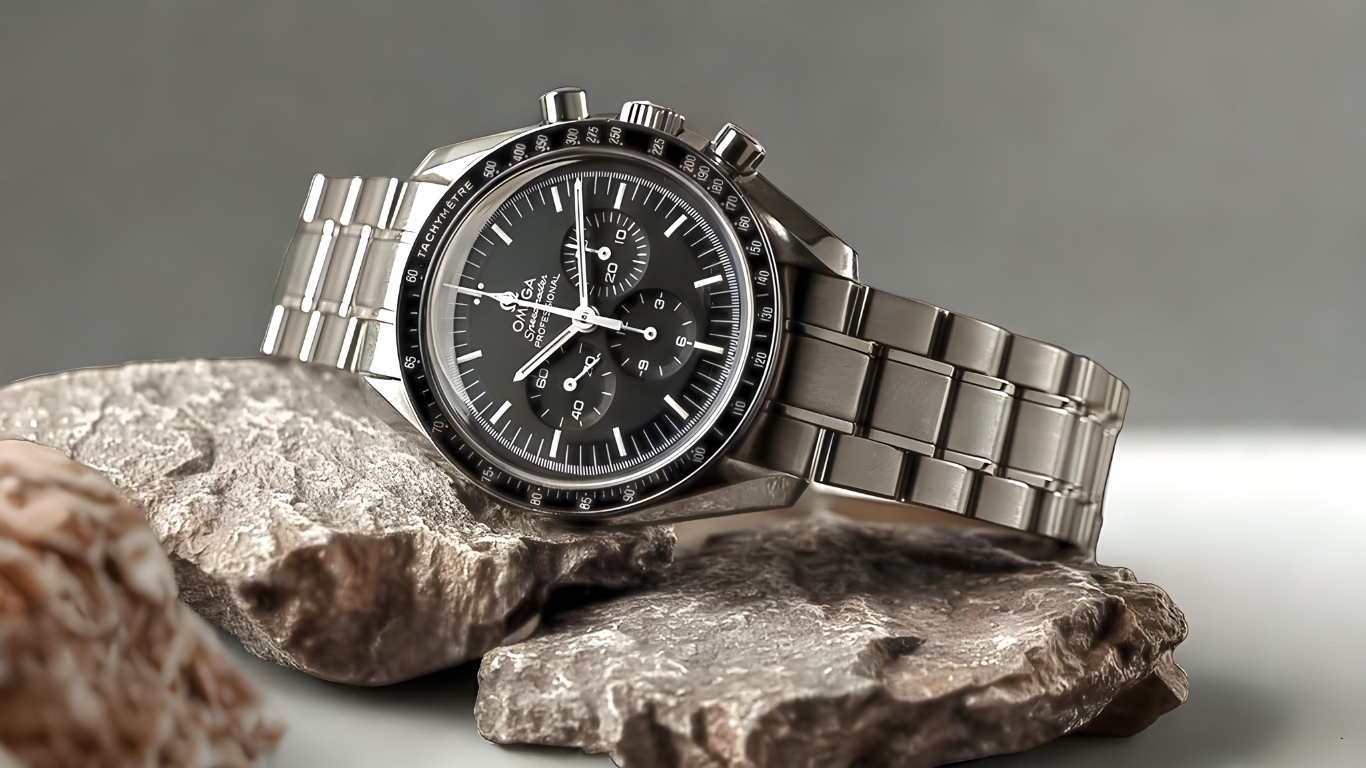
The Moonwatch case is defined by its 42mm professional profile, twisted lugs, and a dial layout built for legibility above all else. The tachymeter bezel is a core part of the identity, a direct carryover from the motorsport origins that still functions as a practical timing tool when you actually need it.
Modern Moonwatch models with Caliber 3861 are Master Chronometer certified and designed to resist magnetic fields above 15,000 gauss. That specification reduces the risk of performance drift in daily use and puts the modern Speedmaster Professional in a different category from many classic chronographs that stay more sensitive to magnetism.
The tri-register dial layout stays intuitive for timing. The chronograph function measures elapsed time in a way that feels mechanically direct, and that tactile experience of actually using a Speedmaster is a big part of why collectors keep coming back. You wear this watch, not just own it.
Some higher-end references also bring back column wheel architecture, which appeals to enthusiasts who value the traditional high-end chronograph feel. It is a detail that signals intent from Omega and speaks directly to the collector who knows what they are looking for.
Material variety also expands the market considerably. Stainless steel stays the core investment entry point for most buyers, but Omega also produces Speedmasters in gold alloys and ceramic cases. Precious metal and ceramic references attract a different buyer profile and can behave differently on resale, often depending far more on production volume and narrative strength than on materials alone.
Bracelets and straps also play a role in the ownership value you experience day to day. Modern bracelets have improved comfort and taper, while NASA-style Velcro straps and NATO options give collectors choices that connect directly to the space story. This flexibility helps the Speedmaster move between tool watch identity and luxury chronograph wearability without losing any coherence.
| Feature Category | Specification and Detail |
|---|---|
| Movement Type | Manual wind Caliber 1861 and Caliber 3861, plus automatic variants in certain families |
| Case Diameter | 42mm for the classic Moonwatch profile, with other sizes across the wider lineup |
| Crystal Options | Hesalite or sapphire depending on reference |
| Water Resistance | 50 meters for standard Moonwatch references, higher on select automatic models |
| Certification | Master Chronometer on Caliber 3861 references |
| Anti magnetic Resistance | Above 15,000 gauss on Caliber 3861 models |
How Much Does an Omega Speedmaster Cost?
The Omega Speedmaster sits in a pricing band where it can function as both a wearable tool watch and a realistic investment-grade collectible. In 2026, retail pricing varies widely by reference, materials, and limited edition positioning, but the core Moonwatch line stays one of the most accessible entry points into a globally recognized collector model family. You are not paying for hype. You are paying for substance.
The Speedmaster Professional Moonwatch with hesalite crystal typically sits around $6,600 at retail, with the sapphire variant often around $7,400. Caliber 3861 Moonwatch pricing usually falls in the same broader band, depending on bracelet and crystal configuration. For what you are getting in terms of history and mechanical quality, that retail price is hard to argue with.
Limited editions and premium references move far higher. Ceramic Dark Side of the Moon models often sit in the five-figure band at retail. Snoopy editions are a different story entirely because demand has historically outpaced supply by a wide margin, pushing secondary market prices well above original retail for certain releases. Caliber 321 references and precious metal executions sit in a higher tier still, and carry retail and secondary pricing that reflects their rarity and historical anchoring.
Average Price Growth of Omega Speedmaster
Average Price Growth of Omega Speedmaster
Discontinued and Collectible Speedmaster Models
Discontinued & Collectible Speedmaster Models
What Has Been the Omega Speedmaster’s Historical ROI?
The Omega Speedmaster has a track record of consistent value retention, and select references have delivered strong appreciation, particularly where scarcity and narrative line up cleanly. Results vary widely by reference, but the market has repeatedly shown a willingness to pay real premiums for historically significant models, limited editions with strong visibility, and vintage references that are correct and unpolished. That last point about originality matters across the collector watch market, not just for Speedmasters.
Snoopy editions are often cited as a standout category because supply has historically been limited relative to global demand. Certain auction and secondary market results show multiples over original retail for early Snoopy references, which reflects both their collectibility and the way the market values playful but historically anchored designs. Charm and provenance together are a powerful combination.
Limited Apollo commemoratives have also shown durable appreciation patterns when held in strong condition with complete sets. Buy right, store well, and patience tends to be rewarded here.
For example, the Apollo 11 50th Anniversary edition has often been tracked in the low to mid teens in thousands on resale for unworn examples, which implies a meaningful premium over original retail for many transactions.
Across the broader lineup, commonly cited annual appreciation ranges for strong references land around 6% to 14%, depending on the reference, the production volume, and the quality of the example. Core Moonwatch models tend to be the most liquid, which supports stable value even when appreciation is more moderate. Liquidity is an underrated quality in the collector watch market.
Limited editions and low-output references can deliver higher ROI, but they can also be more sensitive to market cycles and buyer timing. You need to know what you own and why before you buy.
Vintage Speedmasters can produce the strongest long-term appreciation when originality is high. Pre-moon references such as the 145.012 and the 105.003 Ed White category have risen sharply over the last decade in many tracked sales, especially for examples with correct parts, honest cases, and clean provenance. Collectors and market analysts tracking vintage references consistently point to originality as the single biggest driver of price separation in this category.
Auction Statistics and Market Trends
- In 2023, an Omega Speedmaster Professional “Snoopy Award” (ref. 3578.51) sold at Phillips for $38,500—nearly four times its original retail price of ~$9,500.
- The Speedmaster Moonwatch “321 Canopus Gold” has appreciated steadily since its 2022 debut, with recent sales exceeding $90,000 on the secondary market, up from a retail price of ~$81,000.
- The Speedmaster 50th Anniversary Apollo 11 (2019) originally retailed for $9,650. Unworn full-set examples now command between $13,000 and $16,000—reflecting 8–10% annual ROI since launch.
Overall, Omega Speedmaster resale performance shows annual appreciation rates of 6% to 14%, depending on production volume, condition, and historical importance. The range is wide, which means the reference you choose and the condition you maintain matter enormously to your actual return.
Who Should Invest in the Omega Speedmaster in 2026?
The Omega Speedmaster offers a rare blend of historical weight, mechanical credibility, and market accessibility that makes it a compelling investment choice across a wide range of collector profiles. In 2026, the Speedmaster appeals equally to first-time buyers looking for a strong entry point and to seasoned collectors who want value preservation, design pedigree, and real liquidity in the sub-$15,000 segment. Just as with other luxury collectibles, knowing your market and buying with conviction rather than speculation is what separates the winners from the regretful.
- First-Time Luxury Watch Investors: For those making their first mechanical watch investment, the standard Speedmaster Professional (Hesalite version) offers a well-priced, reliable entry point. Its price stability, NASA association, and consistent secondary demand make it one of the safest on-ramps into horological investing. Retailing around $6,600, it retains value well and has strong brand visibility, which ensures high liquidity.
- Collectors Seeking Heritage and Long-Term ROI: Enthusiasts with an interest in space exploration and mid-century design gravitate toward Speedmasters for their lunar legacy. Limited production models—such as the Apollo 11 50th Anniversary and the “Silver Snoopy Award” editions—are increasingly recognized for outperforming their retail pricing by 10–15% annually. These pieces are ideal for long-term holding.
- Vintage Market Participants: Investors targeting models like the pre-Moon 145.012 or the rare 105.003 “Ed White” Speedmaster often find double-digit annual ROI, especially for full sets with unpolished cases. These watches benefit from low supply and a well-documented rise in auction premiums. Speedmaster vintage references now rival early Daytonas in terms of investment return versus accessibility.
- Diversified Asset Investors: For collectors who already hold assets like Rolex or Audemars Piguet, the Speedmaster fills a different strategic role. It provides design credibility, brand legacy, and market-proof resilience—especially during downturns. Investors seeking exposure to a stable, low-volatility timepiece will find the Speedmaster’s long production continuity and expanding collector base attractive.
- International Buyers and Boutique Investors: In Asia and the Middle East, the growing prestige of Omega Master Chronometer movements and Canopus Gold references is fostering a niche collector segment. These buyers view the Speedmaster as a viable long-term hold, particularly in full-gold or boutique-exclusive variants with regional scarcity and technical innovation.
FAQ
Is the Omega Speedmaster a good investment in 2025?
Yes, the Omega Speedmaster remains one of the most reliable watch investments under $15,000. Its historical significance, strong resale performance, and brand legacy make it a top-tier choice for both new and seasoned collectors.
What is the average resale value of the Omega Speedmaster?
Depending on the model and condition, most modern Speedmaster Professionals retain 80–95% of their retail price. Limited editions and vintage references can exceed retail by 15–40%, particularly with box and papers.
Which Omega Speedmaster models appreciate the most?
Snoopy editions, certain Apollo commemoratives, vintage pre moon references, and limited production Caliber 321 releases are among the most cited high performers, largely because demand exceeds supply and the references carry clear narrative importance.
How does the Speedmaster compare to Rolex in investment terms?
While Rolex watches typically appreciate faster, the Omega Speedmaster offers lower volatility and stronger value retention in its price category. It’s one of the most stable assets in the mid-luxury chronograph space.
Are vintage Omega Speedmasters worth buying?
Absolutely. Vintage Speedmasters, especially pre-Moon references, have become blue-chip investments, with some models appreciating more than 200% over the last decade when in original condition.
Is the Omega Speedmaster better with Hesalite or Sapphire?
Hesalite is often preferred by collectors who want the closest experience to the NASA era Moonwatch. Sapphire is preferred by buyers who prioritize scratch resistance and movement visibility. Both can hold value well when the reference is desirable and the condition is strong.