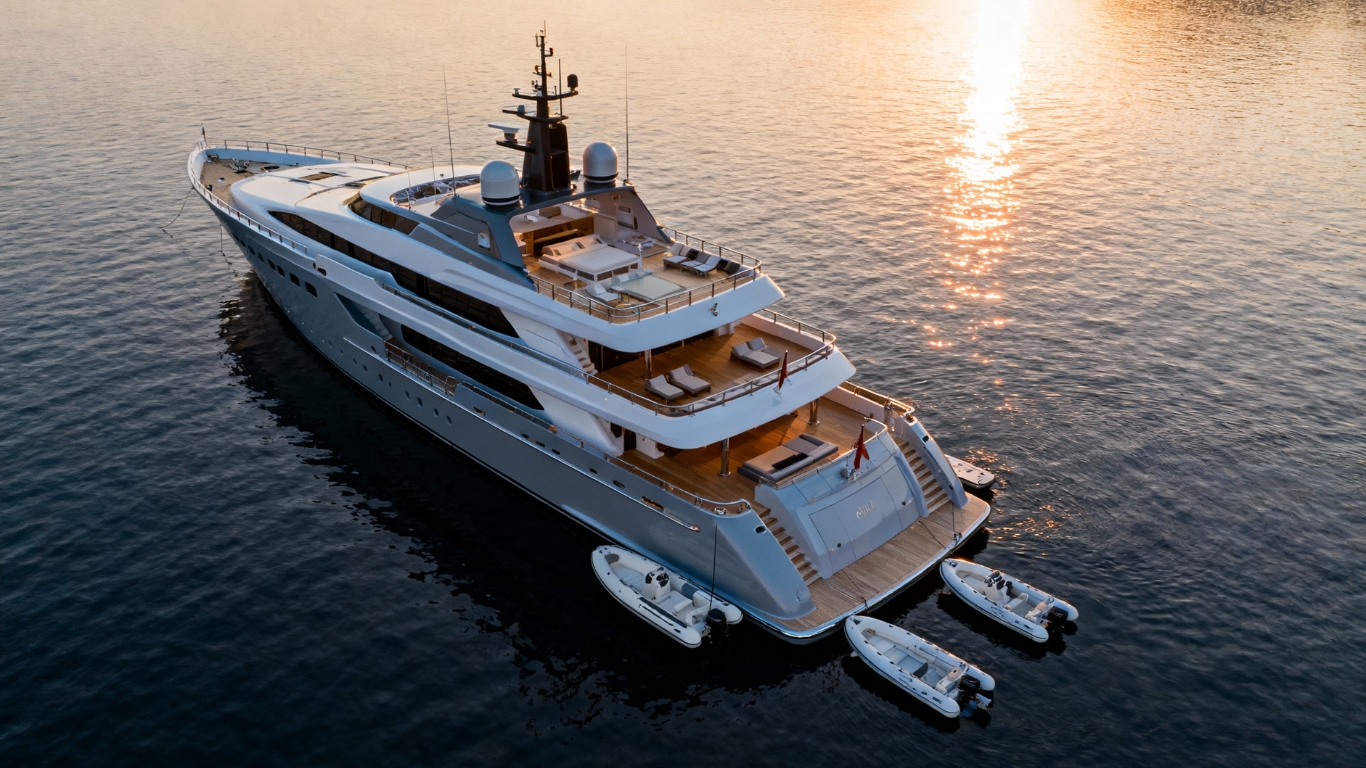
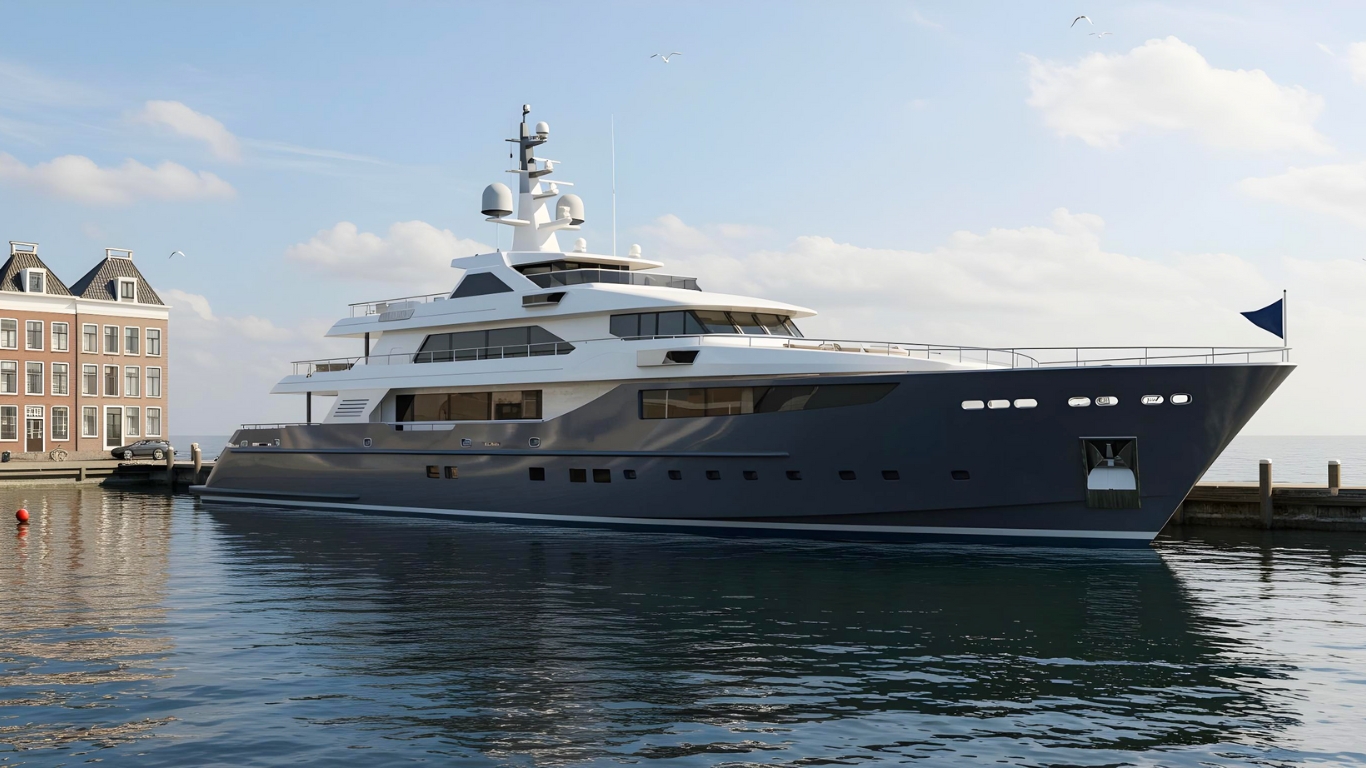

The Netherlands quietly dominates global yacht building in ways that catch most people off guard. If you haven’t spent much time around the maritime industry, you might not realise that many of the world’s most advanced and valuable superyachts roll out of shipyards clustered around Rotterdam and the Dutch coast.
This small European nation consistently ranks among the top three countries worldwide for superyacht construction, punching far above its weight in an industry where reputation, technical capability, and long-standing client relationships determine who gets to build for the ultra-wealthy.
The scale of this dominance becomes clear when examining the numbers, with the Global Order Book 2025 placing the Netherlands at #3 worldwide with 69 projects in build or on order, totaling 4,483 meters and averaging 65 meters per vessel.
What the numbers really tell you is that Dutch yards aren’t chasing volume. They focus on highly complex, high-value builds that sit in the most profitable and prestigious segment of the market, and that’s a deliberate choice.
Table of Contents
- The Netherlands quietly ranks among the top three countries worldwide for superyacht construction and captures a disproportionate share of global market value given its small size.
- The 2025 Global Order Book shows 69 Dutch superyacht projects in build or on order, totalling 4,483 metres and averaging around 65 metres per vessel, underscoring a focus on large, complex yachts rather than volume production.
- Leading shipyards such as Feadship, Heesen, Oceanco, Amels (Damen), and Royal Huisman specialise in fully custom, high-complexity builds that sit in the most profitable and prestigious segment of the market.
- Dutch yacht building is a serious export engine, generating roughly €3.6 billion in pleasure and sport boat exports and directly supporting around 6,500 jobs in shipyards and specialist suppliers clustered around Rotterdam, Makkum, Oss, and the Dutch coast.
- Flagship projects like Feadship’s 118.8-metre hydrogen fuel-cell superyacht and Oceanco’s e-hybrid concepts demonstrate technical leadership in sustainable propulsion, making Dutch yards a natural choice for billionaires who want both engineering excellence and environmental credibility.
- Strategically, the Netherlands occupies the sweet spot between Italian series-production volume and Germany’s ultra-large niche, offering the best balance of customisation, technology, and profitability in the superyacht industry.
- Who is this for?
- Billionaires, family offices, and yacht owners deciding where to commission a new build, as well as investors and analysts studying the Dutch superyacht cluster as a high-value industrial and export story.
- What is happening?
- A dense network of Dutch shipyards, designers, engineers, and suppliers has turned the Netherlands into a world-leading hub for large, fully custom superyachts that combine cutting-edge technology with fine craftsmanship and reliable after-sales support.
- When did this dominance emerge?
- Dutch leadership has been built over several decades but is clearly visible in recent data, with the 2025 Global Order Book confirming a strong pipeline of large projects and a sustained focus on high-value builds even as the broader market normalises.
- Where is this happening?
- The core activity is concentrated in and around Rotterdam, Makkum, Oss, and other coastal areas, where yards like Feadship, Heesen, Oceanco, Amels, and Royal Huisman sit within a compact maritime corridor linked to R&D centres and specialised suppliers.
- Why does it matter?
- For owners, choosing a Dutch build means access to the most advanced engineering, proven green propulsion options, and strong resale appeal. For the Dutch economy, superyachts represent a resilient, export-driven industry that anchors high-skilled jobs and innovation in a country better known for logistics and trade than for ultra-luxury manufacturing.
How Big Is The Netherlands’ Lead In Global Yacht Building?
The Netherlands holds an outsized lead in the superyacht world because it controls a large share of the highest-value projects, not just hull count. It consistently ranks among the top three yacht-building nations globally and dominates the 60m to 80m and 80m-plus custom segment, meaning Dutch yards are over-represented exactly where projects are most expensive, technically complex, and visible to ultra-wealthy owners.
ABN AMRO and HISWA-RECRON analysis shows Dutch-built superyachts accounting for roughly 25% of the global market by value in 2023. That concentration would be remarkable in any industry, but in luxury manufacturing it feels close to monopolistic. When one small country captures a quarter of a global luxury market, you’re looking at something far more durable than temporary fashion or lucky timing.
What makes this dominance so striking is how it’s achieved. Dutch production tilts heavily toward full-custom builds, with NL Times reporting that roughly 70% of Dutch superyachts are completely bespoke and above 60m, aligning perfectly with ultra-high-net-worth tastes for one-off engineering rather than picking options from a catalog.
The Netherlands Builds the Longest Superyachts
New superyacht sales of 50 metres or more in 2024, by country of manufacture and vessel length category.
Key Insights from 2024 Sales Data
- Italy leads in total superyacht sales with 17 units, primarily in the 50–60m category.
- The Netherlands dominates the ultra-large segment (80m+) with 7 superyachts, representing 54% of this category.
- Germany exclusively builds superyachts over 80 metres, with 5 units sold.
- In total, 45 new superyachts of 50 metres or more were sold in 2024.
Dutch yards compete on capability rather than price, building vessels that literally cannot be constructed elsewhere because the technical requirements exceed what other shipyards can deliver. Think of the difference between ordering a suit off the rack and having one made by a Savile Row tailor who creates patterns that simply don’t exist in standard sizing.
Dutch pleasure and sport boat exports, dominated by superyachts, reached approximately €3.6 billion in 2024 based on CBS trade data. To put that in perspective, the sector supports roughly 6,500 jobs directly across yards and suppliers, creating employment concentrations in towns like Makkum, Oss, and around Rotterdam where entire communities depend on yacht building and the ecosystem of specialised services that surrounds it.
Dutch Superyacht Industry Snapshot (2023 to 2026)
| Metric | Latest datapoint | Year / Source |
|---|---|---|
| Global market share by value | ≈ 25% of global superyacht market value | 2023 – ABN AMRO & HISWA-RECRON |
| Projects in build / on order | 69 superyachts, total 4,483m LOA | 2025 Global Order Book (24m+) |
| Average Dutch project length | ≈ 65m per build | 2025 Global Order Book |
| Long superyacht leadership | World’s largest builder of 80m+ yachts; 7 yachts >80m delivered in 2024 | 2024 – ABN AMRO / NL Times |
| Export value (pleasure & sport boats) | ≈ €3.6 billion, majority superyachts | 2024 – Statistics Netherlands (CBS) |
| Direct employment | ≈ 6,500 jobs (yards & suppliers) | 2023 – ABN AMRO & HISWA-RECRON |
| Speculative builds share | > 25% of Dutch projects built on speculation | 2025 – ABN AMRO cluster analysis |
Looking at who actually runs this show, the major players including Feadship, Heesen, Oceanco, Amels under Damen, and Royal Huisman operate within what Rotterdam Partners describes as a remarkably dense maritime cluster. The supply chains and R&D capacity that competitors in other countries struggle to replicate are all concentrated right here.
This cluster advantage creates powerful network effects where yard capabilities, supplier expertise, and engineering talent reinforce each other in ways that elevate Dutch yacht building far beyond what any individual company could achieve operating alone in a less developed maritime region.
The confidence Dutch yards have in their position shows up in an unusual metric. The 2026 Global Order Book indicates the Netherlands had 27.5% of its projects started on speculation, meaning yards are building yachts without committed buyers and essentially betting on their ability to find clients for completed or near-complete vessels.
That kind of spec building requires genuine confidence in eventual demand and cash flows strong enough to finance construction without customer deposits providing working capital. Understanding how yacht ownership structures work makes it clear why this financial strength matters so much. Struggling yards in other countries simply cannot afford to operate this way.
What Numbers Reveal Dutch Dominance In Superyachts?
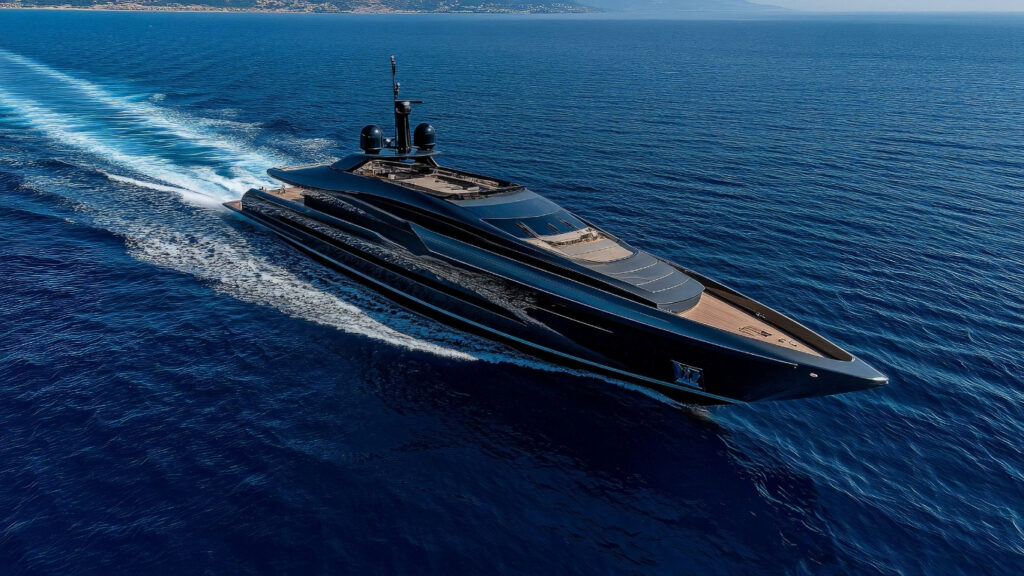
Recent data shows 69 Dutch superyacht projects in build or on order totalling 4,483 metres, with an average length of about 65 metres per yacht. Around 70% of these builds are fully custom and often above 60 metres, the sector exports roughly €3.6 billion of pleasure and sport boats a year, and supports about 6,500 high-skill jobs. Taken together, those numbers show a small country specialising in large, high-value, made-to-measure yachts rather than chasing volume.
The investment in innovation underpinning Dutch leadership goes far beyond what competing yacht-building nations commit. Government and industry announced €60 million in innovation funding to turbocharge shipbuilding R&D back in October 2023, as Offshore Energy reported, with funding specifically targeting the Rotterdam maritime cluster.
Building on that public commitment, the Maritime Master Plan subsidy scheme supports dozens of demonstration ships testing hydrogen, methanol, and LNG propulsion with CO₂ capture.
What this government support really does is accelerate technology development across the entire cluster. Dutch yards can offer clients proven green propulsion systems rather than experimental concepts that might fail spectacularly two years after delivery when the warranty has expired and the builder has moved on.
The flagship projects emerging from this R&D investment demonstrate technical leadership that competitors openly acknowledge but struggle to match. Feadship’s Project 821, better known as Breakthrough, stands as the world’s first hydrogen fuel-cell superyacht at 118.8 metres, with SuperYacht Times documenting the five-year development program that culminated in successful sea trials in late 2024.
Moving beyond hydrogen into broader hybrid systems, Oceanco’s KAIROS concept showcases an e-Hybrid platform taking a battery-first approach with generators for charging and high-speed operation. Designed with Pininfarina and Lateral, the system cuts noise, vibration, and local emissions to zero at point of use, as Boat International explains.
For wealthy buyers increasingly conscious of environmental impact and facing social scrutiny about their carbon footprints, these proven green technologies make Dutch builds attractive beyond just performance and luxury. Exploring the best fuel alternatives for yachts shows exactly why this matters practically, especially as Mediterranean ports roll out emissions regulations that could restrict where conventional diesel yachts can actually cruise.
Comparing the Netherlands with its main European competitors reveals fundamentally different strategic positioning. The 2026 Global Order Book shows the Netherlands with 69 projects averaging 65 metres, Germany with just 18 projects but averaging roughly 95 metres in the ultra-large niche, and Italy leading by sheer project count through series and semi-custom volume production.
What this means practically is that the Netherlands occupies the profitable sweet spot between Italian volume and German ultra-large focus, building complex custom yachts at a scale that requires capabilities few other countries can match.
Why Do Billionaires Prefer Dutch Craftsmanship For Their Yachts?
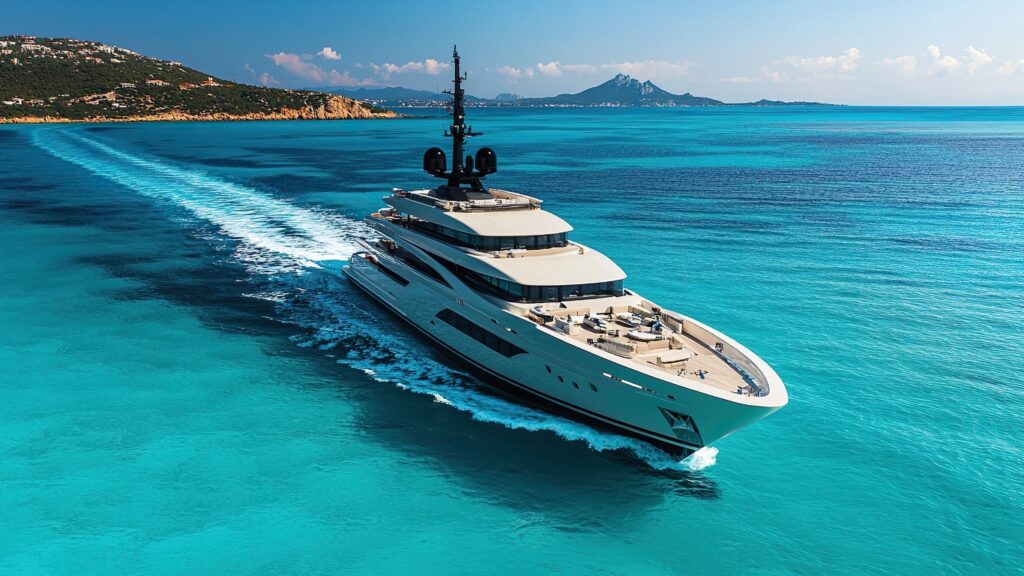
Billionaires favour Dutch yards because they combine deep engineering capability with flawless finish and credible green technology. Projects like hydrogen fuel-cell flagships and advanced e-hybrid concepts prove the Netherlands can deliver quieter, cleaner, future-proof yachts, while a dense cluster of yards and suppliers ensures strong project execution and resale appeal. For owners, a Dutch build signals both technical sophistication and long-term asset quality, not just luxury styling.
Understanding why the world’s wealthiest consistently choose Dutch yards means looking beyond marketing to what actually matters in yacht ownership.
The technology leadership demonstrated through projects like the hydrogen-powered Feadship and hybrid Oceanco concepts gives sustainability-minded buyers tangible proof that Dutch yards can deliver genuine environmental performance alongside luxury, rather than greenwashing with carbon offset marketing.
As regulatory pressure builds around emissions and wealthy owners face uncomfortable questions about their yachts’ environmental footprint, being able to honestly say your vessel runs on hydrogen or battery-electric power in port becomes increasingly valuable, both socially and practically.
The order book quality metric reinforces that Dutch yards deliberately compete at the high end where margins and reputations are strongest. That 65-metre average project length in the Netherlands’ 2026 order book isn’t an accident. It reflects a conscious focus on large, complex, high-ticket builds that represent the part of the market with the strongest reputational pull and the best resale support.
Smaller yards might chase volume, but Dutch builders understand that reputation compounds when you consistently deliver the most challenging projects rather than pumping out series production boats.
For investors evaluating this sector rather than buyers commissioning yachts, several factors make Dutch yacht building a compelling investment thesis. That €3.6 billion in exports from a country of just 17 million people demonstrates an export intensity that few other luxury manufacturing sectors achieve, suggesting genuine competitive advantage rather than just serving a captive domestic market. If you’re thinking about how Wall Street is repositioning around alternative assets, the Dutch superyacht sector fits squarely into that conversation.
The broader market context provides additional confidence about durability. The Global Order Book shows worldwide gross tonnage under construction up 5.3% year-over-year to 577,482 GT despite broader economic uncertainty, implying bigger boats on average as the mix shifts toward larger, more complex vessels.
That trend plays directly to Dutch strengths in engineering and custom building, where Italian volume producers have less natural advantage. Dutch market share could actually expand as a result.
At the same time, trade data shows healthy demand from key markets, with CBS reporting 10.5% year-over-year growth in Netherlands goods exports to the U.S. in H1 2026, with machinery and transport categories contributing strongly.
This growth indicates strong transatlantic luxury demand that should support continued yacht orders from American clients who represent substantial portions of Dutch order books and typically favor the technical sophistication and custom capabilities that Dutch yards offer.
The combination of technical leadership, government support, cluster advantages, and proven environmental technology positions Dutch yacht building for sustained success even as the industry normalises from pandemic peaks.
The 69 projects in the 2026 order book, the €3.6 billion in exports, the 25% global market share by value, and the world-first hydrogen yacht all point to momentum that distinguishes genuine market leadership from niche positioning.
For investors and buyers evaluating where to allocate capital in luxury manufacturing, Dutch superyachts sit at a rare intersection of technical excellence, financial stability, environmental responsibility, and proven demand from the world’s wealthiest clients who ultimately determine what succeeds in ultra-luxury markets. That’s not a niche. That’s a category that sets the standard.