The best fuel alternatives for yachts in 2026 are no longer a research project; they are reshaping the propulsion conversation at the upper end of the build cohort. Hydrogen fuel-cell programmes from Lürssen and Feadship, hybrid-electric drive trains across the Italian and Dutch yards, and serious solar and wind-assist installations are all moving from prototype to production.
BOAT International, the Financial Times' sustainable-business desk and the major flag-state registries are all tracking the same shift. What follows is our editorial read on the alternative-fuel landscape for serious yachts in 2026, and the practical questions for owners thinking about a new build or a major refit.
Key takeaways
- Electric and hybrid propulsion now appears as standard on serious new builds, particularly across the 20-40 metre segment.
- Hydrogen fuel cells are moving from prototype to production on flagship builds, led by Lürssen's Cosmos and Feadship's Project 821.
- Solar, wind and biofuel each work as part of a hybrid system rather than as standalone solutions on serious vessels.
- Methanol is emerging as a credible drop-in replacement for diesel in specific commercial-marine applications.
- Fuel alternatives for yachts in 2026 span hybrid diesel-electric, biofuel blends, methanol, hydrogen fuel cells and selected wind-assist technologies across the new build and refit segments.
- We see hybrid diesel-electric propulsion as the most commercially mature alternative, with installations now routine across new build superyachts above the 50-metre threshold.
- Biofuel blends including HVO renewable diesel offer immediate carbon reduction without major engine modification, with availability now expanding across major Mediterranean fuelling hubs.
- Methanol propulsion and hydrogen fuel cells remain in earlier deployment phases, with selected pioneer projects including the Feadship Project 821 announcing material commitments.
- Wind-assist technologies including Flettner rotors and sail-assist systems offer auxiliary efficiency gains, with applications increasingly seen on larger yachts and commercial shipping.
- For most considered yacht owners we view fuel alternatives as an active rather than speculative consideration for any new build or major refit project in 2026 and beyond.
- Who is this for?
- Yacht owners, naval architects and the shipyards, classification societies and fuel suppliers framing alternative fuel decisions across the new build and refit complex.
- What is happening?
- A read of the best fuel alternatives for yachts in 2026, covering hybrid diesel-electric, biofuel blends, methanol, hydrogen fuel cells and wind-assist technologies.
- When did this emerge?
- The article reflects 2026 conditions through Lloyd's Register, ICOMIA and shipyard reporting alongside our observations on the evolving fuel landscape.
- Where is this happening?
- The piece covers the global yacht propulsion complex, including European builds at Feadship, Heesen, Oceanco and Lürssen alongside selected American and Asian yards.
- Why does it matter?
- Alternative fuel selection shapes long-term operational and resale economics, which is why understanding the current options matters before any new build or refit commitment.
Electric propulsion
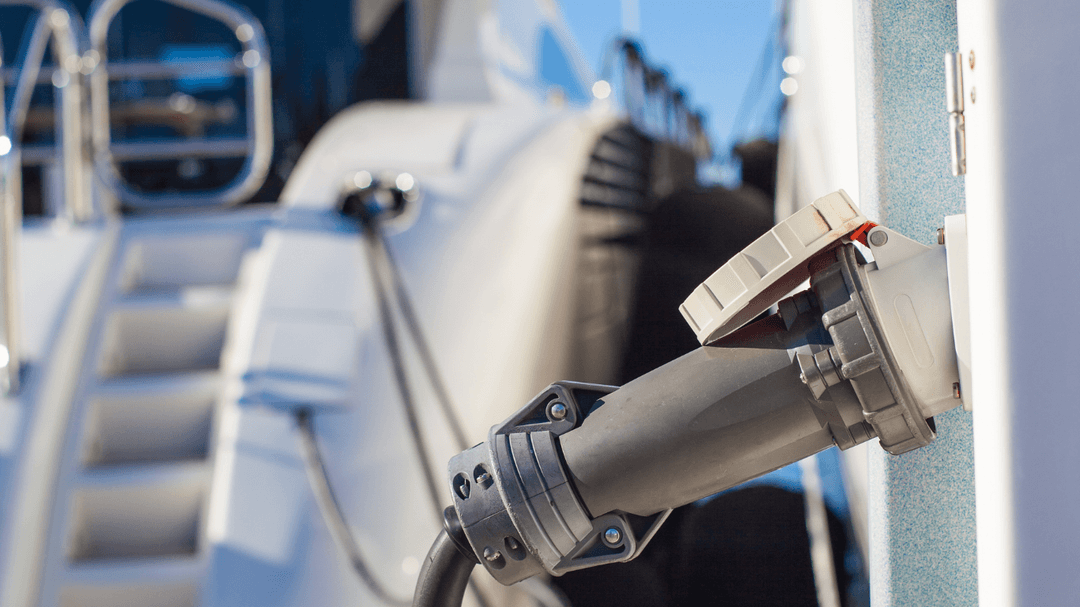
Electric propulsion has moved from the experimental fringe to a working option on serious yachts. The 20-40 metre segment is now where the production volume sits.
The benefits
Zero local emissions, near-silent operation at low speeds, fewer moving parts than a diesel installation, and the integration with onboard battery banks that supports house-load demand without the generator running. The cruising experience changes materially.
The serious operators report meaningfully lower noise and vibration on electric installations, which matters more on cruising-grade vessels than the engineering specs suggest. The wider luxury market's appetite for genuinely sustainable products tracks the same arc the FT covers in its Financial Times sustainable-business reporting.
The challenges
Range and battery weight are the structural constraints. Charging infrastructure at marinas is still developing, and the cost premium on a full electric installation versus a comparable diesel is meaningful at this scale.
For most cruising profiles, hybrid-electric is the working answer rather than pure-electric. The wider conversation around the broader trend of sustainability-driven investment covers some of the demand-side dynamics.
Hydrogen fuel cells
Hydrogen fuel cells are the longer-horizon technology that the most serious yards are actively developing. The pace has accelerated meaningfully across the past three years.
Efficiency and environmental impact
Fuel cells convert hydrogen directly to electricity at higher efficiency than combustion-engine alternatives. The only emission is water vapour. The technology is well-understood in commercial-marine and automotive applications, and the yacht-specific engineering is now production-ready on flagship builds.
Current usage and future potential
Lürssen's Cosmos and Feadship's Project 821 are the most visible hydrogen-equipped builds in the current cohort. BOAT International coverage at Boat International has tracked the build programmes in detail. The bunkering infrastructure remains the binding constraint outside a small number of European ports.
Solar power
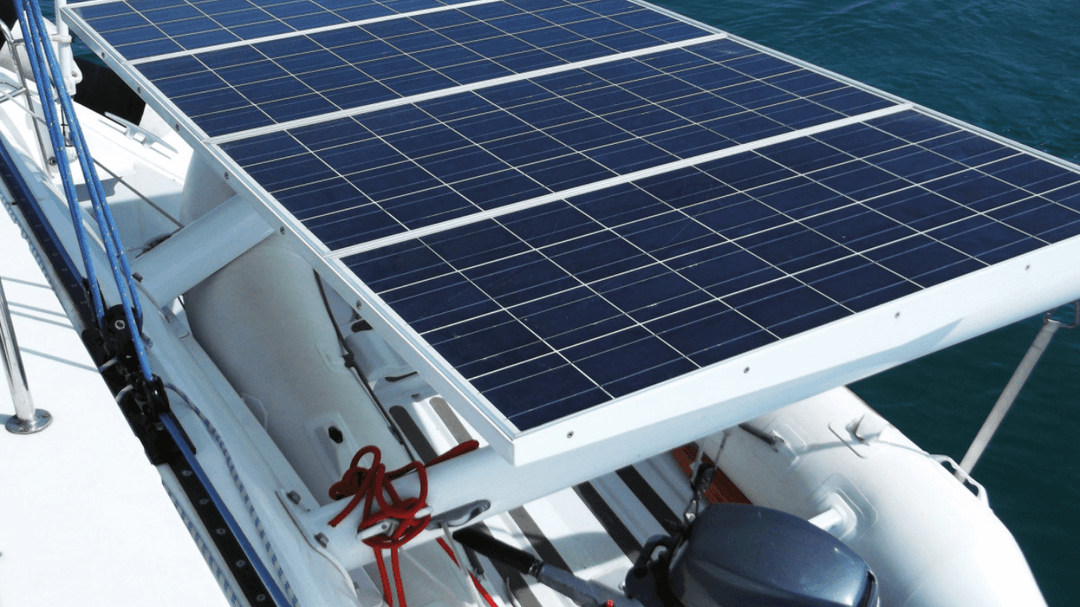
Solar power on serious yachts works as part of a hybrid system. As a standalone propulsion solution it doesn't scale; as a contributor to house-load and auxiliary systems it adds real value.
Advantages on yachts
Solar arrays integrated into hard tops, superstructures and biminis generate meaningful kilowatt-hours across a Mediterranean day. The contribution to battery banks supports air-conditioning, refrigeration and the rest of the house load without running the generator.
The serious yards now specify solar integration into the structural design rather than as a bolt-on after-fit. The aesthetic and structural integration is the difference between effective and decorative installations.
Installation and maintenance
Solar installation on yachts requires marine-grade panels (the salt and UV environment is harder than residential), proper structural support, and integration with the onboard electrical architecture. Maintenance is modest: cleaning, periodic inspection, replacement on the 15-20 year manufacturer cycle.
Wind power
Wind propulsion has the longest history in serious yachting, and modern wind-assist technology is reviving the conversation across the commercial-marine fleet.
Wind propulsion systems
Traditional sails remain the most reliable wind technology for sailing yachts. Rotor sails, kite systems and hard-wing sails are all in active commercial-marine development with reported emissions reductions of 5-15 percent depending on the system and the route.
| Wind Propulsion System | Advantages | Average Emission Reduction |
|---|---|---|
| Traditional Sails | Low cost, high reliability | Varies based on usage |
| Rotors | Efficient, minimal crew intervention | 8% |
| Kites | Access high-altitude wind, significant fuel savings | Up to 15% |
| Hard-Wing Sails | High efficiency, low maintenance | 5%-8% |
Biodiesel
Biodiesel is the most accessible alternative fuel today, with relatively straightforward integration into existing diesel installations.
Benefits and considerations
Biodiesel reduces lifecycle emissions versus fossil diesel while maintaining most of the operational profile owners and crews are familiar with. Reuters coverage at Reuters has tracked the supply-side maturation across the marine market.
Engine compatibility
Most modern marine diesel engines accept biodiesel blends up to B20 (20 percent biodiesel) without modification. Higher blends require manufacturer approval and sometimes additional filtration or seal upgrades.
Biofuels in the wider picture
Biofuels collectively are one of the practical answers to decarbonising the existing fleet, where retrofit to electric or hydrogen is not realistic in the short term.

Different types
The biofuel category includes biodiesel, bioethanol, biomethane and renewable diesel from waste feedstock. Each has different infrastructure and engine-compatibility profiles. The marine industry's current focus is on renewable diesel and biomethane.
Sustainability and environmental impact
Lifecycle emissions reductions versus fossil diesel range from 50 to 90 percent depending on feedstock and processing. The credibility of any specific biofuel depends on rigorous lifecycle accounting, which the serious operators now demand as standard.
Methanol
Methanol is the emerging dark-horse alternative for serious marine applications. The commercial-marine industry is moving meaningfully toward methanol over the next build cycle.
Advantages of methanol
Methanol is liquid at ambient temperature, which makes bunkering and storage materially easier than hydrogen or LNG. Green methanol (produced from renewable energy and captured carbon) offers lifecycle emissions reductions comparable to hydrogen with much simpler infrastructure.
Current implementations
Maersk and the major container-shipping operators have committed to methanol-powered new builds. The yacht industry watches this commercial-marine transition closely because it signals where the bunkering infrastructure will be in five to ten years. Coverage by Robb Report has tracked the same arc on the luxury side.
Our companion read on rise in luxury asset markets touches on parallel sustainability conversations, and our note on sustainable luxury trends covers the broader demand picture.
What this means for owners
The alternative-fuel conversation in 2026 is no longer a research project. Owners commissioning serious new builds today are specifying hybrid-electric and exploring hydrogen and methanol as realistic options on the next build cycle.
The owners who position with credible sustainability narratives, and who specify the propulsion to match, will sit on the right side of both the regulatory and the cultural arc. The owners who don't will find the resale conversation more difficult than they expect. We last reviewed this analysis in May 2026.


Stefanos Moschopoulos
Stefanos Moschopoulos founded The Luxury Playbook in Athens and has spent the better part of a decade following the auction calendar, the en primeur releases, and the watchmakers, gallerists, and shipyards the magazine covers. He writes the field guides and listicles that anchor the Connoisseur section — pieces built on Phillips and Christie's results, Liv-ex movements, and conversations with collectors he has met across Geneva, Bordeaux, Basel, and Monaco. His own collecting habits sit closer to watches and wine than art, and it shows in the level of detail in the magazine's coverage of those categories. Under his direction, The Luxury Playbook now publishes long-form field guides, market-defining year-end listicles, and the Voices interview series with the founders behind the houses and the brands.