After years of European dominance in luxury yacht construction, the U.S. yacht industry is quietly regaining its footing. And the revival is starting where you might least expect it: the Pacific coast.
Italian and Dutch yards have long set the standard for superyacht excellence. But a combination of innovation, serious shipyard investment, and sustainable design is driving a West Coast revival that’s pulling attention from buyers who once looked exclusively to Europe for their builds.
This isn’t nostalgia for America’s shipbuilding past but a forward-looking transformation built on technology, regulatory advantages, and the creative energy of California’s design culture meeting traditional maritime craftsmanship.
The market fundamentals back up the optimism. investors tracking alternative asset classes will want to know that the U.S. luxury yacht market is projected to grow at 8. 25% annually through 2030, driven by domestic manufacturing strength and post-pandemic wealth creation, according to AInvest. If you’re evaluating where the yacht industry is heading, this West Coast revival isn’t just an American comeback story.
It’s a genuine shift in where innovation and value creation are happening across global yacht construction.
Key Takeaways
Navigate between overview and detailed analysisKey Takeaways
- After decades of European dominance, the U.S. yacht industry, particularly on the Pacific coast, is experiencing a quiet revival driven by innovation, sustainability, and strategic shipyard investment.
- West Coast facilities like Marine Group Boat Works in San Diego are expanding capabilities with advanced materials, hybrid propulsion systems, and Foreign Trade Zone advantages that make U.S.-built yachts more competitive.
- Market fundamentals are strong, with AInvest projecting 8. 25% annual growth in the U.S. luxury yacht market through 2030, supported by post-pandemic wealth creation and domestic demand for luxury experiences.
- Policy initiatives, including the “Restoring America’s Maritime Dominance” executive order and the Big Beautiful Bill Act restoring 100% yacht depreciation, are creating powerful tailwinds for U.S. builders.
- While the global new-build market has slowed, the combination of U.S. innovation, regulatory advantages, and growing international recognition suggests long-term investment potential in West Coast yacht construction.
The Five Ws Analysis
- Who:
- U.S. yacht builders, investors, and buyers shifting focus from Europe to the Pacific coast, led by shipyards in California and Washington.
- What:
- A West Coast-led resurgence in American yacht building driven by sustainable design, new technology, and favorable policy incentives.
- When:
- Gaining momentum in 2025, supported by renewed investment, regulatory changes, and evolving post-pandemic buyer behavior.
- Where:
- Centered around key shipyards like Marine Group Boat Works in San Diego and emerging players along the Pacific coast.
- Why:
- Because a mix of innovation, infrastructure, and policy support is positioning the U.S. yacht industry, particularly the West Coast, as a credible global competitor and attractive investment opportunity.
The Story of American Yacht Building
To understand how far this revival has come, you need to understand how far American yacht building had fallen.
U.S. yacht construction lost serious ground to European builders throughout the 2000s, as Italian styling, Dutch engineering, and German precision became synonymous with superyacht quality.
American yards struggled to compete on design sophistication. Higher labor costs made things worse. And the industry lost institutional knowledge as skilled workers aged out without enough new talent coming up through the trades to replace them.
The turning point came through a set of forces that converged at just the right moment. Wealthy Americans who had accumulated substantial capital during pandemic-era market gains suddenly had both the means and the motivation to commission yachts.
Post-pandemic spending patterns shifted hard toward experiences and assets that offered privacy, mobility, and luxury without the crowds and restrictions that defined traditional vacation options. Investment in marine technology, especially around hybrid propulsion and sustainable systems, also opened up space where American innovation could genuinely compete with, and in some cases exceed, European capabilities built on more traditional approaches.
That said, the broader new-build market tells a more complicated story. SuperYachtTimes reports that new-build yacht sales of vessels over 30 meters fell roughly 25% in the first half of 2024 versus the same period in 2023, dropping from 110 units to 83 units.
This global contraction means U.S. yards are fighting for share in a smaller pie, though it also suggests that buyers are becoming more selective in ways that could favor yards offering genuine innovation rather than just replicating established European designs.
The global yacht market keeps expanding despite that new-build softness, with Yachtway showing growth from $9. 06 billion in 2024 to $9. 48 billion in 2026, representing roughly 4.
7% annual growth. That disconnect between slowing new-build sales and growing overall market value reflects appreciation in existing yacht prices, rising refit and maintenance spending, and geographic expansion into new markets that U.S. builders are well-placed to capture.
The West Coast’s New Wave of Innovation
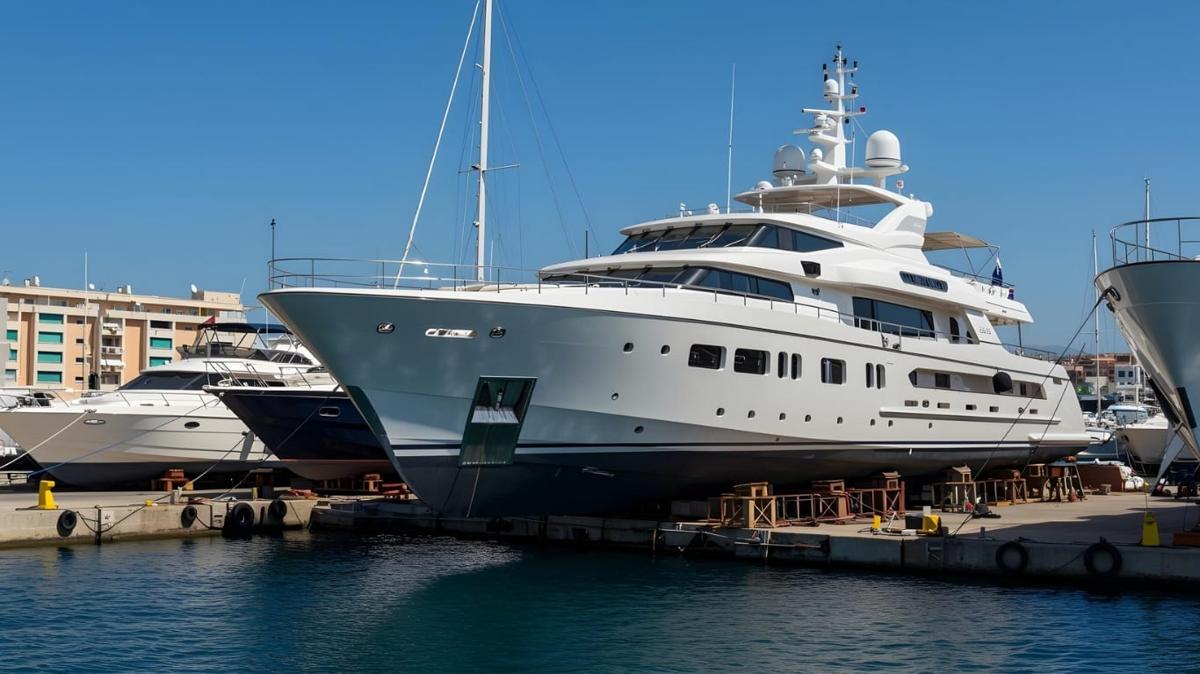
The physical infrastructure behind this revival signals serious capital commitment to West Coast yacht building. Marine Group Boat Works in Chula Vista near San Diego operates a shipyard spanning 1.25 million square feet with over 2,000 feet of dockage, an 820-ton boat lift, and variable-width systems that can handle a wide range of vessel sizes.
As Seapower reported in July 2025, the facility came under new ownership with intentions to expand capabilities in superyacht service and construction, signaling that investors see viable business building and maintaining large yachts on the West Coast.
What makes this facility especially strategic is its designation as San Diego’s Foreign Trade Zone for luxury yachts, as US Sailing notes. That FTZ status lets foreign-flagged vessels be marketed to U.S. buyers without triggering immediate import duties, directly addressing one of the historic barriers that made importing a European yacht more attractive than commissioning one domestically.
Move beyond the infrastructure and you find real capability. West Coast shipyards in California and Washington are embracing advanced materials and hybrid propulsion systems that go well beyond catching up to European standards. Yards connected to California’s tech ecosystem and strong environmental culture are positioned to lead sustainable yacht design, not just follow it.
SuperYachtTimes reports that some new yachts are being delivered with American-flagged certifications alongside Cayman compliance from West Coast yards, showing that orders tied to U.S. builders are materializing again. This blending of domestic credentials with international registry requirements matters because American buyers often prefer foreign registry for operational flexibility while still wanting to put their money behind home-built vessels.
Why Global Buyers Are Looking West Again
The shift in perception may be the most important change driving the West Coast revival. Recognition of American creativity and performance is growing, especially in areas where U.S. expertise naturally leads: advanced composites, hybrid power systems, and deeply integrated technology.
The Port of San Diego’s working waterfront gives you a sense of the regional depth supporting this industry. Six shipyards handle repair and maintenance of commercial and recreational vessels. The broader region employs roughly 14,000 shipbuilding and repair workers and generates approximately $1.
25 billion in shipbuilding and repair payroll. San Diego alone has the skilled workforce and infrastructure to support expanded yacht construction at scale.
The Boat International Global Order Book 2026 now counts Rockport Marine among builders of vessels over 24 meters, marking the yard’s entry into large yacht order book ranks. One yard alone doesn’t flip the script. But it does show that American builders are being recognized in the international tracking systems that buyers and brokers rely on when comparing construction options, which is essential ground to hold if you want to compete with established European yards.
U.S. West Coast Yacht Builders Leading the American Revival
A closer look at the leading yacht builders on the U.S. West Coast tells the full story of this revival. Delta Marine, Christensen Shipyards, Nordlund Boat Company, Westport Yachts, and Horizon Yachts each bring distinct strengths to the table, from their locations and heritage to their specialty capabilities, notable projects, and the specific contributions each is making to the American luxury yacht building industry.
| Builder ▼ | Location / Heritage ▼ | Specialty / Capabilities | Notable Projects and Recent Activity |
|---|
Economic Winds Favoring the U.S. Yacht Industry
The baseline is sobering and worth knowing before you get too bullish. The Progressive Policy Institute notes that American shipyards are building only 3 of the 5,448 large commercial vessels currently on global order, highlighting just how steep the climb is for any broader maritime revival.
A White House executive order titled “Restoring America’s Maritime Dominance,” signed in April 2026, acknowledges that the U.S. builds less than 1% of global commercial ships while China builds roughly 50%.
But policy responses are creating real tailwinds that could accelerate the yacht building revival as part of a wider maritime industry push. The executive order directs that within 210 days the U.S. government must deliver a Maritime Action Plan covering shipbuilding, repair, supply chain, and workforce investments, as King and Spalding and USNI News report.
The focus of that plan sits primarily on commercial and naval shipbuilding. Still, yacht builders benefit from the shared infrastructure, workforce development, and supplier networks that improve whenever broader maritime investment flows into the industry.
More directly relevant to you as a potential buyer, the Big Beautiful Bill Act signed in 2026 restores 100% bonus depreciation for superyachts, as SuperYachtTimes notes. You can now write off the full purchase price in year one rather than depreciating it over time. For anyone considering commissioning a new build, that changes the after-tax cost in a way that’s hard to ignore.
Understanding how principal investing strategies apply to hard assets like yachts makes this incentive even more compelling.
The proposed maritime revitalization funding adds another layer of support. A proposed U.S. bill would direct $29 billion to revitalize the maritime and shipbuilding industrial base, with roughly $5 billion supporting naval shipbuilding and the remainder going toward techniques, workforce development, and supplier development, according to California Forever.
Even a modest share of that flowing toward yacht-relevant capabilities could meaningfully sharpen the competitiveness of West Coast yards.
Looking at market dynamics, the pre-owned sector is showing pricing shifts worth watching. United Yacht Sales reports that 27% of all boats listed for sale over $500,000 had price reductions in the two months leading up to mid-2026, pointing to real softness in the used market. When pre-owned pricing comes under pressure, buyers increasingly turn their attention to new builds where they can spec exactly what they want rather than compromising on used inventory.
That dynamic could send meaningful order flow toward yards with available build capacity.
If you’re evaluating the U.S. West Coast yacht building revival, the honest picture is more nuanced than a straightforward American comeback story. The infrastructure is there, with facilities like Marine Group Boat Works offering world-class capabilities. Policy support is building, with tax incentives, FTZ designations, and proposed maritime investment creating favorable conditions.
And the market opportunity is real, with the U.S. cruising mega yacht segment projected to nearly double by 2033. Positioning your portfolio around hard assets that benefit from these structural tailwinds is exactly the kind of thinking that separates reactive buyers from strategic ones.
We last reviewed this analysis in May 2026.