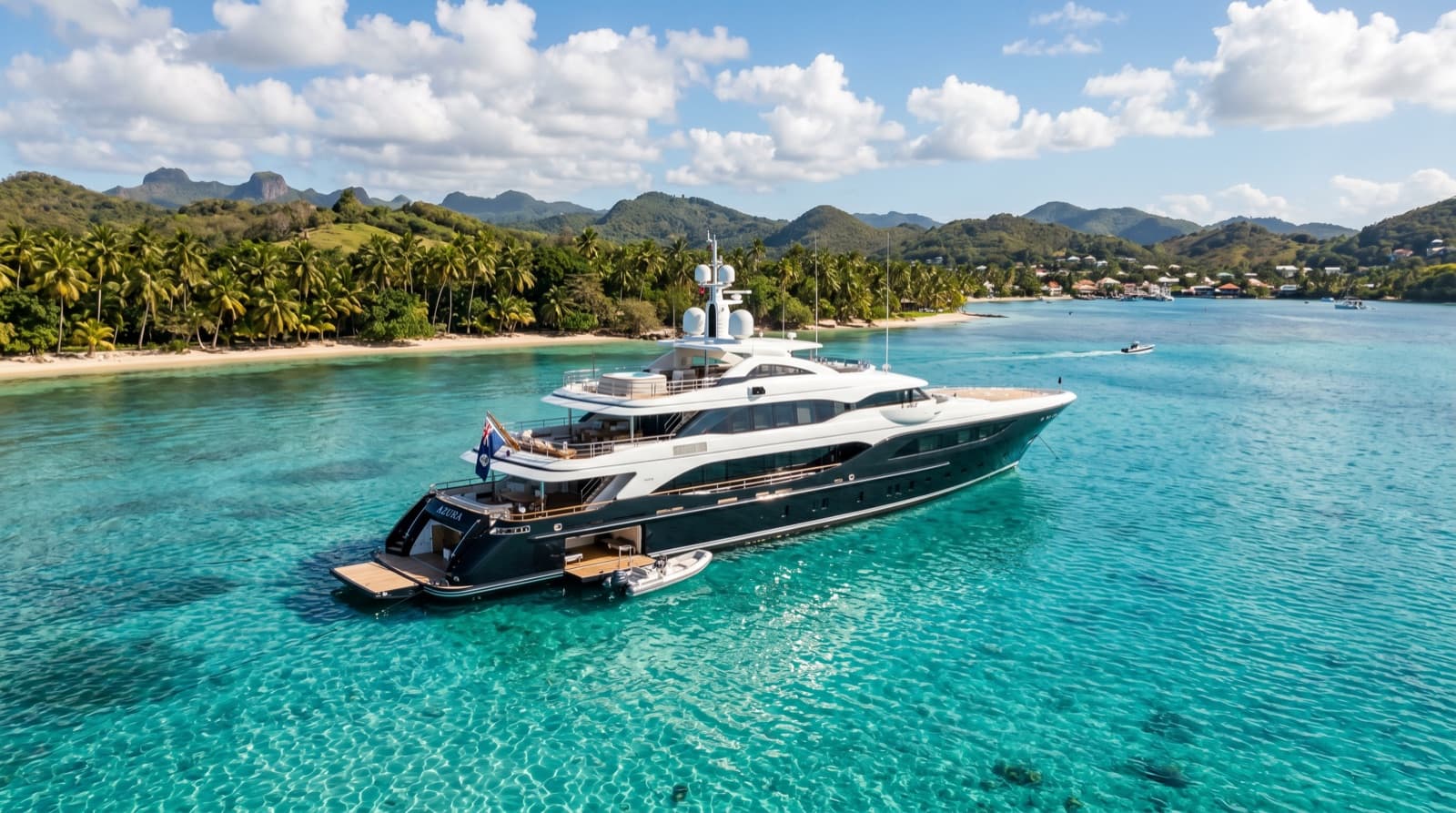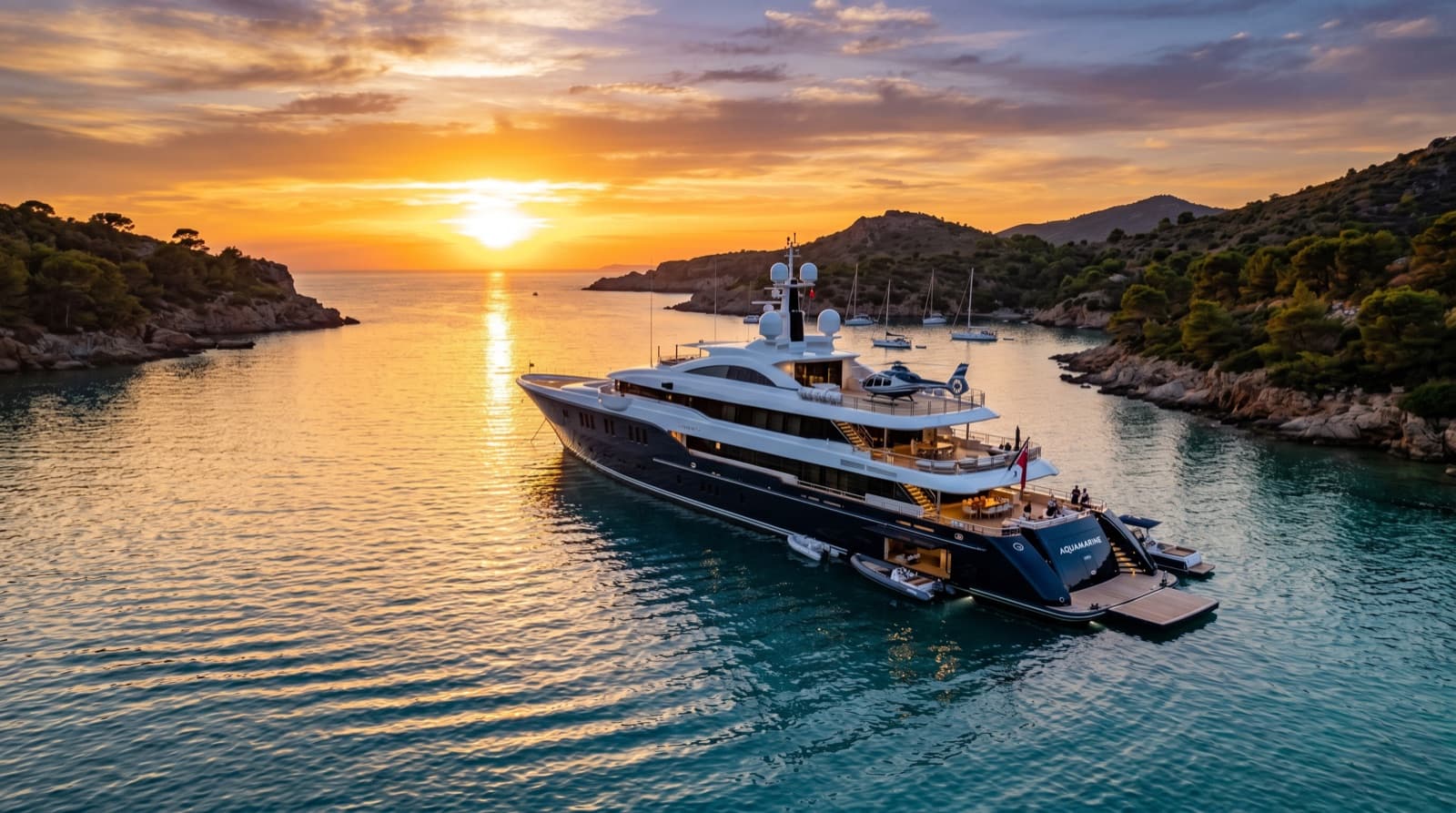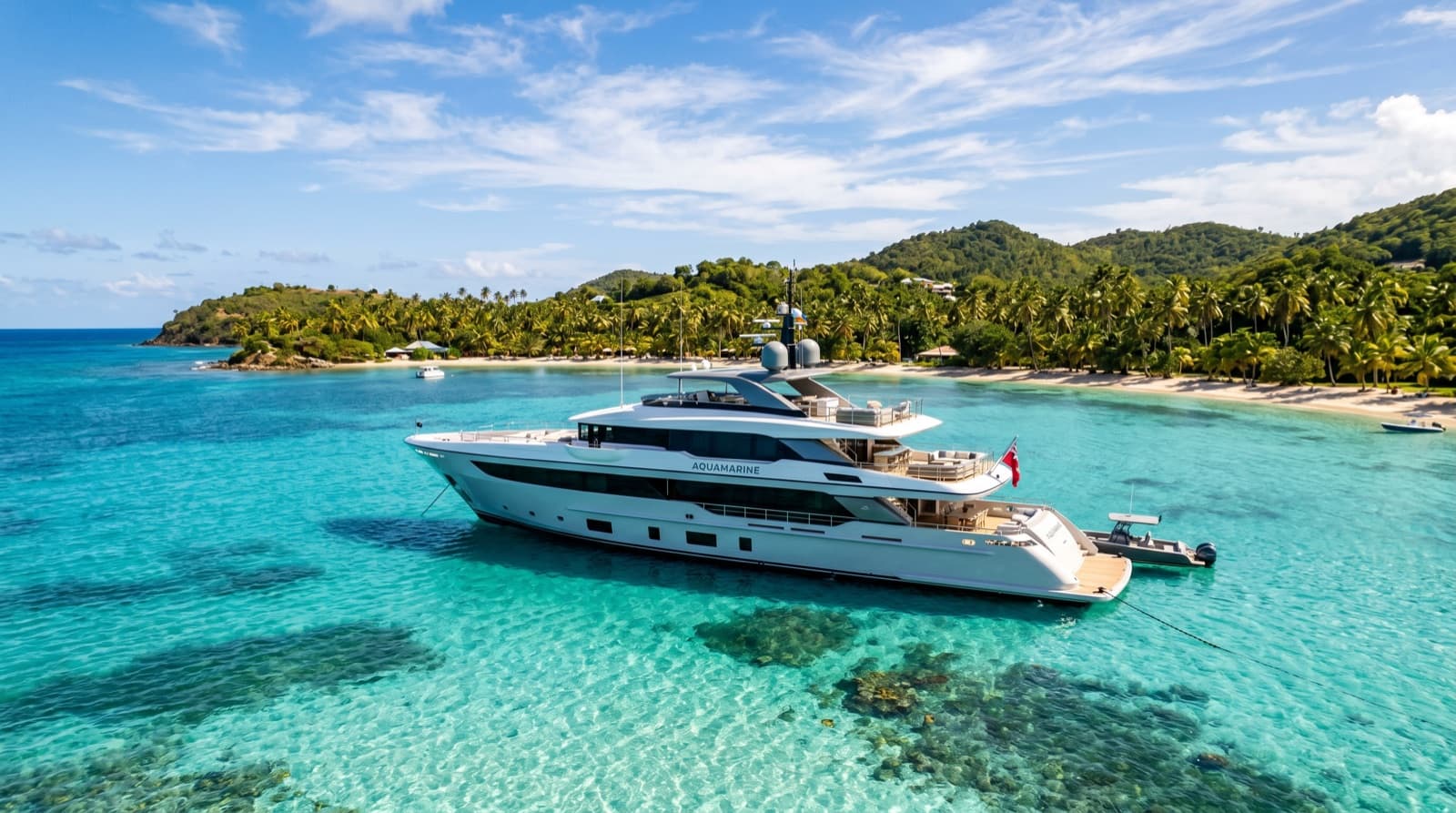
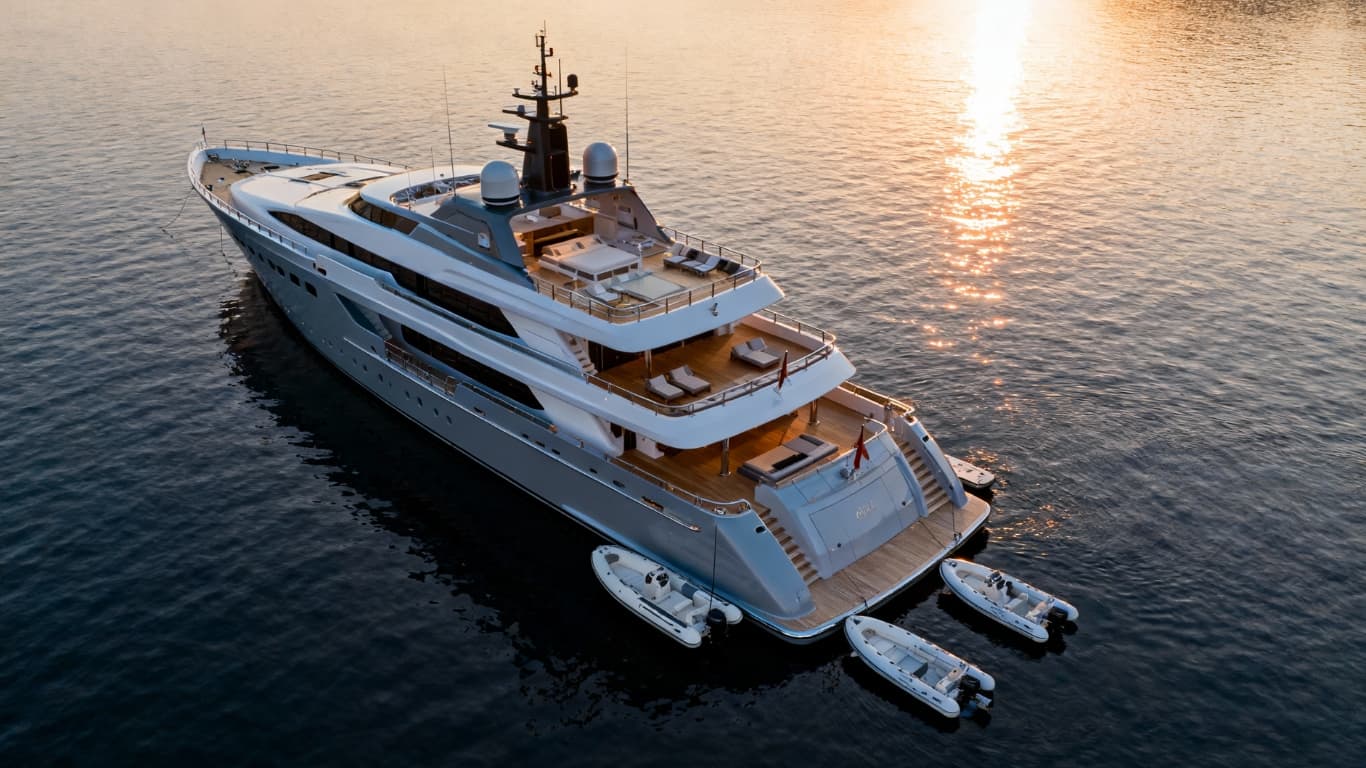
Fractional yacht ownership is the closest model the yachting market has to the NetJets approach in aviation. Owners buy a share in a managed pool of vessels, receive guaranteed weekly usage rights across the fleet, and avoid the single-vessel commitment of either direct ownership or a closed syndicate. SuperYacht Times tracked the fractional cohort up roughly 35 percent year on year through 2024, with the bulk of activity concentrated on motor yachts in the 25-to-45-metre band.
The model is genuinely different from a yacht syndicate, despite the two structures being close cousins. Where a syndicate locks a fixed cohort onto a single vessel, the fractional structure runs on a managed multi-vessel platform with the management firm at the centre of the operation. Our companion piece on yacht syndicates and how owners share superyacht costs covers the syndicate alternative in detail.
- Fractional yacht ownership offers structured access to upper-end vessels through shared participation, with operators including SeaNet and Smartyacht anchoring the contemporary market.
- We see typical fractional structures spanning 4 to 12 owners per vessel, with usage allocation, scheduling and cost-sharing protocols formalised through detailed legal agreements.
- Acquisition cost participation typically runs 10 to 25 percent of full acquisition price per fractional share, with annual operational contribution proportionally allocated.
- Operational management is typically professionalised through the fractional operator framework, with the operator providing the central operational and administrative interface.
- Exit pathways including secondary share sales and structured wind-down arrangements support practical participation across multi-year horizons.
- For most considered yacht buyers we view fractional structures as a meaningful alternative to sole ownership across the typical superyacht access decision.
- Who is this for?
- Yacht buyers evaluating fractional ownership structures, alongside the operators, maritime lawyers and yacht management firms framing those decisions.
- What is happening?
- A read of fractional yacht ownership and how the model actually works, covering operator landscape, structure design, cost-sharing protocols and exit pathways.
- When did this emerge?
- The article reflects current market conditions through 2025 and 2026, with reference to the multi-year evolution of fractional yacht participation.
- Where is this happening?
- The piece covers the global fractional yacht complex, including the Mediterranean and Caribbean primary operational areas.
- Why does it matter?
- Fractional ownership offers distinctive access economics, which is why understanding the framework matters before any superyacht acquisition decision.
How the structure actually works
The serious fractional platforms (SeaNet, Smart Yacht Group, and a handful of broker-led operators including Burgess, Edmiston, Y.CO, Camper & Nicholsons, Fraser Yachts, IYC, Northrop & Johnson) operate on a multi-vessel pool. Members buy a share class that maps to a defined number of weeks of usage per year across the fleet. The fleet typically runs eight to twenty vessels across multiple builders and size brackets.
A typical entry share on a 30-metre motor-yacht pool buys roughly four to six weeks of annual usage. Larger share classes give access to higher-size vessels in the same pool. The share-class structure means a member can typically upgrade or downgrade across the pool by paying a step-up fee rather than transacting out and back in.
The operating costs sit inside the annual carry on the share rather than being billed separately on each booking. Members pay a flat annual operating fee that covers their proportional share of crew, dockage, fuel, maintenance, and management. Variable costs (specific itineraries, special provisioning) are billed separately at the end of each booking.
The SeaNet model
SeaNet has anchored the structured-fractional conversation in the yachting market for roughly two decades. The platform operates across the Mediterranean and Caribbean on a curated fleet of mid-size motor yachts. Member usage rights run across the calendar with priority-week allocation handled through a rotating-priority system that the management firm operates.
The SeaNet fleet has historically included builds from Sanlorenzo, Benetti, Heesen, and other established mid-market yards. The vessels are specified for the fractional rotation rather than for a single-owner taste, which means broadly appealing interiors and amenities, professional charter-ready layouts, and well-resolved running specifications.
The pricing on SeaNet sits between a serious charter spend and the equivalent direct ownership. A typical four-week annual share runs the carrying cost of roughly €150,000 to €300,000 on top of the share purchase price, depending on vessel size and the operating-fee structure. The membership is closer to a sophisticated charter relationship than to direct ownership, but with the predictability and exclusivity of guaranteed allocation.
The Smart Yacht Group framework
Smart Yacht Group operates a similar fractional model with a focus on the Mediterranean cruising calendar. The fleet runs across mid-size motor yachts with structured weekly rotations on the Western Mediterranean cruising grounds. The platform targets the owner cohort that wants more than charter but less than full single-vessel commitment.
The pricing structure runs similarly to SeaNet, with the operating-fee plus share-purchase formula. The platform's distinguishing feature is the level of personalisation available within the pool: members can request specific vessels for specific weeks, captain preferences, and itinerary customisation that goes beyond the standard charter relationship.
The broker-led fractional cohort
The major brokers (Burgess, Edmiston, Y.CO, Camper & Nicholsons, Fraser Yachts, IYC, Northrop & Johnson, Cecil Wright, Bluewater, Ocean Independence, Engel & Völkers Yachting) all run fractional-aligned client services to varying degrees. The broker-led version of the fractional model typically structures around either a single-vessel syndicate (which is closer to the syndicate model than to pure fractional) or a curated multi-vessel platform managed by the broker's yacht-management division.
The broker advantage is the deep relationship with both the build-yards and the charter market. A broker-led fractional structure can typically deliver better-specified vessels, more flexible operational arrangements, and a clearer exit path than a standalone fractional platform. The trade-off is that broker-led structures are typically less standardised than SeaNet or Smart Yacht Group, which means more bespoke negotiation upfront and less plug-and-play access at the membership level.
The yacht-management layer
Yacht-management infrastructure is the operational backbone of any fractional platform. Burgess Yacht Management, Camper & Nicholsons Yacht Management, Fraser Yacht Management, Y.CO Management, and Northrop & Johnson Yacht Management all run fractional-aligned practices alongside their direct-ownership management work. The management firm runs the captain and crew, the maintenance calendar, the dockage relationships, the regulatory compliance, and the booking-allocation system.
The serious fractional platforms typically run the management function in-house or through a tightly integrated partnership. The cohort of fractional members rotating through multiple vessels each year demands tighter operational discipline than a single-owner vessel. Maintenance windows, crew rotation, and provisioning all need to fit a multi-member calendar rather than a single-owner preference.
The classification societies (Lloyd's Register, RINA, ABS, Bureau Veritas, DNV) verify the build standards on the fleet vessels. Commercial-yacht-code compliance is typically a baseline on the fractional fleet, because the vessels rotate through structured charter as well as member usage. Our full read on the real costs of yacht maintenance and operation covers the wider operational picture.
What kind of buyer fits the model
The fractional model fits a specific cohort genuinely well. Buyers who want guaranteed access to top-tier vessels but at four-to-six weeks of annual usage are squarely in the target audience. Buyers who want bespoke single-vessel commitment, full control of the build specification, or unlimited annual usage are not.
The cohort buying fractional shares is broadly the cohort that previously chartered three or four weeks a year and wants the predictability of guaranteed allocation plus the cultural register of genuine ownership. The wider buyer-cohort context is in our read on why luxury yachts are drawing a wider class of buyer.
For first-time buyers, the model can serve as a useful step into the broader segment. The combination of guaranteed access, professional management, and limited single-asset exposure is closer to what most first-time buyers actually need than direct ownership of a 30-metre yacht with the full carrying-cost commitment that comes with it. Our wider guidance is in tips for first-time yacht buyers.
The cruising-ground positioning
The fractional fleets operate primarily across the Mediterranean (French Riviera, Italian Riviera, Croatian Adriatic, Greek Aegean and Ionian, Spanish Balearic) during the May-to-September season. The Caribbean (British Virgin Islands, Antigua, St Barths, the broader Lesser Antilles) is the December-to-April season for the same fleets during Atlantic crossings. The South Pacific, Norwegian Fjords, and Antarctic expedition cruising sit outside the standard fractional fleet positioning.
The cruising-ground concentration on the Mediterranean-Caribbean rotation means most fractional members operate within the standard global yachting calendar. Members wanting expedition-grade or off-calendar cruising are typically routed to a chartered explorer vessel rather than the standard fractional pool.
What this means for prospective members
The fractional model is now a structured, well-developed alternative to direct ownership for the right buyer cohort. The SeaNet and Smart Yacht Group platforms anchor the structured side of the market.
The broker-led versions of the conversation extend the model into more bespoke arrangements for buyers wanting specific vessels and customisation. Our buyer-side comparison of chartering versus owning covers the related decision frame.
The honest read on the fractional model is that it rewards buyers wanting predictability, professional management, and guaranteed allocation without single-vessel commitment. It does not reward buyers wanting custom interiors, single-vessel bespoke control, or unlimited annual usage. For the right buyer in the right cohort, the model genuinely lowers the financial bar to serious yacht access without compromising on the cultural register of ownership.
We last reviewed this analysis in May 2026.
Further reading
- Yacht syndicates: how owners share superyacht costs
- Chartering vs owning a yacht: a buyer's comparison
- Why luxury yachts are drawing a wider class of buyer
- The real costs of yacht maintenance and operation
- Tips for first-time yacht buyers

Stefanos Moschopoulos
Stefanos Moschopoulos founded The Luxury Playbook in Athens and has spent the better part of a decade following the auction calendar, the en primeur releases, and the watchmakers, gallerists, and shipyards the magazine covers. He writes the field guides and listicles that anchor the Connoisseur section — pieces built on Phillips and Christie's results, Liv-ex movements, and conversations with collectors he has met across Geneva, Bordeaux, Basel, and Monaco. His own collecting habits sit closer to watches and wine than art, and it shows in the level of detail in the magazine's coverage of those categories. Under his direction, The Luxury Playbook now publishes long-form field guides, market-defining year-end listicles, and the Voices interview series with the founders behind the houses and the brands.