
Smart money doesn’t wait for everyone else to figure things out. Right now, institutional investors and wealthy individuals are quietly moving capital into five specific emerging real estate markets where the right factors are coming together in ways that won’t stay quiet much longer.
These aren’t the usual cities you see splashed across real estate headlines. They’re places going through real, structural changes that create the conditions for prices to keep climbing.
What makes a genuine opportunity goes beyond recent price jumps. You need to see infrastructure spending that changes how a place works, population shifts that create new demand, rule changes that let in buyers who couldn’t invest there before, and economic transformation that makes a location matter in ways it simply didn’t five years ago.
Price gains without these underlying drivers tend to reverse fast. Real structural change, on the other hand, tends to build on itself for years or even decades.
Our ranking cuts through the noise by focusing on what actually drives returns.
Table of Contents
Best Emerging Real Estate Markets
A close look at the top emerging real estate markets globally puts Seoul, South Korea at the front with 18.4% growth. Asian markets dominate the upper tier, with Seoul, Riyadh, and Tokyo commanding the strongest growth rates, while European and North American destinations like Corfu and Aspen post solid appreciation potential at 8.9%. Across diverse geographic regions, these markets offer some of the most compelling entry points available to international buyers right now.
Real Estate Market Growth Rate by City

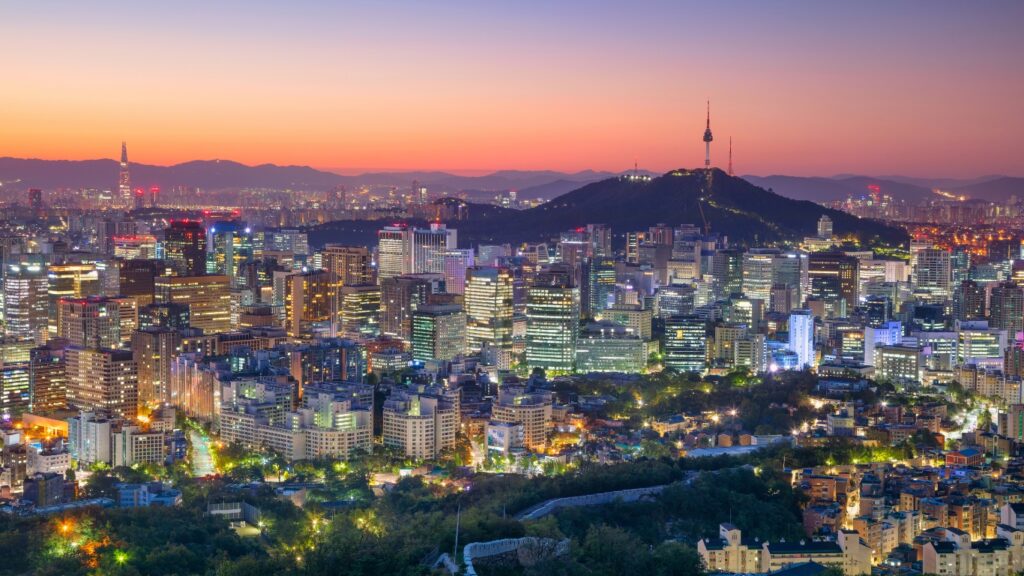
Seoul, South Korea
Seoul sits at the center of Asia’s fourth-largest economy, home to nearly 10 million people, tech giants like Samsung and LG, and a cultural export machine that’s reshaped global entertainment. The city that gave the world K-pop and Korean cinema has posted 18.4% price appreciation recently, leading this group of the five best emerging real estate markets and signaling that international capital is finally recognizing what locals have known for years about the city’s fundamentals.
That price momentum tells you something important about where the market sits right now. Seoul property isn’t pulling back from overheated peaks. It’s climbing because buyers are recognizing value that wasn’t fully priced in before.
By mid-2026, average apartment prices sit around $950,000 to $1.05 million, crossing the million-dollar mark for the first time according to KB Kookmin Bank. But that headline number hides big differences. Prime apartments in Gangnam, Hannam, and Yongsan typically sell anywhere from around $600,000 to well over $2 million depending on size and age.
What makes the numbers work for investors is that rental income stays solid even as prices climb. Seoul yields run around 4% to 5% gross according to Global Property Guide’s 2026 data, with smaller units often paying more.
That’s not spectacular compared to frontier emerging markets, but it’s decent income while you capture appreciation, particularly in a city where office and housing markets rank among Asia-Pacific’s tightest according to research from CBRE.
At the same time, the government’s approach to managing growth has evolved in ways that support continued gains without letting speculation get out of hand. Authorities have implemented permit requirements in prime districts like Gangnam, Seocho, Songpa, and Yongsan to manage the pace of appreciation, with fresh loan-to-value adjustments targeting only the hottest submarkets.
This suggests officials want controlled growth rather than having to cool an overheated market later, which actually creates a healthier environment for sustained price gains.
For anyone thinking five to ten years out, Seoul offers something compelling. You get a mature, easy-to-trade market in a globally important city that’s posting the strongest price gains in this group while underlying fundamentals keep strengthening.
Riyadh, Saudi Arabia
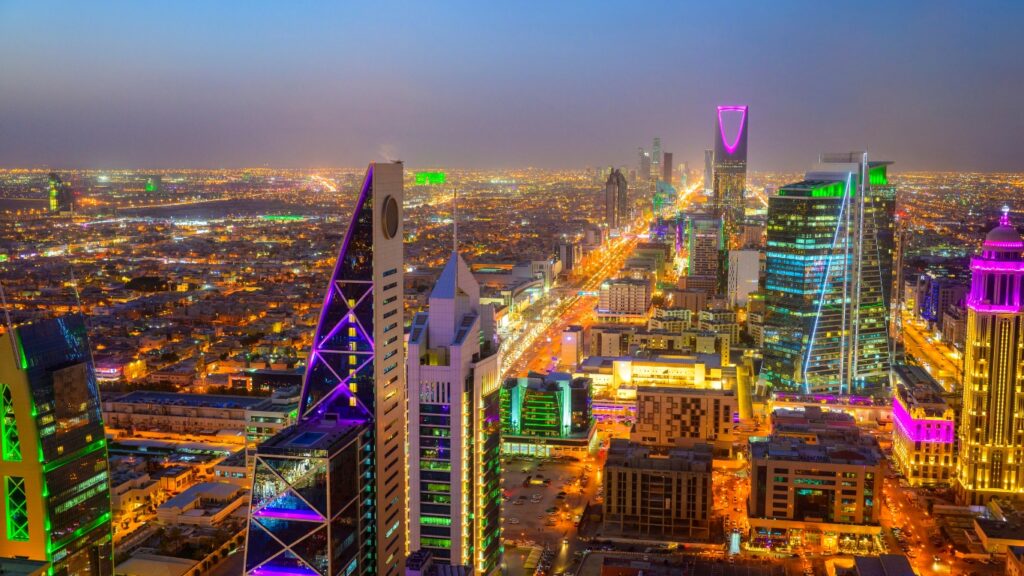
Riyadh is going through one of the fastest urban transformations happening anywhere on the planet right now. The 16% price appreciation reflects capital flowing toward that change before it fully plays out.
Under Vision 2030, this city of 7.6 million has become the center for mega-projects like NEOM, Qiddiya, and Diriyah Gate, representing hundreds of billions in committed capital that’s reshaping not just Riyadh but the entire Saudi economy, positioning it as one of the best emerging commercial real estate markets in the world. Workers flowing in to build all this and staff the new industries have pushed housing demand in ways that show clearly in the numbers. If you want to understand the broader Gulf real estate story, the $759B UAE property boom gives useful regional context.
The price performance has been dramatic even by Gulf standards. Apartment prices jumped roughly 10.6% in 2024 alone according to Knight Frank, with further strength carrying into 2026. That kind of appreciation in a single year reflects genuine demand rather than speculation, particularly when it’s happening alongside massive population growth and economic transformation.
The government recognized the affordability pressure this created and responded in September 2025 by freezing rent increases for five years across the Riyadh urban area, a landmark policy that signals both the intensity of demand and the authorities’ commitment to managing growth rather than letting it run wild.
Even with a rent freeze dampening one income stream, the investment fundamentals stay compelling. Gross rental yields in Riyadh run around 7% to 9% depending on district and unit type according to Global Property Guide, keeping income investors engaged even as price appreciation normalizes after the multi-year surge.
The broader market context shows signs of healthy normalization rather than concerning reversal. Saudi Arabia’s General Authority for Statistics reported the real estate price index up just 3.2% year-over-year, with residential nearly flat, suggesting the market has moved from surge phase into something more selective and fundamentals-driven.
What’s changing the market at its core is liberalized foreign ownership that rolled out over 2024 and 2025, widening the buyer base in ways that weren’t possible before. Institutional capital and high-net-worth individuals can now acquire property where previous restrictions kept them out entirely, with demand clustering around the Diplomatic Quarter, King Abdullah Financial District, and Diriyah.
Tokyo, Japan
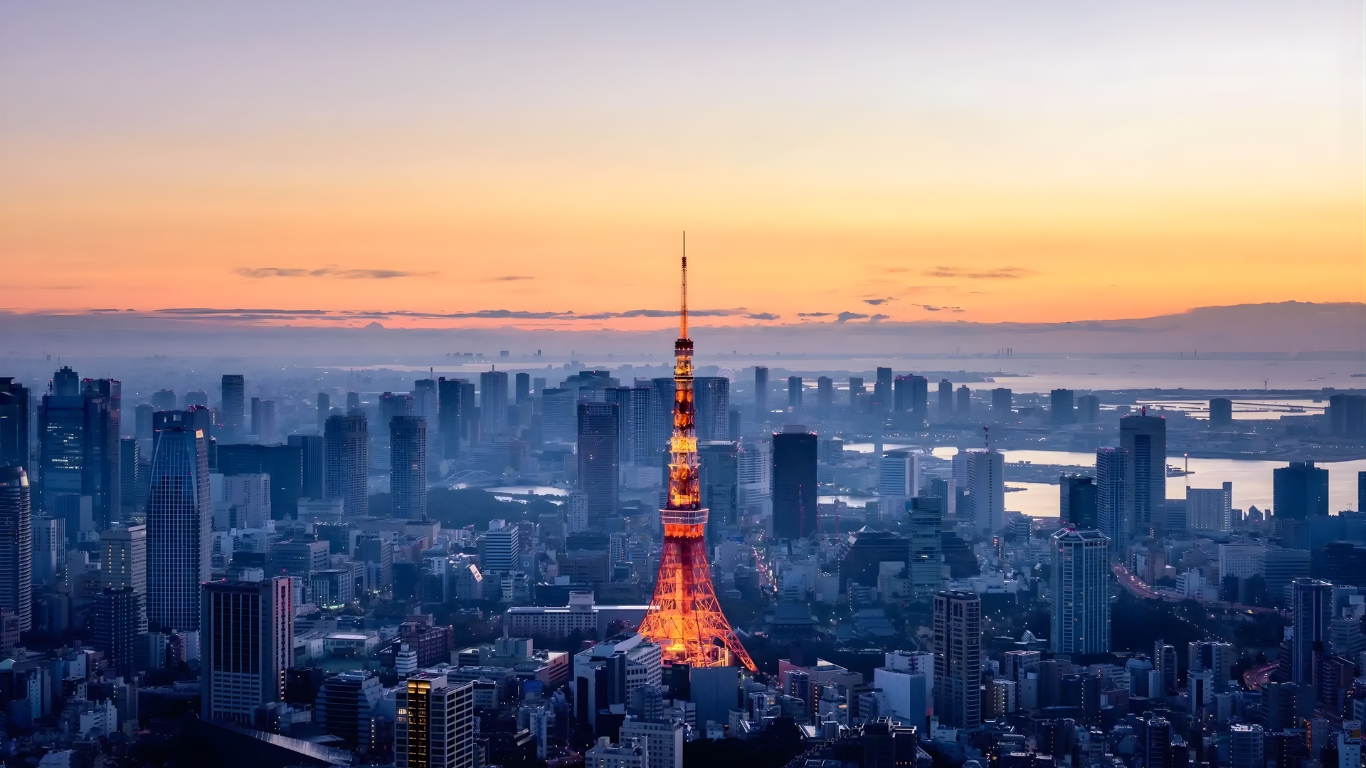
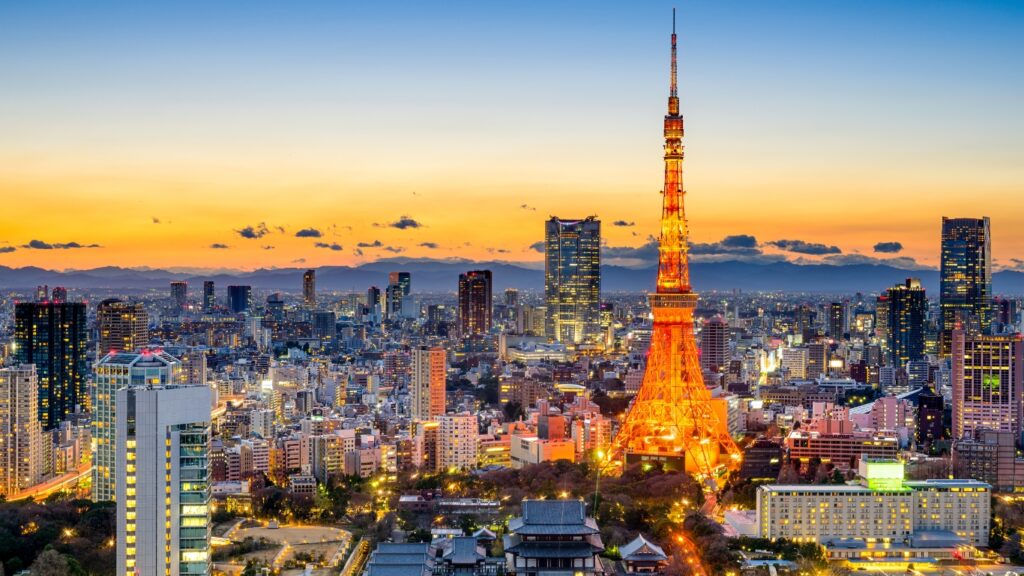
Tokyo has become one of the most compelling real estate opportunities for international buyers right now, and the catalyst is something most investors initially read as a problem: the yen’s weakness.
The fundamentals driving Tokyo’s market would be impressive in any currency. Grade-A office vacancy hit roughly 2.4% in recent quarters, near record lows that reflect genuine scarcity in a city of 14 million anchoring a metro area of 37 million.
JLL and Savills highlight sustained rent growth and sub-5% vacancies in the core wards, the kind of tight supply conditions that support residential pricing through amenity density and employment concentration. CBRE’s research consistently ranks Tokyo among Asia-Pacific’s tightest big-city office markets, which matters for residential investors because jobs and density drive housing demand.
But the currency situation is what’s making headlines and creating the entry opportunity. The yen repeatedly flirted with ¥150 to ¥155 per dollar through 2024 and 2025, levels that magnify foreign buyer purchasing power dramatically versus 2021 when the yen was trading much stronger.
Policymakers have been vocal about volatility and have occasionally intervened, but the underlying interest rate differential between Japan and the U.S. keeps pressure on the currency. For dollar or euro-based buyers, this translates into Japanese property being roughly 30% cheaper in your home currency than it was just a few years ago.
Mainstream sources peg gross yields around 3% to 4.5% in Tokyo’s 23 wards, with market data showing roughly 4.5% Japan average across recent quarters. That might not sound thrilling until you factor in the liquidity and tenancy depth that comes with investing in one of the world’s largest, most stable urban economies.
Finding quality tenants and exiting positions when you want to doesn’t require the kind of effort or discount it might in smaller markets.
Corfu, Greece
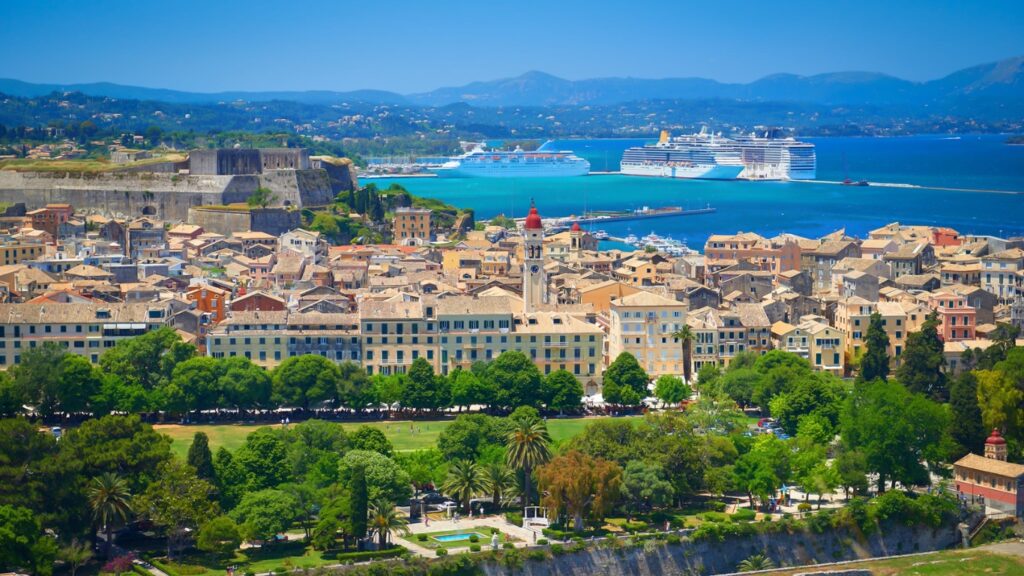
Corfu’s 8.9% appreciation might look modest next to Seoul’s 18.4% or Riyadh’s 16%, but context matters enormously here. This is a mature European island market posting those gains while much of the Mediterranean stays flat or slides, and it’s happening as major infrastructure and policy changes are just starting to reshape what the island can attract.
The infrastructure catalyst came through 2024 and 2025 with a state-ratified mega-yacht marina concession worth €89 million in sub-concession value and €50 million in direct investment. This materially upgrades the island’s nautical capacity and the spending power it can draw in, transforming Corfu from a pleasant Mediterranean island into a legitimate superyacht destination that competes with established ports across the region. You can explore how European coastal property markets attract this caliber of buyer for useful comparison.
At the same time, Greece increased its Golden Visa thresholds in 2024 and 2025, establishing tiers from €400,000 to €800,000 depending on location and property type. That might sound like a barrier, but it’s actually steering inbound capital toward prime islands and top-end stock, exactly where appreciation potential concentrates.
When visa policy pushes buyers upmarket, it reduces competition for mid-tier properties while concentrating demand on premium assets that were already supply-constrained.
The investment focus has shifted clearly toward waterfront villas and historic town assets that qualify for the higher visa tiers while delivering the lifestyle that high-net-worth buyers are actually seeking. Between the new marina pipeline and elevated Golden Visa entry points, serious international capital now targets properties that can deliver 4% to 6% gross yields through seasonal rentals, with short-let strategies pushing into higher territory for owners willing to manage more actively. For a broader look at how Greek island real estate is evolving, the Santorini market offers a useful benchmark.
What makes Corfu particularly interesting versus other Mediterranean options is that you’re getting an EU residency pathway through investment, combined with a stable rental market serving over 8 million visitors annually, while prices stay well below what Mykonos or Santorini command for comparable properties.
The British Protectorate legacy means English-speaking services and legal frameworks that international buyers understand, removing friction that exists in some other Greek islands.
And unlike mainland Greece, Corfu weathered the debt crisis better through limited new construction that kept supply and demand in balance rather than creating the overbuilding that hit some coastal regions hard.
Aspen, United States
Aspen is the ultimate scarcity play in U.S. real estate. With 90% of surrounding land protected or unbuildable and median home prices hitting $5.2 million, the highest in America, supply constraints here aren’t a temporary feature. They’re permanent.
The Estin Report showed H1 2025 median single-family sales around $18.1 million at roughly $3,965 per square foot, while brokerage data through late 2025 showed median list prices around $16.25 million with sustained pricing between $3,600 and $3,700 per square foot across active inventory.
Sales of $10 million-plus properties accelerated through 2025, and record trophy trades including a $108 million transaction set the tone for the very top of the market.
What separates Aspen from other luxury mountain markets is the cultural programming that makes it far more than a ski town. The Aspen Ideas Festival, Music Festival, and year-round events create an intellectual and cultural scene that appeals to the kind of wealth that values substance as much as status.
When you’re deploying $10 million or $50 million or $100 million-plus into a vacation property, the difference between a place you visit for skiing versus a place that offers genuine year-round engagement matters enormously.
Aspen came through the 1980s Colorado recession and the 2008 financial crisis with minimal declines, proving that genuine scarcity protects value even during broad market stress. Prices have climbed roughly 180% since 2010 and 450% since 2000, appreciation that reflects not just wealthy buyers chasing lifestyle but real supply constraints that can’t be solved through new construction. Bloomberg’s real estate coverage has tracked this pattern across multiple cycles.
For capital seeking U.S. exposure with genuine scarcity characteristics, Aspen offers something rare. You get a market where supply is permanently constrained by geography and regulation, where demand comes from the highest-net-worth cohort globally, and where cultural and recreational amenities justify premium pricing independent of economic cycles. Robb Report’s real estate desk has consistently flagged Aspen as one of the few U.S. markets where pricing power simply doesn’t erode.

FAQs
How much capital do I need to invest in emerging real estate markets?
Budget $500,000 to $1 million minimum for quality condos in Seoul or Tokyo, $400,000 to $1.5 million in Riyadh for apartments or villas, €400,000 to €1 million-plus in Corfu depending on Golden Visa tier, and $2 million-plus for entry-level Aspen condos based on current median pricing
Which emerging real estate market offers the best rental yields?
Riyadh leads with 7% to 9% gross yields depending on submarket and unit type, while Seoul averages 4% to 5% and Tokyo delivers 3% to 4.5% in prime wards. Corfu short-term rentals can reach mid-single digits seasonally, while Aspen is appreciation-driven with lower 2% to 3% yields.
How do currency fluctuations affect returns in emerging real estate markets?
The weak yen at roughly ¥150 to ¥155 per dollar in late 2025 boosts purchasing power for dollar and euro buyers in Tokyo by roughly 30% versus 2021. Won and riyal exposures are more stable but remain policy-sensitive. Euro exposure in Corfu adds currency diversification, while Aspen offers pure dollar-asset positioning.
What are the transaction costs in the best emerging real estate markets?
Expect roughly 5% to 10% all-in round-trip costs in Seoul and Tokyo, similar or slightly lower in Riyadh depending on developer and registry fees, approximately 7% to 12% in Greece including VAT, transfer taxes, and fees depending on whether it’s new construction, and 6% to 10%-plus in Colorado including transfer, title, legal, and broker fees. Always verify locally before committing capital.