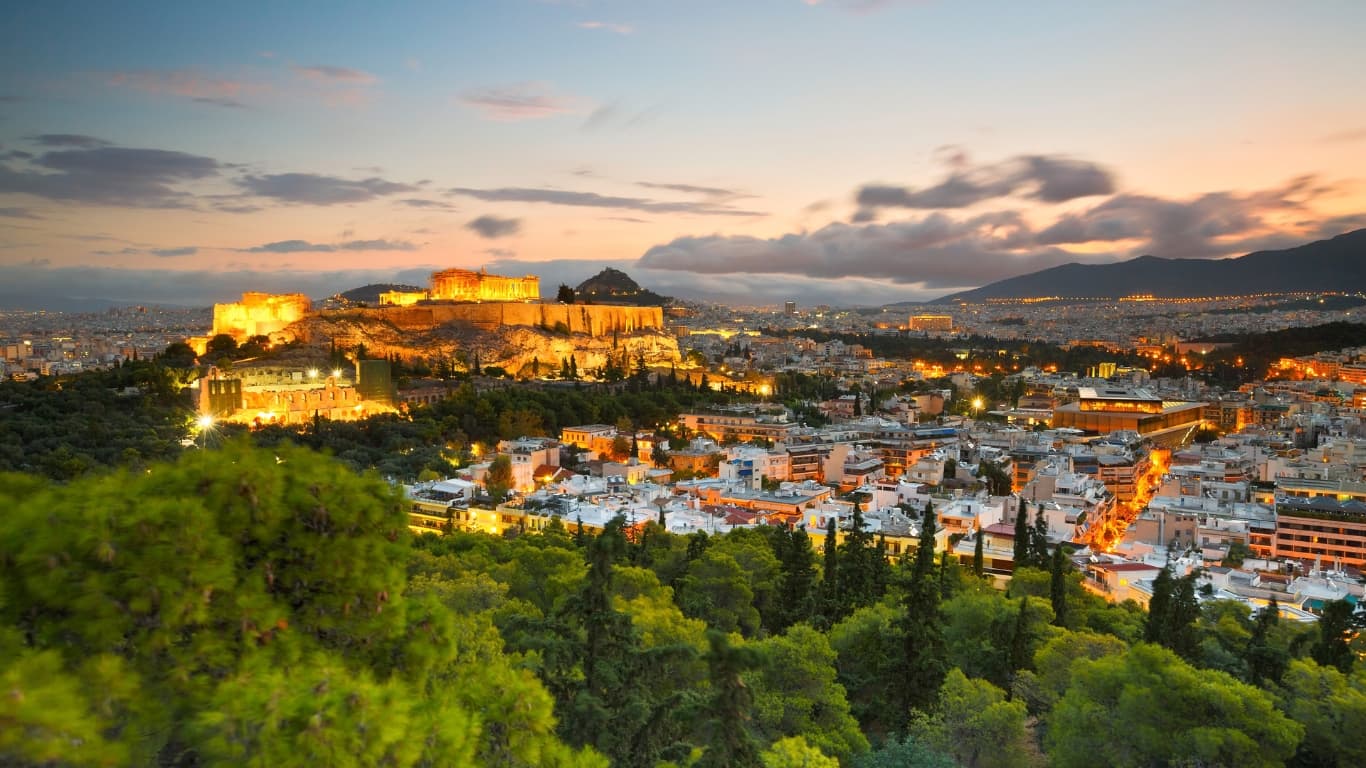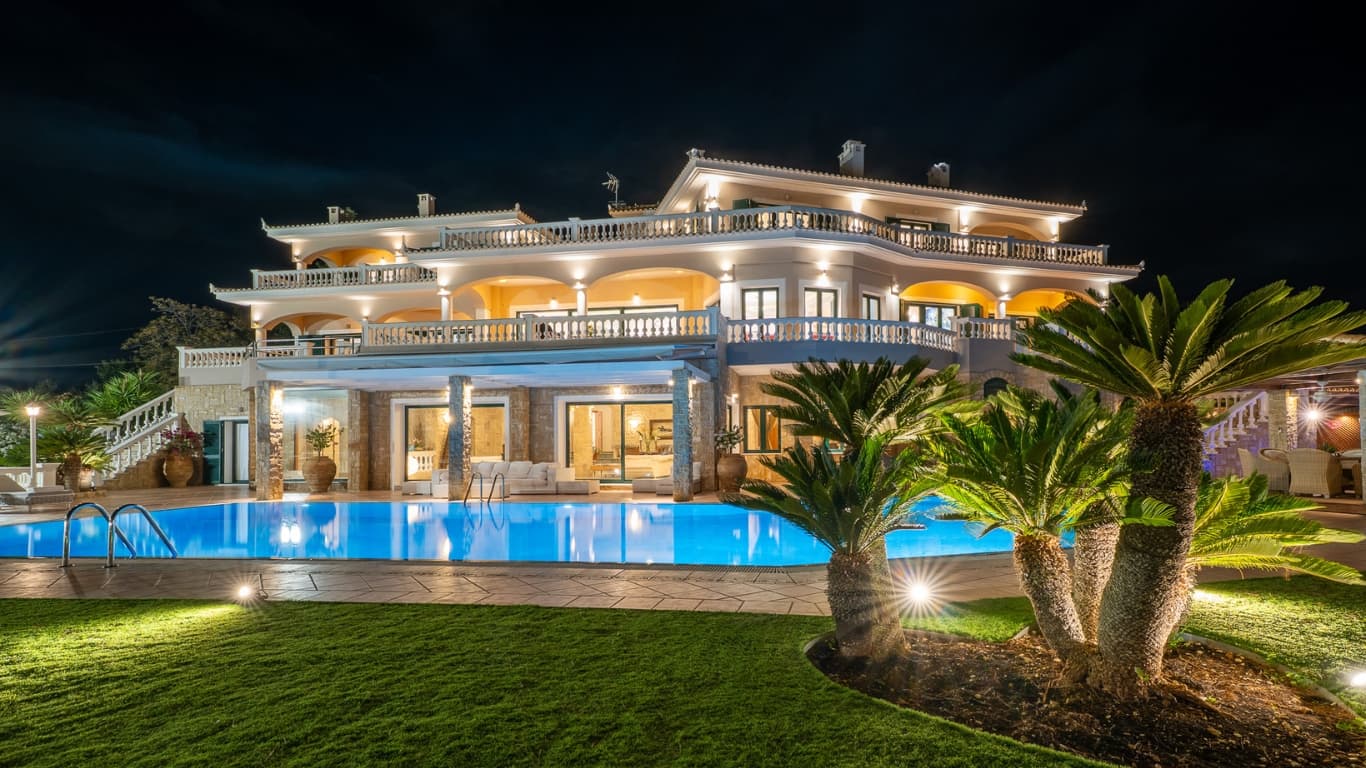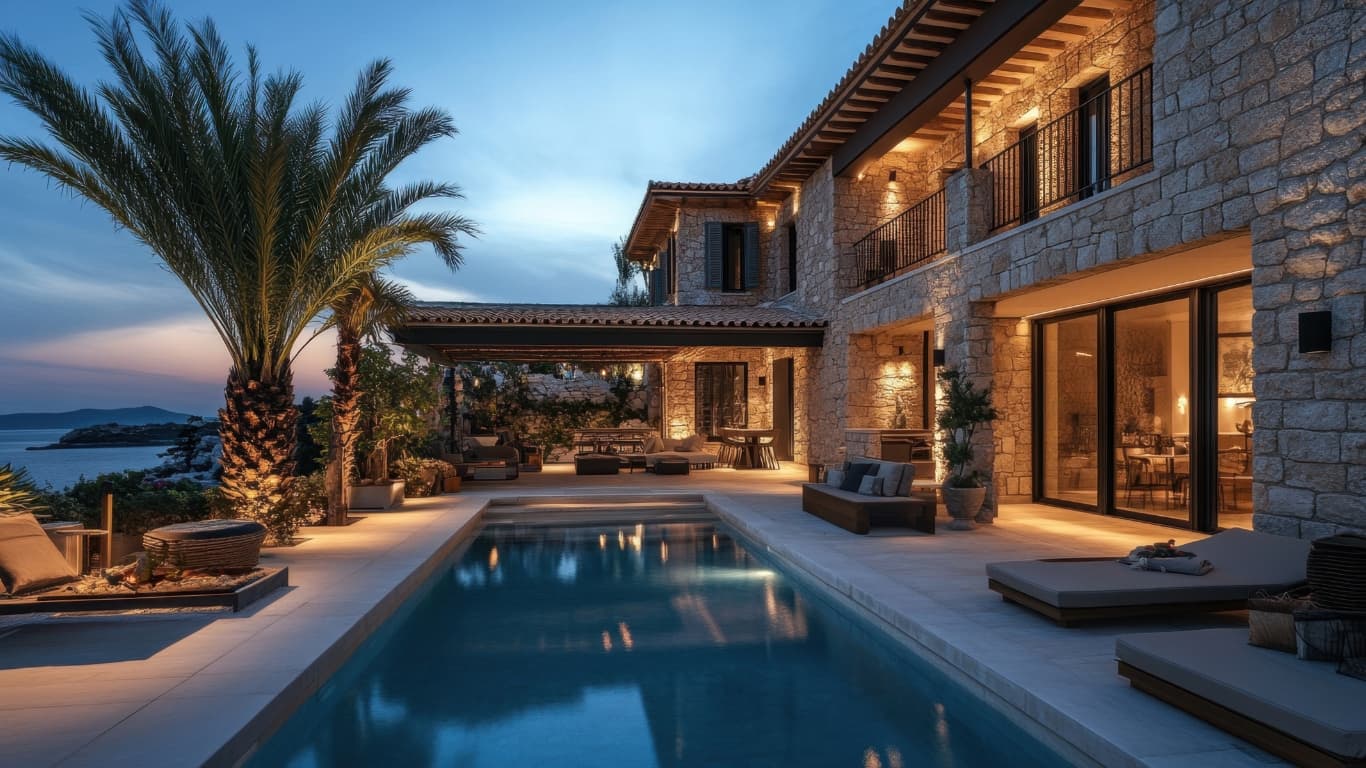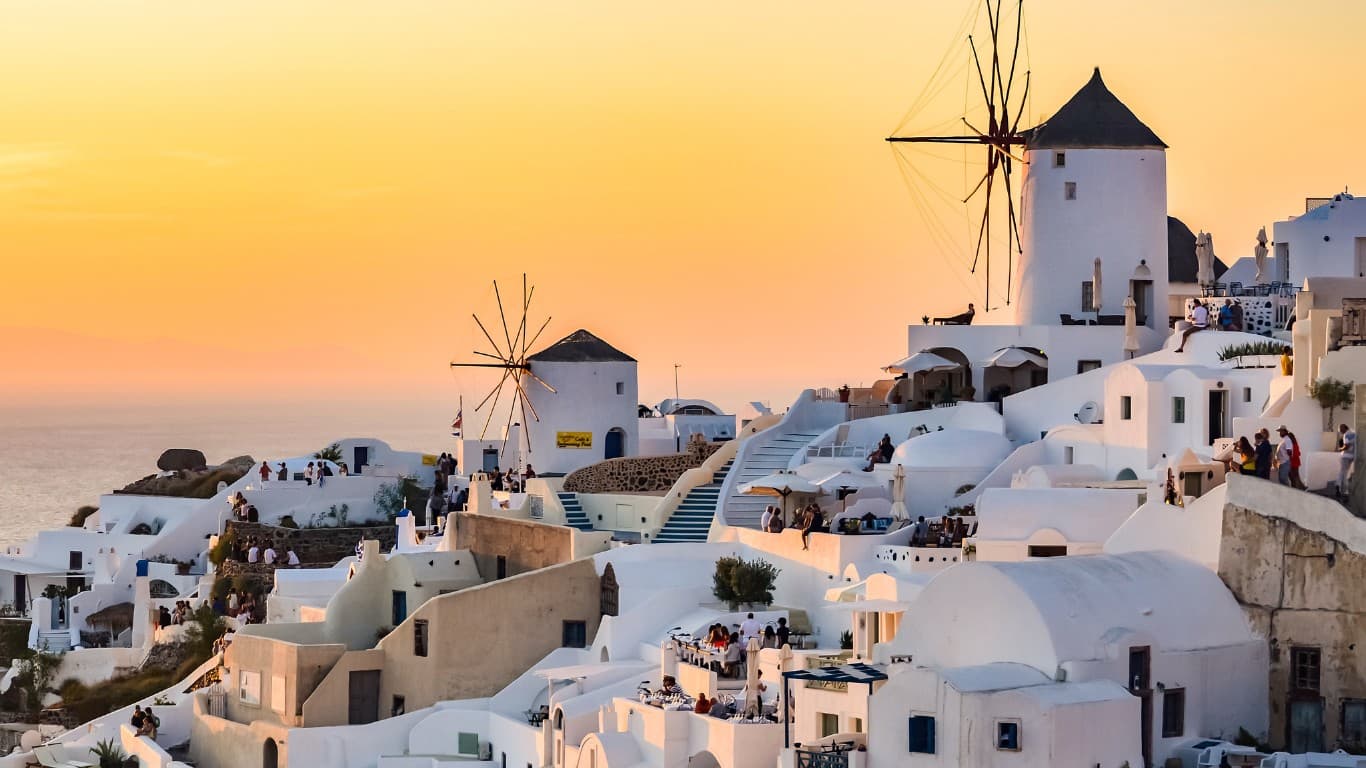
The Santorini property market stands apart as one of the most architecturally distinctive island markets in the entire Mediterranean. The whitewashed cubic houses cascading down the caldera have made the island one of the most globally recognised landscapes in the world, and the strict building regulations protecting that landscape have created one of the most structurally supply-constrained property markets in Europe.
As of Q2 2026, prime caldera-view properties in Oia and Imerovigli command EUR 8,000 to EUR 12,000 per square metre, with average island prices sitting around EUR 5,400 per sqm. Knight Frank's Wealth Report and Mansion Global have devoted increasing coverage to Santorini's positioning as one of the more consequential ultra-prime Mediterranean lifestyle destinations.
The architectural register is the foundation of everything. The traditional Cycladic vernacular (whitewashed stone, vaulted ceilings, sky-blue accents) sits within UNESCO-protected building zones that strictly limit new construction. The luxury hospitality cluster anchored by Andronis, Mystique (Belmond), Canaves and Katikies has reshaped the contemporary residential conversation.
The volcanic geology (the caldera collapse of 1646 BCE created what has become the world's most photographed coastal landscape) is the structural foundation of the island's appeal.
- Santorini sits at the most internationally recognised end of the Greek island market, with caldera-edge stock in Oia, Imerovigli and Firostefani commanding among the highest prices per square metre in the Cyclades.
- We see prime caldera villas in Santorini trading at multi-million euro levels, with the iconic views supporting a meaningful premium over comparable Aegean alternatives.
- Building restrictions, including strict heritage protection and the caldera-edge zoning framework, have limited new prime supply, which has supported continued price firmness across recent cycles.
- Greek Golden Visa thresholds on Santorini sit at the higher EUR 800,000 band, reflecting its place among the most prestigious tourist destinations under the regulatory framework.
- Short-term rental yields in prime caldera-view properties remain among the highest in the European luxury market, with peak season nightly rates approaching Mykonos territory.
- For most considered Greek buyers we view Santorini as the trophy view asset within the Cycladic complex, with appreciation tied to genuine scarcity rather than broader market dynamics.
- Who is this for?
- International ultra-high-net-worth buyers considering Santorini as a trophy view asset, alongside the advisers, brokers and family office staff coordinating those acquisitions.
- What is happening?
- A market read of Santorini property in 2026, covering caldera-edge villas, heritage zoning, Golden Visa thresholds and the peak-season rental yield landscape.
- When did this emerge?
- The article reflects 2025 and 2026 market conditions, with reference to the multi-year scarcity dynamic that has shaped pricing across recent cycles.
- Where is this happening?
- The piece focuses on Santorini, including Oia, Imerovigli and Firostefani, with reference to broader Cycladic and Aegean luxury market dynamics.
- Why does it matter?
- Santorini offers an unusual combination of global brand recognition and constrained supply, which is why the island deserves attention from anyone tracking the upper end of Mediterranean luxury.
The Santorini market today
Foreign buyers account for over 70 percent of all 2025 transactions, primarily from Western Europe, North America, the Middle East and the broader European wealthy migration patterns. Entry-level luxury villa pricing starts around EUR 1. 2 million; prime caldera-view villas exceed EUR 5 million.
Cave-house conversions in Oia have become a particularly distinctive subcategory, drawing buyers willing to commit to multi-year restoration projects with named Greek architects (K-Studio, Kapsimalis Architects, Mold Architects) leading the work.
Supply is severely constrained. Strict zoning, UNESCO protection, and the geological reality of building on a caldera-edge cliff face all limit new development. Most current activity centres on restoration and licensed conversion of existing stock.
The senior Greek brokerages (Algean Property, Engel and Volkers Cyclades, Knight Frank Greece) all describe a structurally similar market: small inventory, long-relationship buyer base, deliberately slow transaction pace.
- Average island prices: approximately EUR 5,400 per sqm
- Prime caldera-view: EUR 8,000 to EUR 12,000 per sqm
- Entry villa prices: EUR 1.2 million
- Foreign buyer share: 70 percent+
Santorini neighborhoods defining the prime tier in 2026
Oia: the most prestigious caldera-edge village, with sunset views over the Aegean, the Andronis and Canaves Oia hotel cluster anchoring the design and hospitality benchmark, and prime cave-house conversions. The Oia restoration market remains the most-watched subcategory of Greek prime-residential, with Architectural Digest covering several of the more consequential recent commissions in detail.
Imerovigli: the highest point on the caldera, with the most expansive sea views and the most discreet residential character. The Grace Hotel (now Auberge Resorts) anchors the area's hospitality offer; the residential inventory is dominated by family-owned period villas and considered contemporary commissions.
Fira: the island capital, with accessible caldera positioning, restored heritage stock, and the cultural infrastructure that supports the broader island lifestyle.
Megalochori: the inland heritage village, traditional Cycladic stock, growing in international attention as the established caldera positions have tightened.
Pyrgos: historic hilltop village with restored properties, the most architecturally intact of the inland villages.
Akrotiri: the southern peninsula, with the unique cultural anchor of the Akrotiri archaeological site (the prehistoric Minoan settlement preserved under volcanic ash), drawing buyers weighting the cultural-historical depth heavily.
The architectural conversation
The contemporary architectural commissioning in Santorini reads as one of the more disciplined chapters in modern Greek architecture.
K-Studio's work across multiple Santorini commissions, Kapsimalis Architects' steady production of restoration and contemporary villa work, Mold Architects' Mediterranean-modernist commissions, and the broader cohort of named Greek studios (A31, AKKA, Block722) operating across the Cyclades have established a contemporary vocabulary that respects the traditional Cycladic vernacular without slipping into pastiche.
Architectural Digest, Wallpaper and Dezeen have all given the work serious coverage.
The discipline of working within UNESCO-protected zoning constraints is itself a distinctive architectural project. The studios working at this tier have developed expertise in materials sourcing (the traditional volcanic-stone construction techniques, the lime-based plasters, the local timber), in collaboration with the heritage authorities, and in the contemporary reinterpretation of vernacular forms.
The Santorini rental landscape
The rental market is structurally seasonal, with approximately 85 percent of rental income earned between May and October. Demand for licensed luxury villas remains strong despite tightening regulations. The legal-compliance gap (between properly licensed villa rentals and the older unlicensed stock) has widened materially over the past three years; the legally compliant inventory trades at meaningful premiums to the older stock.
What is shaping the Santorini property market in 2026
The structural drivers remain consistent: UNESCO-protected zoning that severely limits new construction, the island's role as one of the world's most photographed lifestyle destinations, and the Greek Golden Visa programme (which provides residency to qualified property buyers above specified thresholds). New rental regulations and overtourism management policies have continued to reshape the operating environment, separating the legally compliant inventory from the older unlicensed stock at growing premium.
The continued investment from the major Mediterranean hospitality groups (Andronis's continued expansion, Belmond's stewardship of Mystique, the Canaves and Katikies houses, the recent additions to the Vedema, Cavo Tagoo Santorini and Andronis Concept Wellness Resort clusters) has reshaped the local cultural and economic profile. The buyer demographic that follows this hospitality investment has correspondingly shifted toward longer-tenure, family-oriented international owners.
Where the Santorini property market reads now
Prime caldera-view prices are expected to climb 5 to 8 percent through the back half of 2026, supported by structural scarcity and the continued international buyer momentum. The legally compliant licensed inventory has continued to outperform the older unlicensed stock.
The strongest growth is expected in the architectural-pedigree subcategory: restoration projects with named architect credit, cave-house conversions of historical significance, and contemporary commissions in the protected zones.
What this means for buyers
For the buyer who values one of the most architecturally distinctive island landscapes in the world, structural scarcity protected by UNESCO designation, and the world's most photographed coastal lifestyle, the Santorini property market continues to read as a structurally important ultra-prime proposition.
The neighborhoods responding most distinctly to the design-led international buyer shift (Oia, Imerovigli, Fira) are quietly outperforming the older legacy inventory, with the inland villages (Megalochori, Pyrgos, Akrotiri) emerging as the second-tier story for buyers seeking architectural depth at meaningfully more accessible pricing. We last reviewed this analysis in May 2026.
Frequently asked
How is the Santorini property market evolving in 2026?
Prime caldera-view prices are projected to climb 5 to 8 percent through 2026, supported by structural scarcity and continued international buyer demand. Knight Frank's Wealth Report flags Santorini as one of the more consequential ultra-prime Mediterranean lifestyle destinations.
Which Santorini areas are seeing the most buyer attention?
Oia, Imerovigli, Fira, Megalochori, Pyrgos and Akrotiri are drawing the most consistent international demand. Western European, North American and Middle Eastern buyers account for the bulk of activity.
Can foreign nationals buy property in Santorini?
Yes. Greece's Golden Visa pathway provides residency for buyers above specified thresholds (EUR 250,000 to EUR 800,000 depending on zone since the August 2023 reforms). There are no general restrictions on foreign property ownership in Greece.
Why is supply so structurally limited?
UNESCO-protected zoning, strict building regulations, and the geological reality of caldera-edge construction all severely limit new development. Most current activity is restoration and licensed conversion of existing stock.
Which architects are working in Santorini?
Named Greek studios including K-Studio, Kapsimalis Architects, Mold Architects, A31, AKKA and Block722 are producing the most considered contemporary commissions, working within UNESCO-protected zoning constraints.


Savvas Agathangelou
Savvas Agathangelou co-founded The Luxury Playbook and has spent years reporting from the prime postcodes the magazine covers — Mayfair, Knightsbridge, the Athens Riviera, Dubai's Palm crescents, and the southern Mediterranean coastlines where the world's wealthy keep coming back. His background is in international hospitality, and that frame shapes how he writes about property: the developer's choices, the architect's signature, the agency's bench of named brokers, the building's service standard once the buyer moves in. He files developer spotlights, agency profiles, and the seasonal "Properties That Defined" listicles, and he hosts the magazine's founder-and-leadership interviews on the Voices side.