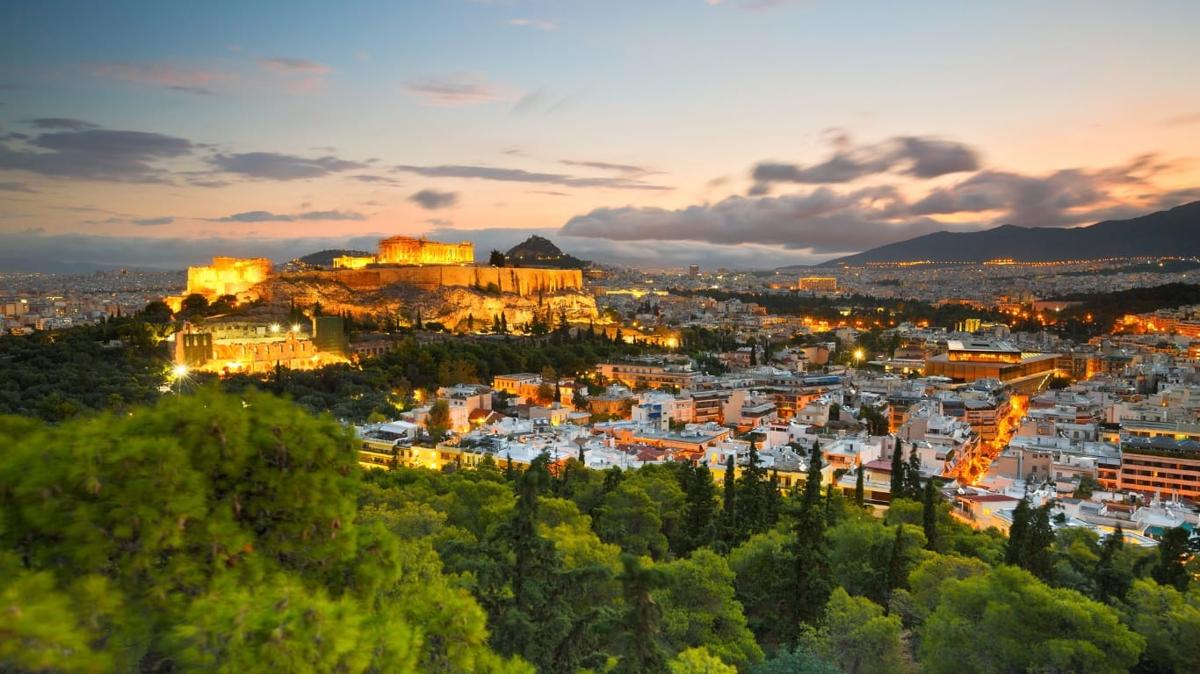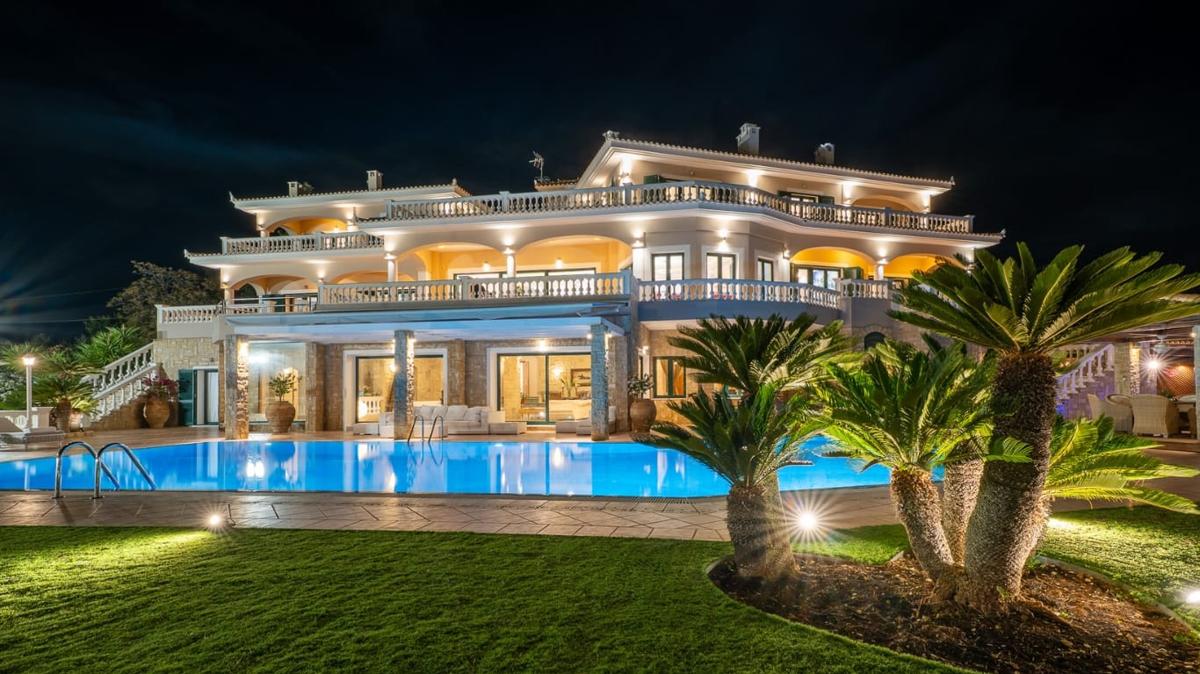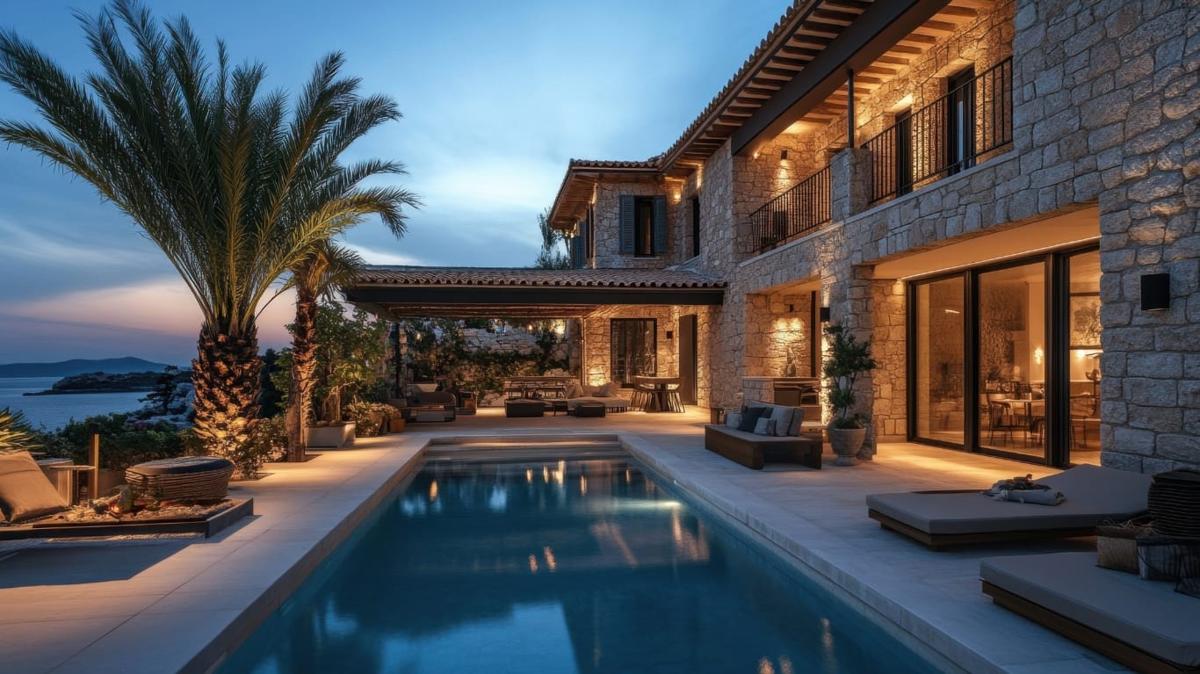
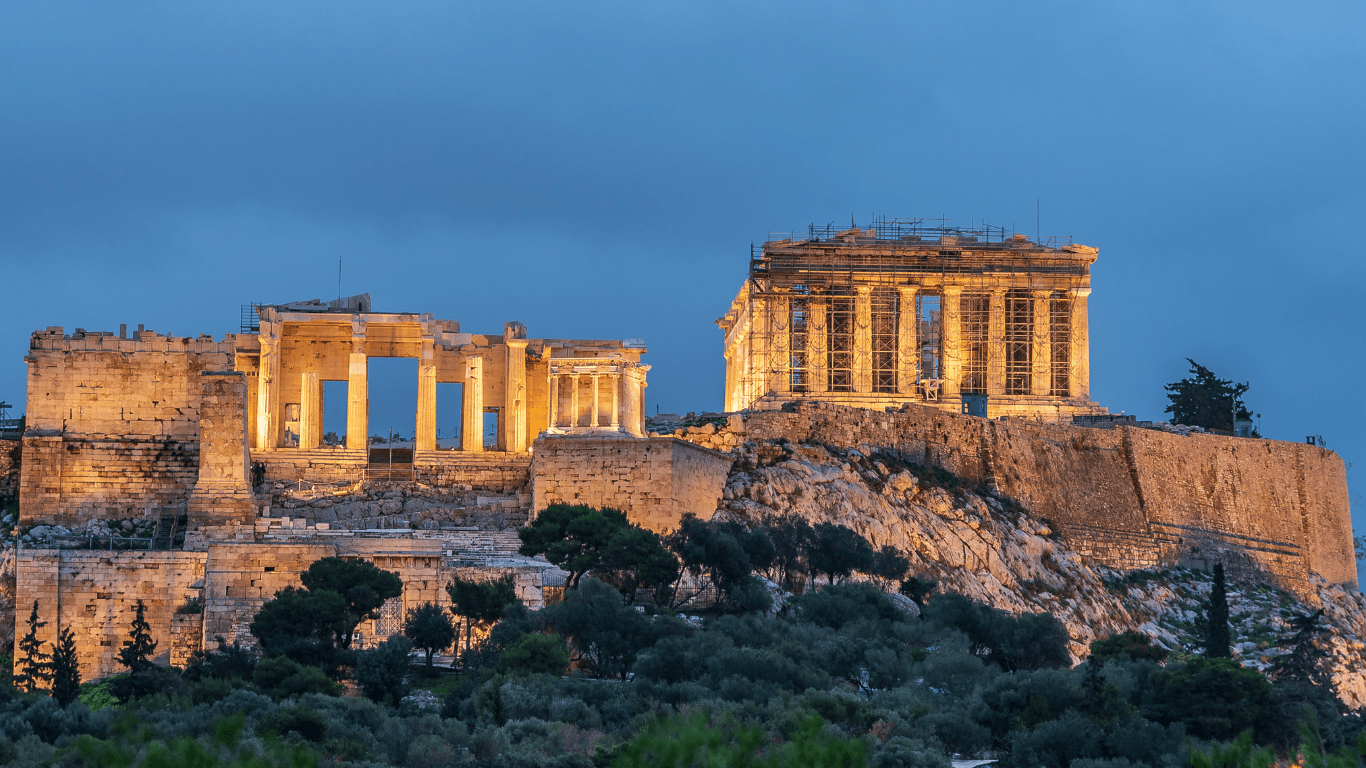
Where to buy property in Greece in 2026 splits along three corridors: prime Athens, the second city, and the maturing prime islands. Greek prime-residential has emerged from a difficult decade into one of Europe's more interesting secondary-prime stories.
The structural recovery from the post-2010 economic period, the architectural-restoration trend that has reanimated Athens's neoclassical core and the prime island markets, and the broadening international buyer cohort have produced a market that reads materially differently from how it read in 2018.
From Athens's prime tier through the second-city Thessaloniki market and the Cycladic island prime addresses, Greek prime-residential is one of the European markets we cover most actively.
This is our editorial map of where serious buyers are actually looking in 2026.
Mansion Global's Greek coverage and Architectural Digest's Athens reporting both note the structural movement that has shifted Greece from "watched" to "established" within European secondary prime. Knight Frank's European Wealth Report tracks the buyer flows. Christie's International Real Estate Greece and Sotheby's International Realty Greece, alongside the established Greek independents (Infinity Real Estate, the broader cohort of prime-residential brokerages), describe the contemporary buyer mix as one of the most internationally diverse of any European secondary prime market.
- The most attractive Greek property markets in 2026 span the Athenian Riviera, Thessaloniki, Mykonos, Santorini, Porto Heli, Halkidiki, Corfu and selected Cretan arcs.
- We see prime Athens neighbourhoods including Kifissia, Glyfada, Voula and Vouliagmeni offering the strongest combination of liquidity, infrastructure and appreciation potential.
- Mykonos and Santorini remain the trophy island markets, with constrained supply supporting price stability at the upper end across recent cycles.
- Porto Heli and Halkidiki offer quieter alternatives with more accessible mainland logistics, attracting buyers prioritising discretion over the more public Cycladic destinations.
- Crete's western coastline, particularly Chania and Apokoronas, has emerged as a serious entry point for international buyers seeking year-round liveability alongside investment exposure.
- For most considered Greek buyers we view the choice between mainland and island as primarily about lifestyle priority and access patterns rather than abstract investment metrics.
- Who is this for?
- International and Greek diaspora buyers selecting Greek markets for acquisition, alongside the advisers, brokers and family office staff framing those decisions.
- What is happening?
- A 2026 read of where to buy property in Greece, covering the Athenian Riviera, Thessaloniki, the Cycladic islands, Porto Heli, Halkidiki, Corfu and Crete.
- When did this emerge?
- The article reflects 2026 market conditions, with reference to the multi-year recovery and the Hellinikon-driven repositioning of the Athenian property landscape.
- Where is this happening?
- The piece covers Greece broadly, including the Athenian Riviera, Thessaloniki, Mykonos, Santorini, Porto Heli, Halkidiki, Corfu and Crete.
- Why does it matter?
- Greek market selection determines the universe of available opportunities, which is why upfront discipline pays back across every subsequent property-level decision the buyer makes.
Athens, the principal market
Kolonaki
Athens's most-recognised prime address. Kolonaki, the central neighbourhood beneath Lycabettus Hill, combines neoclassical apartment buildings, contemporary residential inventory, the principal cultural and dining establishments, and a structural position as the heart of Athens prime-residential. Median pricing for Kolonaki prime apartments has run between €4,500 and €8,000 per square metre over recent transaction cycles, with the upper-end period inventory at meaningfully higher levels.
Kifissia and Ekali
The northern suburbs anchoring Athens's prime-villa market. Kifissia's villa inventory, set within mature gardens, often with significant architectural depth, represents a different category of Greek prime-residential ownership from the central-Athens apartment market. The neighbourhood has been the principal Athens villa market for several decades.
The southern coastal corridor. Glyfada, Voula, Vouliagmeni
The most-watched contemporary prime-residential corridor in Greece. The Athenian Riviera, Glyfada, Voula, Vouliagmeni, Lagonissi, has produced some of the more interesting recent prime-residential developments and resales. The combination of coastal location, accessible distance to central Athens, and the structural draw of the broader Riviera narrative (anchored by the Astir Vouliagmeni and the broader hospitality and leisure infrastructure) has produced strong buyer interest.
The historic core and emerging neighbourhoods
Architectural-restoration work across Plaka, Monastiraki, Psyrri, and the broader historic core has reanimated the central Athens neighbourhood map. Buyers prioritising architectural depth and restoration projects find significant interest in this layer.
Thessaloniki, the second-city market
Greece's second city, with its Byzantine heritage and the more recent Mediterranean-modern restoration trend, has emerged as a structurally interesting secondary-prime market. The historic Ladadika district, the Aristotelous Square central core, the eastern suburbs (Panorama, Pylaia), and the broader Thessaloniki prime-residential map have produced consistent buyer interest.
Median pricing in Thessaloniki sits at approximately €2,350 per square metre, materially below Athens's prime tier and significantly below comparable European prime locations.
Thessaloniki's structural draw includes the cultural depth (Byzantine architecture, the food culture, the broader Macedonian cultural inheritance), the accessible entry pricing, and the city's growing role as a regional commercial centre.
The Cycladic islands
Mykonos
Greece's most-internationally-watched island prime market. Mykonos's prime-villa inventory, concentrated around Agios Lazaros, Aleomandra, the Tourlos hills, and the broader prime corridor, represents the upper end of Greek island prime-residential. Pricing for prime Mykonos villas runs into the multi-million euro range, with the upper-end inventory at meaningfully higher levels.
The architectural quality of recent prime work has been one of the more interesting features of the contemporary Mykonos market.
Santorini
The structural complement to Mykonos in Cycladic prime-residential. Santorini's prime-residential is concentrated around Oia (the most-photographed of the Cycladic prime addresses), Imerovigli and Fira. The architectural fabric of the cliff-set residences produces a distinctive and very specific kind of prime ownership, restoration of traditional Cycladic cave houses, contemporary architectural commissions integrated with the Caldera-edge topography, and a particularly limited supply that has supported pricing through cycles.
Paros, Antiparos and the broader prime Cyclades
Beyond Mykonos and Santorini, the broader Cyclades have produced an expanding prime-residential market over recent years. Paros and Antiparos in particular have drawn buyers seeking the Cycladic architectural and lifestyle register without the Mykonos visibility. Naoussa, Parikia, and the broader Paros prime tier have been documented in Mansion Global's coverage as one of the more interesting expanding Greek island prime markets.
Other regional prime markets
Halkidiki
The peninsula extending south from Thessaloniki, with strong appeal for buyers seeking the Mediterranean coastal experience without the Cycladic visibility. The first peninsula's resort developments (notably around Sani) and the broader Halkidiki prime-residential map.
Corfu and the Ionian islands
A different texture of Greek prime, the Ionian islands have a distinctive cultural inheritance (Italian and Venetian influence) and an established international-buyer base. Corfu's prime-residential corridor produces consistent buyer interest.
The Peloponnese
Costa Navarino and the broader southern Peloponnese have emerged as a recognised prime-resort and prime-residential corridor over recent years.
Crete
The largest Greek island, with its own distinctive prime-residential map covering Chania, Heraklion, Apokoronas, Elounda and the broader Cretan prime corridor. Substantial enough to be a prime market in its own right rather than a secondary appendage to the Cycladic conversation.
The buyer profile
Greek prime-residential's structural buyer mix has thickened materially over the past decade. The historical core, Greek nationals and the diaspora (significant flows from the UK, Australian, North American Greek diaspora), has been augmented by structural flows from across Europe (UK, Germany, France, the Nordic countries), North America, the Gulf, China, Israel and Eastern Europe. The international buyer cohort is one of the most diverse of any European secondary prime market.
The Golden Visa programme
Greece's residency-by-investment programme has been a structural feature of the international buyer flow over the past decade. The minimum threshold has been progressively raised; current thresholds vary by location (with higher thresholds in Athens and the principal islands). The programme continues to operate, though the structural attraction has shifted with the threshold revisions.
The architectural-restoration story
One of the more interesting features of Greek prime-residential's contemporary chapter has been the architectural-restoration trend. Athens's neoclassical inventory, the Cycladic cave houses, the period villages of the islands and the mainland, all have been reanimated by serious-restoration work over the past fifteen years. Architectural Digest has tracked the broader trend extensively; for buyers prioritising architectural depth, this layer is structurally consequential.
The transaction layer
Greece applies a 3 percent transfer tax on resale property. ENFIA (the principal annual property tax) varies by property and value. Foreign buyers have well-established legal frameworks for ownership; the Land Registry processes are transparent.
The combined transaction-and-ownership cost layer is moderate by European standards.
Frequently asked
Which Greek markets are reading most strongly in 2026?
Athens's prime tier (Kolonaki, Kifissia, the Athenian Riviera through Glyfada, Voula and Vouliagmeni), Thessaloniki's emerging prime corridor, the Cycladic prime addresses (Mykonos, Santorini, the expanding Paros and Antiparos market), and the prime addresses across Crete and the Peloponnese.
How does Athens compare to Thessaloniki?
Athens is the principal market with the deepest prime-residential map and the highest pricing tier. Thessaloniki sits at materially more accessible pricing and offers a different cultural and architectural register; for buyers seeking depth without the Athens pricing tier, Thessaloniki has produced consistent interest.
Is the Golden Visa programme still operational?
Yes, with revised thresholds. The programme continues to operate; the structural attraction has shifted with the threshold revisions but remains material for international buyers.
What's distinctive about Cycladic prime-residential?
The architectural fabric (the traditional Cycladic vernacular, the cliff-set Santorini residences, the Mykonos prime-villa work), the limited supply that has supported pricing, and the structural visibility of Mykonos and Santorini as global prime-resort destinations.
Further reading
What this means for buyers reading where to buy property in Greece in 2026
Where to buy property in Greece in 2026 depends on the holding's purpose: Athens prime postcodes (Kolonaki, Kifisia, the Riviera south of Glyfada) serve flagship lifestyle buyers, Thessaloniki anchors the value end, and the islands (Mykonos, Paros, Santorini) cover the second-home segment. Buyers should weight the Golden Visa thresholds, the upcoming Ellinikon delivery, and the seasonal rent-yield ceiling on the islands. Knight Frank Greece publishes a quarterly read worth tracking.
We last reviewed this analysis in May 2026.