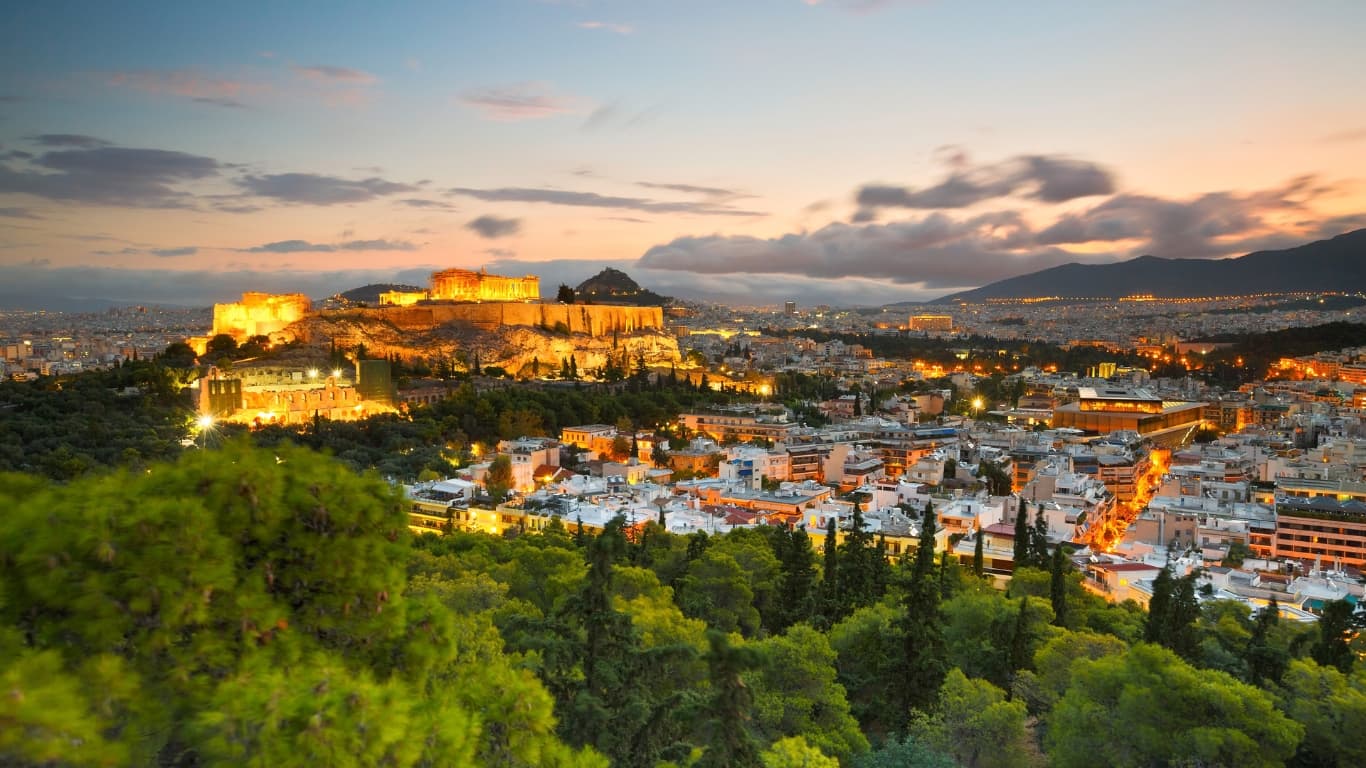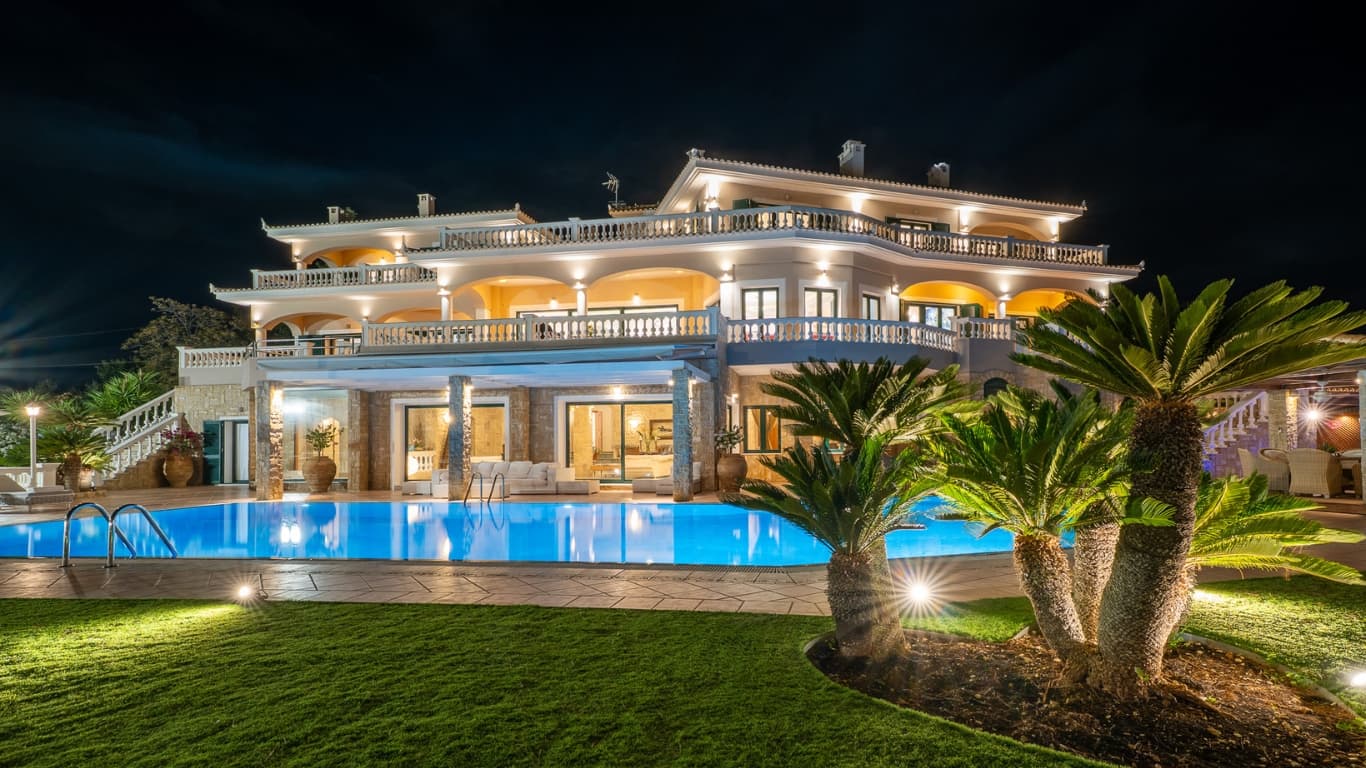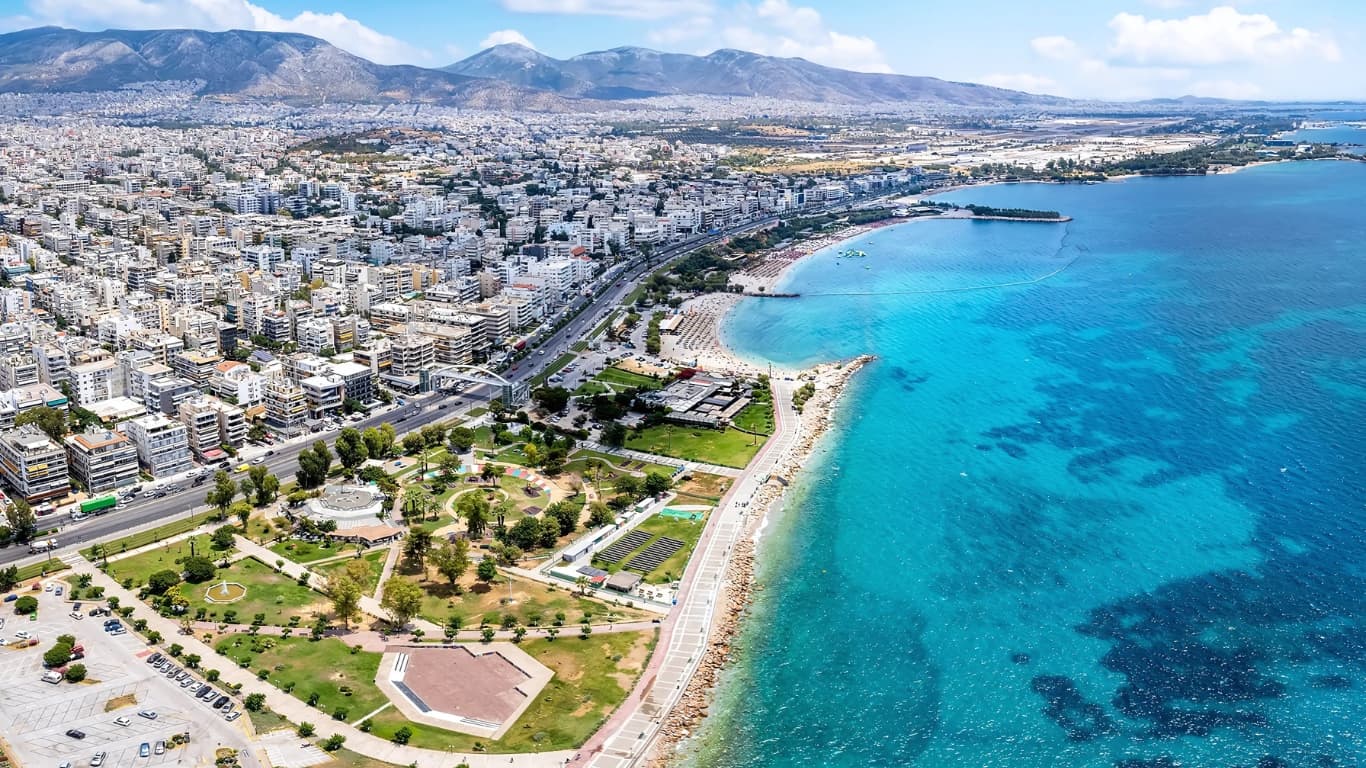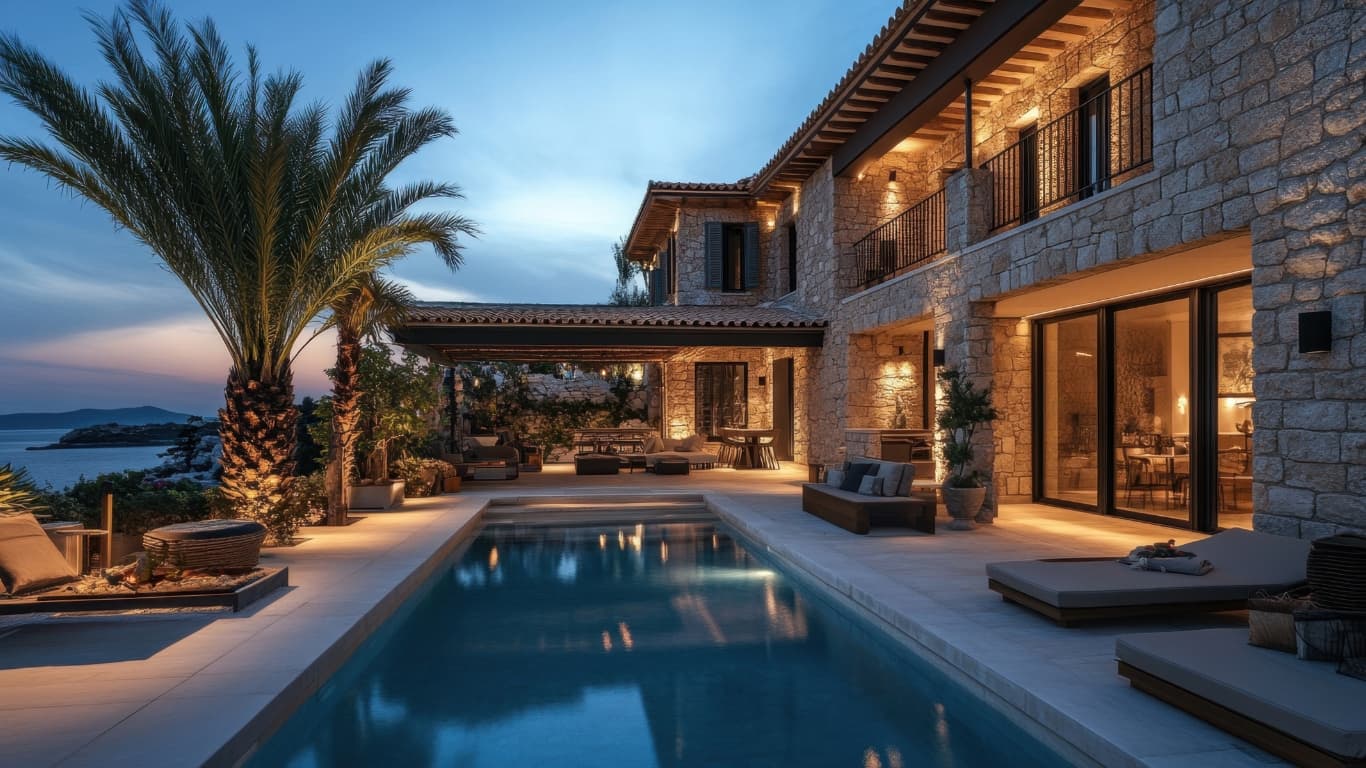
Greek luxury real estate has joined the Mediterranean elite, and the data backing that statement is finally undeniable. Greek properties now command prices comparable to the Mediterranean's most prestigious destinations, with prime and super-prime housing reaching parity with Ibiza, Mallorca, Tuscany, and Dubai's coastal zones. The shift is not speculative but quantifiable across hard transaction data.
According to the new “Voices of Affluence” survey by Greece Sotheby’s International Realty, prime and super-prime housing across Greece has reached price parity with long-established luxury markets including Ibiza, Mallorca, Tuscany, and Dubai’s coastal zones.
What makes this moment so compelling is the combination of premium valuations with substantial growth runway still ahead. Despite reaching price parity with established markets, Greece's luxury property sector generates only about €1 billion annually, capturing roughly 2 per cent of the estimated €50 billion Mediterranean luxury real estate market. Ultra-high-net-worth individuals from over thirty countries are increasingly viewing Greece as a first-choice destination rather than a fallback.
Survey data from Greece Sotheby's International Realty shows 63 per cent of UHNWIs express intent to purchase property in Greece, with international buyers accounting for 67 per cent of respondents. The US leads at 12 per cent, followed by the UK at 10 per cent, France at 8 per cent, and Germany at 7 per cent. Greek domestic buyers make up the remaining 33 per cent, which tells us this is genuine international capital reshaping the market rather than local wealth recycling.

- Greek luxury real estate has crossed an important threshold in 2026, with the Athenian Riviera, Mykonos, Santorini, Porto Heli and selected island stock now trading at credible Mediterranean-elite levels.
- We see Knight Frank Greece and JLL Greece reports placing the top Greek markets at comparable benchmarks to Saint-Tropez, Capri and the Spanish Costas, with the gap continuing to narrow.
- The Hellinikon megaproject, including Riviera Tower and the branded residence pipeline, has established new pricing benchmarks for the Greek prime segment that hold their own against international peers.
- International buyer interest from the US, UK, Middle East, China and the broader EU has deepened materially across recent cycles, supporting the premium pricing at the top of the market.
- Branded residences in Mykonos, Santorini and the Athenian Riviera have proliferated, with hospitality-grade services supporting consistent demand at the upper end of the market.
- For most considered international buyers we view Greece as having genuinely joined the Mediterranean luxury elite, with appreciation potential tied to the continued internationalisation of the buyer base.
- Who is this for?
- International ultra-high-net-worth buyers considering Greek luxury property, alongside the advisers, brokers and family office staff framing those acquisitions.
- What is happening?
- A read of how Greek luxury real estate has joined the Mediterranean elite, covering the Athenian Riviera, Mykonos, Santorini, Porto Heli, the Hellinikon project and branded residence proliferation.
- When did this emerge?
- The article reflects 2026 market conditions through Knight Frank Greece, JLL Greece and Hellenic Property Federation data alongside our own observations.
- Where is this happening?
- The piece covers Greece broadly, including the Athenian Riviera, Mykonos, Santorini, Porto Heli and the comparison to the wider Mediterranean luxury complex.
- Why does it matter?
- Greek luxury market positioning has shifted materially in recent years, which is why understanding the current standing matters for any buyer tracking the broader Mediterranean prime segment.
The price parity data that confirms Greece's elite status
Analysis of 2,145 properties from Sotheby's global database reveals that Greek luxury markets now sit within a narrow band of their better-known rivals across multiple price points and locations. Mykonos gives the clearest comparison: prime properties there average around €10,800 per square metre versus Ibiza's €11,600 per square metre. That is a gap of less than 7 per cent, a dramatic compression from the 30 to 40 per cent differential that existed just a few years ago.
The Athens Riviera tells a similar story at slightly different price levels, averaging about €10,500 per square metre and closing in on Dubai's flagship coastal areas at roughly €12,600 per square metre. That positions Athens firmly in what the market now considers Dubai-level pricing territory, a remarkable achievement for a market that was trading at steep discounts to global gateway cities less than a decade ago. Knight Frank's European Residential Index has tracked the compression carefully.
Even Greece's secondary islands show this same pattern of achieving parity with established European markets. Corfu's prime property values sit near €8,900 per square metre, right alongside Mallorca's €9,900 per square metre. Greece's leading islands now trade shoulder to shoulder with Europe's classic second-home markets rather than at the discount you would expect from an emerging destination.
Perhaps most surprising, semi-emerging regions like the Peloponnese show pricing around €5,500 per square metre compared with Tuscany's €4,000 per square metre. Greek coastal and countryside properties can actually command premiums over Italian benchmarks when the product meets buyer expectations for quality and location.
Greece Sotheby’s explicitly notes that these comparisons confirm “prices comparable to mature markets like Mallorca and Ibiza,” based not on anecdotal listings but on hard transactional and listing data across their global network.
This picture gets reinforced by separate market research from Engel & Völkers, whose 2026 market report highlights that top island destinations like Mykonos and Paros now reach up to €12,000 per square metre for prime villas. What is worth noting about this pricing achievement is its breadth across different Greek markets rather than concentration in a single hotspot.
The parity extends from marquee islands like Mykonos through secondary locations like Corfu to mainland coastal areas like the Athens Riviera and even countryside regions like the Peloponnese.
This suggests the repricing reflects a fundamental reassessment of Greece as a luxury destination rather than speculative bubble dynamics playing out in isolated micro-markets. That distinction matters enormously for any buyer thinking beyond a two-year horizon, and Mansion Global has covered the structural nature of the shift extensively.
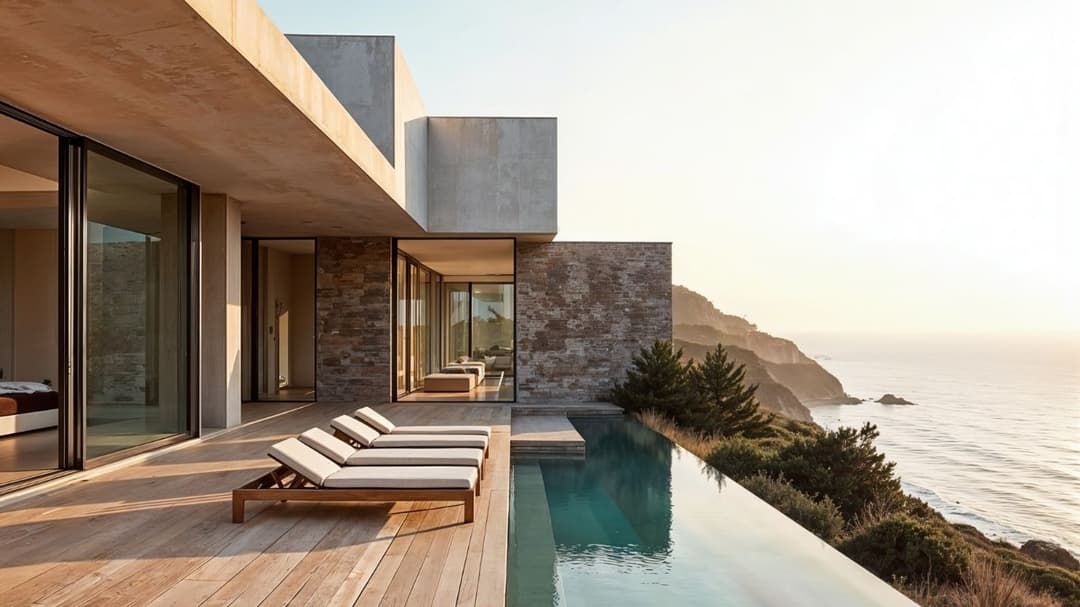
The €49 billion growth opportunity behind elite pricing
The interesting dynamic for buyers emerges from the gap between Greece's pricing achievement and its actual market share within the broader Mediterranean luxury environment. You would expect elite pricing to come with elite market share, but that has not happened yet, and that gap is where the opportunity lives.
Greece Sotheby’s estimates annual luxury transactions in Greece range between €800 million and €1 billion, yet the wider Mediterranean luxury real estate market exceeds €50 billion annually.
Greece is capturing roughly 2 per cent of regional luxury property value despite having achieved price parity with markets commanding far larger shares. That disconnect does not last forever. This under-penetration persists despite exceptionally strong demand signals that should theoretically be driving higher market share already, including the 63 per cent purchase intent that stands out for any single country in a competitive region like the Mediterranean.
International buyers making up 67 per cent of the survey base tells us Greece's luxury story is driven overwhelmingly by inbound capital rather than local wealth concentration. That is a crucial distinction when assessing sustainability and long-term growth potential. Compare this with London's luxury property dynamics, where domestic and international demand have long competed for the same limited stock.
Greece is converting only a fraction of available capital despite this strong intent. Some 52 per cent of international respondents simultaneously consider alternative Mediterranean destinations, primarily Italy at 15 per cent, France at 10 per cent, and Spain at 9 per cent. Greece clearly competes directly with the established big three markets but captures smaller portions of their substantial budgets.
An impressive 83 per cent of respondents believe the Greek economy will remain stable or improve over the coming year, while 76 per cent expect property values to either rise or stay stable. Those confidence metrics imply most buyers view Greece not as short-term speculation but as a durable lifestyle and wealth-preservation play. Understanding whether you are optimising for cash flow or equity growth will shape how you position within this market.
Savvas Savvaidis, CEO of Greece Sotheby’s International Realty, explicitly links the next growth phase to completing the urban and spatial planning framework while improving market transparency.
The argument from institutional observers is that structural reforms around title transparency and permitting would unlock significant capital from institutional investors in luxury residential developments, giving the market the depth and liquidity that matches its new pricing status. Cushman & Wakefield's Mediterranean coverage corroborates the read.
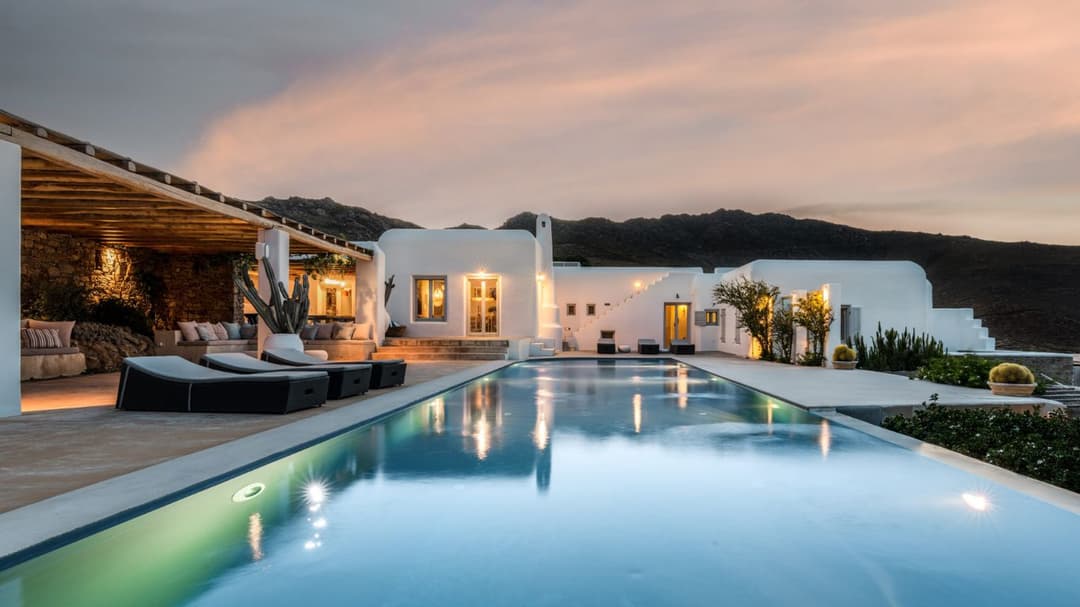
What elite status means for buyers and market evolution
The research defines a new buyer archetype reshaping demand patterns and investment opportunities across Greek luxury real estate. The profile that emerges from the survey is something distinct from traditional luxury buyers focused on trophy assets and conspicuous display. These are buyers who want a life, not just an address.
The demographics show an average age of 54 with a median budget of €2. 5 million, concentrated in the €1 to €5 million range for 87 per cent of buyers while 13 per cent exceed €5 million. Around 10 per cent of all respondents qualify as centi-millionaires with individual budgets above €10 million, which tells us that ultra-wealthy buyers are willing to deploy genuinely significant capital in Greece rather than treating it as a minor diversification play.
Bloomberg's luxury real estate coverage has tracked this shift in UHNWI allocation toward Southern European coastal markets over the past several years.
Geographic preferences reveal interesting divergences between international and domestic buyers that create diversified demand across Greek regions. International buyers favour the Cyclades at 40 per cent, Ionian Islands at 20 per cent, Athens Riviera at 15 per cent, and Crete with the Dodecanese at 10 per cent. The focus falls heavily on islands and iconic coastal strips with strong international name recognition.
Greek domestic buyers lean toward the Athens Riviera and Northern Suburbs at 42 per cent, the Cyclades at 28 per cent, the Peloponnese at 15 per cent, and the Ionian Islands at 10 per cent. That creates balanced demand between lifestyle city-coast corridors and pure island retreats, which is exactly the kind of broad geographic support a maturing luxury market needs.
The strategic timing becomes compelling when you contrast Greece's current position with markets like Ibiza or Mallorca that achieved elite status decades ago. Those established destinations offer premium pricing that reflects mature, saturated markets with limited expansion potential and buyer bases already fully engaged. The upside is largely priced in.
Greece offers something rarer: market credibility and pricing power are already established through demonstrated transactions, while the growth phase is just beginning. Institutional capital is still largely absent, and market share gains are available simply by capturing higher portions of budgets already allocated to Mediterranean luxury property. Christie's International Real Estate's Greek desk has flagged this as the prime structural window for the next decade.
What this means for buyers
For capital with a view beyond the next season and toward the next decade, the combination of elite status plus genuine runway is exactly what critical mass looks like in a luxury real estate market. The foundations are validated, the buyer base is engaged and expanding, and the pricing power is established.
The market sits early enough in its development cycle that substantial appreciation potential exists through market share gains alone, without needing multiple expansion or entirely new buyer discovery.
That combination does not come around often. Understanding where global housing markets face bubble risk only sharpens the case for markets like Greece that are still building toward their ceiling rather than testing one, and the buyers we watch are positioning accordingly.
We last reviewed this analysis in May 2026.

Savvas Agathangelou
Savvas Agathangelou co-founded The Luxury Playbook and has spent years reporting from the prime postcodes the magazine covers — Mayfair, Knightsbridge, the Athens Riviera, Dubai's Palm crescents, and the southern Mediterranean coastlines where the world's wealthy keep coming back. His background is in international hospitality, and that frame shapes how he writes about property: the developer's choices, the architect's signature, the agency's bench of named brokers, the building's service standard once the buyer moves in. He files developer spotlights, agency profiles, and the seasonal "Properties That Defined" listicles, and he hosts the magazine's founder-and-leadership interviews on the Voices side.