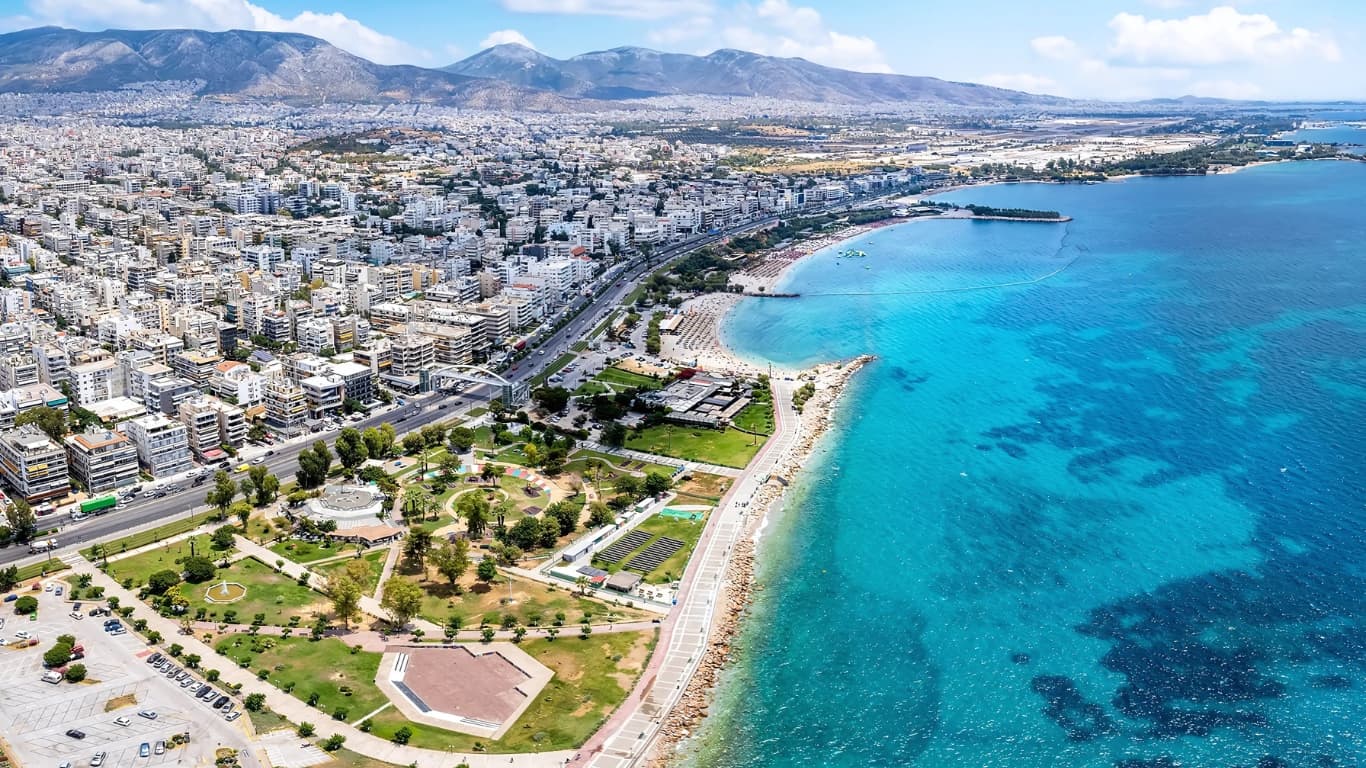
New housing measures are set to boost Greek real estate, and the package's effects on the structural framework are broader than the affordability headlines suggest. Greece launched its most ambitious housing support package in decades in 2025, committing roughly €1 billion in direct rental subsidy for nearly 950,000 households alongside a wider tax-incentive framework aimed at unlocking renovation and new-build supply.
The under-reported piece is how the package has materially shifted the framework that international and domestic prime buyers operate within.
Greece's prime-residential market has been on a multi-year run, and the price moves have stretched the affordability ceiling for younger Athenian and Thessalonikian households. The Bank of Greece, the Ministry of National Economy, and the cabinet's housing committee designed the 2025 package to address that affordability problem directly through rental subsidies, conversion incentives for vacant or commercial-to-residential property, and tax structure adjustments around long-let residential.
- New Greek housing support measures, including subsidised mortgage programmes and tax incentives, are expected to support continued residential market activity through 2026 and beyond.
- We see the first-time buyer mortgage subsidy programme as one of the more impactful initiatives, with eligibility tiers supporting purchase activity across the entry-to-mid market segments.
- Tax incentives for property renovation continue to support stock improvement in older neighbourhoods, with the energy efficiency dimension increasingly central to the policy framework.
- Construction industry stimulus has supported continued new-build delivery, with the supply response moderating but not eliminating the underlying price pressure in most major markets.
- Local authority initiatives, including streamlined building permit processing in some municipalities, have reduced friction in the development pipeline across multiple market segments.
- For most considered Greek buyers we view the housing support measures as a modest tailwind, with structural market fundamentals remaining the dominant pricing driver across the cycle.
- Who is this for?
- International and Greek buyers evaluating the impact of new housing support measures, alongside the advisers, developers and policy analysts tracking the Greek market.
- What is happening?
- A practical read of new housing support measures expected to boost the Greek real estate market, covering mortgage subsidies, tax incentives, construction stimulus and local authority initiatives.
- When did this emerge?
- The article reflects 2025 and 2026 policy frameworks, with reference to the announced timelines for the various support programmes across the medium term.
- Where is this happening?
- The piece covers Greece broadly, with reference to the regional variations in policy application across Athens, Thessaloniki and the regional markets.
- Why does it matter?
- Housing support measures affect market activity at the margin, which is why understanding the framework matters even for buyers who do not directly access the programmes.
What the package actually contains
The headline rental subsidy is the largest single line item. Roughly €1 billion has been committed to direct subsidy for households at defined income thresholds, with the Bank of Greece administering the disbursement framework through 2026. The objective is to take pressure off the existing rental tenant base, particularly in central Athens and Thessaloniki where the rent-versus-income squeeze has been sharpest.
The tax-incentive framework is more layered. The package includes a graduated tax-credit system for owners undertaking certified renovation of existing residential property, with deeper credits available for energy-efficiency upgrades and historic preservation. A second tier addresses commercial-to-residential conversion, providing planning-pathway and tax-credit incentives for owners converting central-Athens and central-Thessaloniki commercial inventory into residential use.
A third tier addresses the rental-supply side. Owners committing to long-let residential leasing (versus short-term rental) qualify for graduated tax rate reductions on rental income. The structure is intended to nudge inventory away from short-let usage and back into long-let supply, addressing what the housing committee described as one of the principal supply constraints in central Athens.
How the package reshapes the buyer's framework
The package's structural effects on the prime market are real but more nuanced than the headlines suggest. For the international buyer profile, including the Golden Visa cohort at the €800,000 threshold, the European and Gulf second-home buyers, and the U.S. and Israeli prime buyers, the package has effects in three directions.
First, the conversion-incentive framework has expanded the supply of interesting prime-renovation inventory. Several of the long-dormant central-Athens commercial buildings have moved into the conversion pipeline, with the more architecturally interesting buildings entering certified conversion programmes. The result is more interesting prime inventory available than two years ago, particularly at the €1.
5 million to €5 million price band where central-Athens trophy townhouses sit.
Second, the long-let tax restructure has shifted the calculation for owners considering rental usage versus owner-occupation. The pre-package framework had pushed Athenian and Cycladic prime inventory aggressively into short-let usage; the 2025 framework re-balances the calculation in a way that may pull some of that inventory back to long-let or owner-occupier usage.
For the prime buyer profile, that restructure changes the rental-usage proposition for portions of the secondary inventory but does not materially affect the trophy-residential calculation.
Third, the broader market normalisation has implications for the trajectory of pricing. The package's focus on supply expansion at the mid-tier suggests Greek policymakers expect the affordability pressure to ease over the next two to three years. Whether that translates to softer headline-pricing trajectories in the prime addresses is a separate question, because prime-residential supply is constrained by planning rather than by market-friction issues the package addresses.
The Cycladic and Riviera dimensions
The package's effects on the trophy island and Riviera markets are limited. Mykonos, Santorini, Paros, and the Cyclades broadly operate under planning frameworks that the 2025 package does not materially adjust. The Athenian Riviera, including Vouliagmeni, Glyfada, and Lagonisi, is similarly unaffected at the prime tier; the planning, density, and visual-impact rules remain controlling.
What has changed is the perception of the broader Greek market. The package signals continued government commitment to maintaining a functioning residential market, which removes one of the tail-risk concerns that some international prime buyers had been factoring into their Greek decisions. Engel & Völkers Greece's 2025 buyer survey reported a notable uptick in international prime inquiries through the second half of 2025, attributed in part to the policy clarity from the package.
Knight Frank's European Residential Index has also flagged Greek prime as moving from an emerging-market to a maturing-market designation for the first time in its annual classification framework. Mansion Global has covered the reclassification in its 2025 Mediterranean coverage.
What this means for buyers
Greek prime is moving into what we would describe as a more layered phase. The headline price moves of the recovery (central Athens up 60 to 70 per cent from the trough, the Cyclades up materially across the prime addresses) will not repeat. What is emerging instead is a market where supply is gradually expanding at the mid-tier, demand is broadening across more international buyer cohorts, and the prime addresses continue on their own trajectory anchored by planning constraint.
The package's most underrated effect may be the signal it sends about Greek property as a maturing rather than emerging market. The deliberate policy attention to housing supply, the Bank of Greece administrative framework around the subsidy disbursement, and the clear regulatory pathway around conversion and renovation all point to a market operating on Western European norms. That graduates Greek prime in a way that matters for the international buyer profile.
For buyers thinking about Mediterranean exposure, this is one of the most useful policy signals out of any Mediterranean prime jurisdiction this year. The reading we have built across the past two quarters is that Greek prime continues to reward selectivity and rewards patience in equal measure.
We last reviewed this analysis in May 2026.

Frequently Asked Questions
- What are Greece's new 2025 housing support measures?
- Greece's €1 billion housing package launches November 2025 with annual rent refunds up to €800 for eligible households (income limits: €20,000 single, €28,000 couples, plus €4,000 per child). Around 1.5 million low-income pensioners and disabled persons receive €250 annually. The My Home II program offers up to €190,000 financing for first homes (50% interest-free), while the Renovate and Rent program provides 60% subsidies up to €8,100 for converting vacant properties to rentals. Tax benefits include capital gains tax suspension through December 2026 and extended VAT exemptions on new construction through 2025.<br>

Savvas Agathangelou
Savvas Agathangelou co-founded The Luxury Playbook and has spent years reporting from the prime postcodes the magazine covers — Mayfair, Knightsbridge, the Athens Riviera, Dubai's Palm crescents, and the southern Mediterranean coastlines where the world's wealthy keep coming back. His background is in international hospitality, and that frame shapes how he writes about property: the developer's choices, the architect's signature, the agency's bench of named brokers, the building's service standard once the buyer moves in. He files developer spotlights, agency profiles, and the seasonal "Properties That Defined" listicles, and he hosts the magazine's founder-and-leadership interviews on the Voices side.