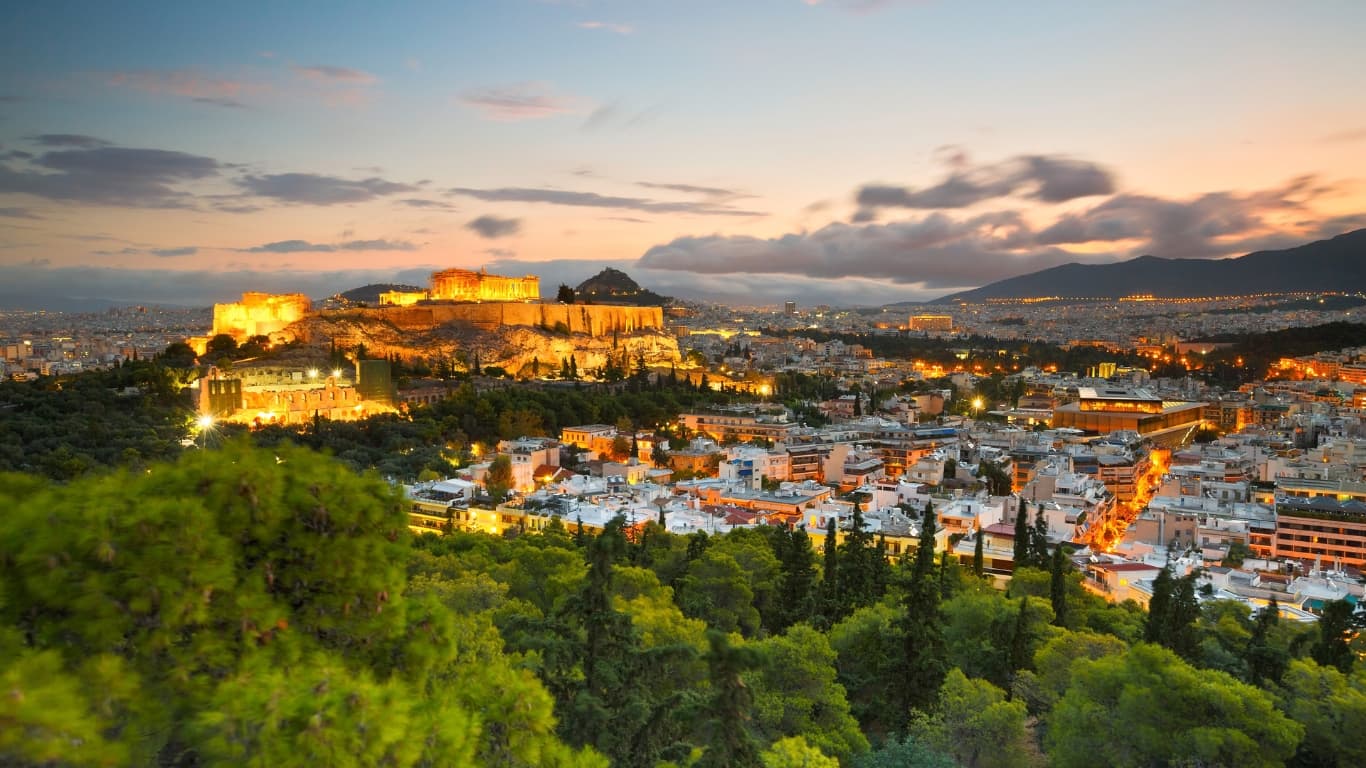
Athens's prime-residential market has emerged from the post-2010 economic period into one of Europe's most-watched secondary-prime stories. The structural recovery, the architectural-restoration wave that has reanimated the central neoclassical core, the broadening international buyer cohort, and the remarkable cultural-and-architectural depth of the city itself have produced a market that reads materially differently from how it read a decade ago.
This is our editorial read on whether buying property in Athens makes sense in 2026, and where in the city the answer is most clearly yes.
Mansion Global's Greek coverage, Architectural Digest's Athens reporting, and Knight Frank's European Wealth Report all describe Athens as one of the more interesting European secondary-prime markets. The combination of accessible entry pricing relative to other major European prime locations, the cultural depth, the architectural-restoration story, and the structural shift in international interest has shaped the contemporary market.
- Athens has crossed an important threshold in 2026, with continued appreciation, improving infrastructure and a deepening international buyer base making the city a credible prime market.
- We see central neighbourhoods including Kolonaki, Kifissia, Glyfada and the Athenian Riviera offering the strongest combination of liquidity and lifestyle appeal for international buyers.
- Bank of Greece data shows residential prices continuing to climb through 2025 and 2026, with the Athens premium over secondary Greek cities widening over recent years.
- Yields for buy-to-let stock have compressed somewhat with the price recovery, although well-located rental units continue to deliver attractive net cash flow relative to other European capitals.
- Golden Visa eligibility remains a significant motivator for non-EU buyers, with tiered pricing on Athenian stock reflecting the regulatory framework for the most prestigious districts.
- For most considered Greek buyers we view Athens as offering genuine prime market quality at pricing that remains attractive relative to comparable Mediterranean alternatives.
- Who is this for?
- International buyers weighing Athens property acquisition, alongside the advisers, brokers and family office staff framing those decisions for first-time and experienced buyers.
- What is happening?
- A practical read of whether buying property in Athens is worthwhile in 2026, covering appreciation, neighbourhood selection, yields and the Golden Visa motivator.
- When did this emerge?
- The article reflects 2026 market conditions through Bank of Greece, ELSTAT and Hellenic Property Federation data alongside our own observations.
- Where is this happening?
- The piece focuses on Athens, including Kolonaki, Kifissia, Glyfada and the Athenian Riviera, with reference to broader Greek prime market dynamics.
- Why does it matter?
- Athens has reached an inflection point in the Mediterranean prime market, which is why the city deserves serious attention from anyone considering Greek property exposure.
The Athens prime-residential map
Kolonaki
The neighbourhood beneath Lycabettus Hill. Athens's principal prime address. Kolonaki combines neoclassical apartment buildings of significant architectural depth, the city's principal cultural and dining establishments, and a structural position as the heart of Athens prime-residential.
The neoclassical apartment inventory in particular has been reanimated by serious restoration work over the past fifteen years.
Plaka and the historic core
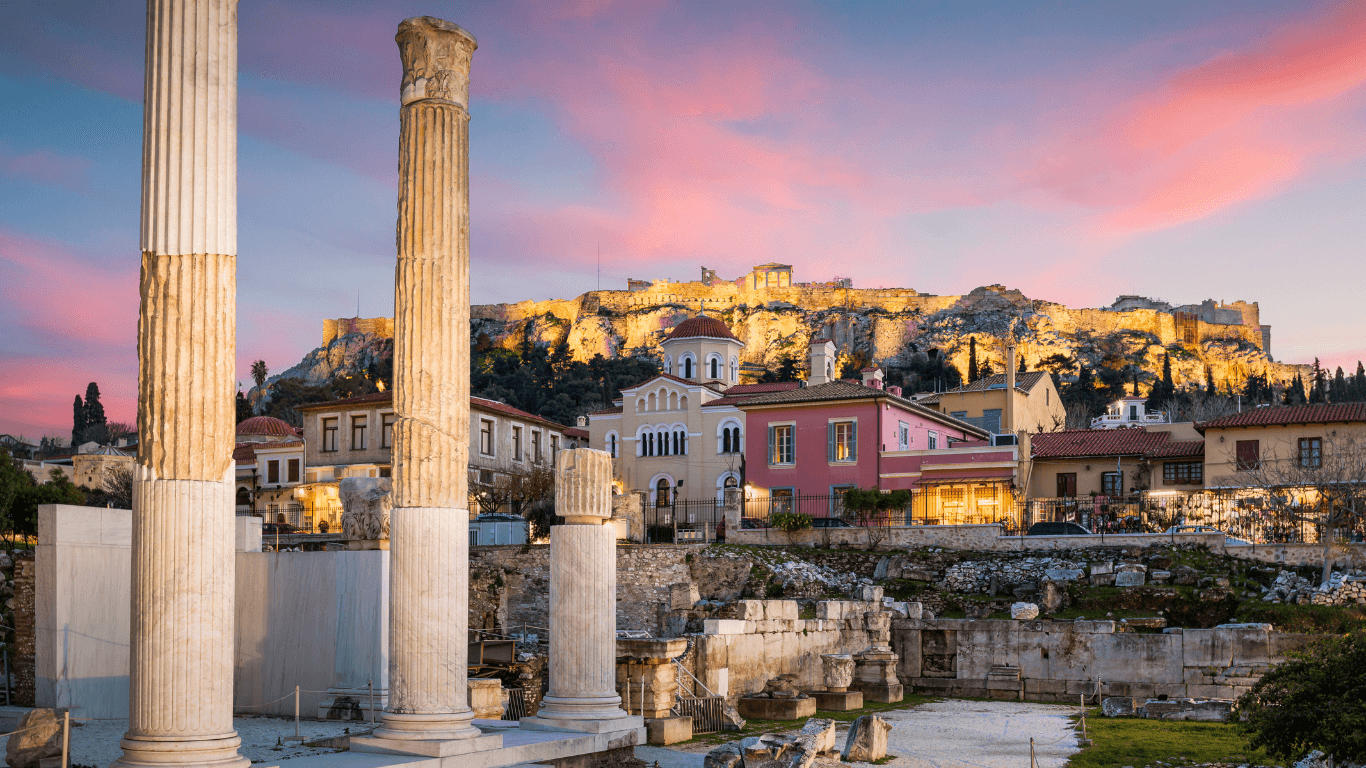
The historic neighbourhoods at the foot of the Acropolis. Plaka, Anafiotika, the broader historic core. Period inventory undergoing architectural-restoration represents one of the more interesting Athens prime-residential opportunities for buyers prioritising architectural depth.
Kifissia and the northern suburbs
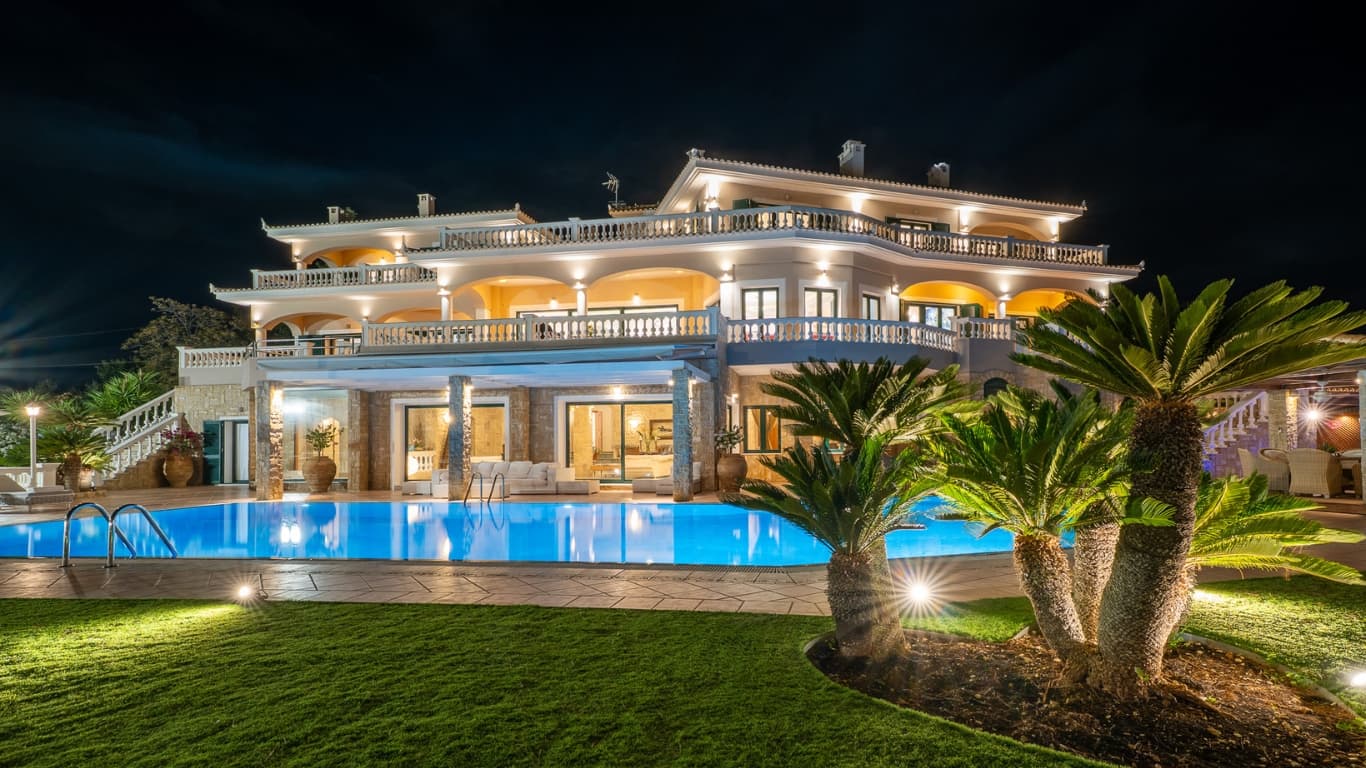
Athens's principal prime-villa market. Kifissia and the broader northern suburbs (Ekali, Politia) have anchored Athens villa ownership for several decades. Mature gardens, significant architectural depth across the period villa inventory, and the structural quietude that distinguishes the northern suburbs from central Athens.
The Athenian Riviera. Glyfada, Voula, Vouliagmeni
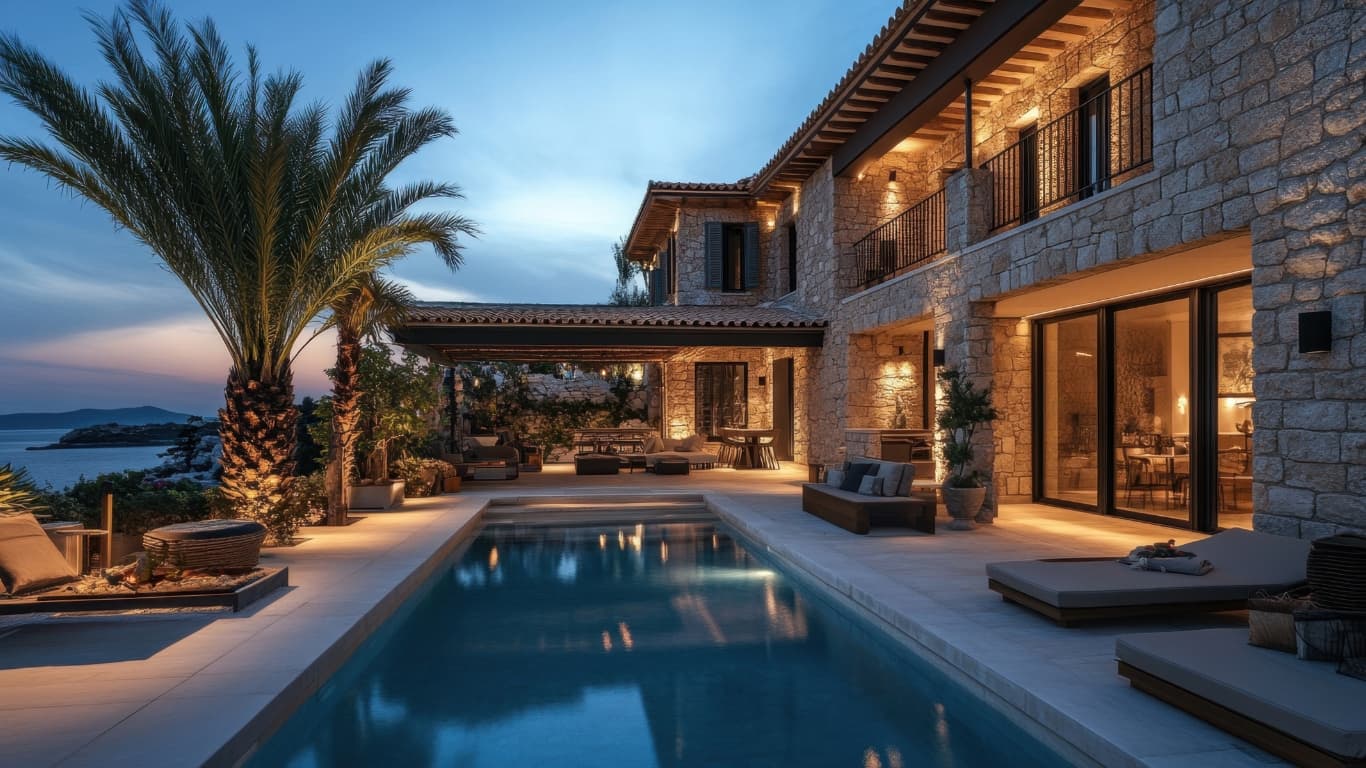
The most-watched contemporary prime-residential corridor in Athens. The Riviera's combination of coastal location, accessible distance to the city centre, and the structural draw of the broader hospitality and leisure infrastructure (anchored by the Astir Vouliagmeni and the broader Vouliagmeni hospitality concentration) has produced strong buyer interest.
The contemporary prime-villa work along the Riviera includes some of the more architecturally interesting Greek prime-residential of recent years.
Emerging neighbourhoods
Architectural-restoration work has reanimated several previously-overlooked Athens neighbourhoods. Pangrati, Mets, the broader Plaka-adjacent corridor, and parts of the central Athens map that had been overlooked in earlier cycles are increasingly drawing buyers prioritising architectural depth.
The buyer profile
Athens's prime-residential buyer mix has thickened materially over the past decade. The historical core, Greek nationals and the broader diaspora (UK, Australian, North American Greek-diaspora communities), has been augmented by structural flows from across Europe, North America, the Gulf, China, Israel and Eastern Europe. Mansion Global's Greek prime coverage describes the Athens international buyer cohort as one of the most diverse of any European secondary prime market.
The Golden Visa context
Greece's residency-by-investment programme has been a structural feature of the international buyer flow over the past decade. The minimum threshold has been progressively raised; current thresholds vary by location (with higher thresholds in Athens specifically). The programme continues to operate, though the structural attraction has shifted with the threshold revisions.
Pricing
Athens prime pricing remains materially accessible relative to other major European prime locations. Kolonaki prime apartments have transacted in recent cycles between approximately €4,500 and €8,000 per square metre, with upper-end period inventory at meaningfully higher levels. The Riviera and the northern suburbs each carry their own pricing tiers.
Compared with London Mayfair (£25,000+ per square metre), Paris's Sixth and Seventh (€20,000+ per square metre), or comparable Italian or Swiss prime, Athens reads as a structurally accessible European prime market.
The architectural and cultural depth
One of Athens's structural distinctions among European prime-residential markets is the genuine architectural-and-cultural depth.
The neoclassical inventory of central Athens (much of it built between the 1830s and 1920s); the modernist apartment buildings of the mid-twentieth century; the archaeological inheritance (Acropolis, Plaka, the broader ancient-Athens fabric); the museum and cultural infrastructure; the food culture; the broader cultural conversation around the city's contemporary architectural restoration.
For buyers prioritising cultural and architectural depth, Athens reads with particular distinction.
Practical considerations
Athens's transaction layer is well-established. Greece applies a 3 percent transfer tax on resale property. ENFIA (the principal annual property tax) applies to all real estate.
Foreign buyers operate through well-established legal frameworks; the Land Registry processes are transparent. Many transactions complete in 2 to 4 months.
For absentee owners, the property-management infrastructure across the principal Athens prime-residential markets is well-established. The English-language operating environment is sufficient for international buyers across the principal markets, though working with established Athens-specialist legal counsel remains important.
The rental-and-seasonal dimension
Beyond personal ownership, Athens has a meaningful seasonal-rental economy, particularly for the central neighbourhoods that draw cultural tourists. The structural details of seasonal rental are jurisdictional and shift over time; the broader picture is that Athens has a developed rental-and-seasonal infrastructure that owners can engage with where appropriate.
How Athens compares
Against London Mayfair, Athens is meaningfully more accessible on entry pricing and offers different but genuine cultural-and-architectural depth. Against Madrid's Salamanca district, Athens is similarly priced and offers stronger architectural depth. Against Paris's Sixth and Seventh, Athens is materially more accessible.
For buyers reading the European prime-residential map and prioritising architectural-and-cultural depth at accessible entry pricing, Athens has been one of the more interesting secondary-prime stories of recent years.
Frequently asked
Which Athens neighbourhoods anchor the prime-residential map?
Kolonaki (the principal address), the historic core (Plaka, Anafiotika), Kifissia and the northern suburbs (the prime-villa market), and the Athenian Riviera (Glyfada, Voula, Vouliagmeni, the most-watched contemporary corridor).
Is Athens still on the Golden Visa programme?
Yes, with revised thresholds. Current minimums are higher in Athens specifically than in some other Greek regions.
How does Athens compare on price with other European prime markets?
Materially more accessible than London Mayfair, Paris's Sixth and Seventh, or comparable Italian or Swiss prime. Comparable in some neighbourhoods to Madrid's Salamanca, with stronger architectural depth.
What about the architectural-restoration story?
One of the most interesting features of contemporary Athens prime-residential. Serious restoration of neoclassical and modernist inventory has reanimated central Athens neighbourhoods over the past fifteen years.
Further reading
- Is It Worth Buying Property In Thessaloniki
- The Greek Golden Visa, Reassessed in 2026
- Property Taxes In Greece In 2026
What this means for buyers reading buying property in Athens
Buying property in Athens rewards buyers who weight cultural depth, the Ellinikon-driven Riviera upside and the Golden Visa pathway over the higher headline growth of comparison-set Mediterranean cities. Kolonaki, Kifisia and the Riviera postcodes south of Glyfada anchor the prime tier; the old centre covers the value end. Knight Frank Greece, Savills Greece and the Greek Statistical Service all publish reads worth tracking each cycle.
We last reviewed this analysis in May 2026.


Savvas Agathangelou
Savvas Agathangelou co-founded The Luxury Playbook and has spent years reporting from the prime postcodes the magazine covers — Mayfair, Knightsbridge, the Athens Riviera, Dubai's Palm crescents, and the southern Mediterranean coastlines where the world's wealthy keep coming back. His background is in international hospitality, and that frame shapes how he writes about property: the developer's choices, the architect's signature, the agency's bench of named brokers, the building's service standard once the buyer moves in. He files developer spotlights, agency profiles, and the seasonal "Properties That Defined" listicles, and he hosts the magazine's founder-and-leadership interviews on the Voices side.