
The United Arab Emirates has put $5.3 billion behind cultural development, and this is no vanity project or superficial nation-branding exercise. The investment spans world-class museums including the Louvre Abu Dhabi and the upcoming Guggenheim Abu Dhabi, plus established art fairs drawing global galleries and serious collectors from every corner of the world, cementing Dubai’s place as a genuine global fine art hub.
Behind this sovereign commitment sits a calculated strategic vision. The UAE wants to diversify its economy beyond hydrocarbon dependence while building the kind of soft power that money alone cannot buy overnight but that sustained, patient investment can absolutely cultivate across decades.
This scale of capital deployment is landing at exactly the right moment. The traditional dominance of New York, London, and Paris in the global art market is facing real pressure from emerging cultural capitals in tax-advantaged jurisdictions where wealth is concentrating fast and governments are backing cultural ambitions with serious money. Hong Kong showed the world how to build an art hub through strategic tax policy and government-supported fairs, before political uncertainty complicated its trajectory. The Financial Times art market desk has tracked this geographic shift closely over the past several years.
Singapore took a similar path, positioning itself as Southeast Asia’s cultural gateway through museum development and collector-friendly regulations. Dubai is now running a parallel playbook, using its geographic position, zero-tax environment, and sovereign wealth to capture flows that would otherwise stay locked in saturated Western markets burdened by high costs and punitive tax treatment. If you’re watching where smart collector money is moving, the direction is hard to ignore. This mirrors the broader relocation trends among high-net-worth individuals who are increasingly voting with their feet and their portfolios.
Table of Contents
Key Takeaways & The 5Ws
- The UAE’s $5.3 billion cultural investment is a strategic nation-building project, turning Dubai and Abu Dhabi into long-term fine art and soft-power hubs rather than vanity projects.
- Art Dubai has grown from a regional fair into a global platform with 120+ galleries and 30,000+ visitors, signaling real market depth and institutional confidence.
- Permanent commitments from Christie’s, Sotheby’s, and blue-chip Western galleries indicate that global art commerce increasingly treats Dubai as a primary market, not a satellite.
- Zero capital gains tax, no wealth or inheritance tax, and free-zone storage make Dubai structurally cheaper and more confidential for art collectors than New York, London, or Paris.
- Rapidly growing Gulf wealth and diversification away from hydrocarbons are expanding a local collector base that supports both regional artists and imported blue-chip Western art.
- Barring shocks, Dubai is positioned to become a permanent node of the global art market, with 10%–15% annual growth in volumes and participation through 2030.
- Who is driving it?
- Ultra-high-net-worth collectors from the Gulf and wider Middle East, Western collectors seeking tax-efficient and discreet transactions, global galleries opening regional branches, and auction houses such as Christie’s and Sotheby’s running permanent operations in Dubai.
- What is being built?
- A deliberately engineered fine-art ecosystem backed by $5.3 billion of state cultural spending, anchored by Louvre Abu Dhabi, the forthcoming Guggenheim Abu Dhabi, Art Dubai’s expansion, free-zone storage, and a dense network of international galleries and auction house offices positioning the UAE as a global trading and collecting hub.
- When does the growth phase run?
- The acceleration runs through at least 2030 under Vision 2030 and related cultural strategies, with the next five to ten years expected to deliver continued 10%–15% annual growth in transactions, galleries, and collector participation if funding and policy support remain stable.
- Where is it concentrated?
- In Dubai and Abu Dhabi, including Art Dubai, Saadiyat’s museum districts and other cultural clusters, and free zones enabling VAT-efficient storage and transactions—drawing collectors from the GCC, wider MENA region, Europe, and Asia who route activity through the Emirates.
- Why does it matter?
- Because the UAE combines sovereign cultural ambition, tax and regulatory advantages, rising regional wealth, and a strategic position between Europe and Asia—allowing collectors to buy blue-chip and regional art with lower tax friction, stronger privacy, and growing institutional validation than many legacy hubs can offer.

The $5.3 Billion Investment Creating Dubai’s Fine Art Ecosystem
Art Dubai’s transformation from a regional boutique event into a globally significant platform tells you everything you need to know about the momentum here. The fair now attracts 120 galleries from over 60 countries and pulls in more than 30,000 visitors, including UAE-based collectors building serious holdings, Gulf Cooperation Council buyers from across the wider Middle East, and international museum representatives scouting emerging artists and market opportunities.
That growth from a modest local fair to a platform rivaling Basel, Miami, and Maastricht is not a fluke. It reflects genuine market depth and real institutional confidence in Dubai’s permanence as an art destination, not the kind of temporary enthusiasm that evaporates when government attention shifts elsewhere.
Major auction house commitment adds another layer of credibility that government-funded institutions simply cannot provide on their own. Christie’s and Sotheby’s both maintain permanent offices and specialist teams in Dubai rather than just dropping in for occasional sales. Christie’s has reported that 15% of new clients acquired over the past three years came from the Middle East and Africa region. That is a number worth paying attention to.
These auction houses balance high-profile public sales that generate media attention and market price transparency with discreet private transactions catering to regional preferences for confidentiality in wealth matters. The result confirms a sustainable collector base that goes well beyond tourists picking up decorative pieces during a holiday.
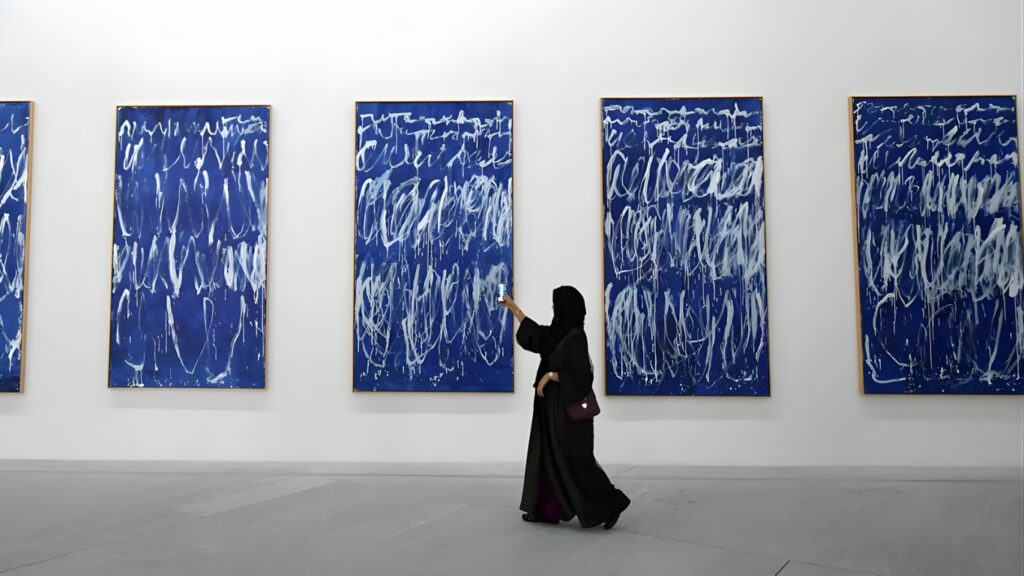
Beyond fairs and auction houses, government cultural programming is doing something more interesting than simply importing Western institutions and hoping local engagement follows. The focus is on building sustainable ecosystems from the ground up.
Vision 2030, the UAE’s comprehensive development strategy, explicitly prioritizes arts and culture alongside economic diversification, recognizing that cultural capital and financial capital reinforce each other in ways that compound over time. The Islamic Arts Biennale held in Diriyah, Saudi Arabia drew 425,000 visitors in 2023, demonstrating the regional appetite for cultural programming when executed at scale with proper marketing and genuine accessibility. Saudi Arabia’s broader ambitions for cultural and lifestyle infrastructure are running in parallel with Dubai’s art push, creating a regional dynamic that Western markets should watch carefully.
Cultural partnerships with international institutions including the Louvre, Guggenheim, and various universities are generating real knowledge transfer and institutional credibility. Artist residency programs bring international talent to the region for extended periods, fostering cross-cultural exchange and embedding Dubai within global creative networks. Education initiatives stretching from school programs through university partnerships are building a pipeline of informed local collectors and arts professionals, so the market stops depending indefinitely on imported expertise.
These ecosystem efforts are producing tangible results you can measure through gallery migration patterns. Established Western galleries including Maddox Gallery, Woodbury House, and Opera Gallery have opened permanent Dubai locations, committing year-round presence rather than simply passing through for art fairs. That kind of commercial commitment signals genuine confidence in the market’s long-term sustainability.
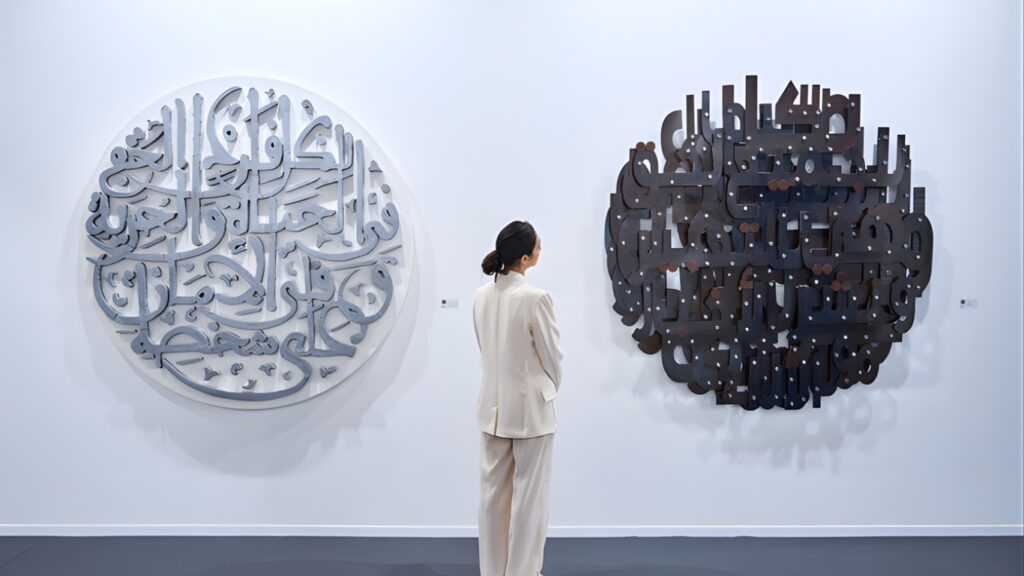
Why Dubai’s Fine Art Hub Appeals To Global Collectors And Capital
The zero-tax environment that Dubai and the broader UAE offer creates a structural competitive advantage that no amount of cultural programming or infrastructure spending can replicate through other means. If you are a serious collector evaluating where to base your collection, the numbers speak for themselves.
Dubai imposes no capital gains tax on art sales. Compare that to the 28% capital gains rate the UK applies to art transactions, or the 20% to 37% rates American collectors face depending on holding period and income levels. The absence of wealth taxes, which exist in Spain, Norway, and Switzerland where art collections feed directly into annual wealth tax calculations, eliminates the ongoing holding costs that quietly compound across decades of ownership. Bloomberg Wealth has documented how these cumulative tax differences are reshaping where the world’s most valuable collections are being held.
No inheritance tax means collections transfer across generations without the 40% estate taxes that UK and US collectors face, which often force heirs to sell beloved pieces simply to cover the tax bill. Art stored in designated free zones incurs no import VAT that would otherwise apply when bringing works into the country. Taken together, these advantages translate to savings of 30% to 50% of total transaction costs compared to London or New York on comparable pieces. That kind of economic incentive overrides cultural preference and long-standing relationships with Western advisors. If you’re thinking about how to structure your asset allocation across alternative investments, art held in Dubai deserves serious consideration.
Beyond the tax arithmetic, the ultra-high-net-worth collector base across the Gulf is growing faster than any Western market right now. Gulf wealth increasingly flows from diversified economies spanning real estate, financial services, technology, and professional services rather than depending exclusively on oil revenues the way previous generations did. That shift creates a more durable organic demand base for the art market to grow into.
This diversified wealth creation fuels art collecting as cultural philanthropy and legacy building among families seeking to establish cultural credentials beyond commercial success.
And then there is the privacy dimension, which matters enormously to a specific type of serious buyer. The discreet transaction environment Dubai provides appeals powerfully to privacy-conscious collectors who face growing scrutiny in their home countries or simply prefer to avoid the public attention that Western auction rooms generate as a matter of course.
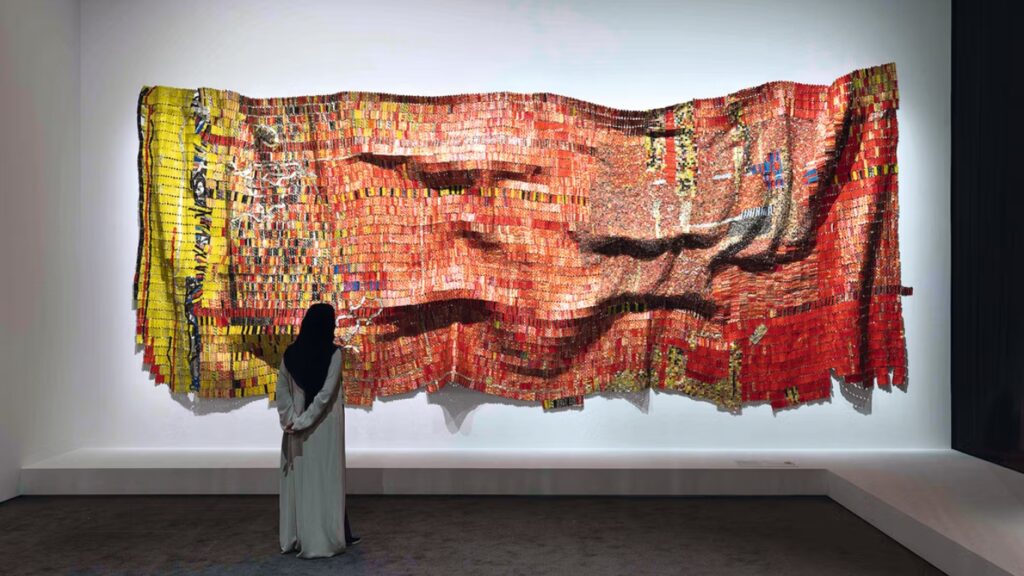
Unlike public auction records in London and New York where hammer prices become permanent public information tracked by databases and market analysts worldwide, Dubai’s gallery-centric sales culture allows genuinely confidential transactions where only the parties directly involved ever know the terms. Free zone storage facilities prevent the kind of public inventory disclosure that customs records or insurance filings might otherwise create elsewhere, letting collectors hold significant works without revealing the scale or composition of their holdings to anyone.
For collectors and investors evaluating Dubai’s fine art potential, the outlook points toward continued robust growth through 2030, driven by sustained government commitment, ongoing wealth migration into the region, and infrastructure momentum that keeps attracting serious commercial participants.
Market observers project 10% to 15% annual growth in transaction volumes, gallery count, and collector participation based on current trajectories and announced government initiatives. ARTnews has tracked the emerging market dimension of this shift closely. If you want to position strategically, focus on Middle Eastern and North African artists gaining institutional recognition through museum acquisitions and major exhibitions. These artists benefit disproportionately from regional collector support and the appetite Western institutions now have to diversify collections that skew heavily toward European and American work.
Contemporary works by relocated international artists following trajectories similar to Farah Atassi or Mohamed Melehi offer opportunities to acquire quality pieces from artists who build profile through UAE residence and access to regional collectors while keeping strong connections to Western institutions. Blue-chip Western art acquired through Dubai rather than London or New York captures identical aesthetic and investment qualities while realizing the tax advantages that justify the UAE’s growing share of global art market flows.
The primary risks to this optimistic picture involve potential government funding cuts if oil prices collapse or fiscal pressures force budget reallocation away from cultural initiatives. That said, the diversification progress made to date suggests culture will stay prioritized even through commodity price cycles.
Regional geopolitical instability, whether through direct conflicts affecting Gulf states or broader Middle East tensions disrupting wealth flows and collector confidence, could temporarily derail momentum even if the long-term fundamentals stay intact. Oversupply of gallery spaces and fair participation, if growth outpaces genuine collector development, might force consolidation and create losses for galleries that entered the market too aggressively.
Yet barring those downside scenarios, Dubai’s combination of sovereign commitment, tax advantages, concentrated wealth, and geographic positioning looks set to make it a permanent fixture in the global art market rather than a passing moment that fades when the spotlight moves on.