
As 2026 unfolds, the financial environment is handing you both complexity and opportunity at the same time. Market cycles are shifting faster than most people expect, inflationary pressures are still front of mind, and geopolitical dynamics are shaping asset behavior in ways we haven’t seen before. In this kind of volatile climate, choosing your ideal asset allocation strategy has never mattered more.
This isn’t simply about dividing your capital across a few buckets. It’s a strategic discipline that shapes the entire architecture of how your wealth grows and survives.
Right now, you’re confronted with a universe of choices. Equities ranging from stable dividend-payers to speculative growth stocks. Bonds being whipsawed by central bank policy pivots.
Alternative assets like real estate and private equity. And a digital asset ecosystem that’s more mature than most people give it credit for. Navigating all of this requires not just insight but structure.
That’s exactly what asset allocation gives you, a framework to align your capital with both your risk appetite and your long-term goals. The 2026 art market forecast is a good reminder of why blindly chasing a single asset class without a broader framework can disappoint even the most investors.
The key to mastering asset allocation in 2026 is understanding the different methodologies available and knowing how to put them to work under real market conditions.
Multi-asset allocation has been studied in depth by the major asset managers. Vanguard publishes its long-running research on age-based and risk-based portfolio frameworks, and BlackRock covers the strategic-versus-tactical debate with the same rigor.
The institutional research desks add the wealth-management lens. JP Morgan's long-term capital-market assumptions and Morgan Stanley's model portfolios both shape how allocations get translated from research into actual client positioning.
What Is Asset Allocation
For deeper context, the breakdown in how rebalancing keeps an allocation framework honest over time is worth reading alongside this analysis.
At its core, asset allocation is the disciplined process of spreading your capital across different asset classes, including equities, fixed income, cash equivalents, real estate, commodities, and alternatives, to strike the right balance between risk and reward. It’s the most foundational principle of portfolio construction and arguably the single biggest driver of your long-term investment outcomes.
Unlike stock picking or market timing, asset allocation focuses on how much of your capital sits in each type of investment, based on your personal goals, time horizons, and tolerance for risk. The idea is straightforward. Different assets behave differently under different economic conditions.
When you get this right, your portfolio experiences less volatility, smoother returns, and genuine protection against systemic risks.
Decades of research back this up. Studies have consistently shown that over 90% of a portfolio’s long-term performance variability comes down to asset allocation decisions, not the individual securities you pick. That’s a number worth sitting with.
The process typically starts with a detailed picture of who you are as an investor. That means understanding your financial goals, whether you’re focused on capital preservation, income generation, or aggressive growth, as well as your liquidity needs and your psychological threshold for watching markets move against you. From there, you assign percentage weightings to various asset classes and adjust them as life events, market movements, or the macroeconomic outlook evolves.
In 2026, asset allocation carries even more complexity than before. Interest rates are still running elevated, global equities are showing sharp sector-specific divergence, and alternative assets are opening up new avenues of return. And here’s the thing, access to institutional-grade strategies like private credit and real assets is increasingly within reach for individual investors, which makes a more nuanced approach not just smart but necessary.
Modern asset allocation is no longer just about stocks and bonds. It’s about engineering a portfolio that’s both resilient and responsive, one that can absorb shocks and capture growth across a wide range of market scenarios.
Strategic Asset Allocation
Strategic asset allocation is the cornerstone of long-term investing. It’s a disciplined, structured approach where you set target allocations across asset classes, equities, bonds, real estate, cash, and hold to them over time regardless of what markets are doing. The philosophy is simple but powerful.
Over the long haul, markets reward consistency and patience far more than reactive behavior.
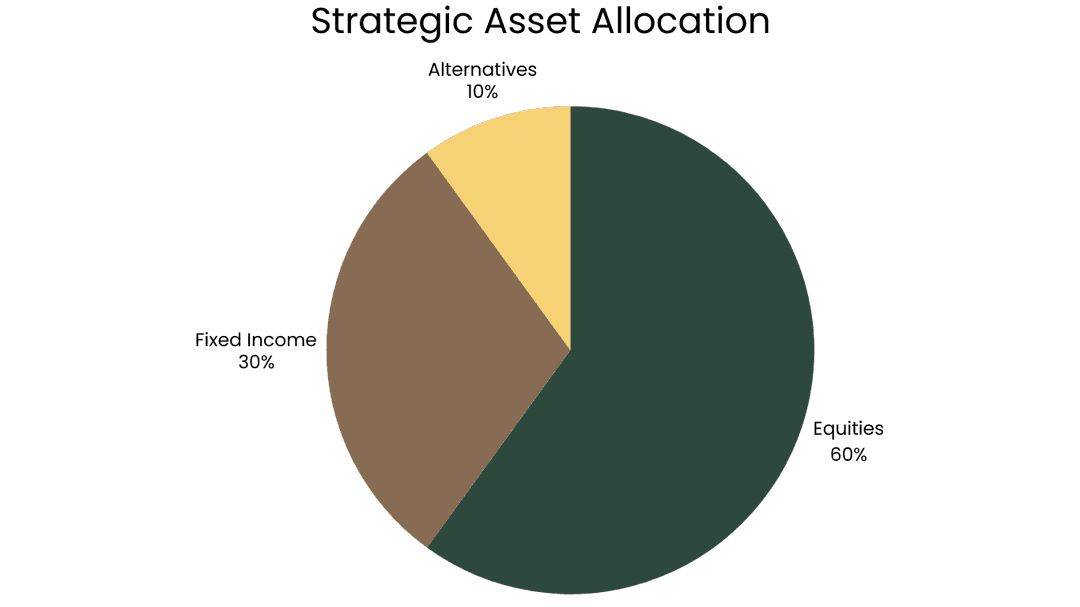
In 2026, strategic asset allocation is as relevant as ever, especially if you’re focused on wealth preservation, retirement planning, or transferring wealth across generations. Its power comes from anchoring decisions to long-term capital markets assumptions rather than short-term noise. A typical model might look like 60% equities, 30% fixed income, and 10% alternatives, built around expected risk and return projections across those categories.
This approach requires periodic rebalancing, usually on a quarterly or annual basis. When one asset class outperforms, say equities during a bull market, it can drift well beyond its original weighting. Strategic allocation calls for realigning back to your targets, locking in gains and restoring your intended risk balance.
That discipline prevents your portfolio from becoming dangerously overexposed to any single asset class.
The numbers support this. Portfolios built on a strategic allocation framework have historically shown lower volatility and more consistent returns over time. Between 2014 and 2024, portfolios following a classic 60/40 equity-bond split returned an annualized average of 6.5%, with a standard deviation well below portfolios that tried to time the market.
Even through 2022’s sharp downturn, rebalanced strategic portfolios recovered faster, precisely because of their structured nature.
One of the biggest advantages here is protection from your own instincts. Investors routinely let fear drive decisions during downturns and overconfidence take over during rallies. Both can seriously damage long-term performance.
Strategic allocation replaces emotion with a rule-based framework, and that’s worth more than most people realize.
Constant-Weighting Asset Allocation
Constant-weighting asset allocation shares a lot of DNA with the strategic approach, but it adds a more responsive mechanism through regular rebalancing back to fixed target weights. The core idea is to hold a predetermined allocation no matter what markets do, by continuously trimming what has grown too large and adding to what has shrunk.
While strategic allocation can tolerate longer gaps between rebalancing events, constant-weighting is inherently more active, often requiring attention quarterly or even monthly.
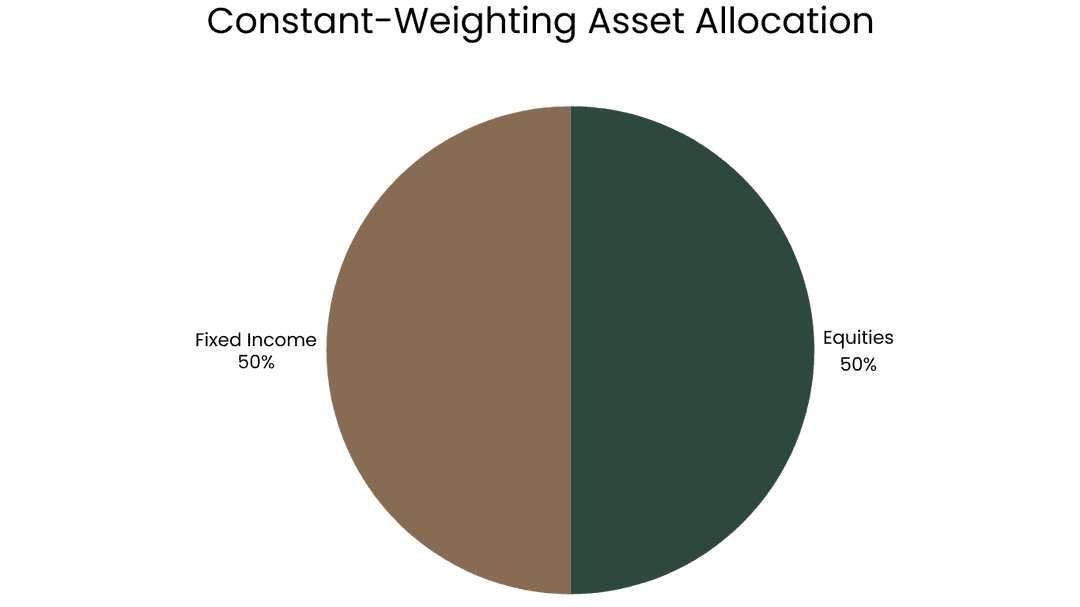
Here’s a simple example. You set a portfolio at 50% equities and 50% bonds. Equities outperform and push the split to 60/40.
You systematically sell a portion of equities and redirect the proceeds into bonds. This not only keeps your risk level in check but also enforces a buy-low, sell-high discipline without you having to think about it. You’re routinely taking profits from what’s running hot and reinvesting in what’s been left behind.
This approach becomes especially valuable in volatile or sideways markets, where short-term swings can quickly distort your target weightings. With global markets navigating fragmented sector recoveries, inflationary pulses, and rapid monetary policy shifts, constant-weighting lets you capture opportunities consistently without needing to forecast what comes next.
Institutional investors and high-net-worth individuals have been drawn to this method for good reason. Research shows portfolios rebalanced on a monthly constant-weighting basis can outperform passive strategies by 0.5% to 1.5% annually, especially during periods of elevated volatility.
That said, the strategy comes with real trade-offs. Constant rebalancing can generate higher transaction costs, particularly across portfolios with many holdings or within taxable accounts. Getting this right means striking a balance between discipline and cost efficiency, often through tax-aware portfolio management tools or automated platforms that optimize your rebalancing thresholds intelligently.
In the current economic cycle, where market dispersion across geographies and asset classes is running high, constant-weighting asset allocation gives you a compelling way to maintain strategic intent while dynamically capitalizing on price movements.
Tactical Asset Allocation
Tactical asset allocation is a more flexible, active approach to managing your portfolio. It allows you to step away from your long-term strategic allocation when short- to medium-term opportunities present themselves. Unlike constant-weighting, which is all about holding structure, tactical allocation embraces deliberate shifts based on macroeconomic trends, market valuations, and technical signals.
In practice, it blends the stability of strategic planning with the adaptability of market timing, though the timing is always executed within disciplined risk parameters.
In 2026, this strategy is drawing renewed attention as investors face uneven global growth, regional inflation divergence, and sharp sector-level rotation. With central banks moving at different paces and some economies entering recession while others expand, tactical allocation gives you the tools to capitalize on cyclical dislocations. Understanding how dominant companies like NVIDIA captured their market position is a useful lens for spotting which sectors deserve a tactical overweight at any given moment.
A straightforward example is overweighting energy equities during a commodities supercycle or pulling back from long-duration bonds ahead of an interest rate hiking cycle. Moves like these, when timed well, can add meaningfully to your returns.
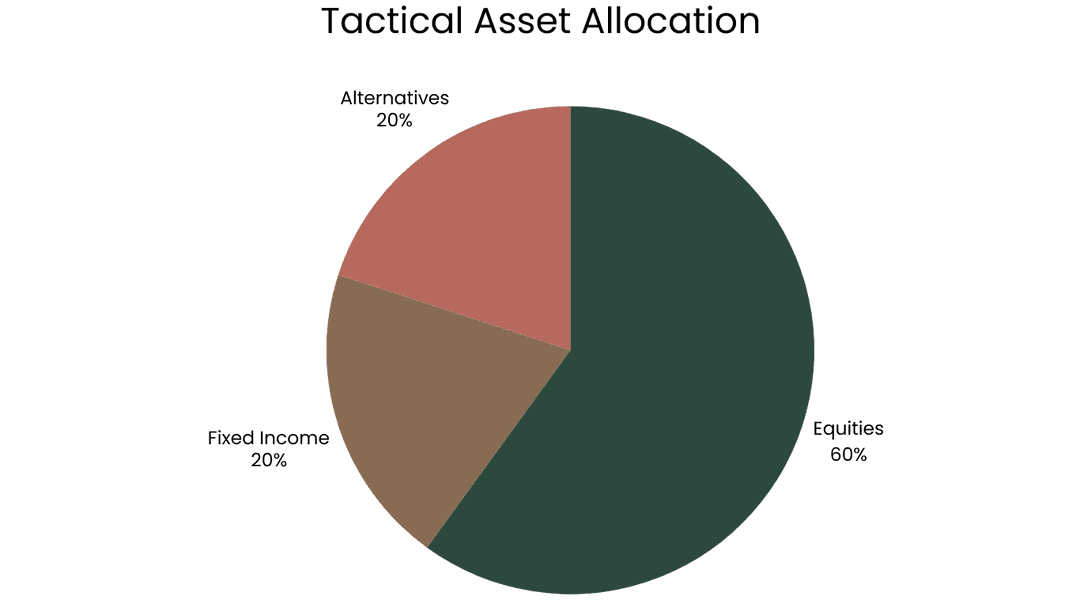
Institutional research backs this up. Portfolios incorporating tactical tilts, typically within a 5% to 20% band from the core allocation, have historically outperformed purely passive portfolios during transitional market phases. A 2024 study found that multi-asset portfolios using tactical overlays beat their static counterparts by an average of 2.1% annually over a 10-year period, with the edge most pronounced during economic inflection points.
But tactical allocation demands serious commitment. You need deep market insight, strong analytical frameworks, and emotional discipline. Without those, it can easily become counterproductive, driven by sentiment rather than signal.
At its best, it’s supported by quantitative models and fundamental macroeconomic research, typically managed by professional advisors or experienced investors who genuinely understand what they’re reading in the data.
A practical 2026 example is reallocating capital from overvalued U.S. technology stocks into emerging market debt, where favorable currency valuations and central bank easing are creating real tailwinds. Another move gaining traction is temporarily increasing exposure to floating-rate securities or real asset funds in response to persistent inflationary pressure in specific regions.
Tactical asset allocation is not designed to replace your long-term strategy. It’s designed to sharpen it through selective, time-bound deviations.
For investors looking for a performance edge while keeping a diversified core intact, this approach can deliver outperformance against benchmarks, provided the timing, research, and execution are genuinely precise.
Dynamic Asset Allocation
Dynamic asset allocation takes a fully adaptive approach to managing your portfolio, continuously adjusting your exposure to different asset classes as market conditions, economic indicators, and risk assessments evolve. Unlike strategic or constant-weighting models that anchor to preset targets, dynamic allocation is fluid and responsive, allowing for substantial reallocation across assets in real time.
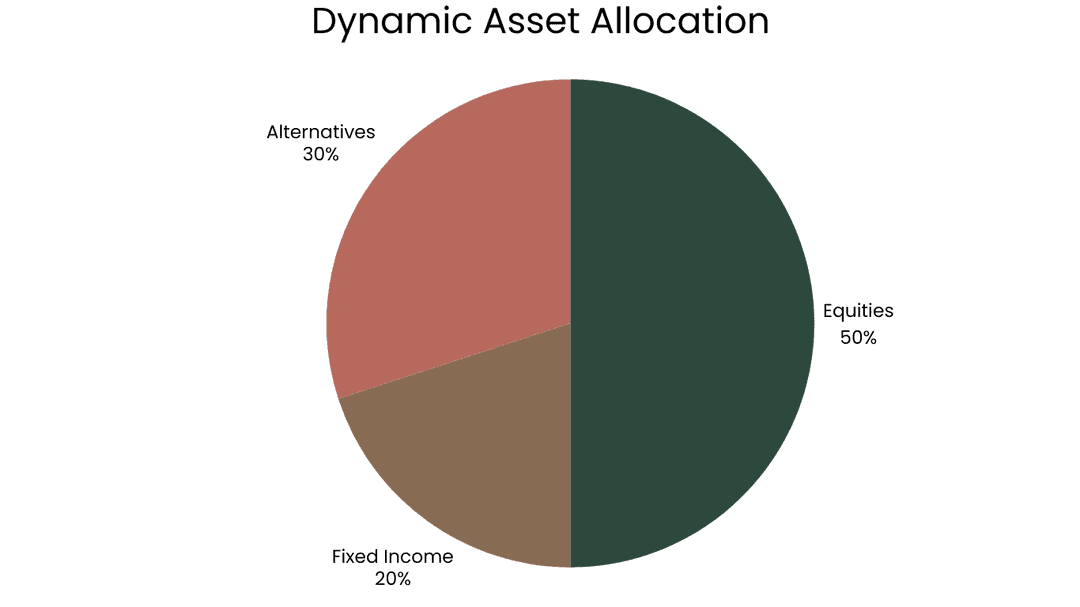
At the heart of this strategy is a core belief that asset class performance is cyclical. Proactive adjustments, when done methodically, can limit your downside while enhancing your upside. A dynamic allocator might carry heavy equity exposure during a bull market, then shift decisively toward fixed income, commodities, or cash as conditions deteriorate.
These moves aren’t short-term tactical bets. They’re typically made with a medium-term horizon, informed by a combination of quantitative models and macroeconomic analysis.
Right now, with interest rate uncertainty, inflation persistence, and geopolitical volatility all in the mix, dynamic allocation is gaining serious traction among institutional funds, family offices, and high-net-worth investors.
Several global asset managers have already shifted significant allocations toward infrastructure, private credit, and low-duration fixed income. They are responding to tightening credit cycles and renewed appetite for real asset exposure.
Understanding the four phases of the real estate market cycle can help you identify exactly when real assets deserve a larger slice of your dynamic allocation.
The data supports this approach. A 2024 performance review of dynamic multi-asset portfolios found that those managed with systematic reallocation frameworks delivered annualized returns of 7.8% with lower drawdowns compared to static portfolios of similar risk profiles.
Those results are especially compelling in 2026, where traditional 60/40 models are being tested by structural changes in both equity and bond markets.
Dynamic allocation also acts as a buffer against behavioral biases. Because the framework runs on pre-established signals rather than gut decisions, you’re less likely to panic-sell or chase momentum. Most dynamic portfolios draw on momentum indicators, earnings revisions, valuation multiples, and macroeconomic data like inflation surprises or interest rate spreads to drive their asset shifts.
One of the most attractive aspects of dynamic allocation is its ability to bring in non-traditional asset classes, such as hedge funds, real assets, and even digital assets, based on what the risk-return picture looks like at any given point.
Early in 2026, for instance, some dynamic strategies began incorporating tokenized real estate funds and yield-bearing crypto instruments, responding to growing investor interest and meaningful regulatory clarity in those markets.
Insured Asset Allocation
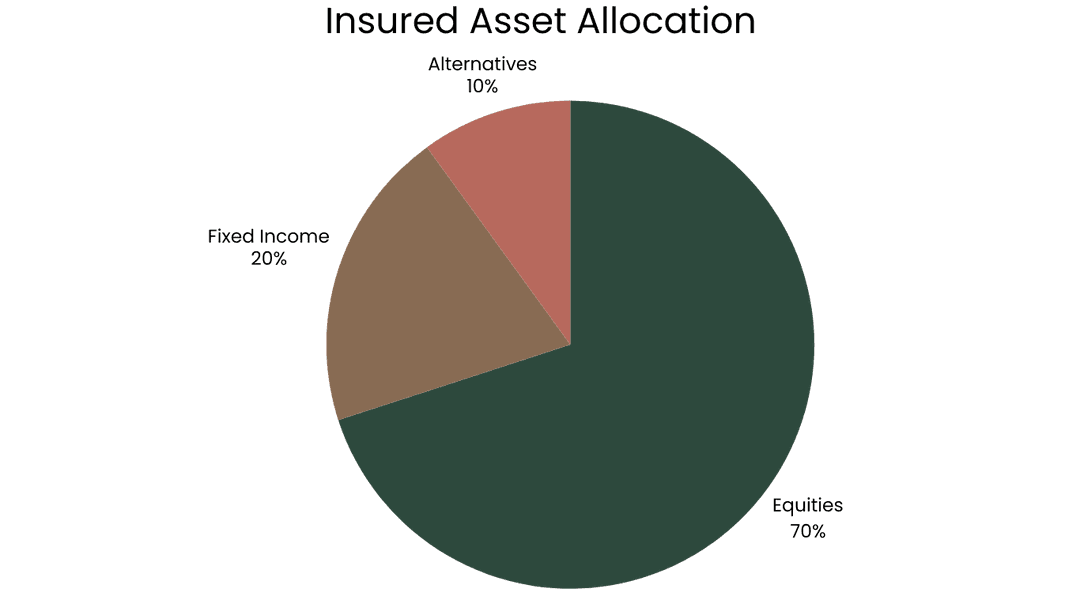
Insured asset allocation is a strategy that weaves risk management directly into your investment framework by defining a value floor for your portfolio, a level below which you simply will not allow your total asset value to fall. It blends elements of strategic allocation with a built-in safety mechanism. If your portfolio value drifts toward that predetermined threshold, you shift assets toward more conservative instruments like Treasury securities or cash equivalents to protect what’s left.
With equity market volatility persisting, global debt levels drawing concern, and central bank signals remaining inconsistent, many investors are searching for capital preservation without abandoning growth entirely.
Insured allocation addresses that directly by actively managing your downside while keeping you in the game when markets move upward.
The strategy starts with a carefully defined floor. Say you set a minimum acceptable value of $950,000 on a $1 million portfolio. While the market value sits comfortably above that level, you might hold an aggressive mix of 70% equities, 20% fixed income, and 10% alternatives.
But if performance deteriorates and the portfolio approaches that floor, a preemptive reallocation into capital-preserving assets kicks in automatically.
What separates insured allocation from a basic stop-loss or hedging technique is its built-in decision framework, often automated through portfolio insurance models or algorithmic rebalancing systems. These systems allow for gradual, data-informed transitions rather than abrupt sell-offs that can lock in losses at the worst possible moment.
That discipline is especially valuable during bear markets, when panic tends to drive irrational decisions and permanent capital destruction.
Insured asset allocation gained real momentum after the 2008 financial crisis and has come back into focus as recession forecasts from major financial institutions rise alongside credit tightening and inflation volatility. Through 2024, retirees and institutional endowments, both of which face firm spending requirements, were among the most active adopters of this approach.
A clear 2026 example is a retiree with a fixed annual withdrawal requirement who uses an insured allocation strategy that shifts more aggressively into municipal bonds, TIPS (Treasury Inflation-Protected Securities), or money market funds once their equity portfolio takes a 10% drawdown. That pivot locks in remaining capital while keeping liquidity available for income needs.
Insured asset allocation won’t capture the full upside of a roaring bull market. But that’s not the point. Its value lies in its asymmetric return profile, limiting your downside exposure while still letting you participate when conditions are favorable.
Integrated Asset Allocation
Integrated asset allocation is the most comprehensive approach among contemporary investment strategies. What sets it apart is that it considers not just your long-term goals, risk tolerance, and time horizon, but also the prevailing economic environment and how your personal financial situation is changing over time.
In practice, it blends elements of both strategic and dynamic allocation while weaving in macro forecasts, capital market expectations, and behavioral finance considerations into a single, coherent framework.
This approach is gaining ground among investors who understand that financial markets don’t operate in a vacuum. The global economy is navigating deglobalization, structural inflation, energy transition, and central bank policy divergence all at once. Those conditions demand a strategy that adapts flexibly while staying aligned with your personal investment objectives.
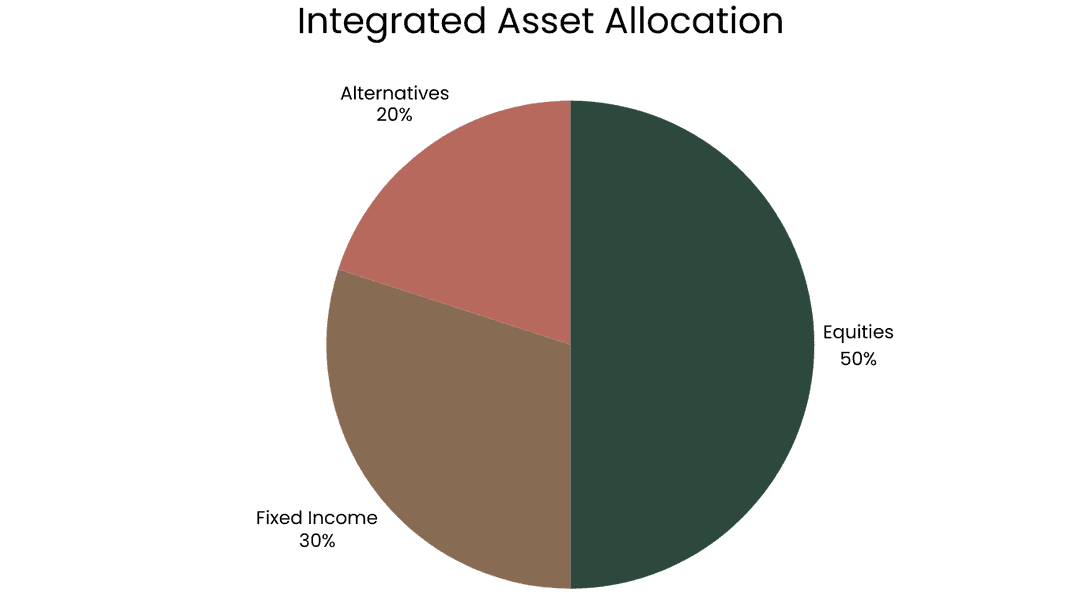
Integrated asset allocation typically builds on a core-satellite model. The core holds a diversified mix designed to meet your long-term needs, usually through low-cost index funds or ETFs. The satellite component adjusts dynamically based on market conditions, sector opportunities, or tactical themes as they emerge.
For example, your portfolio’s core might stay steady at 50% global equities and 30% fixed income, while the satellite 20% rotates among commodities, hedge strategies, or alternative assets like private credit or infrastructure, depending on what the signals are telling you.
One of the most distinctive features of integrated allocation is its ability to factor in real-life variables that other models simply ignore. Career risk, future liabilities, business ownership, these all matter. A tech entrepreneur with heavy NASDAQ exposure through their own company, for instance, might hold a more conservative liquid portfolio weighted toward real assets and fixed income, achieving genuine balance when the whole picture is viewed together.
Statistical analysis from multi-asset strategy funds in 2024 shows that integrated portfolios delivered higher Sharpe ratios and lower drawdown volatility, even when benchmark performance was erratic. The Financial Times’ wealth management coverage has documented this trend extensively among family offices and institutional investors moving toward integrated frameworks.
The strength of integrated allocation is its layered flexibility. No single variable drives the decisions. Instead, you get a continuous interplay of economic signals, market data, and personal financial factors working together.
What Is a Good Asset Allocation by Age?
Asset allocation should always reflect your individual goals and risk tolerance. But age gives you a practical starting point for thinking about the right mix. As you move through different life stages, your portfolio naturally evolves to balance growth, income, and capital preservation in different proportions.
Here is a simplified framework for 2026, shaped by current market conditions. Younger investors in their 20s and 30s typically carry 80% to 90% in growth assets like equities and real estate, with a small buffer in bonds or cash. Investors in their 40s and early 50s often shift toward a 60% to 70% growth allocation, bringing fixed income up to 25% to 30% and adding a slice of alternatives.
By the late 50s and into retirement, the balance tilts further toward income and preservation, with equities dropping to 40% to 50%, bonds rising to 35% to 40%, and a meaningful allocation to cash or capital-protected instruments. Forbes Advisor’s breakdown of age-based allocation models offers a useful reference point alongside your advisor’s recommendations.
- Ages 20–35 – This stage is defined by long investment horizons and a high tolerance for risk, making it optimal for portfolios heavily weighted toward equities. A typical allocation may include 90% equities and 10% fixed income or cash, with a focus on high-growth sectors such as technology, emerging markets, and innovation-focused ETFs.
- Ages 35, 50 , Investors in their mid-career years often face increasing financial obligations, leading to a more balanced portfolio structure. Allocations might shift to 70% equities, 25% fixed income, and 5% alternatives, reflecting a gradual shift toward stability while maintaining a strong growth component.
- Ages 50, 65 , As retirement approaches, capital preservation takes precedence over aggressive growth. A common allocation during this phase might be 60% equities, 30% fixed income, and 10% alternatives, with a growing emphasis on dividend-paying stocks, bonds, and inflation-sensitive assets like infrastructure.
- Age 65+, The retirement phase typically centers on income generation and portfolio stability. Investors in this group often transition to a conservative allocation of 40, 50% equities, 40% fixed income, and 10% in cash or low-volatility instruments to ensure consistent income and minimal drawdowns during the distribution years.
In 2026, a more nuanced approach is gaining ground. Rather than relying on age alone, smart investors are adjusting their allocation strategies dynamically to reflect health status, employment income, legacy planning goals, and even non-traditional assets like fine wine and collectibles. Reuters Markets has tracked this shift as part of a broader move away from rigid age-based formulas toward genuinely personalized, flexible frameworks. That evolution reflects a simple truth. A number on a birthday card doesn’t tell the whole story of your financial life.
FAQ
What is the best asset allocation strategy in 2025?
Integrated and dynamic asset allocation strategies are most effective in 2025. They adapt to market shifts while aligning with individual goals and risk tolerance.
How often should I rebalance my portfolio?
Rebalance annually for strategic allocation, quarterly for constant-weighting, and as needed for tactical or dynamic strategies based on market signals.
Can tactical asset allocation outperform passive investing?
Yes. Tactical allocation can outperform passive strategies by 1, 2% annually when applied with discipline and market insight.
Is the 60/40 portfolio still effective in 2025?
Partially. The 60/40 model is now often supplemented with alternatives like real estate and private credit to improve diversification and inflation protection.
Should young investors avoid bonds?
No. While equities dominate early portfolios, a small bond allocation adds stability and liquidity during market downturns.
We last reviewed this analysis in May 2026.


Alex Tzoulis
Alex Tzoulis is Co-Owner and Markets Analyst at The Luxury Playbook, specializing in equities, crypto, forex, and global financial markets. His work focuses on analyzing macroeconomic trends, geopolitical developments, and monetary policy, translating them into actionable insights across both traditional and digital asset classes. He leads the platform's financial market coverage, providing structured analysis across stock market investing, trading strategies, and cryptocurrency markets. His expertise strengthens the publication's authority in financial markets and capital allocation, bridging traditional finance with emerging digital investment ecosystems.