

KAWS occupies a unique position in contemporary art as an artist who moves seamlessly between seemingly incompatible worlds. He commands museum exhibitions at institutions like the Brooklyn Museum and Crystal Bridges while simultaneously designing Uniqlo T-shirts sold for $15 at shopping malls.
His sculptures appear in prestigious gallery programs alongside established contemporary masters yet his mass-market collaborations with Dior, Nike, and Sesame Street reach audiences who have never set foot in a gallery.
The evolution of “art toys” from niche collectibles to investment-grade contemporary art represents a broader cultural shift in how markets value creative output. What began in the 1990s as small-run designer vinyl figures sold at underground shops in Hong Kong and Tokyo has transformed into a legitimate asset class where certain pieces command five-figure and six-figure prices at major auction houses.
KAWS himself started by producing limited vinyl figures in the early 2000s, priced affordably for young collectors, before gradually scaling up to museum-scale bronze and fiberglass sculptures that now sell for hundreds of thousands or even millions of dollars at auction.
However, this rapid ascent from street-level collectibles to investment-grade art creates tension at the heart of KAWS collecting.
Are these museum-quality sculptures deserving of placement alongside established contemporary artists like Takashi Murakami, Jeff Koons, and Damien Hirst? Or do they represent overhyped vinyl toys riding cultural trends driven by Instagram aesthetics and streetwear hype that will inevitably fade when the next generation discovers different artists?
Table of Contents
Key Takeaways & The 5Ws
- KAWS has evolved from underground “art toys” to a mature contemporary art market where key works can behave like investment-grade assets rather than hype collectibles.
- Over roughly a decade, the market has shown strong annualized returns with deep auction liquidity, high sell-through rates, and museum validation that can provide a structural value floor.
- The real investment case sits in scarce bronze, wood, and fiberglass sculptures in small editions—especially Companion variants with strong provenance—not in mass-produced vinyl figures and broad collaborations.
- Post-2021 corrections have cleaned out speculative excess, creating a healthier 2026 market where serious collectors can enter at more rational prices while still capturing upside from a culturally dominant artist.
- Key risks include continuous new releases, reliance on social-media visibility, and taste cycles; long-term returns depend on selectivity around edition size, material, and exhibition history.
- Who is this for?
- High-net-worth collectors, family offices, and specialized art investors seeking exposure to culturally iconic contemporary art with a real auction track record, plus serious KAWS fans ready to graduate from vinyl collectibles into museum-caliber works.
- What is the strategy?
- A focused KAWS allocation built around scarce Companion sculptures and key canvases in premium materials and small editions, backed by strong provenance and exhibition history—while treating open-edition vinyl toys and mass collaborations as passion purchases rather than core investments.
- When is the window?
- From the current post-hype consolidation phase—roughly 2026 onward—as prices have reset from peak levels, weak hands have exited, and the market shifts from speculative churn to long-term collector ownership.
- Where does it trade?
- Primarily through major auction houses and blue-chip galleries in New York, Hong Kong, London, and other global hubs, where top Companion sculptures and important works on canvas trade regularly and pricing is transparent enough to benchmark entry points.
- Why does it work?
- Because KAWS sits at the intersection of pop culture, streetwear, and institutional contemporary art, offering culturally resonant, financially proven works—provided investors avoid overproduced editions and concentrate on genuinely scarce pieces that collectors will still want in twenty years.

What Do The Numbers Actually Say About KAWS Investment Performance And Market Sustainability?
Moving beyond subjective debates about artistic merit, the quantitative performance data provides concrete evidence of how KAWS has performed as an investment asset over meaningful timeframes. The artist has delivered 16.8% average annual returns over the past 10 years, with auction sale prices for paintings and prints rising 184% since 2010 according to art market analytics firms tracking secondary market transactions.

This appreciation outperformed S&P 500 returns during the same period, demonstrating genuine value creation beyond hype cycles that characterize many alternative assets. Unlike cryptocurrencies or meme stocks that surged and crashed within months, KAWS has shown sustained appreciation across a full decade that includes multiple market cycles and economic conditions.
The depth behind these returns reveals a maturing market rather than speculative froth concentrated in a few headline transactions. KAWS has generated $230.3 million in total auction sales since 2015, with transaction volume doubling over this period as more collectors enter the market and existing collectors upgrade holdings.
The 87% sell-through rate recorded in 2024 indicates strong buyer demand even in the post-pandemic correction environment where many speculative assets from NFTs to luxury watches collapsed as easy monetary policy ended and interest rates normalized.
Beyond transaction volume, the overall market capitalization tells a story of sustained growth with healthy corrections rather than boom-bust dynamics. KAWS’ market capitalization reached $596 million, representing a 200% increase since 2015, with particularly noteworthy momentum of +20.5% in the last 12 months through early 2026.
This recent acceleration matters because it follows the 2021 peak and subsequent correction that many observers predicted would permanently damage KAWS values as pandemic-era speculation unwound. Instead, the market is showing renewed upward trajectory, suggesting the correction represented healthy consolidation that eliminated weak hands and reset prices to sustainable levels rather than indicating a bubble that burst permanently.
What separates KAWS from pure speculation plays is the institutional validation creating a value floor that provides downside protection even during broad art market corrections. Over 12 major museums now hold KAWS works in their permanent collections, including Crystal Bridges, SFMOA (San Francisco Museum of Modern Art), and various MoMA (Museum of Modern Art) collaborations that position his work alongside canonical contemporary artists.
The artist has mounted over 50 solo exhibitions across his 24-year career, demonstrating sustained curatorial interest rather than temporary fascination.
Which KAWS Figures Are Actually Investment-Grade And What Are The Major Risk Factors In 2026?
Understanding which specific KAWS works qualify as investment-grade rather than simply collectible requires examining the material and edition size dynamics that serve as primary value drivers in his market.
Bronze, wood, and fiberglass sculptures produced in editions of 3 to 25 pieces consistently appreciate over time, with examples including the “At This Time” series produced in editions of only 3 and “Final Days” bronze sculptures limited to editions of 25.
These small-edition sculptures in premium materials command prices from $50,000 to over $500,000 depending on size, edition number, and provenance. Conversely, open-edition vinyl figures, while culturally significant and aesthetically appealing, remain affordable collectibles priced from hundreds to low thousands of dollars with limited appreciation potential due to unlimited supply.
Material quality matters substantially more than character recognition for investment returns, as collectors willing to pay six figures demand the scarcity and permanence that bronze or fiberglass provides versus mass-produced vinyl that any dedicated fan can acquire.
Within KAWS’ broader character universe spanning multiple figures, the Companion character demonstrates overwhelming dominance in auction performance that makes it the core investment thesis for serious buyers.
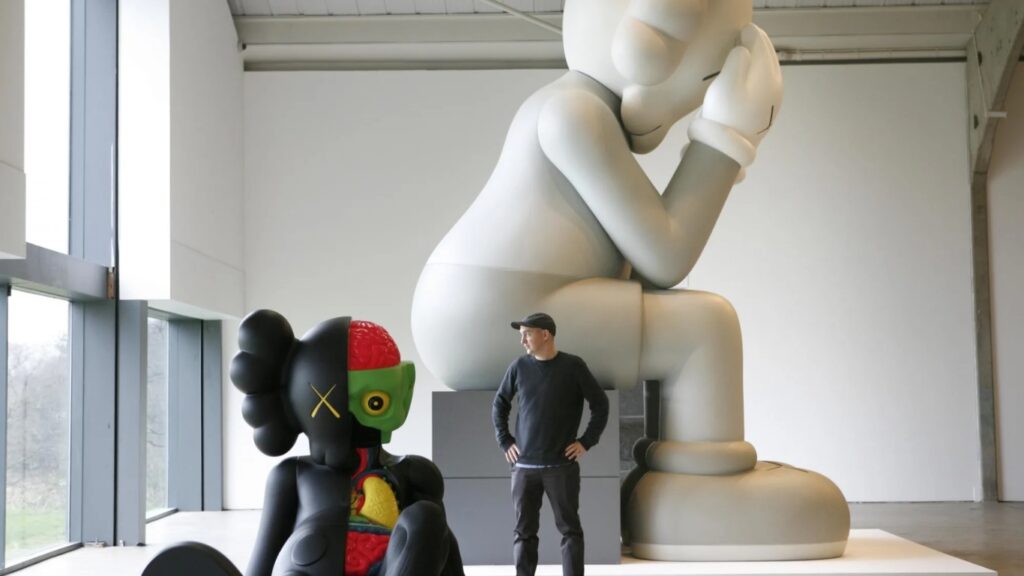
Over 80% of high-value KAWS transactions involve Companion variations including iconic works like “Four Foot Companion,” “Dissected Companion” showing the character’s internal anatomy, and “Clean Slate” depicting the figure in contemplative poses.

This single character, recognizable by its distinctive crossed-out eyes and Mickey Mouse-inspired proportions, has become synonymous with KAWS in the same way that specific Murakami flowers or Hirst dots define those artists’ markets.
While other characters including BFF (a lying-down Companion variant), Chum, and the various Family groupings serve important cultural and aesthetic roles within KAWS’ artistic practice, they lack comparable investment track records with substantially fewer high-value auction results and less consistent appreciation patterns.
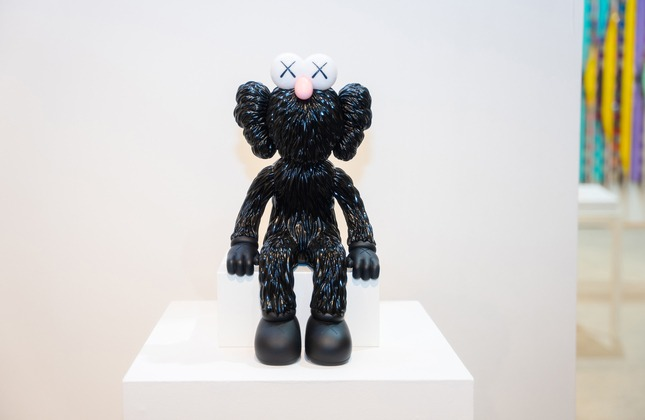
The current market environment presents what may prove to be optimal entry timing for informed collectors as post-hype market maturation creates opportunity that didn’t exist during the speculative peak. Unlike the 2019 to 2021 period when speculation drove irrational pricing with flippers buying anything KAWS-related expecting automatic profits, the 2026 market shows healthier dynamics with informed buyers focusing on provenance documentation proving authenticity, edition scarcity separating limited from unlimited releases, and material quality distinguishing investment-grade sculptures from mass-market collectibles.
The correction that occurred in 2022 and 2023 eliminated weak hands who were chasing appreciation rather than collecting for genuine appreciation of the work, leaving a market composed increasingly of serious collectors building long-term holdings.
This maturation process, painful for those who bought at the peak, creates better conditions for new entrants who can acquire quality pieces at prices that better reflect fundamental scarcity and institutional support rather than Instagram-driven hype.
However, despite these encouraging fundamentals and recent price momentum, meaningful risk factors deserve monitoring before committing significant capital to KAWS as an investment vehicle. Edition saturation from continued new releases presents perhaps the most significant threat, as KAWS maintains an aggressive production schedule releasing multiple new sculptures, prints, and collaborations annually.
Each new release, while generating publicity and maintaining cultural relevance, potentially dilutes scarcity premiums that drive secondary market appreciation for earlier works. If collectors perceive that acquiring the latest release provides similar satisfaction to hunting secondary market rarities, demand for older editions may soften even as supply remains fixed.
At the same time, the over-reliance on Instagram-driven hype, while contributing to KAWS’ remarkable reach with 4.5 million followers creating awareness that most contemporary artists cannot match, also creates vulnerability to platform algorithm changes or shifts in social media consumption patterns.
Much of KAWS’ value proposition stems from his pieces being instantly recognizable and highly shareable on visual platforms, creating demand from collectors who appreciate this visibility alongside or instead of purely artistic merit.
If social media’s influence on art consumption wanes or new platforms emerge where KAWS’ aesthetic translates less effectively, this pillar supporting his market could weaken even as museum collections and gallery representation continue.