The art-market gender gap has narrowed in headlines and barely budged in the auction record. The 2024 Burns Halperin Report tracked roughly 11 percent of works sold at auction by women between 2008 and 2022, against a far lower share of the value. Inside that small percentage, a smaller still cohort of contemporary female artists is now rewriting record after record.
We have spent the past two seasons watching five names in particular. Each one represents a different argument for how the market actually catches up: institutional repetition, depth of edition, market timing, geographical pull, and the speed at which a fresh primary market translates into auction depth. The cohort sits alongside the blue-chip artists defining 2026 and the broader artists defining the market in 2026.
- The art-market gender gap has narrowed in headlines and barely budged in the auction record, with the 2024 Burns Halperin Report tracking roughly eleven percent of auction works by women.
- Yayoi Kusama is the rare contemporary artist whose institutional footprint genuinely tracks her auction footprint, with major retrospectives at Tate Modern, the Hirshhorn, Pompidou and M Plus.
- Christie’s and Sotheby’s have repeatedly placed Kusama’s large-scale pumpkin paintings and Infinity Net canvases in the eight-figure range across multiple seasons.
- Bridget Riley’s market has run a different course, with the reappraisal accelerating in the 2010s through Tate, Hayward Gallery and Yale Center for British Art retrospectives.
- Tracey Emin’s market rerated meaningfully through 2023 and 2024 as a generation of British collectors who grew up with the YBA story moved into peak buying age.
- Ayako Rokkaku and Daisy Dodd-Noble represent the speed at which a fresh primary market now translates into measurable auction depth for serious female contemporary artists.
- Who is this for?
- Contemporary collectors, advisors and curators interested in the small cohort of contemporary female artists who are genuinely rewriting auction records across the past several seasons.
- What is happening?
- An editorial overview of five contemporary female artists rewriting auction records, covering Kusama, Riley, Emin, Rokkaku and Dodd-Noble and the structural arguments behind each.
- When did this emerge?
- Most relevant around the May and November contemporary evening sales at Christie’s, Sotheby’s and Phillips and during major retrospective and survey programmes at leading institutions.
- Where is this happening?
- Centred on the New York, London and Hong Kong salesrooms at the three major houses, with institutional support from Tate Modern, MoMA, the Pompidou, the Hirshhorn and M Plus.
- Why does it matter?
- Understanding which female contemporary artists are actually rewriting the auction record clarifies how the broader gender-gap conversation translates into measurable secondary-market depth.
Yayoi Kusama: institutional gravity, market depth
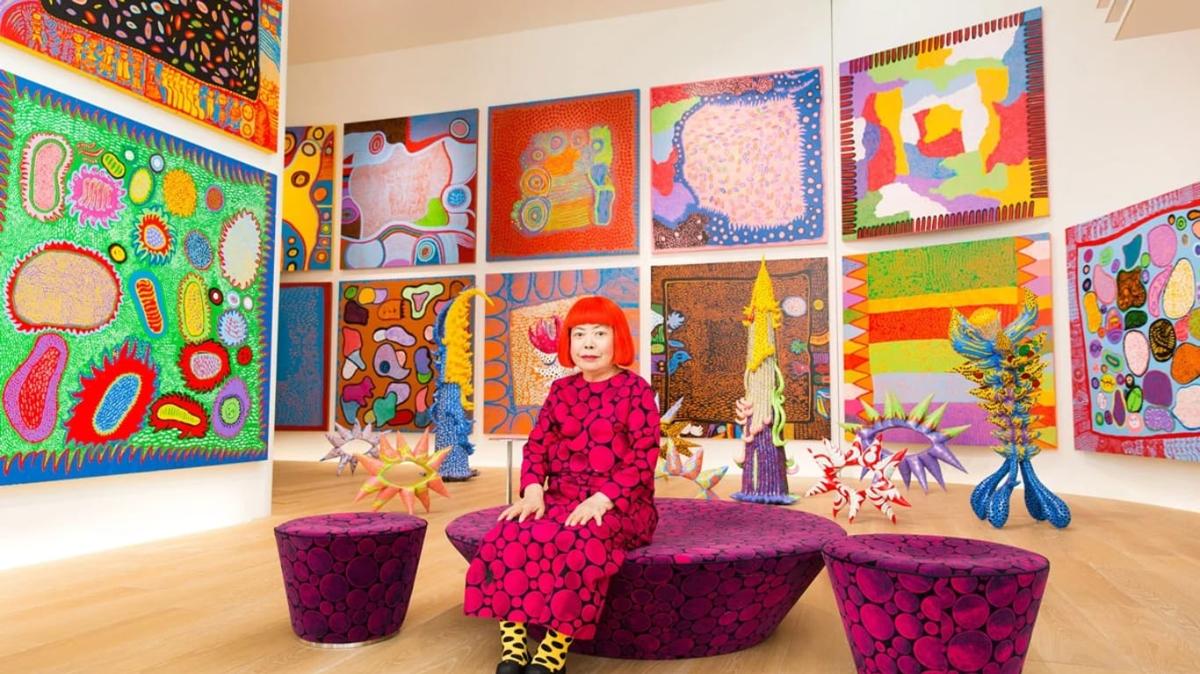
Kusama is the rare contemporary artist whose institutional footprint genuinely tracks her auction footprint. Major retrospectives at Tate Modern, the Hirshhorn, the Centre Pompidou, M+ Hong Kong and the Whitney have run consecutively for the past decade, and the Infinity Room remains the single most-Instagrammed contemporary work on any continent.
The auction record reflects that. Christie's and Sotheby's have repeatedly placed her large-scale pumpkin paintings and Infinity Net canvases in the eight-figure range. Phillips' Hong Kong sales have been the most consistent venue for her work above $5 million, and the depth of her market (the number of distinct buyers willing to bid at that level) is genuinely deep.
Kusama's market is not a moment; it is a multi-decade compounding of museum legitimisation. Collectors who anchor a collection with her work pay for that compounding rather than against it.
Bridget Riley: Op Art, restored to depth
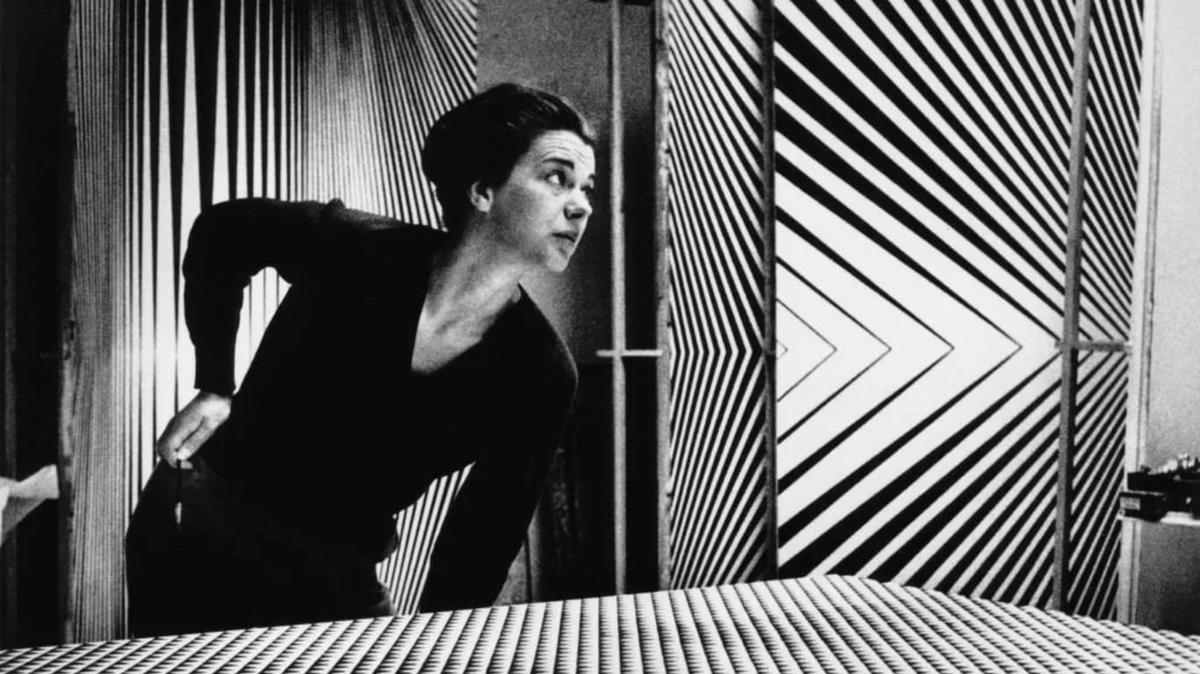
Riley's market has run a different course. For decades after the 1960s Op Art moment her primary work traded in a narrow band, supported by serious Tate-backed legitimation but constrained by the period's reputational baggage. The reappraisal accelerated in the 2010s with the Tate, Hayward Gallery and Yale Center for British Art retrospectives, and it has compounded since.
Sotheby's, Christie's and Phillips have placed her major 1960s and 1970s canvases consistently in the multi-million-pound bracket, and the depth of her primary-period work at auction has visibly thickened over the past five seasons. The David Zwirner representation has anchored the contemporary primary market in parallel.
Tracey Emin: the late re-rate

Emin's market re-rated meaningfully through 2023 and 2024 as a generation of British collectors who grew up with the YBA story moved into peak buying age. Her institutional moment has caught up in parallel: the Munch Museum's pairing of her work with Edvard Munch, the major Tate retrospective, and the public reception of her recent painting cycle have all pushed the conversation past the early-career headlines.
Christie's and Sotheby's London have absorbed the strongest secondary-market depth, with new highs across her painting practice and steady secondary movement on the embroidery and neon work. The argument for Emin is partly the late-career painting reappraisal, partly the durable institutional record.
Ayako Rokkaku: the speed of the new primary market

Rokkaku is the speed-of-light example. The Avant Arte editions, the major institutional placements, and a primary-market presence that scaled from a small Tokyo cohort to a global collector base in roughly a decade have produced one of the fastest auction acceleration curves of any contemporary artist working today.
Sotheby's and Phillips Hong Kong have anchored the auction depth, with multiple seven-figure results across her larger canvases over the past three seasons. The volume is what to watch: dozens of works trade above the six-figure mark in a typical year, which is the kind of liquidity that turns an artist's market into a serious collector consideration rather than a hype curve.
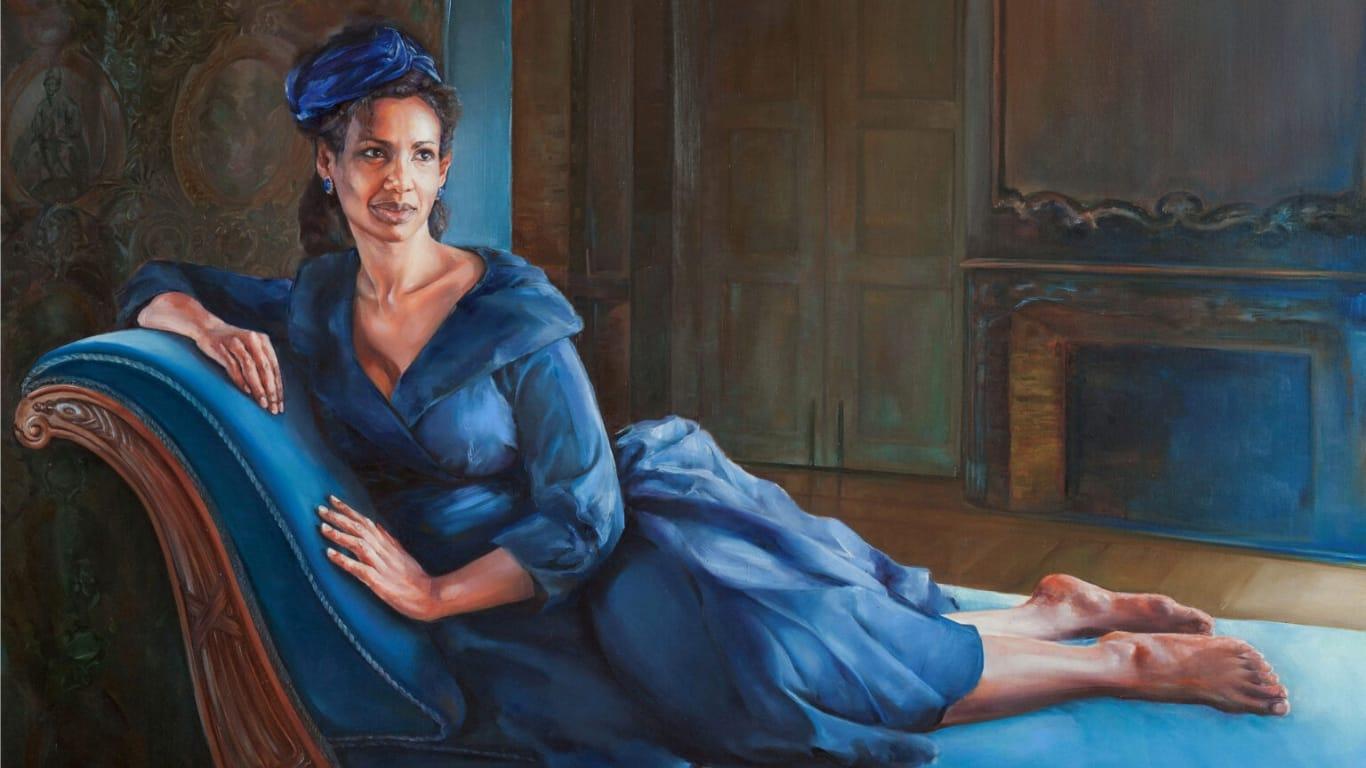
Daisy Dodd-Noble: the cohort to watch

Dodd-Noble represents the cohort one tier earlier in the curve. The primary-market reception, the early institutional placements, and the gallery representation through London and Los Angeles all sit at the stage where a serious career either compounds into auction depth or stalls.
The conservative read is to watch the institutional record over the next three seasons. The faster read is to engage the primary market while it is still primary, with the understanding that any contemporary artist at this stage carries the volatility that comes with a thin auction comparable set.
What the five names have in common
Each artist has cleared two tests that the wider market still ducks. The first is institutional repetition: not a single retrospective, but multiple at named institutions across geographies. The second is depth of secondary-market activity: enough comparables that a collector can underwrite an acquisition with reference to actual recent results rather than to a single trophy lot.
The 2024 UBS / Art Basel Global Art Market Report flagged the gap between the institutional record of contemporary female artists and the auction record. The five names above are the part of the cohort where that gap has visibly closed.
What this means for collectors
The cohort of contemporary female artists with genuine auction depth remains smaller than the institutional record would suggest, which is the structural argument for paying attention to it. The market's tendency to under-rate names whose museum record outruns their auction comparables has historically been one of the more reliable opportunities in collecting.
The five names above each illustrate a different point on that curve. Kusama and Riley are the compounded-history end; Emin is the late re-rate; Rokkaku is the speed example; Dodd-Noble is the cohort to watch. Readers building positions across this part of the market often anchor with the contemporary art field guide first.
We would not argue any single one is the right entry point for every collection. We would argue that ignoring the cohort entirely is now a position that the market is actively pricing against.
Frequently asked questions
Why does the auction record still lag the institutional record for female artists?
The structural answer is that the auction record is a lagging indicator of museum legitimisation, and the institutional opening of contemporary survey programmes to women happened meaningfully only in the past fifteen years. The Burns Halperin Report has tracked the gap year after year. The five names above are the cohort where that lag has now visibly compressed.
Is Kusama's market still a sensible entry point in 2026?
Her primary work and major canvases now trade at levels that require a dedicated allocation rather than an opportunistic acquisition. Works on paper, smaller pumpkin canvases and Infinity Net studies remain the more accessible entry into a market with deep institutional support.
What should a collector look for in an artist at Rokkaku's stage of the curve?
Depth of distinct buyers at recent secondary-market sales, the breadth of gallery representation across geographies, the volume of work trading above the six-figure mark, and the rate at which institutional placements are accelerating. All four data points need to be moving in the same direction.
How can collectors gauge the institutional record of an emerging artist?
Track named-institution acquisitions (Tate, MoMA, the Whitney, the Pompidou, M+), survey-show inclusion, biennial selection (Venice, Sharjah, Lyon, the major regional biennales), and the quality of catalogue scholarship around the work. The pattern matters more than any single placement.
We last reviewed this analysis in May 2026.