
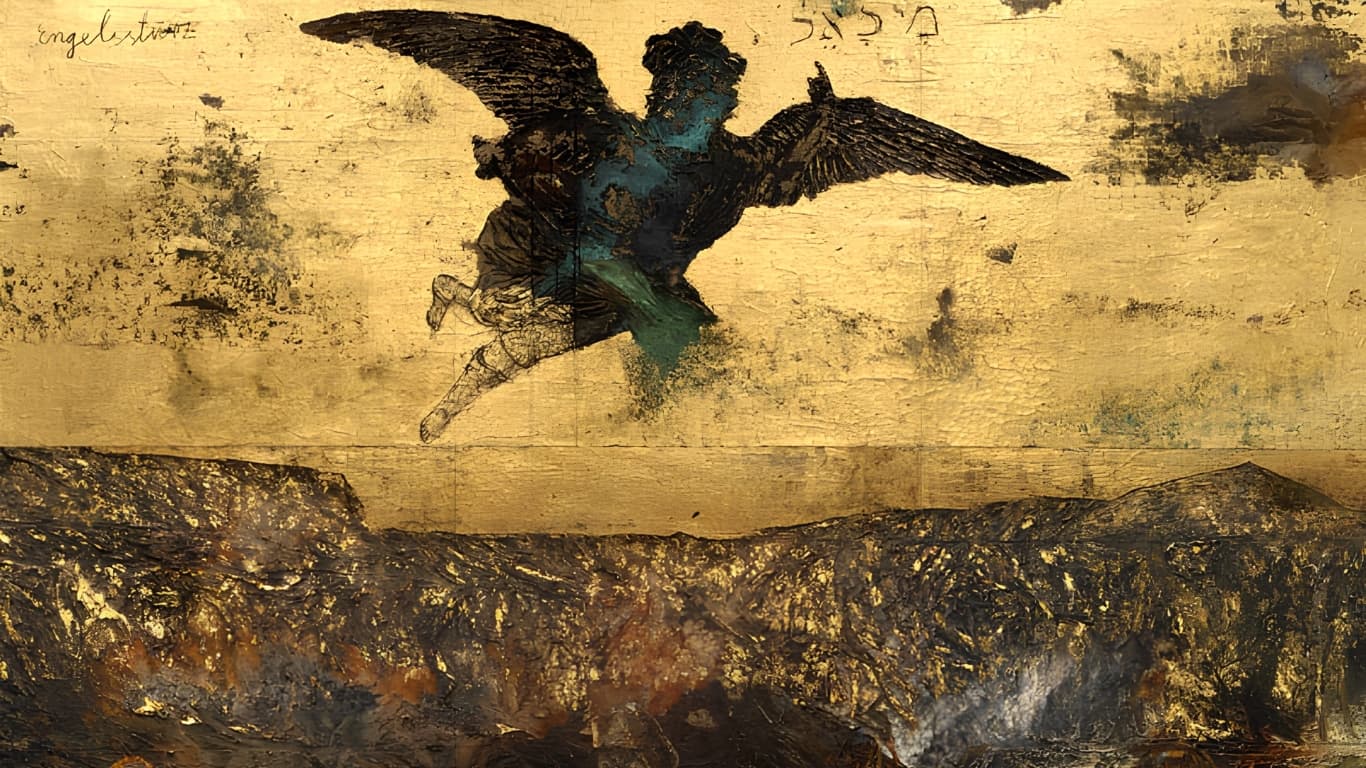
Very few living painters carry the cultural weight that Anselm Kiefer carries. We mean that almost literally — his canvases come freighted with lead, with ash, with straw and gold leaf and dried sunflowers, and they come freighted with the entire post-war German question. Born in Donaueschingen in March 1945, in the closing weeks of the Reich's collapse, Kiefer has spent six decades building an oeuvre that refuses to look away from the country's history. He is, by some distance, the cornerstone living German painter, and 2026 finds his standing more secure than at any point in his career.
The recent moment has been unusually concentrated. Wim Wenders' 3D portrait Anselm, released in 2023, gave the painter a new audience outside the gallery circuit. The Palazzo Ducale retrospective during the 2022 Venice Biennale, the Grand Palais Éphémère commission the year before, the Florence exhibition in 2024, and the permanent installation at La Ribaute now open to the public via a foundation — taken together these mark the kind of institutional saturation that very few living artists ever achieve. The Art Newspaper, Apollo, Frieze, and The Burlington Magazine have all returned to him repeatedly. The auction houses have followed.
This is, then, our editorial read on Kiefer at the present moment: what the entity actually consists of, why the materials matter, which cycles a serious collector must learn to read, and where the secondary market sits as we move through the 2026 sale calendar.

Key Takeaways & The 5Ws
- Anselm Kiefer, born 1945 in Donaueschingen, is the cornerstone living German painter — the figure who took on what Beuys gestured at and made it a six-decade oeuvre.
- The material language is the meaning. Lead, ash, gold leaf, straw, dried flowers, broken glass and impasto carry the historical and mystical content of every canvas.
- The cycles are the map: Margarete and Sulamith, Für Paul Celan, Walhalla, Die Himmelspaläste, the alchemical Nigredo works, Die Ungeborenen, and Engelsturz.
- 2024-25 marked another structural step up in the secondary market, with major works regularly clearing the seven-figure range at Christie's, Sotheby's, and Phillips.
- Primary representation runs through Gagosian and White Cube — the Bermondsey "Finnegans Wake" show in 2023 and recent Gagosian outings remain the reference points.
- Who is this for?
- Serious contemporary collectors, museum trustees, foundation curators, and advisers building a post-war and contemporary holding around a cornerstone European entity.
- What is it?
- The TLP editorial argument for why Anselm Kiefer occupies the cornerstone-living-German-painter position in 2026 — covering the cycles, the materials, the market, and our read for new entrants.
- When does it matter most?
- The current cycle. The Wim Wenders documentary moment, the 2024-25 auction step-up, and the saturation of major retrospectives have all compounded.
- Where does it apply?
- Christie's, Sotheby's, and Phillips evening sales in London, New York, and Paris for the secondary market; Gagosian and White Cube for primary; La Ribaute for the lieu.
- Why consider it?
- Because the cultural and market standing of the entity is structural, not cyclical. Kiefer is the rare living painter whose institutional weight and auction performance have moved together for three decades.
The Beuys Inheritance And The German Question
To understand Kiefer's standing we have to start with Joseph Beuys and the Düsseldorf Kunstakademie in the early 1970s. Beuys is the figure who put felt and fat and the language of personal mythology at the centre of post-war German art. He gestured at the Holocaust, at the war, at the question of German identity, but he gestured at it through performance and installation and a famously hermetic personal vocabulary. Kiefer, his student, took the same set of questions and pushed them onto canvas at architectural scale.
The early Kiefer photographs of the painter in his father's Wehrmacht uniform performing the Sieg Heil salute across European landscapes — the Occupations series of 1969 — set the terms. These were not provocations for their own sake. They were a refusal of the collective German amnesia of the 1950s and 1960s, the determination to put the question of what had happened back at the centre of German cultural production. That refusal is the spine of everything Kiefer has done since.
By the late 1970s and through the 1980s the canvases had grown to five, six, seven meters wide. The motifs that recur — the scorched fields, the railway tracks vanishing into the horizon, the wood-beamed attic rooms borrowed from Albert Speer's neoclassicism — are the visual grammar of a painter who has decided that the German landscape itself carries the historical content. The Apollo critic walking the Royal Academy retrospective in 2014 noted that Kiefer's fields are never neutral. They are always already burned.
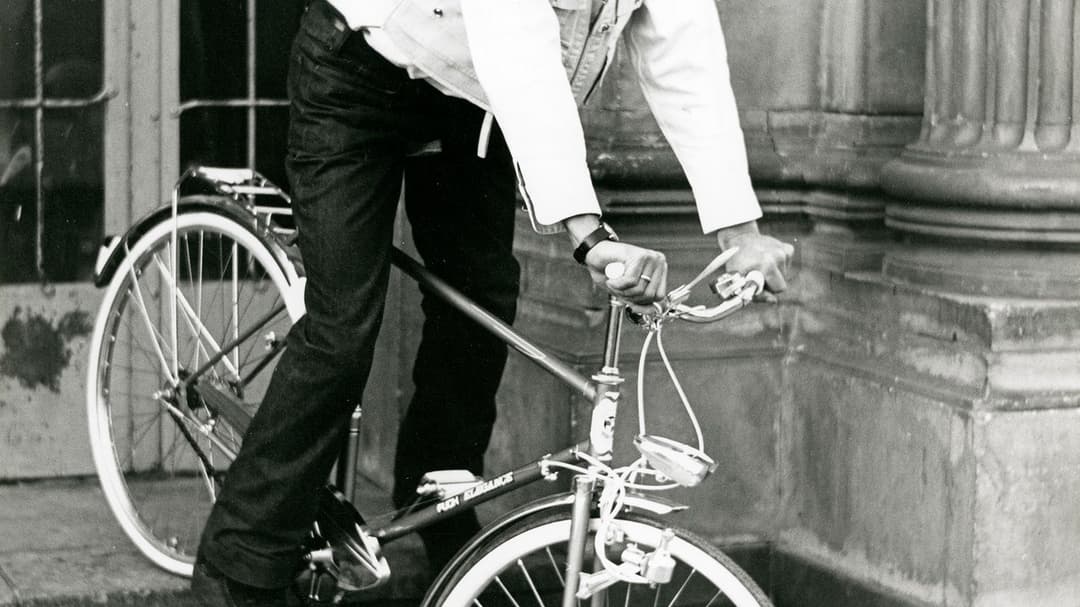
Photo: Joseph Beuys at the Kunstakademie Düsseldorf by Hans Lachmann / Archiv der Evangelischen Kirche im Rheinland via Wikimedia Commons (CC BY-SA 2.0)
The Material Language Lead, Ash, Gold, Straw
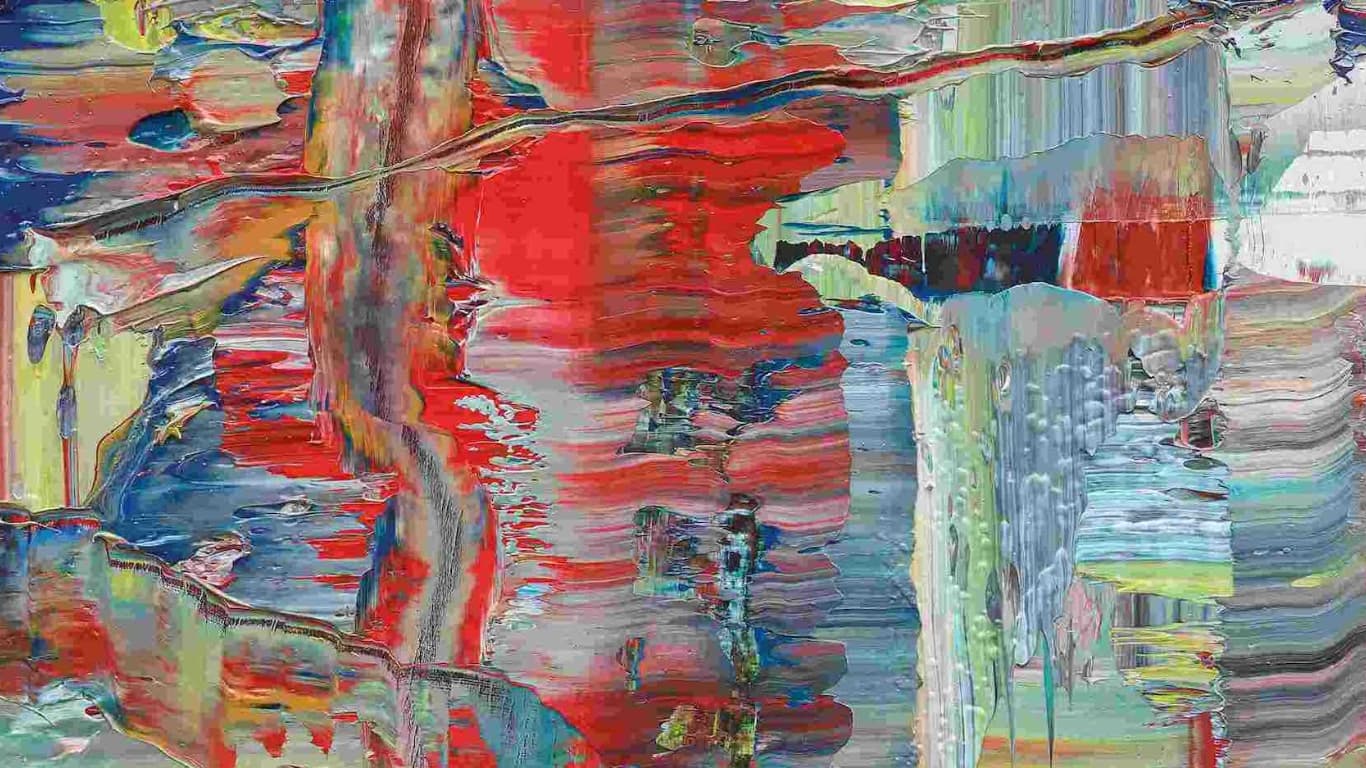
The Kiefer surface is the single most distinctive in contemporary painting. We have stood in front of these works at the Royal Academy and at the Centre Pompidou and the experience is unmistakable. Lead sheets, often hand-rolled and hammered into the canvas, sit alongside passages of gold leaf. Ash and straw are mixed directly into the oil. Dried sunflowers, sometimes whole, are fixed to the surface. Electrolysis residues, broken glass, and earth from specific German locations enter the work as semantic material.
None of this is decorative. The lead is the alchemical base metal, the matter that the medieval alchemists believed could be transmuted into gold. It is also the material of the German weight, the heavy unredeemed substance of history. The gold leaf is the redemption — sometimes literal, sometimes ironic. The straw is harvest and combustion. The ash is what remains. Every Kiefer surface is a meditation on transformation and on what cannot be transformed.
For a collector, this material vocabulary matters enormously to provenance and to condition. These works are physically fragile in ways that a standard oil painting is not. The lead can develop a powdery surface oxidation that is part of the work's life. The straw and dried-flower passages are sensitive to humidity. The major works require specialist installation and ongoing conservation dialogue. The catalogue raisonné project led by the studio is the reference, and the Gagosian and White Cube archives carry the primary-market documentation. Serious collectors check both.
Photo: Kunstakademie Düsseldorf exterior via Wikimedia Commons (CC BY-SA)
The Cycles Celan, Wagner, Kabbalah, Alchemy
Kiefer's oeuvre is organised by named cycles, and learning to read the titles is the first task for any new collector. The cycles map the intellectual territory the painter has been working through, and they also map the secondary-market hierarchy. A canvas titled with a phrase from Paul Celan's Todesfuge belongs to one of the most important threads in the entire body of work. A title invoking Walhalla places the work in the Wagner-and-Norse-mythology cycle. A Nigredo title places it in the alchemical sequence.
The Margarete and Sulamith series, named for the two women in Celan's poem, runs from the early 1980s through to the present. These are among the most historically charged works Kiefer has made. The Für Paul Celan series, expanded across the 2000s and 2010s, includes some of the largest-scale and most institutionally collected pieces. The Walhalla cycle and the Die Himmelspaläste (Heavenly Palaces) series engage Norse and Kabbalistic cosmology. The Engelsturz (Fall of the Angel) compositions and the Die Ungeborenen (The Unborn) works extend the theological reading. The alchemical Nigredo works belong to the long meditation on transmutation.
The 2023 White Cube Bermondsey show, built around the figure of Finnegans Wake, brought the Joycean cycle into focus. Kiefer reads, and the cycles follow what he is reading. For a collector this is genuinely useful — it means that a canvas can be situated within an intellectual sequence, and the sequence itself accumulates value as the institutional literature grows.
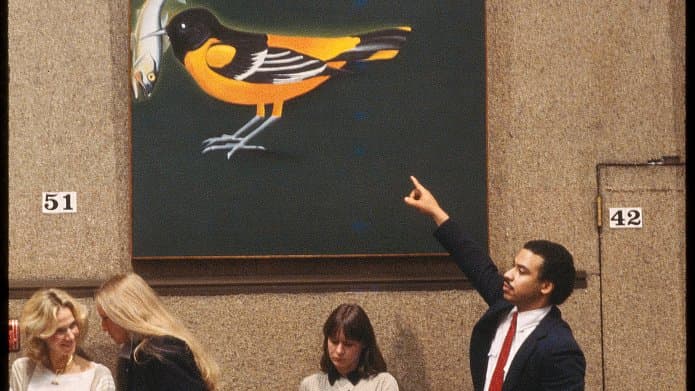
Photo: Art auction at Christie's New York by Library of Congress via Wikimedia Commons (Public Domain)
The Current Market And The 2024-25 Records
The secondary market has stepped up materially in the last two seasons. The benchmark Velimir Khlebnikov multi-panel cycle and other major works have regularly cleared the low seven-figure range at Christie's and Sotheby's evening sales, and the very top historical pieces have approached the high single-digit millions. Phillips has handled the contemporary-bracket Kiefer market with increasing visibility. The Art Newspaper sale reports across 2024 and 2025 logged the structural shift.
Several factors are running together. The Wim Wenders Anselm documentary brought the painter to a substantially wider audience, and the Pompidou and Palazzo Ducale retrospectives reset the institutional bar. The 2021 Grand Palais Éphémère commission, which paired Kiefer with the composer Pascal Dusapin, was the first time a living artist had been given the building. The Florence 2024 exhibition extended the southern-European reading. These are the kinds of institutional markers that the secondary market reads as durable.
On the primary side, Gagosian remains the central gallery relationship. The recent Gagosian outings — including the major New York and Paris shows — set the reference prices for current production. White Cube handles a parallel slice of the work, and the Bermondsey shows have been critical reference points. A collector entering the primary market now is essentially entering a waitlist conversation with one of these two houses; the foundation at La Ribaute and the studio at Croissy-Beaubourg are the production lieux.
Our Read For Serious Collectors In 2026
Our editorial read is this. The Kiefer entity is structural, not cyclical. The cultural standing of the painter and the auction performance of the work have moved in lockstep for three decades, and the 2024-25 step-up looks like a re-rating rather than a peak. A new collector building a position should focus on three things.
First, the cycle matters more than the date. A mid-1990s Margarete-and-Sulamith canvas carries the historical content that the cycle name signals. A mid-2010s Für Paul Celan piece sits within the most institutionally collected thread of the late oeuvre. The dated-but-uncycled landscape painting is a different proposition, and the secondary market reads it as such. Read the title before you read the year.
Second, scale matters but is not everything. The seven-meter Kiefer is the museum work, and the museum work is the trophy. But the studio and the gallery network produce a steady run of mid-scale pieces — two to three meters — that hold their place in serious collections and that move at evening sale without requiring institutional infrastructure to display. For most private collectors entering the market now, this is the entry tier worth understanding.
Third, condition and provenance are everything. The Kiefer surface is alive and the materials are unconventional. A canvas with documented provenance from Gagosian or White Cube, with the studio's installation records, and with a clear conservation history is the standard. The catalogue raisonné project is the cross-reference. For collectors approaching the market for the first time, our adjacent read on why Basquiat's 1982 to 1984 paintings command record auction prices covers the same cornerstone-artist auction logic, and our piece on why major auction houses are increasing buyer's premiums in 2026 is the economics underneath the current sale calendar.
Kiefer is, in the end, the rare living painter who has done what very few of his contemporaries have managed. He has built an oeuvre that the major museums treat as canonical and that the secondary market reads as durable, and he has done it without softening the historical question that started him. Six decades in, the work is still pushing. The entity is still gaining. The 2026 collector who understands the cycles, the materials, and the lieu has the map.
Frequently Asked Questions
- Why is Anselm Kiefer considered the cornerstone living German artist?
- Kiefer, born in 1945 in Donaueschingen, is the painter who took what Joseph Beuys's installation language gestured at and turned it into a six-decade oeuvre confronting post-war German history. The combination of canonical institutional standing — Royal Academy, Centre Pompidou, Grand Palais Éphémère, Palazzo Ducale during the Venice Biennale, the permanent La Ribaute installation — and durable secondary-market performance has placed him at the structural top of the living German painter category.
- What materials does Anselm Kiefer use and why do they matter?
- Kiefer's surfaces incorporate lead, gold leaf, ash, straw, earth, dried flowers, broken glass, electrolysis residues, and oil worked into deep impasto. The materials are the meaning. Lead carries the alchemical and historical weight, gold leaf signals transmutation and redemption, ash and straw read as combustion and harvest. The material vocabulary is also why provenance and conservation history matter so much for collectors — the works are physically fragile in ways standard oil paintings are not.
- Which Anselm Kiefer cycles should a new collector know?
- The Margarete and Sulamith series and the broader Für Paul Celan cycle are the most historically charged and institutionally collected. Walhalla and Die Himmelspaläste engage Norse and Kabbalistic cosmology. The Nigredo works belong to the alchemical sequence. Engelsturz and Die Ungeborenen extend the theological reading. The 2023 White Cube Bermondsey "Finnegans Wake" show brought the Joycean cycle forward. Reading the title is how a collector situates a work within the oeuvre.
- How is the Anselm Kiefer auction market performing in 2026?
- The secondary market has stepped up materially across 2024 and 2025. Major works regularly clear the low seven-figure range at Christie's and Sotheby's evening sales, and the top historical pieces have approached the high single-digit millions. Phillips has handled the contemporary bracket with increasing visibility. The Wim Wenders documentary and the saturation of major retrospectives have amplified the moment, and the 2026 sale calendar opens with the entity at its strongest institutional and market position to date.

Stefanos Moschopoulos
Stefanos Moschopoulos founded The Luxury Playbook in Athens and has spent the better part of a decade following the auction calendar, the en primeur releases, and the watchmakers, gallerists, and shipyards the magazine covers. He writes the field guides and listicles that anchor the Connoisseur section — pieces built on Phillips and Christie's results, Liv-ex movements, and conversations with collectors he has met across Geneva, Bordeaux, Basel, and Monaco. His own collecting habits sit closer to watches and wine than art, and it shows in the level of detail in the magazine's coverage of those categories. Under his direction, The Luxury Playbook now publishes long-form field guides, market-defining year-end listicles, and the Voices interview series with the founders behind the houses and the brands.



.jpg)