
While collectors obsessively chase Rolex sports models and Patek Philippe complications, dress watches like the Jaeger-LeCoultre Reverso quietly deliver stable returns without waitlists, dealer games, or hype premiums that inflate entry costs beyond rational levels.
This overlooked investment phenomenon creates opportunities for sophisticated collectors who understand that genuine value retention comes from heritage, technical legitimacy, and enduring design rather than temporary market mania driven by social media influencers and flippers.
What defines investment grade watches extends beyond simple brand recognition to encompass specific characteristics that support long term value. The Reverso checks every box: over 90 years of continuous production history since 1931, in-house mechanical movements demonstrating genuine manufacture capability, haute horlogerie credentials positioning Jaeger-LeCoultre among legitimate Swiss watchmaking houses, and most importantly, demonstrated value retention on secondary markets where actual transaction data proves theoretical investment cases.
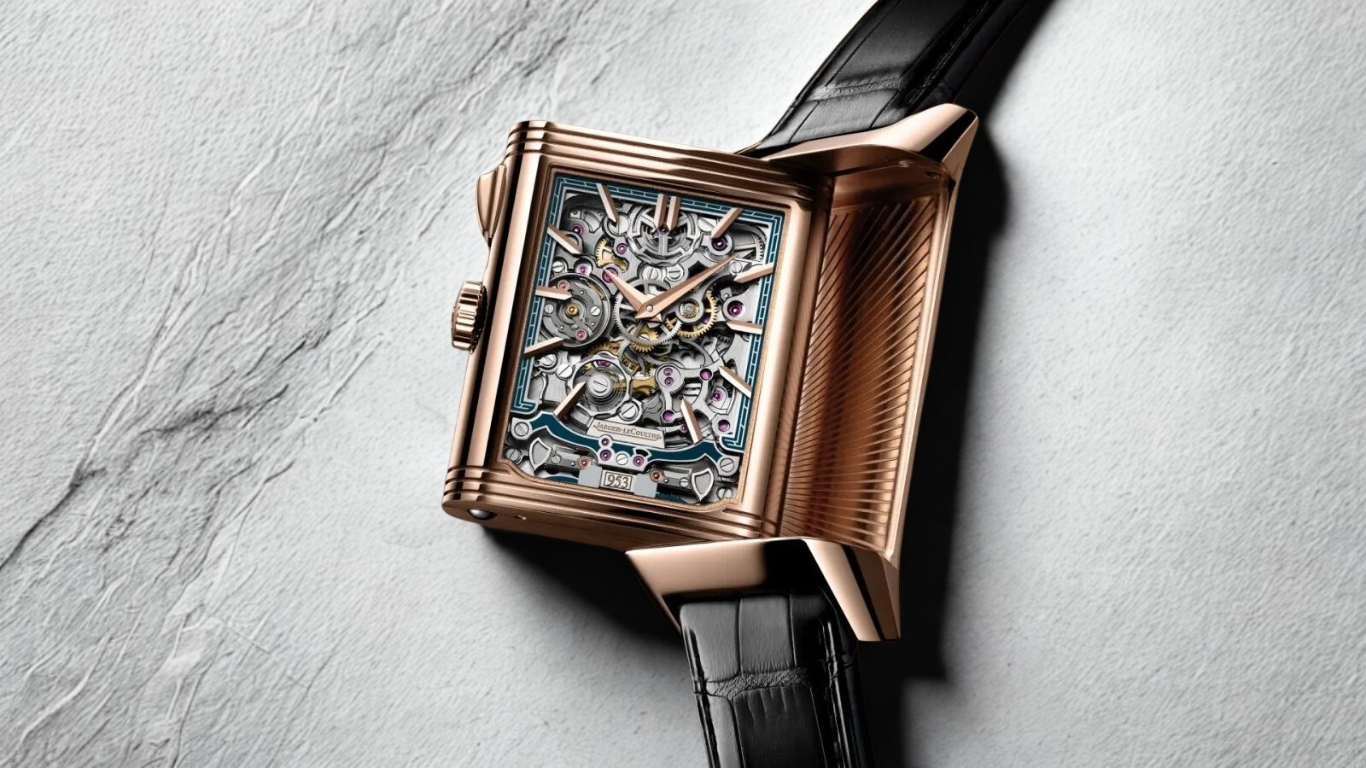
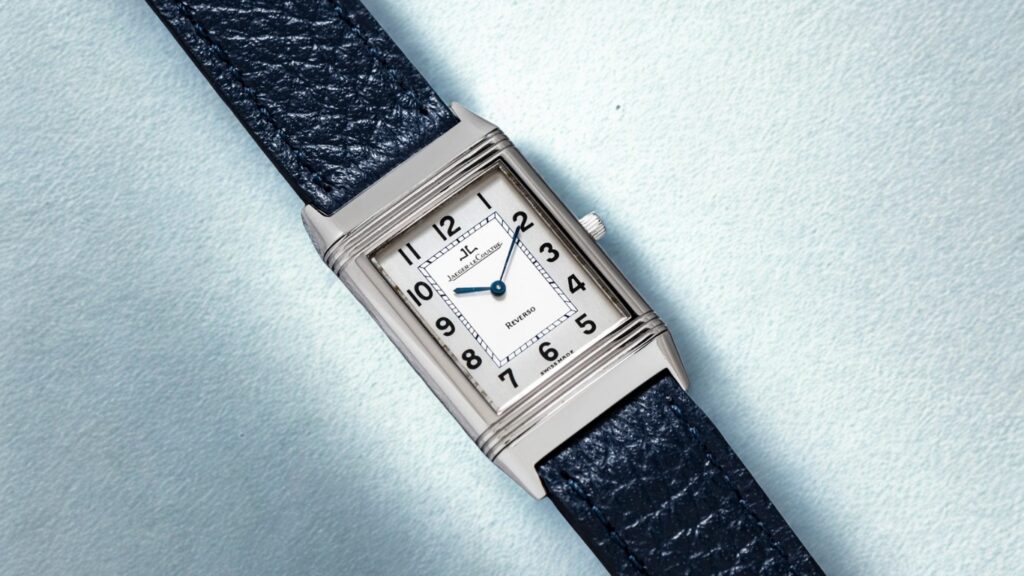
The Reverso occupies a unique position among dress watches through its distinctive rectangular case design originally created for 1930s polo players seeking protection for watch crystals during matches. The reversible case mechanism protected by 177 patents creates genuine technical interest beyond pure aesthetics, while Art Deco styling appeals to design collectors and fashion enthusiasts beyond traditional watch collectors who typically gravitate toward round sport models.
Table of Contents
- The Jaeger-LeCoultre Reverso often behaves like an investment-grade dress watch, avoiding hype premiums, waitlists, and dealer distortions commonly seen in Rolex and Patek sports models.
- Core Reverso references typically retain around 65%–75% of retail, while standout models such as the Classic Large Small Seconds and key Tribute pieces have shown real price appreciation over the past 5–10 years.
- Its investment case is built on fundamentals: more than 90 years of continuous production since 1931, in-house manufacture movements, high horology credibility, and a reversible case with genuine technical legitimacy.
- Compared with similarly priced dress watches (Cartier Tank, IWC Portofino, Omega De Ville, Panerai Radiomir), the Reverso tends to show shallower initial depreciation and stronger long-term value retention, lowering total cost of ownership for 5+ year holds.
- Vintage Reverso watches from the 1930s–1950s and limited high-complication references (Tourbillon, Gyrotourbillon, Hybris) show scarcity-driven demand, reinforcing the Reverso as a serious long-term collecting and investment platform rather than a fashion watch.
- Who is this for?
- Sophisticated collectors and investors who prioritize heritage, mechanical credibility, and long-term value retention over social-media hype, including buyers active in both modern and vintage Reverso segments.
- What is it?
- The Jaeger-LeCoultre Reverso as an investment-grade dress watch line, defined by high value retention, controlled depreciation, and selective appreciation in key references, especially steel Classics, Tribute Duoface models, and historically important or complicated pieces.
- When does the investment case show up?
- The credibility is built over more than 90 years of continuous production (since 1931) and has been visible in the last decade of secondary market data, with some models reportedly approaching a doubling in price over the past five years.
- Where can you see value signals?
- In global secondary markets such as Chrono24, WatchCharts, auctions, and specialist dealers, where Reverso models often trade with higher retention rates than competing dress watches in the same price band.
- Why does it matter?
- Because the Reverso combines iconic Art Deco design, a patented reversible case with real technical purpose, in-house calibers, disciplined production, and broad collector recognition, it can function as a long-duration, lower-risk allocation within a watch investment portfolio.

Why the Reverso’s Investment Metrics Beat Expectations?
The Jaeger-LeCoultre Reverso typically retains around 65–75% of its retail price, with some core references and standout models holding 80–100% or even appreciating over 5–10 years. This shallower depreciation curve versus rivals like Cartier Tank, IWC Portofino, and Omega De Ville reflects in-house movements, disciplined production, and strong long-term collector demand.
The value retention reality for Reverso Classic and Duo models substantially exceeds what most collectors expect from dress watches, with typical secondary market pricing holding 65% to 75% of retail according to Chrono24 marketplace data.
Standard steel Reverso Classic models retailing between $7,000 and $9,000 consistently resell between $5,000 and $6,500 in good condition with complete boxes and papers. This performance proves far superior to competing dress watches at similar price points, including Cartier Tank models retaining only 50% to 60% of retail or IWC Portofino pieces holding 55% to 65% according to secondary market analysis.
At the same time, the manufacture movement premium plays a crucial role in supporting Reverso values, particularly for post-2009 models featuring in-house Calibre 822/2 movements rather than outsourced ETA-based calibers used in earlier production. Mechanical credibility increasingly matters as collectors demand genuine manufacture movements for investment purchases, viewing assembly operations using generic base calibers as fundamentally less valuable regardless of finishing quality or brand prestige.
Reverso models with proprietary JLC movements command measurably higher resale prices than otherwise identical watches housing third-party movements.
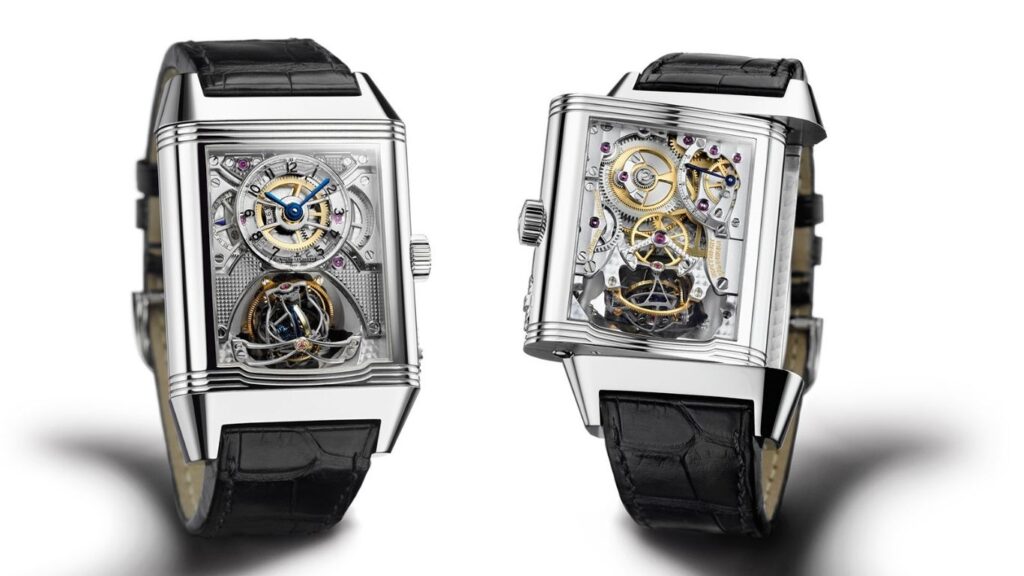
Grande Complication models demonstrate even stronger investment characteristics, with Reverso Tourbillon, Gyrotourbillon, and perpetual calendar variants often trading at or above original retail in pre-owned markets. The Reverso Tribute Gyrotourbillon originally retailed around $180,000 according to specialist dealers, but recent examples now command $200,000 plus in secondary transactions according to auction results and private sales documented by watch market analysts. Limited production of just 50 to 100 pieces for most high complication Reverso references creates genuine scarcity that supports premium pricing when examples occasionally reach the market.
Vintage market strength provides additional validation of the Reverso’s investment credentials across multiple decades rather than just recent production. Reverso references from the 1930s through 1950s in good original condition have appreciated 5% to 10% annually over the past decade, with Art Deco period pieces from 1931 through 1940 commanding $15,000 to $50,000 plus depending on condition, originality, and provenance according to vintage watch specialists and auction house results.
Reverso models typically lose 25% to 35% of value during the first two to three years, then stabilize at that level rather than continuing to depreciate. This contrasts sharply with 40% to 50% immediate drops for non-sport Rolex dress models or 50% to 60% declines for Omega dress watches according to depreciation studies tracking secondary market pricing over time.
The shallower depreciation curve means substantially lower total cost of ownership for buyers planning to hold pieces for five plus years before selling, making Reverso a more economical way to own haute horlogerie compared to alternatives experiencing steeper value destruction.
Chrono24’s own market analysis highlights the Jaeger-LeCoultre Reverso Classic Large Small Second as a value retention standout, noting it has “almost doubled in price over the last 5 years” on their marketplace. This represents genuine appreciation rather than simple stability, making it one of the better performing non-Rolex dress watches in the mid-luxury bracket where most competitors experience ongoing depreciation throughout ownership periods.
Which Jaeger-LeCoultre Reverso Models Offer The Best Investment Returns?
The strongest risk-adjusted returns typically come from steel Reverso Classic and Tribute Duoface models, especially the Classic Large Small Seconds and key Tribute references that combine liquidity with high retention. Limited high-complication pieces and important vintage Art Deco Reversos can deliver outsized gains, but they carry lower liquidity and higher entry prices.
Not all Jaeger-LeCoultre Reverso references perform the same on the secondary market. Across the Reverso range, investment outcomes are shaped by a small set of repeatable drivers: steel over precious metals for liquidity, useful complications over novelty, controlled production volumes, and consistent buyer demand in global resale channels. For collectors, the goal is not “the best Reverso,” but the reference that delivers the strongest risk-adjusted outcome for the price tier.
Reverso Models: Retail vs Market Snapshot
| Model (Reference) | Retail (USD) | Market Price (USD) | Value Retention |
|---|---|---|---|
| Reverso Classic Medium Thin (2548440) | $10,100 | $9,251 | 91.6% |
| Reverso Classic Medium Small Seconds (2438520) | $10,100 | $10,490 | 103.9% |
| Grande Reverso Ultra Thin (2788520) | $9,150 | $9,212 | 100.7% |
| Grande Reverso Ultra Thin 1931 Black (2788570) | $8,400 | $10,916 | 130.0% |
| Reverso Classic Large Duoface Small Seconds (3848422) | $15,300 | $10,837 | 70.8% |
| Reverso Tribute Duoface (3988482) | $15,100 | $12,699 | 84.1% |
| Reverso Tribute Duoface Calendar (Stainless Steel) (3918420) | $21,700 | $17,719 | 81.7% |
| Reverso Tribute Monoface (Stainless Steel) (397843J) | $11,400 | $10,554 | 92.6% |
At the accessible end of the market, Reverso Classic Medium and Large Thin models act as the stable baseline. These manual-wind steel references typically retail around $7,000–$10,000 and are often described as holding roughly 70%–75% of value in the secondary market, with steel versions generally more liquid than gold or two-tone variants.
One of the cleanest real-world benchmarks is the Reverso Classic Large Small Seconds category, where asking prices commonly appear around €7,500–€11,600 for new or like-new pieces and around €6,100 for older or more worn examples. Against an MSRP around €11,800, that implies typical retention around 65%–75%, with the top end of listings sometimes pushing close to 90%–100% for unworn inventory.
For many buyers, the strongest “middle ground” investment case sits with the Reverso Tribute Duoface. The dual-timezone concept adds practical utility without narrowing the buyer pool the way ultra-high complications can.
With retail figures often cited between roughly $12,000 and $18,000 (and a commonly referenced MSRP point at $11,400 for the Tribute Duoface Small Seconds), secondary listings for examples such as Q3988482 frequently cluster around $9,300–$13,000, with a median figure near $11,000 depending on region and condition. That translates to about 80%–100% retention under typical current conditions for well-kept, recent production pieces.
At the very top, Reverso Grande Complications can show scarcity value, but liquidity becomes the limiting factor. Models like the Reverso Tribute Gyrotourbillon in platinum (limited to 75 pieces) were introduced around €270,000 (about $302,000 at the time), while a cited auction result shows a sale near $122,219.
Even when that equates to roughly 40%–50% of MSRP, the key signal is that there is still a collector bid at a six-figure level, which many competing complicated watches struggle to sustain. Limited editions and Hybris pieces can trade on a different curve entirely: the 2021 Reverso Hybris Mechanica Calibre 185 Quadriptyque was priced around €1.35 million (about $1.65 million), produced in 10 pieces, and secondary inquiries have reportedly reached $2 million+.
How Does The Reverso Compare To Other Luxury Dress Watches At Similar Prices?
Compared with similarly priced dress watches, the Reverso usually shows higher value retention and a softer initial drop than Cartier Tank, IWC Portofino, Omega De Ville, or Panerai Radiomir. In practice this means a lower total cost of ownership for 5+ year holds, with more of your capital preserved if you decide to exit later.
A Reverso investment case becomes clearer when it is benchmarked directly against other dress watches in similar retail brackets. The comparison is less about brand popularity and more about market mechanics: liquidity, movement credibility, supply discipline, and how frequently a watch is bought for long-term ownership rather than short-term fashion rotation. On those factors, the Reverso often behaves more like a “collector dress watch” than a typical formal watch.
Dress Watch Value Retention Comparison
| Watch (Reference) | Retail (USD) | Market Price (USD) | Value Retention |
|---|---|---|---|
| Jaeger-LeCoultre Reverso Classic Medium Thin (2548440) | $10,100 | $9,251 | 91.6% |
| Jaeger-LeCoultre Reverso Tribute Duoface (3988482) | $15,100 | $12,699 | 84.1% |
| Cartier Tank Must Large (WSTA0041) | $3,450 | $2,765 | 80.1% |
| IWC Portofino Automatic (356501) | $4,950 | $2,415 | 48.8% |
| Panerai Radiomir 8 Days 45 (PAM992 / PAM00992) | ~$9,300 | $4,866 | 52.3% |
| Omega De Ville Prestige Co-Axial 39.5 (424.10.40.20.01.001) | $4,400 | $1,952 | 44.4% |
Across these comparisons, the Reverso’s edge comes from repeatable fundamentals: a mechanically credible identity, a design that is immediately recognizable, and a collector audience that values continuity rather than novelty. In the dress watch category, those traits are what turn a purchase from consumption into a more investable allocation.
FAQ
Does the Jaeger-LeCoultre Reverso hold its value better than other dress watches?
Yes. The Reverso typically retains around 65–75% of retail in the secondary market, and some core references can hold 80–100% or even appreciate over time. In comparison, many competing dress lines such as Omega De Ville or IWC Portofino often sit closer to the 45–60% retention range, making the Reverso structurally stronger on resale.
Which Reverso model offers the best investment potential?
The best all-round investment profile usually comes from steel Reverso Classic and Tribute Duoface models that combine strong demand with good liquidity. References like the Classic Large Small Seconds and key Tribute Duoface pieces often sit near the top of the retention spectrum, while ultra-high complications can deliver headline prices but are far less liquid.
How much does a Jaeger-LeCoultre Reverso depreciate in the first few years?
Most modern Reverso models lose roughly 25–35% of their retail price in the first two to three years and then tend to stabilize. This is materially milder than the 40–60% drawdowns often seen in non-sport Rolex dress watches or Omega dress lines, which makes the Reverso more economical for collectors with a multi-year holding horizon
Are vintage Reverso watches a good investment?
Well-bought vintage Reversos, especially pieces from the 1930s–1950s in original condition, have historically shown attractive appreciation, often in the mid-single to low-double digit range annually. Iconic Art Deco references with strong provenance can command significant premiums and behave more like long-duration collector assets, but they require careful authentication and condition checking.