The vintage watch market has transformed across the past five years, and vintage Seiko models set to appreciate most over the next decade are the ones serious collectors are now treating with the same discipline they apply to vintage Rolex and vintage Omega. Japanese watchmaking, once dismissed by Geneva-leaning collectors as inferior, has shifted from overlooked to fiercely pursued.
- Vintage Seiko models set to appreciate most across the next decade cluster around the King Seiko Daini references, the Grand Seiko 4520 chronometer line, and the Seiko 6105 diver pieces.
- Reference 45-7001 King Seiko Daini in Hi-Beat and Reference 4520-7000 Grand Seiko chronometer anchor the most coveted entries, with the Daini factory provenance leading collector competition.
- Seiko 6105-8000 and 6105-8110 diver references from the 1960s and 1970s draw serious collector competition, with original conditions and bezel inserts commanding meaningful premiums.
- We see the King Seiko Daini Hi-Beat 4500A as the strongest single vintage Seiko purchase available, with the manufacturer movement and Daini factory finishing supporting long-term value retention.
- Reference 6139 Seiko chronograph references, including the 6139-6005 and 6139-7060 Pogue, draw growing collector competition with the historic ownership story driving auction premiums.
- Buyers entering the vintage Seiko market should anchor on factory provenance documentation, original dial conditions, and the kind of disciplined sourcing that supports the appreciation thesis.
- Who is this for?
- Vintage Japanese watch collectors, Grand Seiko owners looking to broaden holdings, and dealers building vintage Seiko inventory ahead of the appreciation cycle.
- What is happening?
- A grounded read on vintage Seiko models set to appreciate most over the next decade, covering King Seiko Daini, Grand Seiko 4520, Seiko 6105 divers, and 6139 chronographs.
- When did this emerge?
- The current appreciation thesis reflects the last decade of vintage Seiko collector education, with Phillips, Christie's, and Japanese specialists continuing to expand auction visibility.
- Where is this happening?
- Japan remains the heart of the vintage Seiko market, with Phillips online sessions, Chrono24, and US specialist auctions now carrying meaningful inventory across the category.
- Why does it matter?
- Vintage Seiko offers high-grade Japanese watchmaking pedigree at price points that still sit well below comparable Swiss vintage, which supports the appreciation thesis through 2026 and beyond.
Auction houses now feature vintage Seiko alongside Rolex and Patek Philippe. Phillips' Hong Kong sales have established meaningful public comparables across the past three years. Specialist dealers who previously focused exclusively on European brands now carry serious vintage Seiko inventory at the front of the case.
The pattern that drove appreciation in vintage Rolex, Omega, and other now-expensive categories is starting to show up in the Seiko market. Younger collectors are recognising that innovation and design matter as much as heritage and brand prestige. The collectors we hear from are no longer treating Seiko as a curious sidebar; they are building references into serious collections.

Which vintage Seiko references are positioned to appreciate most
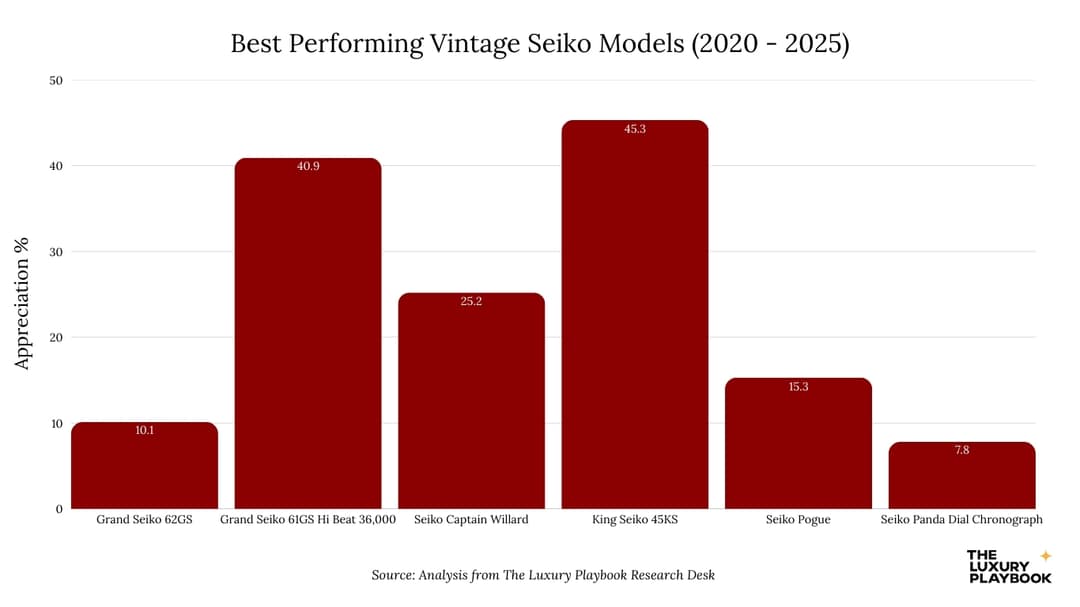
Early Grand Seiko models from the 1960s and 1970s remain dramatically undervalued compared to contemporary Swiss equivalents. That gap is not going to last. The 62GS reference 6245-9000 shows the dynamic clearly.
WatchCharts tracking puts the reference up roughly 10. 1 per cent over the past five years, outperforming the broader Grand Seiko brand index, which actually declined.
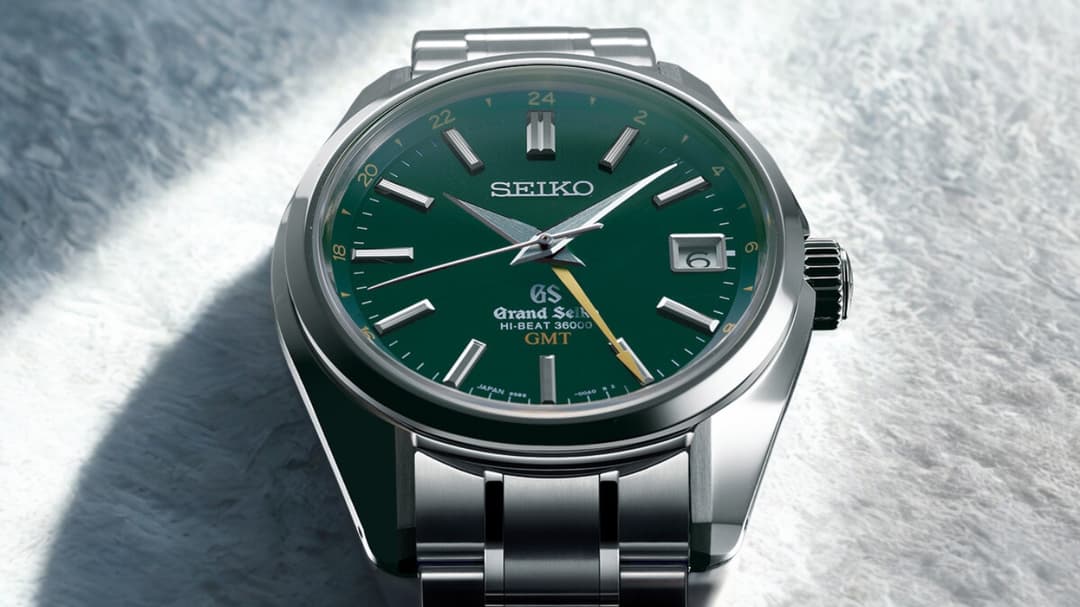
The 61GS Hi-Beat 36,000 reference 6145-8000 tells a stronger story. Up approximately 40. 9 per cent across five years on WatchCharts data, the reference has surprised collectors who still think of vintage Grand Seiko as affordable.
This was Japan's first automatic high-beat movement, a genuine horological achievement that competed head-to-head with the best Swiss chronometers of the era.
The valuation gap exists because many collectors still price early Grand Seiko like enthusiast watches rather than technical peers to Swiss equivalents. A 1960s Omega or Longines chronometer with comparable specs and finishing trades at multiples of what a 62GS or 61GS commands. Much like the Jaeger-LeCoultre Reverso, which collectors underestimated for years before prices moved, that mispricing is where opportunity sits.
The professional dive references and the Captain Willard
The 6217-8000 62MAS from 1965 was Seiko's first proper dive watch and has broad name recognition among enthusiasts. WatchCharts shows the reference down 30. 5 per cent over five years, which looks concerning until you read it as a post-peak correction.
The most recognised vintage Seikos experienced speculation-driven price spikes that were never sustainable; the corrections that followed create real accumulation windows for disciplined buyers who focus on originality.
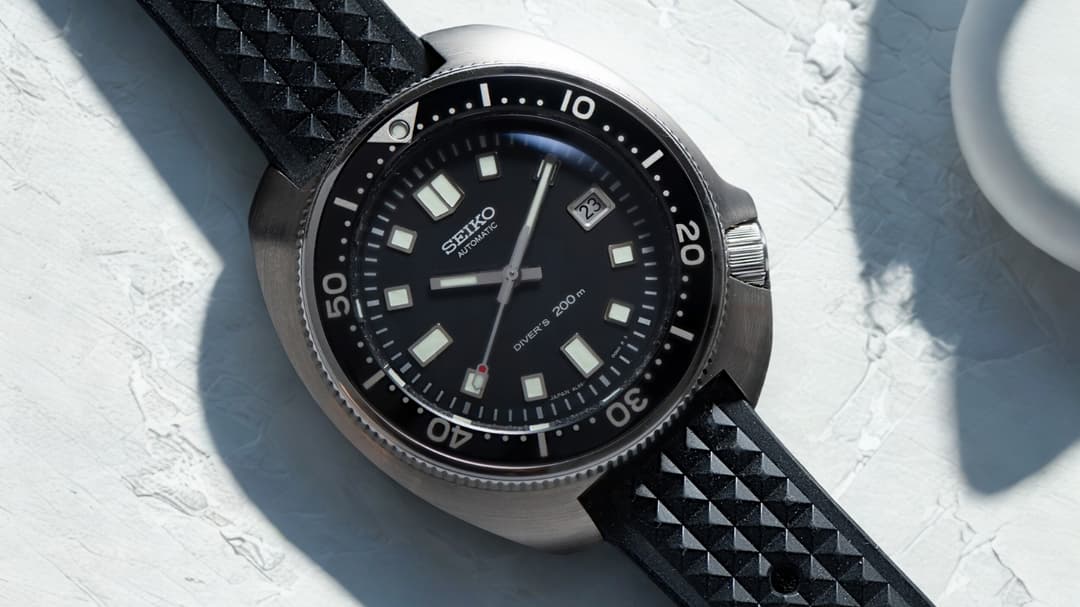
The 6105-8110 Captain Willard gained fame through its appearance in Apocalypse Now and its documented use by military personnel. WatchCharts puts the reference up 25. 2 per cent across five years, with Chrono24 listings spanning roughly $1,300 to $3,700 and averages around $2,300.
The price range tells you everything about the originality premium across the category.
The 6159-7001 Grandfather hi-beat diver shows a similar correction pattern, down 35. 7 per cent over five years on WatchCharts. Phillips has achieved strong results for exceptional examples, with one clearing HK$56,250 at a recent Hong Kong sale.
The correction is real. So is the ceiling for the right pieces.
King Seiko and the 1970s automatic chronographs
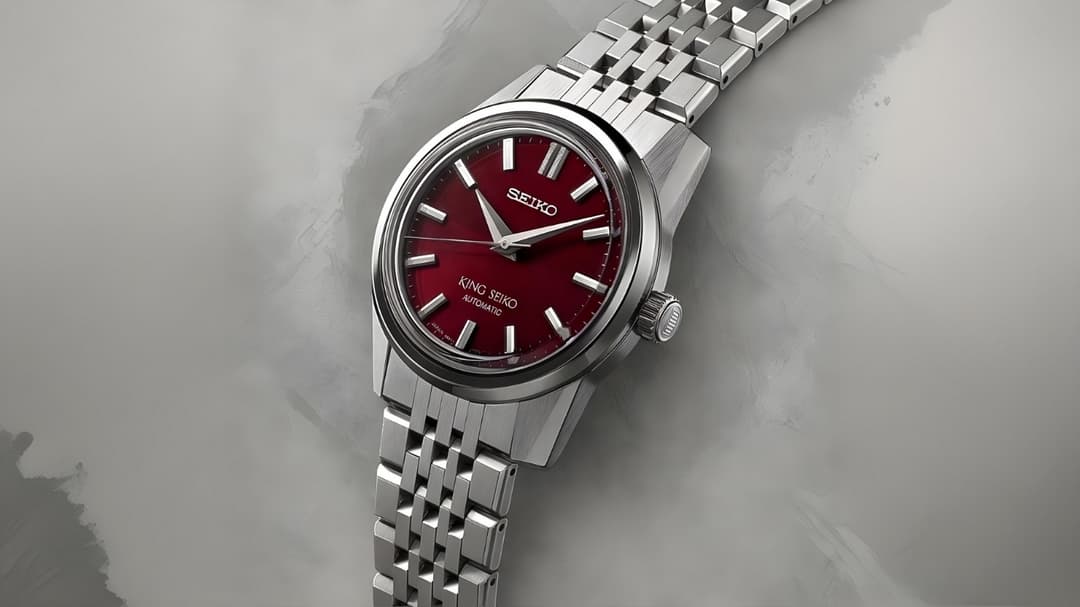
King Seiko was the parallel line to Grand Seiko that delivered comparable quality with distinct aesthetics. It still prices like a secret among collectors who know what they are looking at. The 45KS reference 4502-7000 shows exactly the appreciation profile value-focused collectors seek.
WatchCharts puts the reference up 45. 3 per cent over five years, one of the strongest performers across the entire vintage Seiko market.
Seiko's 1970s automatic chronographs are another category that stays severely undervalued compared to Zenith, Heuer, and Omega chronographs from the same era, despite delivering comparable or in some cases superior technical specifications. The 6139-6002 Pogue earned its nickname from astronaut Bill Pogue wearing it during the Skylab mission. It is up 15.
3 per cent over five years, with Chrono24 listings ranging from roughly $530 to $1,800 and averages around $1,000. For a watch with genuine space history, that pricing still looks like a gift.
The auction-house validation reshaping vintage Seiko collecting
Auction house validation is transforming how serious collectors perceive vintage Seiko. Phillips has established meaningful public comparables that reframe the category from enthusiast collecting to institutional-grade material. A Seiko 6215-7000 early professional diver sold for HK$63,500 at a recent Phillips sale, while a 4520-8020 Astronomical Observatory Chronometer achieved HK$444,500.
Numbers like that place the right vintage Seiko references directly inside the serious watch auction conversation. When major auction houses feature vintage Seiko in their important sales and deliver strong results, it signals to collectors that the category deserves serious consideration. The validation creates a feedback loop where auction success attracts more collectors, which drives more consignments, which generates more visibility.
Condition and originality premiums are widening fast as the market matures. Trade publications note bluntly that it is not uncommon for vintage Seikos to carry undisclosed replacement or reproduction parts. That dynamic explains exactly why truly all-original watches are pulling away from the pack in value.
The originality premium and what serious buyers verify
The same reference can trade across radically different price ranges based purely on originality. The 6105-8110 Captain Willard spanning roughly $1,300 to $3,700 for the same reference number is the market applying a multiplier to original case geometry, matching dial and hands, and proper service history.
That premium gap will likely widen as collectors realise how few genuinely original examples actually survive. Replacement parts flood the vintage Seiko market because the brand's popularity created aftermarket supply that does not exist for many Swiss watches. Distinguishing original from replacement requires expertise most buyers lack, which creates opportunities for knowledgeable collectors to acquire undervalued original pieces.
Why supply exhaustion will lift the right references
These watches were manufactured 40 to 60 years ago, and surviving examples in excellent, unmolested condition get rarer every year. The scarcity is not just about total production numbers. It is about how many survive with correct original parts, especially as restoration culture and modification culture pull original components out of circulation.
Even within single references, short-run sub-variants like the April-to-June 1965 small-crown 62MAS create scarcity within scarcity. That is exactly the dynamic where premiums tend to accelerate late in collecting cycles. You see the same scarcity premium logic playing out with Tudor references that serious collectors have been tracking closely.
Cultural and media influence is pushing younger collectors toward Japanese watchmaking in ways that did not exist a decade ago. Vintage watch content creators have built substantial followings by spotlighting design innovation and technical achievement over pure brand prestige. The broader appreciation for Japanese design across fashion and architecture creates tailwinds that benefit vintage Seiko directly.
The risk factors that separate opportunity from value trap
Reproduction parts flooding the market create value traps where buyers pay for what they believe are original watches but actually own heavily restored pieces worth far less. Counterfeit dials have become sophisticated enough that even experienced collectors can be fooled without detailed knowledge of correct fonts, printing techniques, and aging characteristics.
Over-restoration is another quiet killer of value. Well-meaning owners who have watches refinished or replated destroy the natural patina and original surfaces that serious collectors prize above almost everything else. The cheapest vintage Seiko is rarely the best entry; low prices almost always reflect condition issues, replacement parts, or authenticity concerns that will prevent real appreciation.
What this means for collectors
Build relationships with reputable dealers and auction specialists. Learn to identify the correct details for specific references. Accept that the best examples command premiums.
Do those three things and you protect yourself from the common mistakes that turn vintage Seiko collecting from rewarding into simply expensive.
The next decade is a critical accumulation window before vintage Seiko reaches full institutional recognition. Auction-house validation is building. Condition premiums are widening.
The supply of truly original examples keeps shrinking. We last reviewed this analysis in May 2026.

Stefanos Moschopoulos
Stefanos Moschopoulos founded The Luxury Playbook in Athens and has spent the better part of a decade following the auction calendar, the en primeur releases, and the watchmakers, gallerists, and shipyards the magazine covers. He writes the field guides and listicles that anchor the Connoisseur section — pieces built on Phillips and Christie's results, Liv-ex movements, and conversations with collectors he has met across Geneva, Bordeaux, Basel, and Monaco. His own collecting habits sit closer to watches and wine than art, and it shows in the level of detail in the magazine's coverage of those categories. Under his direction, The Luxury Playbook now publishes long-form field guides, market-defining year-end listicles, and the Voices interview series with the founders behind the houses and the brands.