The JLC Reverso is quietly the strongest modern reference in serious collecting, and the case for it has only deepened across the past decade. The watch doesn't draw the auction-room volume of a Daytona or the headline coverage of a Patek Nautilus, and that quietness is structurally part of why the reference holds up so consistently.
- The Jaeger-LeCoultre Reverso quietly anchors one of the strongest modern Swiss reference positions, with the shaped-case architecture and reversible case dating to 1931.
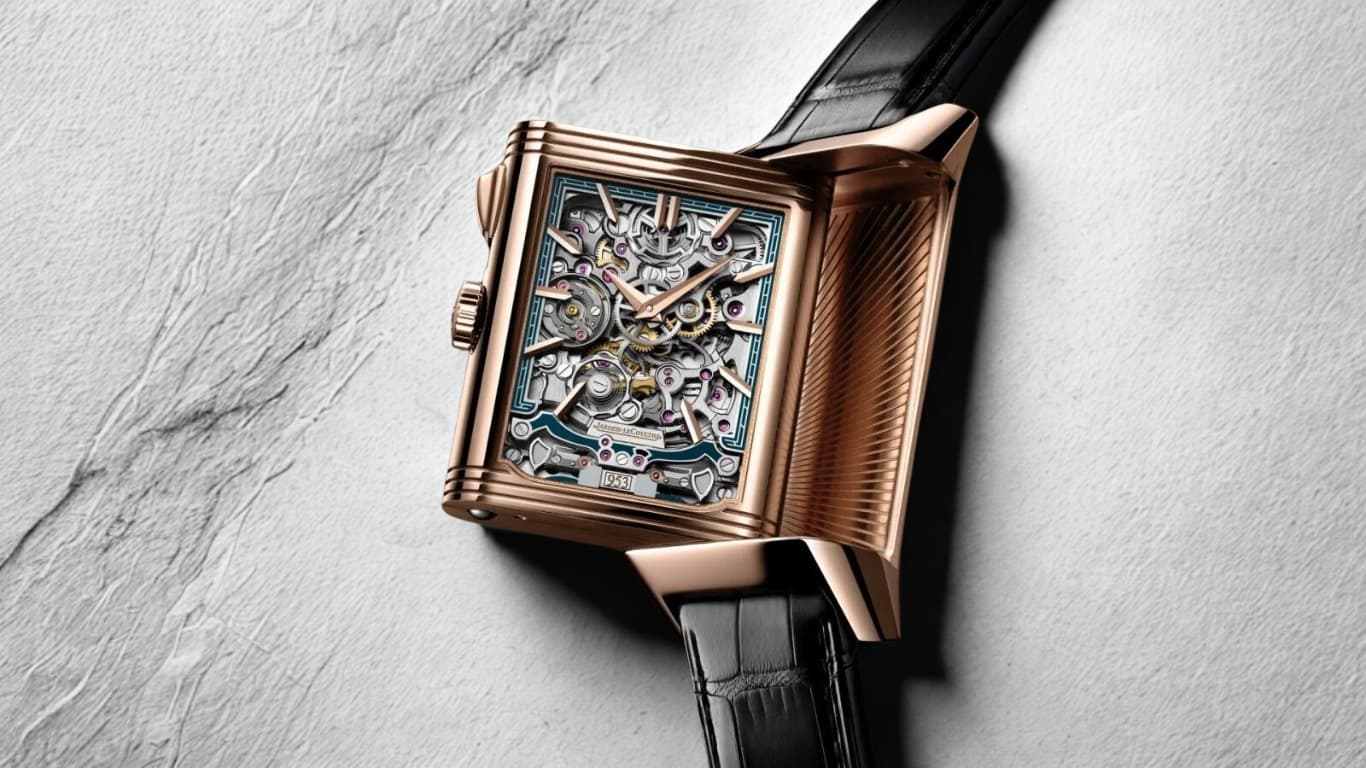
- Reference Q3988482 Reverso Tribute Duoface in pink gold and Reference Q397848J Reverso Tribute Small Seconds anchor the modern catalogue across complication tiers.
- The Reverso Hybris Mechanica references serve the high-end JLC collector base, with auction visibility growing as collector education catches up to the kind of complication architecture available.
- We see the Reverso Tribute Duoface as the strongest single dress-watch purchase from a manufacturer that has supplied the Holy Trinity for nearly a century, with shaped-case architecture combined.
- Vintage Reverso references from the 1930s and 1980s draw growing collector competition, with original art-deco dials and reversible-case originality driving meaningful premiums.
- Manufacturer pricing discipline has held through cycles, with Reverso secondary values supported by the kind of finishing and shaped-case originality that no peer can match.
- Who is this for?
- Established collectors looking beyond the obvious Holy Trinity, dress-watch buyers, and serious students of Art Deco watchmaking heritage.
- What is happening?
- A grounded read on the JLC Reverso as quietly the strongest modern Swiss reference, covering the Tribute Duoface, Tribute Small Seconds, and Hybris Mechanica.
- When did this emerge?
- The Reverso has anchored JLC since 1931, with the modern Tribute and Hybris Mechanica lines continuing to drive collector momentum through 2026.
- Where is this happening?
- Authorised JLC dealers globally stock the modern catalogue, while Phillips, Christie's, and specialist auctions handle the vintage Art Deco Reverso market.
- Why does it matter?
- The Reverso offers shaped-case architecture, Art Deco design lineage, and the kind of manufacturer pedigree that supports serious long-term collector positioning.
The collectors we hear from at the Phillips and Christie's previews keep returning to the Reverso for the same reasons; the design discipline runs unbroken from 1931, the manufacture's technical credentials are genuine, and the secondary-market behaviour reflects considered conviction rather than allocation gaming.
The Reverso operates as the working illustration of why credible modern collecting rewards structural conditions over headline coverage. For collectors building serious modern positions, the reference earns a place that the wider catalogue continues to extend rather than replace. Reading the case in 2026 means understanding why the Reverso has earned its quiet dominance.
Why the JLC Reverso quietly anchors modern collecting
The structural conditions reinforce each other cleanly. Design discipline runs unbroken from the 1931 original through the current Tribute and Hybris Mechanica catalogue, with the rectangular case profile and the patented swivel mechanism carrying directly from the historical design to the modern production. The case proportions sit within a tight band that, across nine decades, has held meaningfully consistent.
The manufacture credentials are real. The broader JLC catalogue operates as one of the cleanest examples of a true manufacture in the modern Swiss high-grade tier, with the Le Sentier facility producing the movements, the cases and the core components in-house at credible scale. The Reverso movement architectures, the Calibre 822 manual-wind, the Calibre 854A Duoface and the considered specialty references, all sit at the upper end of credible modern manufacture work.
The third condition is the secondary-market behaviour. Clean Tribute references hold meaningful value across the credible dealer network, the limited-edition Duoface and Reverso Hybris Mechanica pieces operate at the upper end of credible Reverso collecting, and the broader catalogue carries credible depth that few peer references at similar retail can match.
The Reverso variants worth knowing
The Reverso Tribute Monoface Small Seconds anchors the practical entry to credible Reverso collecting. The reference operates with the Calibre 822 manual-wind movement and the disciplined dial vocabulary that runs through the line. Case proportions sit at the historical band, with the bracelet and strap options giving the buyer credible flexibility within the modern Reverso frame.
The Reverso Tribute Duoface extends the line into the manufacture's most-cited modern complication architecture. The Calibre 854A movement drives two dials on opposite faces of the case, with the first dial showing local time and the second dial showing a second time zone via a separate display. The piece operates with the kind of technical signature the manufacture's reputation rests on.
The Reverso Tribute Calendar and the considered moon-phase variants extend the line into measured upper-end territory. The references operate with disciplined complication work and the kind of considered limited-edition production that the manufacture's allocation discipline supports.
The Grande Reverso and the upper-end catalogue
The Grande Reverso Ultra Thin Tribute, the Grande Reverso Calendar and the considered specialty references all anchor the upper end of credible modern Reverso collecting. The case proportions sit at the larger end of the historical Reverso band, with the upper-complication work earning serious specialty-collector attention.
The Reverso Hybris Mechanica references operate at the manufacture's haute horlogerie tier. The Hybris Mechanica 11, the Hybris Mechanica à Triptyque and the related specialty work all operate at the upper end of credible modern Swiss high-grade complication, with genuinely tight production discipline and credible technical credentials.
What the Reverso secondary market actually shows
The reference operates with credible depth across the dealer network and the major auction houses. Phillips, Christie's and Sotheby's specialist sessions catalogue Reverso references with regularity, and the named lots draw serious estimates at the upper-complication tier. The broader Tribute catalogue trades cleanly at the secondary-market level the structural conditions support.
The trade infrastructure treats the Reverso as a structural anchor of credible modern JLC collecting. Specialist dealers in New York, London, Geneva and the wider European network maintain steady Reverso inventory, and the wait-list economics on the considered Tribute and Duoface variants operate at credible levels.
The structural reading is that the Reverso sits in the band where production discipline, design heritage and technical credentials all reinforce each other. The reference does not depend on speculative momentum to hold value; it operates on conditions that the wider modern collecting category has learned to recognise. Our three-reference primer goes deeper on where the Reverso sits within the broader JLC working frame.
How the Reverso sits versus credible peer references
The reference comparison matters because it shows the structural case in clearer terms. The Cartier Tank operates at a separate tier of credible design-heritage collecting, with the rectangular case proportions and the maison's design vocabulary giving the Tank its own structural position. The two references do not displace each other; both anchor separate corners of credible modern collecting.
Against the Patek Calatrava and the Vacheron Patrimony, the Reverso earns its place on different conditions. The Calatrava operates as a round-case dress reference at the upper end of credible trinity collecting; the Reverso operates as a rectangular-case reference at the upper end of credible manufacture collecting. The structural reading is that both deserve credible attention in any serious modern frame.
Against the broader Swiss high-grade rectangular-case competition, the Reverso operates with structural conditions, design discipline, technical credentials, secondary-market depth, that few peer references credibly match. The reference's quiet dominance at the rectangular-case tier of credible modern collecting is now uncontroversial.
What collectors actually look for in modern Reverso collecting
Originality of dial, hands and case finish carries serious weight across the Reverso catalogue. The piece's swivel mechanism makes case condition particularly important, with clean examples and disciplined service history drawing meaningful premiums on the secondary market.
Box-and-papers documentation is the working baseline for any modern Reverso secondary-market transaction. The manufacture's authorisation discipline at the boutique level is real, and the credible dealer network operates with verification standards that the wider Reverso market depends on.
The structural conditions for serious Reverso collecting are clearer than for most peer references. The reference operates with the kind of liquidity that, on a clean documented example, allows the trade to function with credible verification confidence. The wider catalogue extends the working baseline rather than disrupts it.
Where the Reverso meets museum-grade collecting
The Reverso Hybris Mechanica references and the considered upper-complication variants sit at the edge of credible museum-grade collecting frontier. The pieces operate at genuinely small production scale, with the technical credentials and the design discipline that anchor the manufacture's reputation at the upper end. For collectors operating at this tier, the Reverso earns serious specialty-collector attention alongside the wider Swiss high-grade specialty catalogue.
What we'll watch next on the Reverso
The trajectory is structural rather than passing. The manufacture continues to operate the Reverso line with the disciplined production and considered complication work that the reference's reputation depends on. Recent releases have shown measured allocation discipline at the upper-complication tier, with the Tribute catalogue continuing to anchor the credible mid-tier conversation.
Whether JLC extends the line with further considered limited-edition work in the rectangular-case format is the question that matters most. On present evidence, the manufacture is operating with the kind of restraint the modern collecting category rewards, and the Reverso's quiet dominance at the rectangular-case tier of credible modern collecting is unlikely to shift on any near-term timescale. The reference remains the working anchor of any serious modern manufacture frame.
We last reviewed this analysis in May 2026.

Frequently Asked Questions
- Does the Jaeger-LeCoultre Reverso hold its value better than other dress watches?
- Yes. The Reverso typically retains around 65–75% of retail in the secondary market, and some core references can hold 80–100% or even appreciate over time. In comparison, many competing dress lines such as Omega De Ville or IWC Portofino often sit closer to the 45–60% retention range, making the Reverso structurally stronger on resale.<br><br>
- How much does a Jaeger-LeCoultre Reverso depreciate in the first few years?
- Most modern Reverso models lose roughly 25–35% of their retail price in the first two to three years and then tend to stabilize. This is materially milder than the 40–60% drawdowns often seen in non-sport Rolex dress watches or Omega dress lines, which makes the Reverso more economical for collectors with a multi-year holding horizon<br><br>

Stefanos Moschopoulos
Stefanos Moschopoulos founded The Luxury Playbook in Athens and has spent the better part of a decade following the auction calendar, the en primeur releases, and the watchmakers, gallerists, and shipyards the magazine covers. He writes the field guides and listicles that anchor the Connoisseur section — pieces built on Phillips and Christie's results, Liv-ex movements, and conversations with collectors he has met across Geneva, Bordeaux, Basel, and Monaco. His own collecting habits sit closer to watches and wine than art, and it shows in the level of detail in the magazine's coverage of those categories. Under his direction, The Luxury Playbook now publishes long-form field guides, market-defining year-end listicles, and the Voices interview series with the founders behind the houses and the brands.