Jaeger-LeCoultre is one of the great manufactures and a cornerstone of serious watch collecting. The Vallée de Joux maker founded by Antoine LeCoultre in 1833 has produced movements not only for its own catalogue but for Patek Philippe, Audemars Piguet, Vacheron Constantin and others across decades. The brand is, in genuine technical terms, the watchmaker the trinity has often relied on.
- Jaeger-LeCoultre holds the deepest movement-making heritage in modern Swiss watchmaking, supplying calibres to Patek, Vacheron, and AP for the better part of the last century.
- The Reverso, Master Control, and Polaris lines anchor the modern catalogue, with the Calibre 822 and Calibre 853 supporting collector confidence across price tiers.
- Atmos clocks and grand complication references serve the high-end of the JLC collector base, with auction visibility growing as collector education catches up.
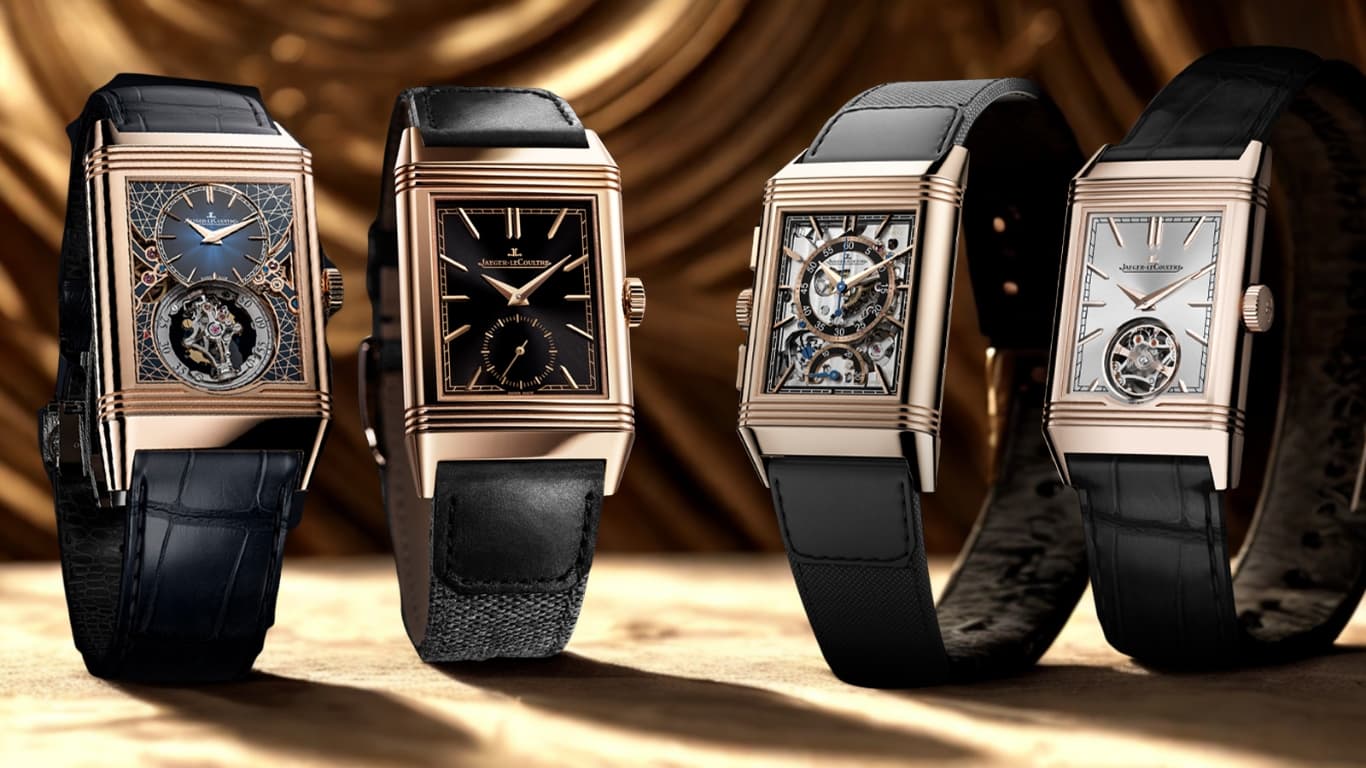
- We see the Reverso Tribute Duoface as the strongest single dress-watch purchase under Swiss watchmaking, with manufacturer movement and shaped-case originality combined.
- Vintage Master Reserve de Marche and Polaris references from the 1960s and 1970s offer collector entry points well below comparable Patek and Vacheron pieces.
- Manufacturer pricing discipline has held through cycles, with JLC secondary values supported by the kind of finishing that rewards collectors with a loupe.
- Who is this for?
- Established collectors looking beyond the Holy Trinity, dress-watch buyers, and serious students of Swiss horological history.
- What is happening?
- A grounded case for Jaeger-LeCoultre as a structural pillar in a serious collection, covering Reverso, Master Control, Polaris, and Atmos references.
- When did this emerge?
- The case has held for over a century, with the modern Reverso Tribute and Polaris lines continuing to anchor the brand position into 2026.
- Where is this happening?
- Authorised JLC dealers globally stock the modern catalogue, while Phillips, Christie's, and specialist auctions handle the vintage market.
- Why does it matter?
- JLC pairs unmatched movement-making pedigree with Reverso shaped-case originality and pricing that still trades at a relative discount to its Holy Trinity peers.
JLC's own catalogue spans some of the most considered classical Swiss watchmaking in production, and the brand's cornerstone references reflect that depth. The Manufacture Jaeger-LeCoultre has filed more than 400 patents and produced more than 1,200 distinct calibres across its history, including some of the smallest and most complicated movements ever made.
The Reverso defines Jaeger-LeCoultre collecting
The JLC Reverso, designed in 1931 by César de Trey for British polo players who needed to protect the watch crystal from impact during play, is the brand's most distinctive contemporary reference. The case slides within its housing to expose a solid metal back, and the patent on that mechanism is one of the most-cited in the history of watchmaking.
The current Reverso Classic Medium, the 40mm by 24.4mm case in steel at 8,000 to 10,000 euros retail, is the cleanest contemporary execution. The Reverso Tribute lines with the various dial configurations in the larger case sizes, the Reverso One for collectors preferring smaller cases, and the Reverso à Triptyque and Hybris Mechanica complications anchor the upper tier.
Phillips' Geneva sales over the past five seasons have consistently treated vintage Reverso with the same catalogue depth given to vintage Patek dress references. The 1930s Reverso pieces in original condition with documented provenance regularly clear 40,000 to 80,000 Swiss francs in the considered collector market.
The Master Ultra Thin and Master Control catalogues
The Master Ultra Thin, JLC's contemporary classical dress watch in the 38mm and 40mm cases, anchors the brand's pure dress catalogue. Pricing runs from around 8,500 euros in the standard reference to 15,000-plus in the moonphase and dress-complication variants. The Master Control line extends the broader classical catalogue into a slightly more contemporary register, and the Master Geographic and Master Calendar references add measured complications.
The Polaris, JLC's contemporary sport-luxury answer with dive-watch heritage running back to the 1960s Polaris originals, extends the brand into the integrated-bracelet sport register. The 41mm Polaris references in steel run from around 9,000 euros retail. The Memovox alarm-complication Polaris references and the chronograph variants extend the line into more technical territory.
The complicated catalogue and serious watchmaking
JLC's complicated catalogue runs from the Master Geographic world-time references through the Master Grande Tradition tourbillons into the Hybris Mechanica grand complications. The Reverso Hybris Mechanica references, the multi-axis tourbillon and minute-repeater Reversos, anchor the brand's most ambitious contemporary work.
The Atmos clock, the perpetually-powered atmospheric-pressure clock that runs on a one-degree-Celsius temperature change, anchors the brand's most distinctive non-wristwatch production. The Atmos has been continuously refined since 1928 and remains a credible standalone collecting category at the major auction houses.
Why Jaeger-LeCoultre endures in serious modern collecting
The historical case is the strongest in modern watchmaking outside the Holy Trinity itself. JLC's role as movement-supplier to Patek Philippe, Audemars Piguet and Vacheron Constantin across decades is documented in the brand archives and acknowledged in the trade press; the calibre 920, supplied as the basis for both the Royal Oak Jumbo and the Patek Nautilus 5711, is the most-cited example. The depth of the manufacture is genuine rather than marketing.
The contemporary catalogue extends that historical reference with serious contemporary execution. The Reverso particularly is one of the rare modern references that reads as historical design rather than styling exercise, and the brand has refined the case geometry gradually rather than reinvented it across nearly a century of production.
What collectors look for in modern Jaeger-LeCoultre
For modern JLC, the references that come up most consistently in serious collector conversation are the Reverso Classic Medium in the steel reference, the Reverso Tribute large-case configurations for collectors preferring the larger geometry, the Master Ultra Thin in the 38mm classical case, the Master Geographic and Master Control complications, and the Polaris in the 41mm sport configurations.
Box-and-papers documentation matters; service-network access through JLC's authorised facilities is the practical baseline.
For vintage, the historical Reverso references from the 1930s and 1940s, the Memovox alarm references from the 1950s and 1960s, and the original Polaris dive references from the late 1960s anchor the considered vintage JLC tier. The Atmos clocks from the various production decades carry their own separate following.
What this means for collectors
The longer story collectors recognise is that JLC occupies a particular position in modern Swiss watchmaking that the trinity itself does not fully cover. The brand's technical credentials, the historical role as movement supplier, the contemporary classical watchmaking range, and the depth of the Reverso archive all anchor a register the broader market doesn't quite duplicate.
The Reverso particularly is one of the rare modern references that genuinely reads as historical design rather than styling exercise. The brand has built its place in serious classical collecting on grounds that extend well beyond contemporary fashion, and the case is stronger now than it has been in two decades.
For collectors weighing a considered JLC pick in 2026, the Reverso Classic Medium in steel remains the cleanest entry into the line, with the Master Ultra Thin as the considered alternative for collectors weighting pure dress-watch register. The Polaris occupies the sport-luxury seat for collectors who want a JLC option in that register, and the various complicated references provide upgrade paths for collectors building toward the upper trinity tier.
Box-and-papers documentation and service-history records anchor the practical resale dynamics across the catalogue.
We last reviewed this analysis in May 2026.

Frequently Asked Questions
- Which Jaeger-LeCoultre model holds value best?
- Typically the Reverso Tribute Duoface, Master Ultra Thin Perpetual, and vintage Memovox pieces show the strongest resale performance. The Reverso is especially consistent because it’s iconic, made in lower volumes, and always in demand among serious collectors.<br><br>
- Do Jaeger-LeCoultre watches go up in value like Rolex?
- Not usually in the same “overnight flip” style. JLC watches tend to rise more slowly but steadily — think 4–8% annual appreciation on key references. The difference is they rely on true watchmaking demand, not just social buzz, so they’re less likely to crash if trends change.<br><br>

Stefanos Moschopoulos
Stefanos Moschopoulos founded The Luxury Playbook in Athens and has spent the better part of a decade following the auction calendar, the en primeur releases, and the watchmakers, gallerists, and shipyards the magazine covers. He writes the field guides and listicles that anchor the Connoisseur section — pieces built on Phillips and Christie's results, Liv-ex movements, and conversations with collectors he has met across Geneva, Bordeaux, Basel, and Monaco. His own collecting habits sit closer to watches and wine than art, and it shows in the level of detail in the magazine's coverage of those categories. Under his direction, The Luxury Playbook now publishes long-form field guides, market-defining year-end listicles, and the Voices interview series with the founders behind the houses and the brands.