The most consistently certified marine-chronometer manufacture in horological history spent most of the 21st century treated as a second-tier conversation. We have wondered about this for years. Ulysse Nardin out-certified every rival at the Neuchatel Observatory, supplied the navies that drew the maps the modern world still navigates by, and in 2001 dropped the most radical wristwatch of its generation. Yet the brand has only recently recovered the collector attention that should have followed it the whole way.
The receipts are concrete. Between 1860 and 1965, the Neuchatel Observatory awarded 4,324 first-place certifications to Ulysse Nardin — more than any other manufacture on record. Phillips Geneva and Christie's continue to catalogue silver pocket chronometers and naval deck watches with the kind of reverence usually reserved for early Patek references, and Hodinkee's long-form coverage has reframed the brand for a generation of collectors who grew up after the quartz crisis. The archive is finally being read out loud.
What follows is our read on why Ulysse Nardin sits where it sits — and why the marine-chronometer DNA still matters in 2026.

Key Takeaways & The 5Ws
- Ulysse Nardin earned 4,324 first-place Neuchatel Observatory certifications between 1860 and 1965 — the highest count of any Swiss manufacture on record.
- The Le Locle workshop supplied marine chronometers to more than 50 navies, making it the de facto reference timekeeper of 19th and early 20th century seafaring.
- Ludwig Oechslin's Astrolabium, Planetarium, and Tellurium trilogy reframed the firm as a serious complication house long before the modern independent boom.
- The 2001 Freak rewrote the rulebook with a carousel movement that doubles as the time display — no dial, no hands, no conventional escapement.
- Vintage Nardin pocket chronometers and deck watches have moved from quiet specialist sales into the main catalogues at Phillips and Christie's.
- Who is this for?
- Serious watch collectors, vintage buyers, independent-minded dealers, and readers building a collection that values manufacture depth over hype-cycle reference numbers.
- What is it?
- An editorial reading of Ulysse Nardin's marine-chronometer heritage and how that heritage threads into the modern collection — Marine, Freak, Blast, Diver.
- When does it matter most?
- Right now. The vintage market is showing real conviction on documented naval pieces, and the modern independent renaissance has put Nardin back on the conversation table.
- Where does it apply?
- Phillips Geneva, Christie's, and Sotheby's vintage sales; specialist dealer floors in Geneva, London, and New York; the secondary market for Freak and Marine references.
- Why consider it?
- Because the entity has been underweighted by the modern hype cycle, and the vintage market is showing the correction in real time. The collecting case writes itself.
The Le Locle Foundation And The Naval Decades
Ulysse Nardin founded the manufacture that carries his name in Le Locle in 1846. The town sits in the Neuchatel Jura at the high end of the Swiss watchmaking belt, and the firm's early decades coincided with the global build-out of merchant and military fleets that needed precision timekeeping to survive open ocean. A marine chronometer was not a luxury object — it was the instrument that turned longitude from guesswork into navigation.
By the second half of the 19th century, Nardin had won contracts with more than fifty navies. The French, Italian, Russian, Japanese, and US fleets all carried Le Locle boxes in their chartrooms. Paul-David Nardin took over from his father in 1876 and pushed the precision standards harder, entering the firm's pocket chronometers into the Neuchatel Observatory competitions where rated movements were judged on rate stability across temperature, position, and time.
The Neuchatel record is the historical hinge. The 4,324 first-place certifications between 1860 and 1965 are the single hardest number in watchmaking provenance, and the reason serious collectors still treat documented vintage Nardin pocket chronometers as cornerstones of any 19th-century horology collection.

Photo: Le Locle factory via Wikimedia Commons (CC BY-SA)
How The Marine Chronometer Changed Precision Watchmaking
A marine chronometer is, in essence, a portable observatory. The movement runs in a gimballed box that keeps it level as the ship pitches, the escapement is tuned for rate stability rather than convenience, and the whole instrument exists to keep accurate Greenwich Mean Time aboard a vessel weeks out from port. Without it the navigator cannot fix longitude, and without longitude the chart is a guess.
Nardin became the dominant supplier because the firm treated the chronometer as a discipline rather than a product line. The same caliber architecture that won Neuchatel firsts in pocket form scaled up into the box chronometers that went to sea, and the rate certificates that accompanied each delivery were treated as part of the deliverable. A navy buying a Nardin chronometer was buying a calibrated, observatory-tested instrument with paperwork.
The discipline carried into wristwatch production. Nardin's deck watches and observation chronometers from the 1930s through the 1950s — silver and steel cases, large legible dials, sub-seconds at six — now anchor specialist vintage sales. Phillips and Christie's catalogue them with the same care given to early cornerstone Patek references, and documented naval pieces find serious buyers when they appear.
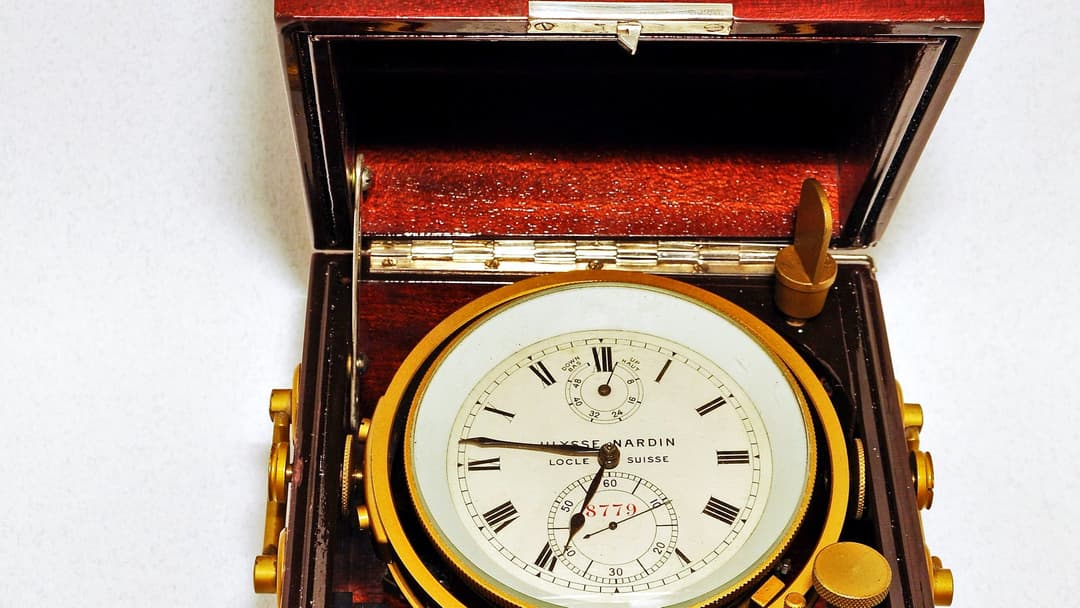
Photo: Marine chronometer via Wikimedia Commons (CC BY-SA)
The Astronomical Trilogy And The Oechslin Era
By the early 1980s, the Swiss watch industry had been gutted by the quartz crisis. Ulysse Nardin was bought out of receivership in 1983 by Rolf Schnyder, who reached for Ludwig Oechslin — an academic horologist with a doctorate in archaeology and a parallel career as one of the most original complication minds of the late 20th century. The collaboration reset the manufacture's reputation entirely.
Oechslin designed the Astrolabium Galileo Galilei in 1985 — a wristwatch that displays the position of the sun, moon, stars, eclipses, lunar phase, and a working astrolabe on a single dial. The Planetarium Copernicus followed in 1988, charting the heliocentric orbits of the inner planets. The Tellurium Johannes Kepler arrived in 1992 with a hand-painted enamel earth at the centre and a real-time view of day and night across the globe. The three together — the Trilogy of Time — announced that Nardin was not merely a chronometry house. It was a complication house with a working theoretical foundation.
The trilogy signalled that Nardin belonged in the same conversation as the small group of manufactures capable of original complication design. That positioning held when Schnyder's team launched the Perpetual Ludwig in 1996, the first perpetual calendar adjustable forward and backward through every indication using the crown alone. The collecting world started to take notice.
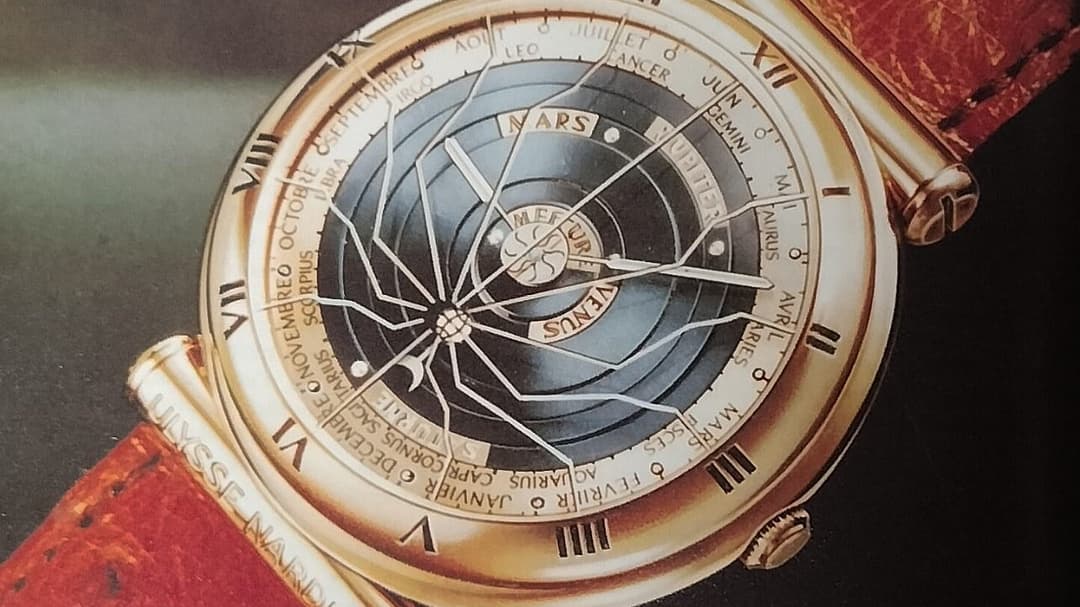
Photo: Copernicus complication via Wikimedia Commons (CC BY-SA)
The Freak, The Blast, And The Modern Collection
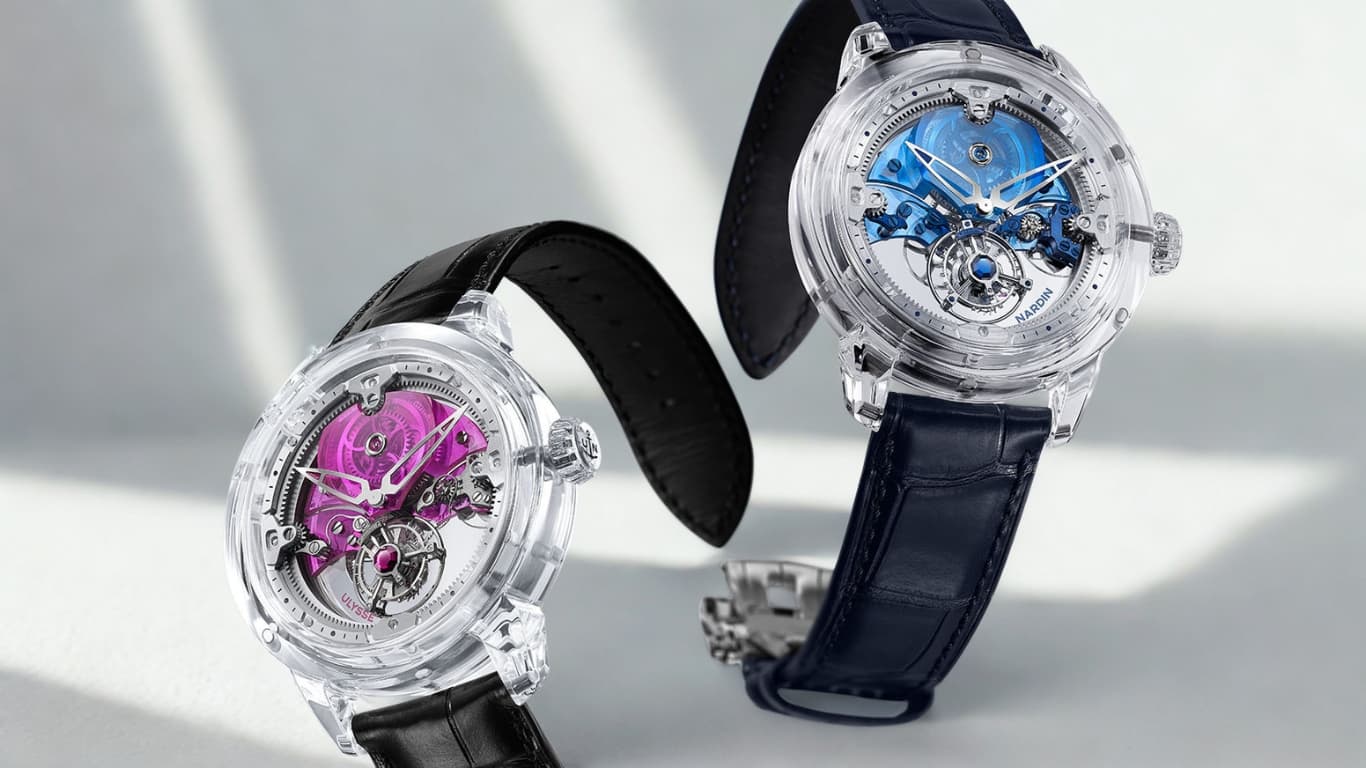
In 2001, Nardin released the Freak. The watch has no dial, no hands, and no conventional escapement. The entire movement rotates around the case once per hour, and the time is read directly off the bridge architecture as it turns. Oechslin's escapement work — the dual direct-impulse silicon escapement that came later — moved silicon from a laboratory curiosity into a production part. The Freak is recognised industry-wide as the watch that opened the modern complication era.
The Freak set the trajectory for everything that followed. The Freak X democratised the platform, the Freak [S] introduced a twin-vertical-balance architecture, and the Blast collection took the carousel movement into a tonneau case with skeletonised aesthetics that read as contemporary independent design. The Marine line — Marine Mega Yacht, Marine Torpilleur, Marine Chronometer — preserves the visual grammar of the original deck watches: large numerals, prominent power reserve, small seconds at six. The manufacture has never stopped naming the line after what it actually was.
The Diver collection threads the same DNA into a 200-metre sports watch. Nardin is independent again under Sowind Group after the Kering Group period from 2014, positioned today as a serious modern manufacture with its archive intact.
Reading The Current Collecting Market
The vintage Nardin market is thin but disciplined. Pocket chronometers with original Neuchatel certificates, deck watches with documented naval inventory, and rare early wristwatch chronometers from the 1930s and 1940s appear at Phillips Geneva and Christie's Geneva several times a year. Specialist dealers in London, Geneva, and New York hold steady inventory at the high end. The bidding has grown more serious — pieces that cleared at low five-figure estimates a decade ago now find committed buyers paying real numbers for documented provenance.
On the modern side, the Freak and Marine references behave the way modern independents behave when the manufacture is taken seriously: standard production pieces hold on the secondary market, limited series with strong narrative — the Freak collaborations, the Marine Tourbillon Grand Feu enamel pieces — move at premiums, and discontinued references find their constituency the same way discontinued AP references have.
Our read for 2026: Nardin sits in a window that closes slowly. The brand has the archive, the technical patents, and the independent ownership structure to justify a senior position in any serious collection. The vintage market has already corrected; the modern market is following at a slower pace. The watches that earned 4,324 firsts at Neuchatel did not stop being important when the conversation moved on. The conversation is moving back.
Frequently Asked Questions
- What is a marine chronometer?
- A marine chronometer is a precision timekeeping instrument designed to maintain accurate Greenwich Mean Time aboard a ship, allowing the navigator to calculate longitude. The movement is mounted in a gimballed wooden box, the escapement is tuned for rate stability rather than convenience, and each instrument was traditionally delivered with an observatory rate certificate documenting its performance across temperature and position. Before satellite navigation, a marine chronometer was the single most important instrument in a ship's chartroom.
- Why is Ulysse Nardin considered the most important marine-chronometer maker?
- Ulysse Nardin earned 4,324 first-place certifications at the Neuchatel Observatory between 1860 and 1965 — more than any other Swiss manufacture across the entire competition era. The firm supplied marine chronometers to more than fifty navies, including the French, Italian, Russian, Japanese, and United States fleets. That combination of competition record and active naval inventory makes Nardin the de facto reference manufacture of the marine-chronometer era.
- Which Ulysse Nardin references should a new collector know first?
- On the vintage side: the silver pocket chronometers with original Neuchatel certificates, the steel deck watches from the 1930s through the 1950s, and the early observation chronometers with documented naval provenance. On the modern side: the Marine Torpilleur as the cleanest contemporary expression of the marine-chronometer aesthetic, the original 2001 Freak and its descendants (Freak X, Freak [S]), the Astrolabium Galileo Galilei as a piece of late-20th-century complication history, and any of the Blast skeleton references for the modern manufacture aesthetic.
- How is the vintage Ulysse Nardin market behaving in 2026?
- Thin but disciplined. Significant vintage pieces — documented pocket chronometers, naval deck watches, early wristwatch chronometers — appear at Phillips Geneva and Christie's Geneva several times a year, and serious specialist dealers in London, Geneva, and New York maintain steady inventory at the upper end. The shift in 2026 is that committed bidders are paying real numbers for documented provenance, where a decade ago similar pieces cleared at lower estimates. The vintage segment has corrected ahead of the modern segment, which we expect to follow.

Stefanos Moschopoulos
Stefanos Moschopoulos founded The Luxury Playbook in Athens and has spent the better part of a decade following the auction calendar, the en primeur releases, and the watchmakers, gallerists, and shipyards the magazine covers. He writes the field guides and listicles that anchor the Connoisseur section — pieces built on Phillips and Christie's results, Liv-ex movements, and conversations with collectors he has met across Geneva, Bordeaux, Basel, and Monaco. His own collecting habits sit closer to watches and wine than art, and it shows in the level of detail in the magazine's coverage of those categories. Under his direction, The Luxury Playbook now publishes long-form field guides, market-defining year-end listicles, and the Voices interview series with the founders behind the houses and the brands.