In an industry that measures itself in output, scale and marketing reach, Philippe Dufour has built the most formidable reputation in modern watchmaking by doing almost the opposite of all three. He is a master watchmaker from the Vallee de Joux in Switzerland, the high valley that has been the cradle of complicated horology for centuries, and he is widely called the greatest living watchmaker. He has earned that title not by volume but by hand, working largely alone, finishing every surface himself to a standard that the rest of the trade now uses as its benchmark. When connoisseurs argue about who truly sits at the top, the conversation tends to end where his name appears.
The proof is partly in the salerooms and partly in the silence of his peers. Phillips has watched the secondary value of his work multiply many times over, and Christie's and Hodinkee treat any Dufour appearance as a significant event precisely because so few exist. Other watchmakers, the ones whose own pieces collectors chase, speak of his finishing in tones close to reverence. That is the rarer endorsement. A maker can be marketed into fame, but the quiet, near unanimous deference of the people who actually do the work cannot be bought. It has to be earned at the bench, one bevelled bridge at a time.

Key Takeaways & The 5Ws
- Philippe Dufour is a master watchmaker from the Vallee de Joux in Switzerland, widely called the greatest living watchmaker.
- He is revered above all for hand finishing: anglage, black polish and hand bevelled bridges executed to a standard the trade now treats as the benchmark.
- His Grande Sonnerie was a landmark, the first wristwatch to carry that chiming complication.
- The Duality, with two escapements, was made in very few examples and is among the rarest watches in collecting.
- The Simplicity, a time only watch made in roughly 200 examples, has seen its secondary value multiply many times over at Phillips.
- Who is this for?
- Collectors and enthusiasts who want to understand why hand finishing, rather than complication or scale, sits at the summit of serious watchmaking.
- What is it?
- A profile of Philippe Dufour, the Vallee de Joux master whose tiny output set the modern benchmark for finishing.
- When does it matter most?
- Whenever you are learning to read a movement's finishing, weighing craft against complication, or following the quietest corner of the collecting market.
- Where does it apply?
- Across the contemporary independent scene and the salerooms that trade his handful of references, from the Simplicity to the Duality.
- Why consider it?
- Because Dufour proves that craft executed to the limit, in tiny numbers, can outweigh every other measure of value in collecting.
The Vallee de Joux Hand Behind the Legend
To understand Philippe Dufour you have to understand the valley that formed him. The Vallee de Joux is the remote Swiss valley where, for generations, the most complicated movements in the world have been conceived and finished, often by craftsmen working through the long winters in near isolation. Dufour came up inside that tradition, learning the disciplines that the broader industry was, even then, beginning to mechanise away. He absorbed a way of working that treated the finishing of a movement not as a final cosmetic step but as the whole point, the place where a watchmaker's character actually shows.
What sets him apart is that he never let go of it. As the industry industrialised, replacing the hand with the machine wherever it could, Dufour kept doing the slow work himself, largely alone, at a bench rather than on a production line. He is not revered for resisting progress for its own sake, but because he proved, with the watches themselves, that the hand can still reach a standard no machine matches. In a field that increasingly prized scale, he made a quiet, stubborn case for the value of one person's craft. It is the same conviction that animates the best of the independent watchmaking movement, traced back to its purest source.
Why Finishing Is the Whole Argument
The word that surrounds Dufour more than any other is finishing, and to outsiders it can sound like a detail. It is not. Finishing is the discipline of treating every surface of a movement, including the ones no owner will ever see, to a standard of perfection that has no functional purpose and every aesthetic one. The vocabulary is precise. Anglage, or bevelling, is the rounding and polishing of every edge of a bridge or component until it catches light cleanly along its whole length. Black polish, sometimes called specular polishing, brings a steel surface to a mirror so flawless it appears black from one angle and bright from another. Hand bevelled bridges carry inward and outward angles that machines struggle to cut at all.
Dufour does this work to a level the rest of the trade openly measures itself against. His bevels are wide, even and perfectly rounded; his inward angles, the hardest test of all because no machine can leave a crisp internal corner, are cut by hand and held up as the reference for how it should be done. The point is not decoration. It is the visible record of a watchmaker who refused to compromise on any surface, an honesty that runs all the way through the movement. Collectors who learn to read finishing learn to read character, and Dufour's movements read as uncompromising from the first bevel to the last. That is why the quiet world of museum grade collecting treats his work as a yardstick.
The Grande Sonnerie and the Duality
Dufour's reputation did not begin with simplicity, but with the opposite. His Grande Sonnerie was a landmark, the first wristwatch ever to carry that chiming complication, which strikes the hours and quarters in passing as a grande sonnerie clock does. To miniaturise the most demanding mechanism in horology into a wristwatch and finish it to his standard announced him as a watchmaker operating at the absolute limit of the craft, not merely a gifted finisher but a constructor of the highest order.
Then came the Duality, and with it a different kind of rarity. The watch carries two escapements working together, an idea drawn from the historical pursuit of better timekeeping, and Dufour made only a very few examples. That scarcity, attached to a piece of such technical ambition and executed with his finishing, places the Duality among the rarest and most quietly coveted watches in all of collecting. It almost never appears, and when it does the event registers across the trade. The Grande Sonnerie and the Duality together established something important before the watch that would make him famous: that this was a maker who could do the hardest things in horology, and choose to do them in tiny numbers, by hand.
How the Simplicity Became the Benchmark
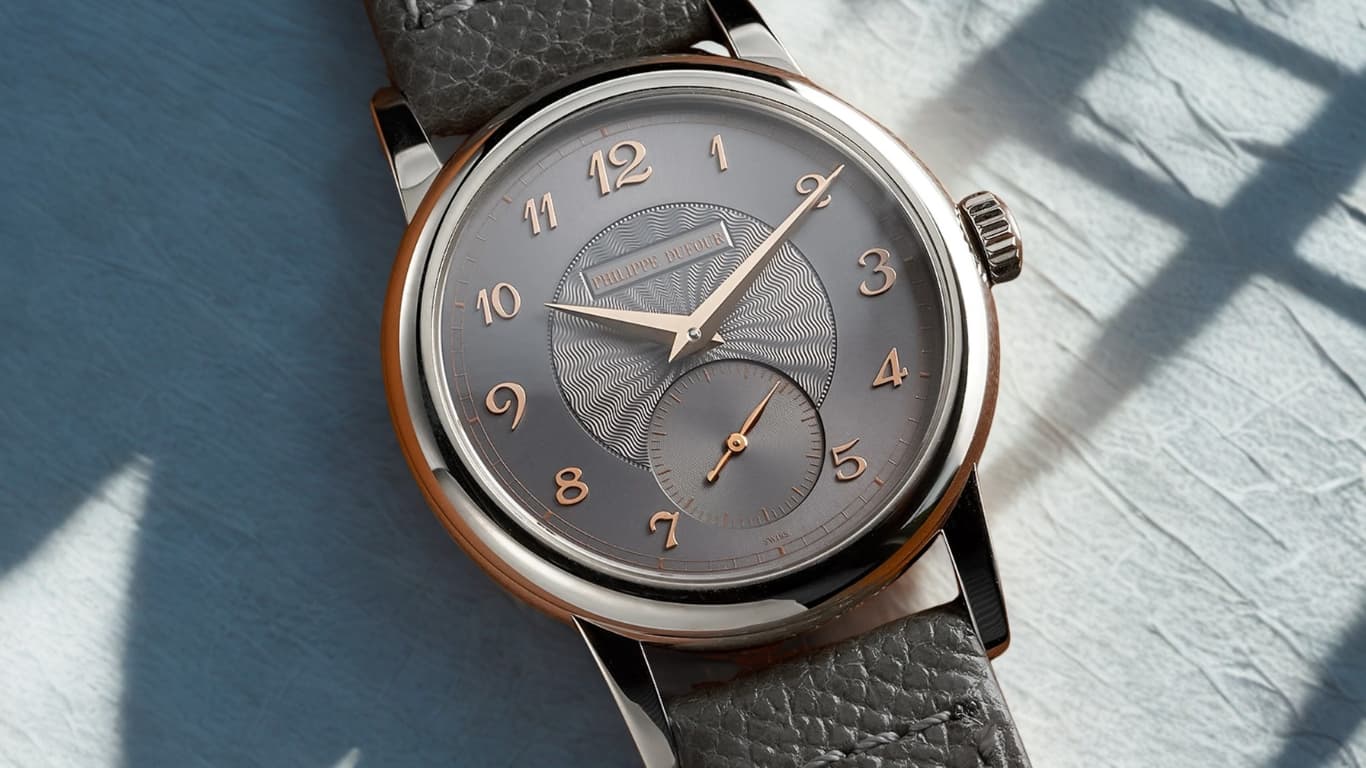
The watch that turned a connoisseur's secret into a collecting legend was, fittingly, his simplest. The Simplicity is a time only watch, no complications at all, made in roughly 200 examples. On paper it is the most modest thing he has built. In the metal it is the purest possible expression of his argument, because with nothing to distract the eye, the entire watch becomes a showcase for finishing. There is nowhere to hide. Every bevel, every polished surface, every hand cut angle stands fully exposed, and the Simplicity passes that test more completely than almost any watch ever made.
That is precisely why it became the benchmark. A time only watch from a maker of complications was a statement that craft alone, executed to the limit, was enough to sit at the very top. The market agreed emphatically: the secondary values of the Simplicity have multiplied many times over at Phillips, as a small population of collectors competes for a watch they understand to be a high point of modern hand finishing. The lesson is one serious collectors absorb slowly. Complication impresses, but craft endures, and the restraint of a perfectly resolved time only watch can outlast far noisier achievements.
Why Philippe Dufour Is the Quietest Coveted Name
What makes Philippe Dufour singular is the contrast between how little he makes and how loudly his name carries. He has produced only a handful of references across an entire career, and yet he stands as the most quietly coveted maker in the field, the one whose work other watchmakers study and other collectors chase hardest. There is no marketing machine behind any of this, no broad campaign, no scale. The reputation rests entirely on the watches and on the testimony of the people best placed to judge them, which is the most durable foundation a reputation can have.
The result is a peculiar kind of fame, intense but contained, the opposite of the noise that usually drives a luxury market. Among the wider public the name means little. Among those who understand finishing it means almost everything, and that gap is the whole story. Dufour built his standing by ignoring the levers that normally create value, output and promotion and reach, and relying instead on craft executed past the point of reason. It worked because the people who matter most in this field can tell the difference, and they have spent years quietly agreeing that no one does it better. The benchmark for finishing is not a brand or a factory. It is one man at a bench in the Vallee de Joux.
The title in our headline is the kind of claim that usually deserves suspicion, and in this case earns none. Philippe Dufour is, by the near unanimous reckoning of the people who do the work, the benchmark against which modern watchmaking measures its own hand. He proved his range with the Grande Sonnerie and the Duality, the hardest things in horology made in the smallest numbers, and then made his most enduring argument with the Simplicity, a time only watch whose perfection of finishing turned it into a legend and multiplied its value many times over. He did all of it by hand, largely alone, ignoring every lever that normally builds a luxury name. That is why his is the quietest coveted name in collecting, and why, when connoisseurs argue about who truly sits at the summit, the conversation keeps ending in the same valley, at the same bench, with the same answer.

Stefanos Moschopoulos
Stefanos Moschopoulos founded The Luxury Playbook in Athens and has spent the better part of a decade following the auction calendar, the en primeur releases, and the watchmakers, gallerists, and shipyards the magazine covers. He writes the field guides and listicles that anchor the Connoisseur section — pieces built on Phillips and Christie's results, Liv-ex movements, and conversations with collectors he has met across Geneva, Bordeaux, Basel, and Monaco. His own collecting habits sit closer to watches and wine than art, and it shows in the level of detail in the magazine's coverage of those categories. Under his direction, The Luxury Playbook now publishes long-form field guides, market-defining year-end listicles, and the Voices interview series with the founders behind the houses and the brands.