There are watchmakers collectors admire, and there are watchmakers collectors wait for. F.P. Journe belongs firmly to the second, smaller group. Francois-Paul Journe is a Geneva based independent who launched his own brand in 1999, and in the quarter century since, he has turned a tiny annual output into one of the most coveted signatures in the trade. To own a current piece you join a waitlist measured in years. To own an early one you go to a saleroom and brace yourself, because the devotion that has gathered around the name is unlike almost anything else in living horology.
That devotion is not sentiment. It is documented in the results. Phillips and Christie's have built entire chapters of their contemporary watch sales around his work, and the figures keep climbing as the early references thin out. Hodinkee and the rest of the serious trade press treat each Journe release as an event rather than a product launch. When a living maker draws that kind of attention from the houses that set the market's agenda, something rarer than fashion is at work. What follows is our reading of why F.P. Journe occupies the position he does, and why the queue behind him never seems to shorten.

Key Takeaways & The 5Ws
- Francois-Paul Journe launched his own Geneva based brand in 1999 after years building complicated watches to commission.
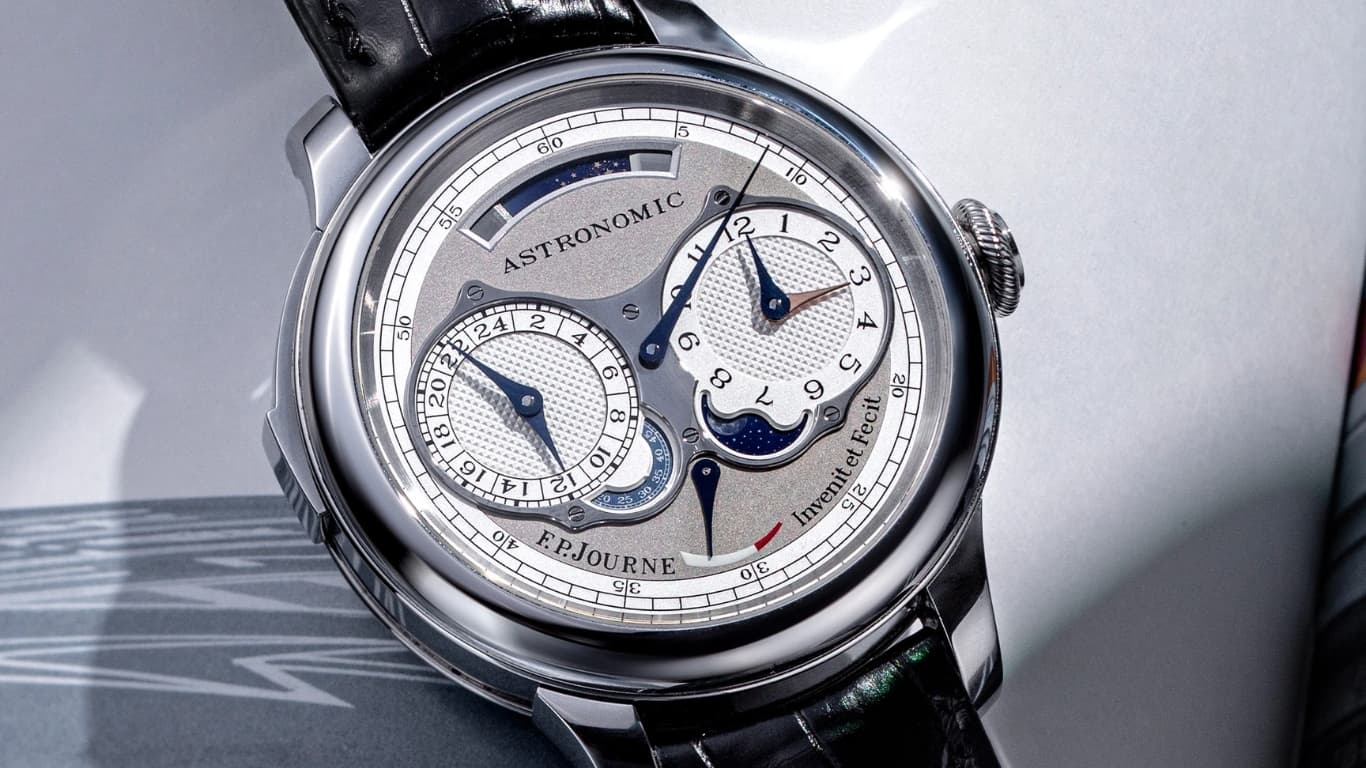
- His dials carry the motto "Invenit et Fecit," meaning invented and made, a claim that the watches are his own from concept to execution.
- The Chronometre a Resonance, with two balances beating in resonance, is the piece that made his name among connoisseurs.
- For years the movements were made in rose gold, an unusual and instantly recognisable signature.
- The early Souscription, or subscription, pieces are the most coveted of all and lead his results at Phillips and Christie's.
- Who is this for?
- Collectors and enthusiasts who want to understand why a living independent commands waitlists and record saleroom prices.
- What is it?
- A profile of F.P. Journe, the Geneva independent watchmaker whose tiny output has become one of collecting's most coveted signatures.
- When does it matter most?
- Whenever you are reading contemporary auction results, weighing an independent against a heritage manufacture, or tracing where modern watch value has concentrated.
- Where does it apply?
- Across the contemporary independent scene, from the brand's own waitlists to the marquee salerooms that trade the early references.
- Why consider it?
- Because Journe shows how authorship, scarcity and chronometric ambition combine into the most intense collector demand of the modern era.
The Maker Behind Invenit et Fecit
Before there was a brand, there was a watchmaker building complications for other people. Journe trained in the classical Parisian tradition and spent his early career making tourbillons and complicated watches to commission, the sort of quiet, demanding work that builds a reputation among the few rather than the many. By the time he put his own name on a dial in 1999, he was not an outsider gambling on attention. He was a constructor who had already proven, privately, that he could conceive and build at the highest level, and who had decided to do it under his own signature at last.
That decision is captured in two words printed on every dial: Invenit et Fecit, invented and made. The phrase is a deliberate echo of the great historical makers, and it is also a claim worth taking literally. It asserts that the watch you are looking at was conceived and realised by Journe himself, not assembled from bought in solutions and dressed in a logo. In an industry that has spent generations obscuring authorship behind corporate signatures, the motto reads as a statement of principle. The watches are his, and he wants you to know it. Collectors who care about authorship in independent horology hear that claim clearly, and it is a large part of why they queue.
The Resonance That Made His Name
If one watch turned a respected constructor into a cult, it is the Chronometre a Resonance. The principle behind it is one of the most romantic ideas in mechanical horology: two independent balances, mounted close together, that fall into sympathetic resonance and beat in concert, each steadying the other. The phenomenon had fascinated the historical masters, who chased it in pendulum clocks and a handful of pocket watches, but to realise it reliably on the wrist was a different order of difficulty. Journe did it, and he made it the centrepiece of his young brand.
What made the Resonance more than a technical stunt was the conviction of its execution. This was not a complication grafted on to impress; it was a chronometric idea pursued for its own sake, finished and presented with the restraint of a serious watch rather than the noise of a novelty. Connoisseurs understood immediately what they were looking at. The Resonance announced that the new brand was not interested in playing safe, that it would chase the hard, historically resonant problems and solve them in its own way. It remains the watch most closely associated with the name, and the one that first taught the market to take F.P. Journe seriously as a maker of consequence rather than a curiosity.
Unconventional displays such as the Audemars Piguet Starwheel share the experimental spirit of the independents.
The Souverain Collection and a Movement in Gold
The Resonance did not stand alone for long. Around it Journe built a collection that has become a coherent body of work: the Tourbillon Souverain, which placed his classical training in its purest setting; the Octa family, an automatic platform that carried a date, a power reserve, a moon phase and more across a single robust calibre; and later the Chronometre Bleu, a time only watch whose tantalum case and deep blue dial made it one of the most quietly desired pieces in the entire range. Each occupies its own register, but all of them speak the same design language, instantly legible as Journe.
For years there was also a signature hidden where most owners never look. The movements were made in rose gold, a choice almost no one else made, since the metal offers no functional advantage over conventional alloys and costs a great deal more. Journe used it anyway, and the warm glow of a gold calibre under the caseback became one of the most recognisable tells in the trade. It is the kind of detail that rewards the obsessive, a quiet luxury aimed squarely at the person who turns the watch over. That instinct, to lavish care on the parts only the devoted will ever see, sits close to the heart of why his watches belong in the conversation about museum grade collecting.
Why the Subscription Pieces Lead Every Sale
At the very top of the F.P. Journe market sit the earliest watches of all, the Souscription, or subscription, pieces. When the brand was new and unproven, Journe funded the first Resonance and Tourbillon production the way the historical masters once did, by inviting a small circle of believers to commit in advance, before the watches existed. Those subscribers backed a watchmaker on faith. The pieces they received, numbered and made at the very beginning of the story, are now the most coveted objects the name has produced, and they lead his results whenever they surface.
The reason is the same logic that governs the rest of serious collecting, concentrated to its sharpest point. These are the first examples, made in the smallest numbers, at the origin of a story that has since become one of the most important in modern watchmaking. They carry the romance of the early gamble and the scarcity of a tiny original run, and connoisseurs prize them accordingly. When a Souscription Resonance or an early Tourbillon Souverain comes to Phillips or Christie's, the room understands it is looking at the foundation stone of the whole phenomenon, and the bidding reflects exactly that. Provenance, sequence and origin all point the same way, and the early pieces sit untouchable at the summit.
Why F.P. Journe Trades Like a Living Blue Chip
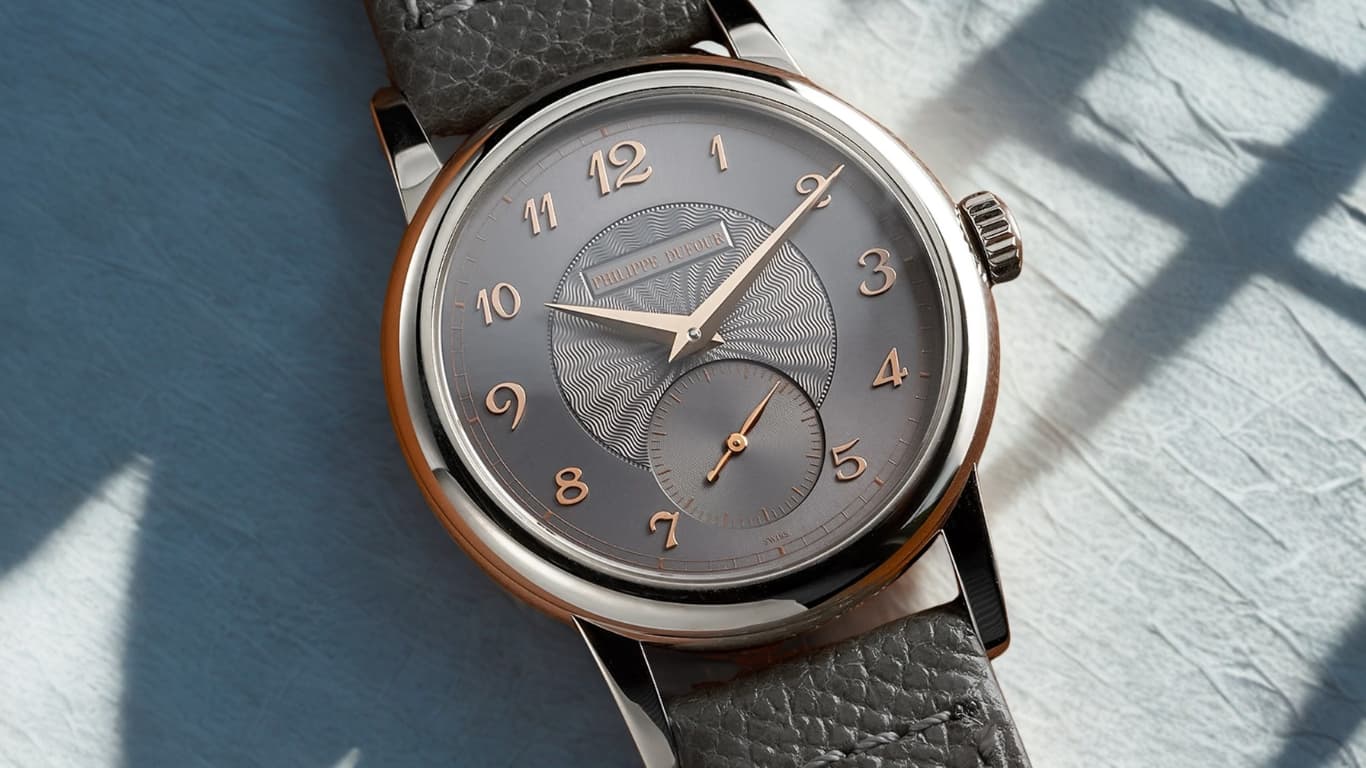
Most watches that command this kind of saleroom devotion belong to makers long dead, their output fixed and finite. F.P. Journe is the rare living independent whose work is treated with the gravity usually reserved for the historical greats, a register he shares with peers such as Philippe Dufour. He has won multiple prizes at the Grand Prix d'Horlogerie de Geneve, the closest thing the watch world has to an annual reckoning of merit, and that recognition has run in parallel with the saleroom story rather than trailing it. The trade and the critics arrived at the same conclusion at roughly the same time, which is itself unusual.
The mechanism sustaining all of this is brutally simple: production is tiny, and demand is not. Journe makes only a small number of watches each year, by deliberate choice rather than constraint, and the appetite for them vastly exceeds what the workshop will ever release. That gap is what produces the years long waitlists for current pieces and the intense secondary competition for everything else. It is the same scarcity dynamic that has lifted the most coveted independent names, the kind of demand that also explains why Audemars Piguet stays a cornerstone, here applied to a maker who is still at the bench. The result is a living blue chip, a signature whose value rests not on marketing spend but on the conviction that the man behind it is making some of the most important watches of his generation.
The phrase in our headline is the plain truth of it. F.P. Journe is, in the literal sense, the watchmaker collectors wait for, and the waiting is the surest measure of his standing. He built a brand in 1999 on a motto that insisted the watches were his own, proved it with a Resonance that chased one of horology's most romantic problems, and surrounded it with a collection of real coherence and quiet, gold calibre luxury. The early Souscription pieces sit at the summit of his market because they sit at the origin of his story. The salerooms treat a living man as a historical great because, by the evidence of the work, that is what he is. The queue behind him is long for the oldest reason in collecting: there are very few of these watches, and a great many people who understand exactly why they matter.

Stefanos Moschopoulos
Stefanos Moschopoulos founded The Luxury Playbook in Athens and has spent the better part of a decade following the auction calendar, the en primeur releases, and the watchmakers, gallerists, and shipyards the magazine covers. He writes the field guides and listicles that anchor the Connoisseur section — pieces built on Phillips and Christie's results, Liv-ex movements, and conversations with collectors he has met across Geneva, Bordeaux, Basel, and Monaco. His own collecting habits sit closer to watches and wine than art, and it shows in the level of detail in the magazine's coverage of those categories. Under his direction, The Luxury Playbook now publishes long-form field guides, market-defining year-end listicles, and the Voices interview series with the founders behind the houses and the brands.