For roughly fifteen years, one watch sat at the centre of the steel sports watch conversation, and everyone in the room knew it. The Patek Philippe Nautilus 5711 was a three hand, date displaying steel watch on an integrated bracelet, and by the end of its run it had become the single most discussed reference in modern collecting. It was not the most complicated watch Patek Philippe made, nor the most expensive. It was something rarer: the piece that defined a category, and then defined the mania around it.
The numbers tell the surface of the story. As Hodinkee and the wider trade documented through the late 2010s, authorised dealer waitlists for the steel 5711 ran for years, while secondary prices climbed to multiples of the retail figure. A watch you could not buy at a boutique for love or money traded freely elsewhere for the price of a serious motor car. To understand how a three hand steel watch reached that point, you have to start where the design started, in 1976, with a sketch that broke every rule Patek was supposed to live by.

Key Takeaways & The 5Ws
- The Nautilus 5711/1A was Patek Philippe's steel Nautilus on a bracelet, the modern heir to the original 3700 of 1976.
- Gerald Genta designed the original Nautilus with its porthole shaped case and horizontal embossed dial, a luxury sports watch in steel.
- Patek discontinued the steel 5711 in 2021, closing the reference at the height of demand.
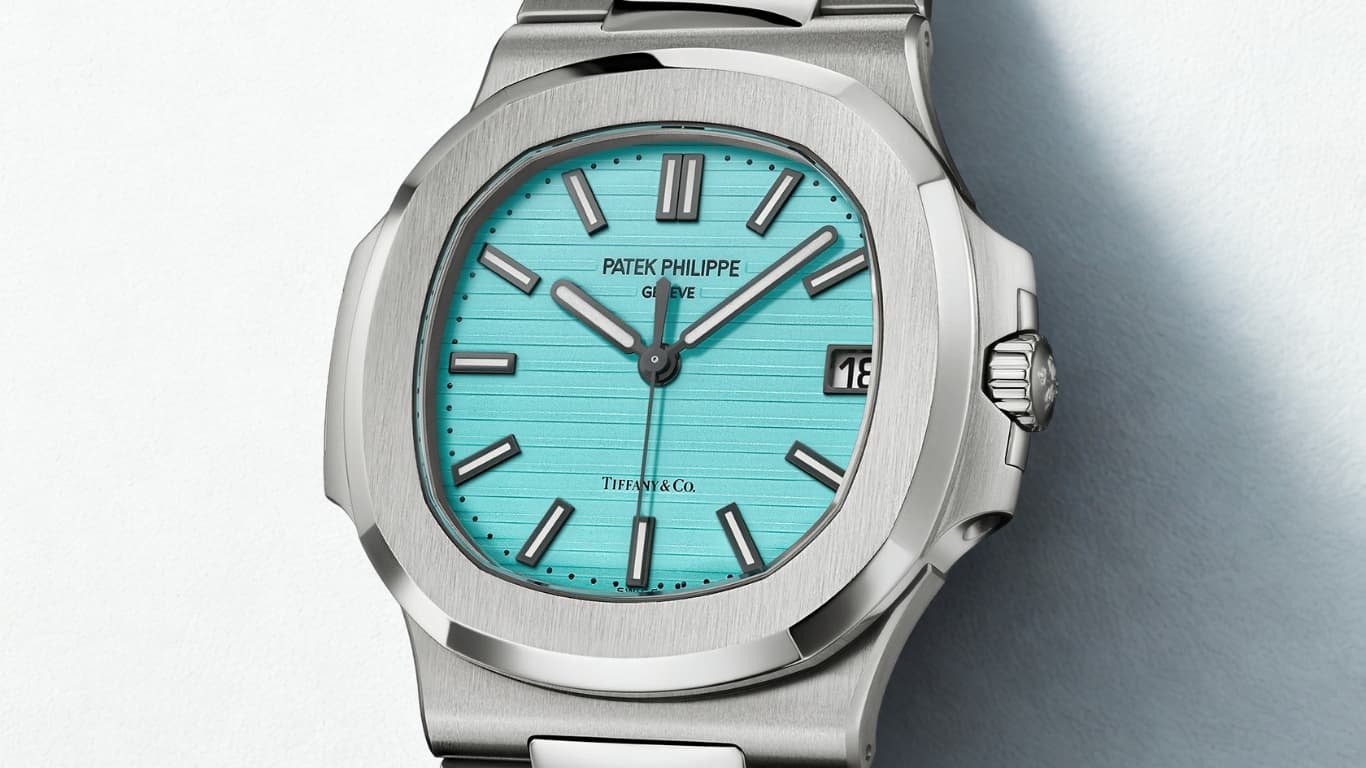
- A small run of green dial 5711s and a final Tiffany and Co blue dial edition marked the reference's farewell.
- Waitlists ran for years and secondary prices ran far above retail, making the 5711 the emblem of 2010s steel sports watch mania.
- Who is this for?
- Collectors and enthusiasts who want to understand why one steel Patek came to define modern watch collecting.
- What is it?
- A profile of the Patek Philippe Nautilus 5711, the steel sports watch on a bracelet that closed in 2021.
- When does it matter most?
- When you are reading the modern Nautilus story, comparing references, or trying to grasp the steel sports watch boom.
- Where does it apply?
- Across the integrated bracelet steel sports watch category that Patek, with the Nautilus, helped to create and then to crown.
- Why consider it?
- Because the 5711 is the clearest case study in how design, scarcity and timing can make a single reference the symbol of an era.
The Genta Blueprint Behind the 5711
Every story about the 5711 has to begin with Gerald Genta, because the watch it perfected was his idea first. In 1976 Patek Philippe launched the original Nautilus, reference 3700, designed by Genta as a luxury sports watch rendered entirely in steel. That last detail was the provocation. Patek was the house of thin dress watches in precious metal, and here it was asking serious money for steel. The advertising leaned straight into the contradiction, presenting a watch elegant enough for a dinner jacket and tough enough to be worn, in the famous line, with a wetsuit.
The design itself was unlike anything in the catalogue. Genta drew a case shaped like a ship's porthole, with two small hinges flanking a rounded octagonal bezel, and inside it a dial carrying horizontal embossed grooves that caught the light across their full width. There were no fussy details, just proportion, finishing and a silhouette you could read across a room. The 3700 earned the nickname Jumbo for its generous case, and it established the visual grammar every later Nautilus would speak.
The 5711 was the direct modern descendant of that 1976 original. Introduced in 2006 to mark the line's thirtieth anniversary, it carried the porthole case, the embossed dial and the integrated bracelet forward, updated with a display caseback and a refined movement. It was, in the truest sense, the 3700 reborn for a new generation, and it inherited the whole weight of Genta's blueprint.
How the Patek Philippe Nautilus 5711 Defined the Steel Sports Watch Era
The 2010s belonged to the steel sports watch, and the 5711 was its standard bearer. The category Genta had effectively invented in the 1970s, the luxury watch in steel on an integrated bracelet, became the defining obsession of a new wave of collectors who wanted one watch that did everything: dressy yet sporty, recognisable yet understated, precious in execution if not in metal. The 5711, with its blue dial reading instantly across any setting, became the watch that whole category pointed toward.
What set the 5711 apart from its rivals was the particular combination it offered. It was a Patek Philippe, which meant the finishing and the name carried the full authority of the most revered house in the trade, yet it wore with the ease of a tool watch. The blue sunburst dial photographed beautifully and looked even better in person, the case sat flat and comfortable, and the bracelet tapered with a precision that rewarded close attention. It managed to be both a connoisseur's watch and an icon legible to people who knew nothing about movements. The blue dial 5711/1A became shorthand for having arrived, and that dual appeal is exactly what drove the doubling down on the Nautilus we watched accelerate through the decade.
The Patek Philippe Nautilus, the steel sports watch the 5711 carried to icon status.
The Waitlists and the Prices That Followed
With demand at that pitch and supply deliberately limited, the market did what markets do. Authorised dealers could not come close to satisfying the queue, and waitlists for the steel 5711 stretched into years rather than months. For most would be buyers, walking into a boutique and leaving with one was simply not possible, no matter how well connected they believed themselves to be. The watch existed in a strange state: officially available at a list price almost nobody could pay, and practically available only somewhere else entirely.
That somewhere else was the secondary market, where the 5711 traded openly at figures far above its retail price. The gap between the boutique number and the real world number widened year after year, until a steel three hand watch changed hands for sums that would once have bought a serious complication in gold. The scarcity was real, rooted in genuinely limited production, but it was also self reinforcing: the very impossibility of buying one at retail made owning one all the more coveted, and the rising prices generated more coverage, more desire and more demand still. The 5711 became the clearest example of a dynamic now reshaping the whole trade, the same forces driving the secondary watch market for the most sought after steel pieces. By the close of the decade it had become less a product you could plan to acquire than a phenomenon you watched from a distance.
The Green Dial and the Tiffany Blue Farewell
Then, in 2021, at the absolute peak of all this, Patek Philippe did the thing nobody expected: it discontinued the steel 5711. Retiring the most in demand watch in the world at the height of its fame was a deliberate and almost contrarian decision, and it sent a shock through the collecting community. The house had a long history of ending references on its own terms rather than the market's, a pattern that helps explain which Patek models get discontinued next, but closing this reference, at this moment, was a statement that landed with real force.
Patek did not let the 5711 slip away quietly. Before the steel reference closed, the brand released a small run with a striking olive green dial, a fresh colourway for a watch the world knew almost entirely in blue. It sold out instantly and became a sensation in its own right, a parting gesture that proved how much heat the reference still carried. The true farewell came with the Tiffany and Co blue dial 5711, a special edition produced in partnership with the American retailer and finished in Tiffany's signature robin's egg blue. Limited to a tiny number and instantly the most talked about watch of its year, it closed the reference on an extraordinary high. Between the green dial and the Tiffany edition, Patek turned the discontinuation itself into one of the great events in modern collecting, and gave the 5711 an ending worthy of the era it had defined.
What the 5711 Left Behind
The retirement of the steel 5711 left a gap the trade is still measuring. Patek replaced it with a new reference, the 5811 in white gold, clearly descended from the same Genta blueprint but rendered in precious metal and at a different price point. The decision to move the flagship Nautilus away from steel was telling. It acknowledged what the 5711 had become and quietly declined to keep feeding the dynamic that had consumed it, choosing instead to reset the conversation on the brand's own terms.
For collectors, the legacy of the 5711 is twofold. As an object it remains one of the most coveted steel watches ever made, its discontinued status only deepening the standing it already held, and it sits alongside the reasons Patek Philippe stays a cornerstone of any serious collection. As a case study it is larger still: the clearest demonstration in living memory of how design, name, scarcity and timing can combine to make a single reference stand for an entire moment in the history of taste.
That is the real measure of the 5711. Plenty of watches are rare, beautiful or expensive. Very few come to define their era so completely that the era is hard to describe without them, and the steel Nautilus did exactly that.
The Patek Philippe Nautilus 5711 was never the most complicated or the most precious watch its maker produced, and that is precisely the point. It was a steel sports watch on a bracelet, descended from Gerald Genta's 1976 original, and through some alchemy of design, name and timing it became the emblem of an entire era. Its years long waitlists, its secondary prices, its green dial and Tiffany blue farewell all tell one story: this was the reference the steel sports watch boom was built around. Patek retired it at the summit, on its own terms. Some watches keep time. A very few keep the memory of a moment, and the 5711 will keep the memory of this one.

Stefanos Moschopoulos
Stefanos Moschopoulos founded The Luxury Playbook in Athens and has spent the better part of a decade following the auction calendar, the en primeur releases, and the watchmakers, gallerists, and shipyards the magazine covers. He writes the field guides and listicles that anchor the Connoisseur section — pieces built on Phillips and Christie's results, Liv-ex movements, and conversations with collectors he has met across Geneva, Bordeaux, Basel, and Monaco. His own collecting habits sit closer to watches and wine than art, and it shows in the level of detail in the magazine's coverage of those categories. Under his direction, The Luxury Playbook now publishes long-form field guides, market-defining year-end listicles, and the Voices interview series with the founders behind the houses and the brands.