Two decades ago, the phrase "independent horology" described a footnote. A handful of lone watchmakers, a few cult names traded among obsessives, and very little gravity in the salerooms that set the trade's agenda. Today the picture is unrecognisable. Independents command their own thematic auctions, their own dedicated coverage, their own waiting lists measured in years. Much of that shift traces back to one Geneva atelier founded in 2005 and named, with deliberate cheek, after the people who make its watches possible.
MB&F stands for Maximilian Büsser & Friends, and the name is the thesis. When Phillips and Christie's began carving out room for independent makers in their marquee sales, they were ratifying a category that Büsser had spent years arguing into existence. Trade press from Hodinkee down treated the brand's releases as events rather than novelties. The "& Friends" was never a marketing flourish. It was a structural claim about who deserves credit when a calibre comes together, and the trade has been adjusting to that claim ever since.

Key Takeaways & The 5Ws
- MB&F was founded in Geneva in 2005 by Maximilian Büsser, formerly of Harry Winston and Jaeger-LeCoultre.
- The "& Friends" model openly credits the watchmakers, designers and suppliers behind each calibre.
- Horological Machines (from 2007) are sculptural, three dimensional wrist objects; Legacy Machines (from 2011) are classical and round.
- The LM1 was developed with Jean-François Mojon, with dial and movement input from Kari Voutilainen.
- MB&F also runs the M.A.D. Gallery and launched the more accessible M.A.D.1 and M.A.D. Editions.
- Who is this for?
- Collectors and enthusiasts who want to understand how independent horology became a serious field rather than a fringe.
- What is it?
- A profile of MB&F, the Geneva atelier that helped legitimise independent watchmaking as a collecting category.
- When does it matter most?
- Whenever you are reading auction results, weighing an independent against a heritage manufacture, or tracing where modern watch culture turned.
- Where does it apply?
- Across the contemporary independent scene, from saleroom catalogues to the ateliers that supply the calibres.
- Why consider it?
- Because the "& Friends" model changed how the trade names talent, and that shift reshaped value far beyond MB&F itself.
The Founder Who Walked Away From Safe
Maximilian Büsser did not arrive as an outsider taking potshots at the establishment. He came from inside it. Before MB&F he was managing director of Harry Winston Rare Timepieces, where he conceived the Opus series, the collaborative project that paired the jeweller with independent watchmakers and gave many of them their first taste of a major spotlight. Earlier still he had spent formative years at Jaeger-LeCoultre, one of the great movement houses. He understood, in other words, exactly how the conventional luxury machine worked, and what it tended to obscure.
What it obscured was authorship. The industry convention treats the brand on the dial as the sole author of the watch, while the constructors, finishers, dialmakers and complication specialists who actually realise a calibre stay invisible behind a corporate signature. Büsser's wager in 2005 was that an audience existed for the opposite arrangement, one that named the talent out loud and built the whole proposition around collaboration. Founding MB&F was less a product launch than a bet on a different model of credit, and the bet has aged extraordinarily well.
Horological Machines Made the Wrist a Stage
The first proof came in 2007 with the Horological Machines. Nothing about HM1 conceded to convention. It was not a watch trying to look like a better version of an existing watch; it was a three dimensional object, sculptural and frankly futuristic, that happened to tell time. The line that followed pushed the idea harder. There were machines shaped like jet engines, like insects, like spacecraft, with movements suspended in sapphire and dials that read vertically or through prisms. The wrist became a stage for kinetic sculpture rather than a surface for a dial.
This mattered beyond spectacle. The Machines forced a question the trade had largely stopped asking: what is a wristwatch allowed to be once you abandon the assumption that it must resemble its ancestors? By answering with such conviction, MB&F gave permission to a generation of younger independents to think in objects rather than templates. Plenty of the radical case making and three dimensional movement architecture that now feels normal in the independent scene was, in the years after HM1, distinctly abnormal. The Machines normalised ambition.
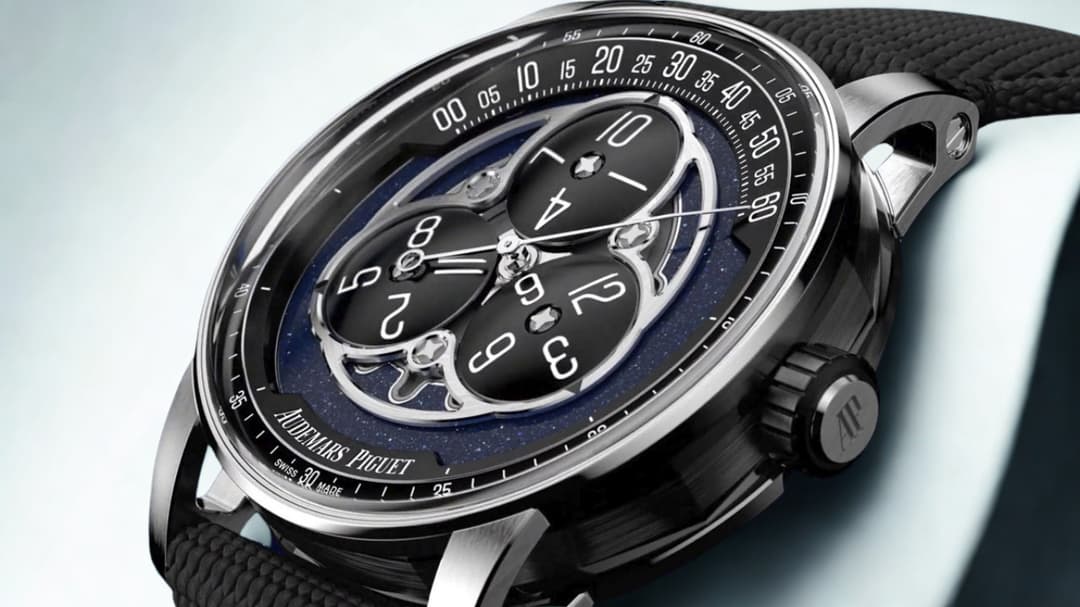
Legacy Machines Proved It Was Not a Gimmick
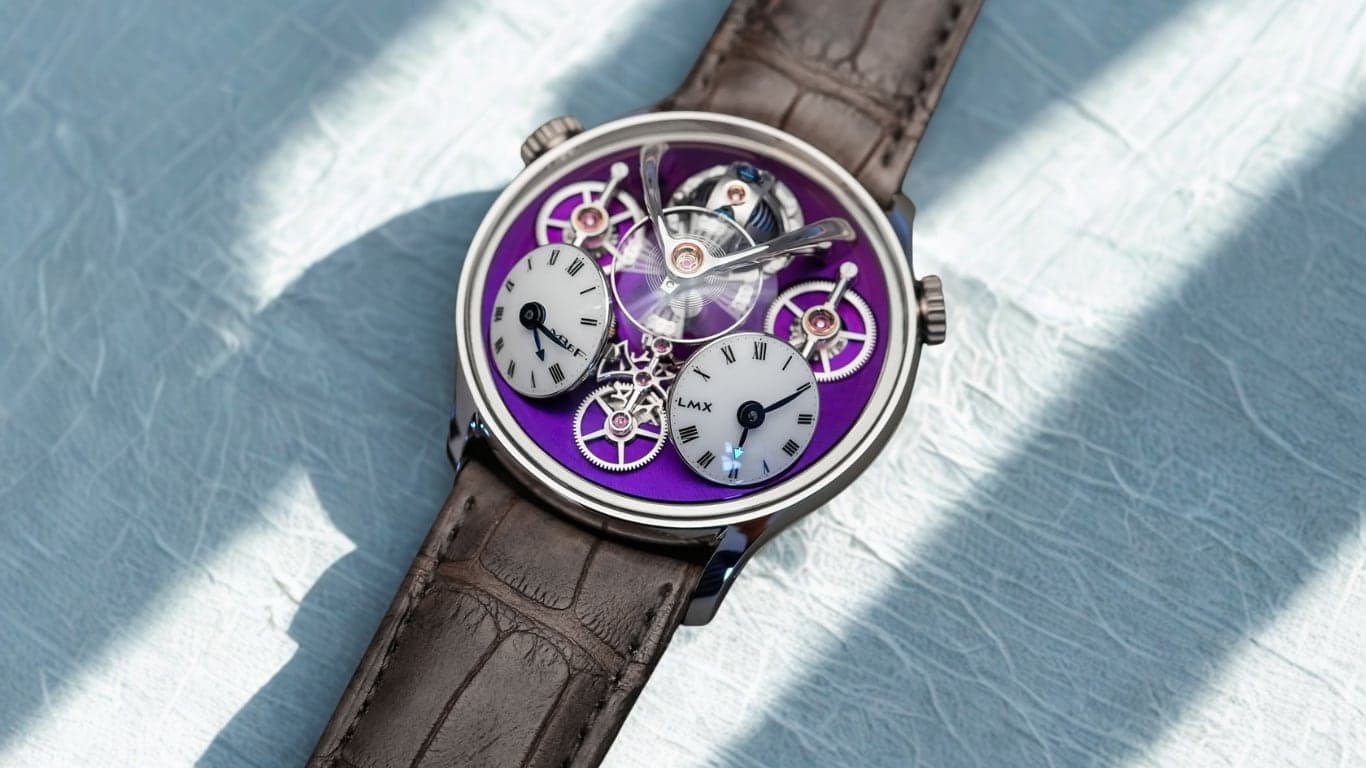
A house built only on shock value would have burned out. The Legacy Machines, launched in 2011, were the proof that MB&F was a watchmaking project and not a styling exercise. Where the Machines looked forward, the Legacy line looked back, to the round cases, exposed balance wheels and classical finishing of nineteenth century horology. The LM1 was the statement of intent: a serious haute horlogerie calibre developed with the constructor Jean-François Mojon, with dial and movement input from Kari Voutilainen, two of the most respected names working in the field.
Pairing those names with the MB&F signature was the "& Friends" thesis made tangible. The watch did not pretend to spring fully formed from a faceless manufacture. It credited the people who built it, and in doing so it told collectors that the talent was the point. The Legacy Machines also broadened the audience. A buyer who found the Horological Machines too extreme could enter through a watch of obvious classical pedigree, hand finished to a standard that bore comparison with the heritage haute horlogerie houses collectors revere most, and still be buying into the same idea of named, collaborative authorship.
The Friends Model Rewired the Trade
The deepest change MB&F made is the one that does not photograph. By insisting that the watchmakers, designers and suppliers behind each calibre be credited openly, the brand chipped at one of the industry's oldest habits: the silence around who actually does the work. For decades, movement constructors and specialist suppliers operated as anonymous subcontractors, their contributions absorbed into someone else's brand story. MB&F made naming them part of the product, and the gesture proved contagious.
Once collectors learned to value a watch partly for the hands that finished it, the calculus shifted across the field. The independent constructor became a draw rather than a trade secret. Names that the public would once never have encountered acquired their own followings, their own collector demand, their own gravity, the way buyers now track manufacture references serious collectors seek out by maker. This is why the "& Friends" idea matters more than any single Machine. It reframed the relationship between a brand and its makers as something to celebrate in the open, and that reframing has rippled out to ateliers and salerooms that have nothing to do with MB&F directly.
From Atelier to Gallery, and Down to Earth
Büsser's instinct that horology is a branch of kinetic art did not stay confined to the wrist. The M.A.D. Gallery, the brand's network of exhibition spaces, places its watches alongside kinetic sculpture, robotics and mechanical curiosities, framing the whole enterprise as art that happens to keep time. It is a coherent extension of the founding idea rather than a sideline. The watches were always objects first, so showing them as objects, among other objects, simply tells the truth about what they are.
The more recent move runs the other way, toward access. The M.A.D.1, and the broader M.A.D. Editions that followed, brought the design language and the kinetic spirit to a price point that opened the door to enthusiasts long priced out of the Machines. This is not a dilution of the project. It is the logical end of a brand that always argued independent horology should be a culture rather than a closed club. Letting more people through the door, without abandoning the craft, is consistent with everything MB&F has claimed since 2005.
The reinvention in the headline is not hyperbole. When MB&F opened its doors, independent horology was a niche that the serious trade tolerated more than it celebrated. Twenty years on, it is a category with its own salerooms, its own canon and its own stars, several of them the very "friends" the brand made a point of naming, the kind of museum grade collecting frontier that once sat at the margins of the trade. Büsser did not achieve that alone, and the whole charm of his project is that he never claimed to. That is the lasting lesson. MB&F's most durable contribution is not a single Machine or a record price; it is the simple, stubborn insistence that the people who make a watch deserve to be named, and a watch trade that now, increasingly, agrees.
Frequently Asked Questions
- What does MB&F stand for?
- MB&F stands for Maximilian Büsser & Friends. Founded in Geneva in 2005 by Maximilian Büsser, the name reflects the brand's defining principle: openly crediting the independent watchmakers, designers and suppliers who collaborate on each calibre, rather than absorbing their work into a single anonymous corporate signature.
- What is the difference between Horological Machines and Legacy Machines?
- Horological Machines, from 2007, are radical three dimensional, sculptural "machines" worn on the wrist. Legacy Machines, from 2011, are round and classical, an homage to nineteenth century watchmaking. The LM1 was developed with Jean-François Mojon, with dial and movement input from Kari Voutilainen. Both lines share MB&F's collaborative, named author approach.
- Who founded MB&F and what was his background?
- Maximilian Büsser founded MB&F in 2005. Before that he was managing director of Harry Winston Rare Timepieces, where he conceived the collaborative Opus series, and earlier he worked at Jaeger-LeCoultre. That insider experience shaped his decision to build a brand around openly credited collaboration rather than the industry's usual anonymity.
- What is the M.A.D.1, and is it more accessible than other MB&F watches?
- The M.A.D.1, and the broader M.A.D. Editions that followed, bring MB&F's kinetic design language to a markedly lower price point than the Horological or Legacy Machines. They open the door to enthusiasts long priced out of the main collections, extending the brand's argument that independent horology should be a culture rather than a closed club.

Stefanos Moschopoulos
Stefanos Moschopoulos founded The Luxury Playbook in Athens and has spent the better part of a decade following the auction calendar, the en primeur releases, and the watchmakers, gallerists, and shipyards the magazine covers. He writes the field guides and listicles that anchor the Connoisseur section — pieces built on Phillips and Christie's results, Liv-ex movements, and conversations with collectors he has met across Geneva, Bordeaux, Basel, and Monaco. His own collecting habits sit closer to watches and wine than art, and it shows in the level of detail in the magazine's coverage of those categories. Under his direction, The Luxury Playbook now publishes long-form field guides, market-defining year-end listicles, and the Voices interview series with the founders behind the houses and the brands.