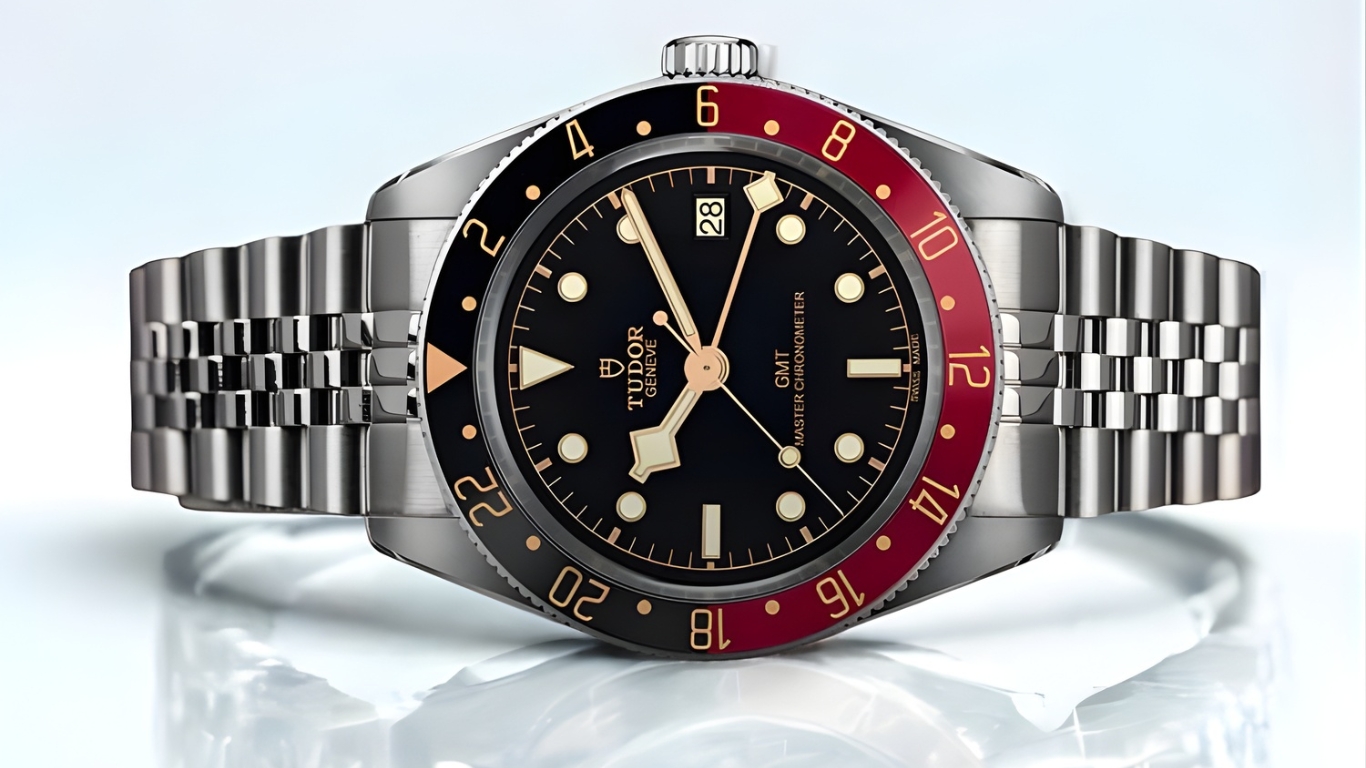

Luxury watch prices reached absurd heights during 2021 and 2022 when unprecedented demand collided with constrained supply to create price spirals that defied rational valuation.
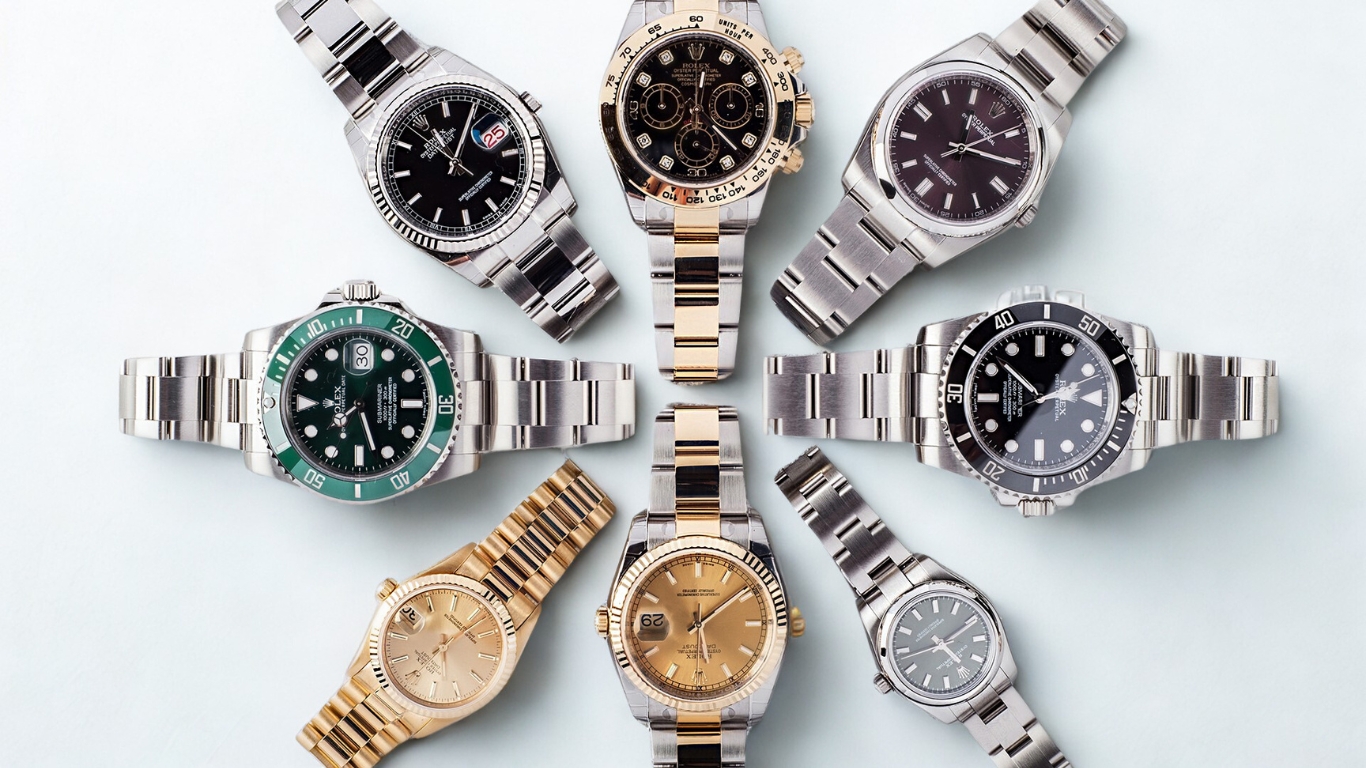
Rolex Submariners traded 50% above retail on the secondary market, while Patek Philippe Nautilus references commanded six-figure premiums. Speculators treated stainless steel sports watches like growth stocks, flipping pieces for immediate profit with no intention of ever wearing them.
Then reality arrived.
Throughout 2023 and 2024, the correction played out in slow motion as prices retreated, premiums evaporated, and the market normalized in ways that felt devastating to those who bought at the peak but looked inevitable to anyone familiar with how speculative bubbles typically resolve.
The primary and secondary markets diverged sharply during this correction. Authorized dealer retail prices remained relatively stable as brands like Rolex, Patek Philippe, and Audemars Piguet maintained pricing discipline and even pushed through modest increases.
Meanwhile, the secondary market where pre-owned dealers, grey market sellers, and auction houses operate experienced dramatic corrections of 20% to 40% for many references. Watches that commanded premiums one year traded at discounts to retail the next, creating situations where patient buyers with authorized dealer access could acquire new pieces for less than impatient buyers were paying for used ones.
The question facing collectors and investors in 2026 is whether the correction has run its course or whether further pain lies ahead.
Table of Contents
Key Takeaways & The 5Ws
- The luxury watch bubble of 2021–2022 has fully deflated, with many steel sports models down roughly 20%–40% on the secondary market even as brands such as Rolex, Patek Philippe, and Audemars Piguet kept pushing retail prices higher.
- The Bloomberg Subdial Watch Index rose about 8% in 2025 and reached its highest level since October 2023, implying the market likely found a floor in late 2024—though the recovery remains choppy and sentiment-sensitive.
- Dress watches and precious metal references are leading the rebound, supported by celebrity visibility, Gen Z’s pivot toward elegant design, sports-watch fatigue, and gold’s surge toward roughly $4,000/oz which lifts intrinsic value for gold models.
- For 2026, the smart approach is selective buying: prioritize liquid, high-quality references with innovation, scarcity, and strong narratives (for example, Cartier, Vacheron Constantin, and Jaeger-LeCoultre dress pieces and strong precious-metal models) rather than assuming every hyped steel sports watch returns to its prior peak.
- Who is affected?
- High-net-worth collectors, flippers burned at the 2021–2022 peak, long-term investors, and a new wave of Gen Z buyers, alongside core brands such as Rolex, Patek Philippe, Audemars Piguet, Cartier, and other maisons that shape supply and pricing.
- What is the new reality?
- A post-bubble normalization: primary prices still edge higher, but the secondary market has repriced. The recovery is now led by dress and precious-metal pieces with scarcity and cultural pull, not by overproduced steel sports references.
- When did the cycle turn?
- Mania peaked in 2021–2022, the correction played out across 2023–2024, a floor likely formed in late 2024, and the first clear rebound appeared in 2025 (around +8% on the Bloomberg Subdial Watch Index), setting up allocation choices for 2026.
- Where is this playing out?
- Across the global luxury watch ecosystem—authorized dealers versus grey/pre-owned channels in the US, Europe, and Asia—with US dynamics further shaped by Swiss watch tariffs and regional differences in demand for sports versus dress references.
- Why did the leadership change?
- Because steel-sports speculation hit its limits, macro uncertainty and tariffs added friction, and collectors rotated toward watches with enduring elegance, clear heritage, and intrinsic metal value—forcing investors to prioritize quality, scarcity, and liquidity over simple brand hype.

What Does the Bloomberg Index Tell Us About the 2025 Recovery?
The Bloomberg Subdial Watch Index posted an 8% gain in 2025, marking the first clean up year after a long unwinding that saw prices retreat from pandemic-era peaks. Bloomberg reports the index climbed to its highest level since October 2023, recovering ground lost during the correction and signaling that the market likely established a floor in late 2024.
The recovery wasn’t smooth or linear. Prices dipped slightly in November 2025 before rebounding in December driven by holiday season purchases according to Bloomberg’s tracking. This volatility within the broader upward trend demonstrates that buying momentum exists but remains sensitive to seasonal patterns and short-term sentiment shifts.
The index composition strengthens confidence in the recovery signal, because Bloomberg constructs the index from the 50 most-traded references weighted by transaction value rather than unit sales or theoretical asking prices.
When this index rises, it reflects where actual liquidity and real money are flowing rather than optimistic dealer listings or auction estimates that may not convert to completed sales. The watches moving the index are the ones that collectors are actually buying at these prices, not just the ones sellers wish they could get these prices for.
Why Are Dress Watches and Precious Metal Models Leading the Recovery?
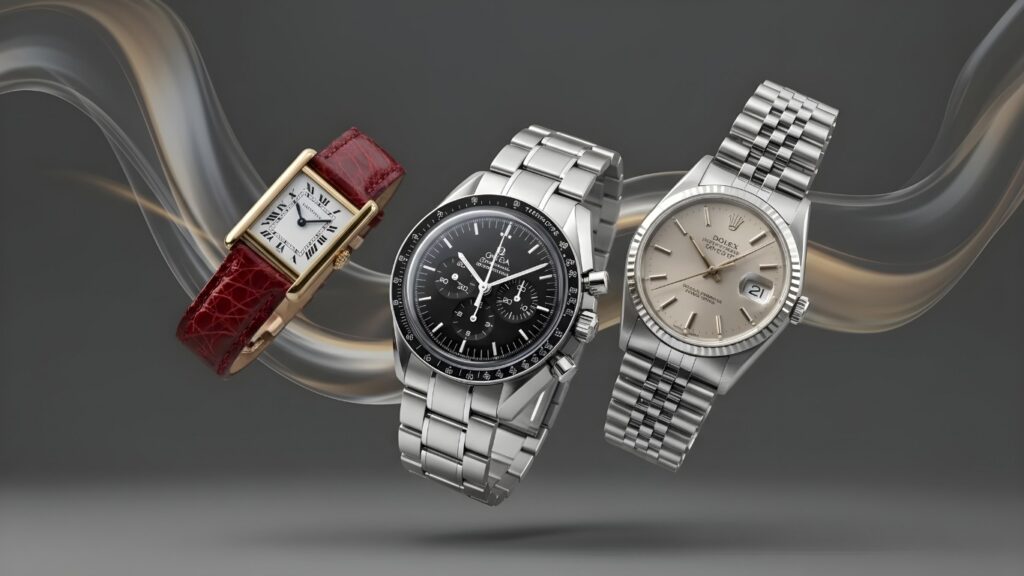
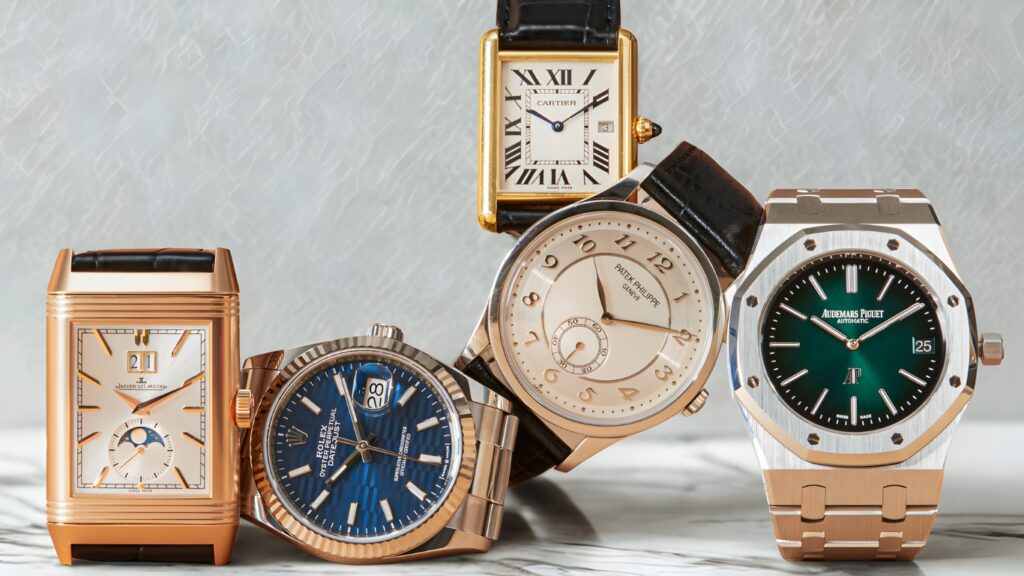
The dress watch resurgence has moved from collector niche to mainstream phenomenon, driven partly by celebrity visibility that created demand shocks for models that were previously quiet. Bloomberg explicitly tied the index reaching two-year highs to dress watches favored by celebrities like Taylor Swift, whose wrist time with elegant timepieces generates the kind of aspirational buying that sports watches enjoyed during their speculative peak.
When someone with Taylor Swift’s cultural reach wears a Cartier Tank or similar dress piece, it reaches audiences who never followed watch collecting but suddenly want what they see.
Chrono24’s first-half 2025 report shows Gen Z’s dress watch share rising sharply over time and sitting higher than other age groups, with Cartier specifically benefiting from this generational shift. Younger buyers entering the market don’t carry the same sports watch bias that defined collecting for decades.
They’re drawn to elegance, heritage, and pieces that work in formal contexts rather than tool watches designed for diving or racing that they’ll never actually use for those purposes.
Sports watch saturation created the conditions for dress watch revival by exhausting collector interest in references that dominated speculation.
WatchCharts highlighted in mid-2025 that multiple Rolex sports lines that once carried consistent premiums were trading at or below retail, a classic signal that supply finally caught up with demand after years of artificial scarcity and flipping.
Precious metal prices add a fundamental tailwind independent of fashion trends or celebrity influence. The World Gold Council documented gold hitting $4,000 per ounce in October 2025 and described 2025 as a record year for the metal. This rising floor under gold watches creates intrinsic value increases that justify higher pricing regardless of brand premium or collector demand.
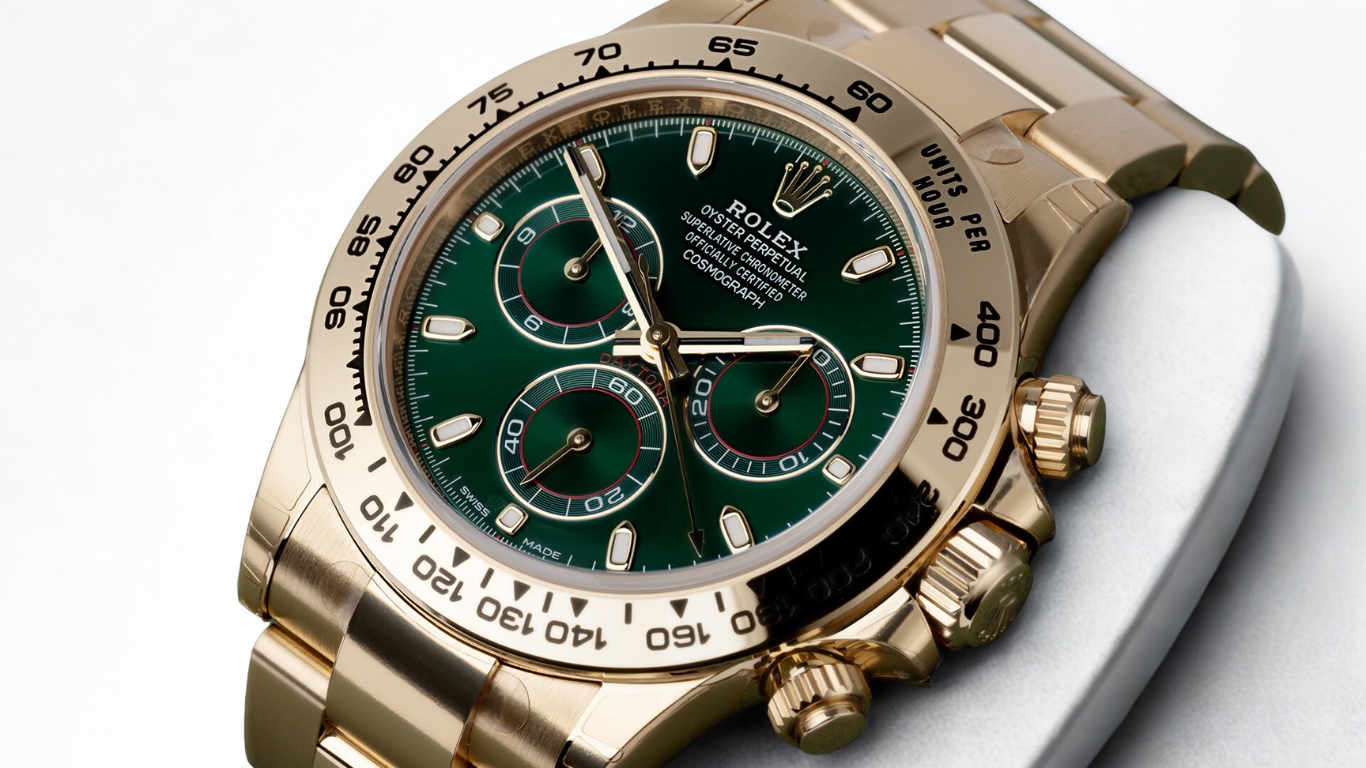
Rolex’s pricing demonstrates how this feeds through to retail, as for example the Cosmograph Daytona in 18k white gold now lists at $56,400 in the U.S., up from $51,800 previously. That 9% increase reflects material cost pressure plus the brand’s confidence that buyers will absorb higher prices for precious metal pieces.
Should Investors Buy Now or Wait for Further Corrections?
The primary market is creating upward pressure that makes waiting potentially expensive. Rolex retail pricing continues climbing with the no-date Submariner rising from $9,500 to $10,050 and crossing the psychologically significant $10,000 threshold, while the GMT-Master II “Batman” jumped from $11,100 to $11,800 according to Gear Patrol.
This marks the third price increase in 12 months, signaling brand confidence in sustained demand and willingness to test how much price elasticity exists before buyers resist. For references where authorized dealer access is possible, buying before the next increase makes financial sense if you’re planning to acquire the piece anyway.
The risk factors tempering enthusiasm remain substantial enough that caution is warranted despite recovery signals. Swiss watch tariffs were reduced from a peak of 39% to 15% retroactive from November 14, 2025 according to swissinfo.ch, an improvement but still materially higher than the historical 2% to 3% norm.
This elevated friction keeps pricing noisy and creates regional distortions where U.S. buyers face different economics than European or Asian counterparts. Economic uncertainty more broadly could weaken luxury spending and trigger another correction if high-net-worth consumers pull back. Reference-specific performance varies wildly, with some models still trading 20% to 30% below their peaks and showing no signs of recovery.
The practical positioning strategy that emerges from this mixed picture favors selectivity over broad exposure. Innovation, scarcity, and proven liquidity represent the safest characteristics to target, meaning index components and dress revival winners offer better risk-reward than speculating on last-cycle sports hype unless you’re explicitly buying the correction and willing to hold through potential further weakness.
Dress watches from established brands like Cartier, Vacheron Constantin, and Jaeger-LeCoultre that benefited from the demographic shift look sustainably repriced rather than temporarily inflated, while precious metal pieces with intrinsic value floors tied to commodity prices provide downside protection that stainless steel cannot match.
Avoiding the temptation to chase every reference that’s risen 10% or assume that everything will recover equally prevents repeating the mistakes that defined the 2021 to 2022 speculation. The watches worth owning in 2025 are the ones you’d want to wear and hold for years regardless of short-term price movements, not the ones you’re buying purely because they went up last quarter.