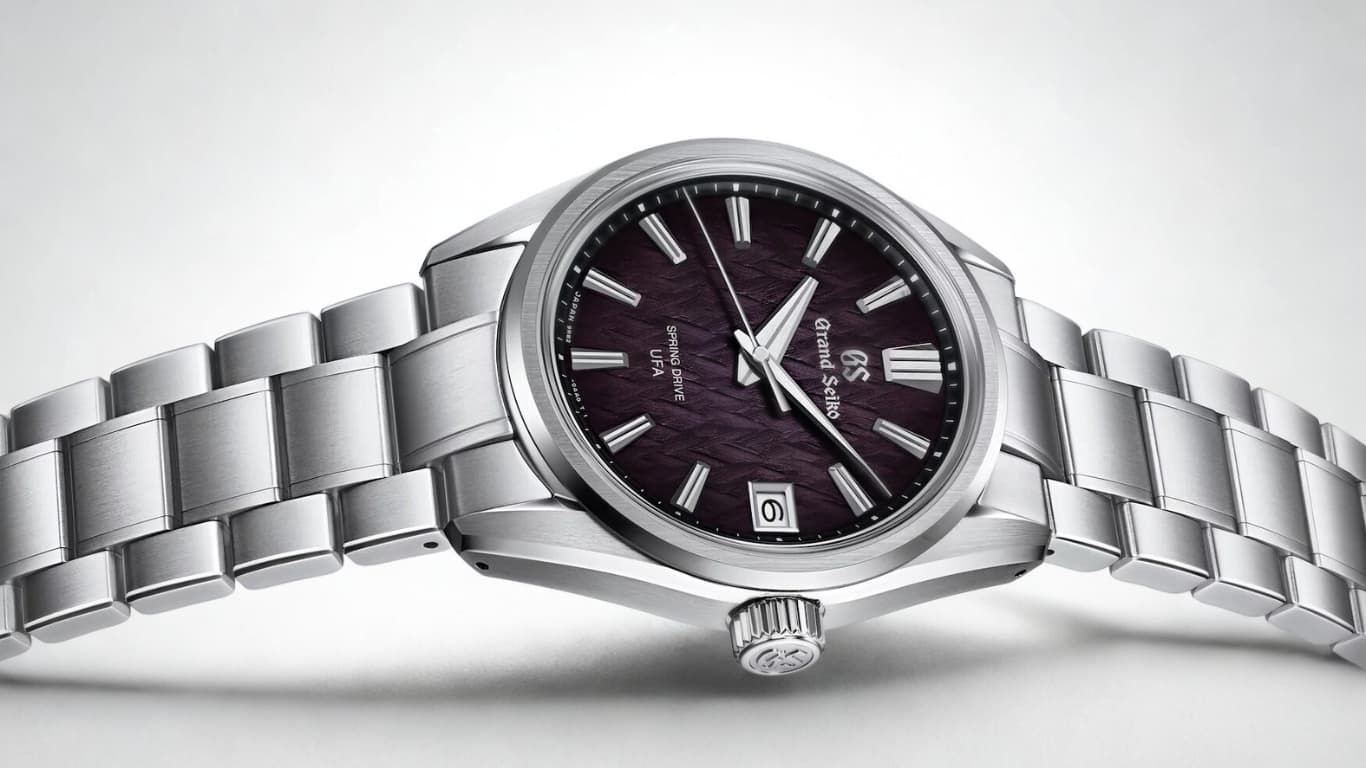
Grand Seiko's 2026 releases mark a turning point that serious collectors cannot afford to ignore. The brand has introduced technical achievements that do not just approach Swiss capabilities but, in several cases, exceed them outright. Grand Seiko's 2026 releases are outpacing Swiss rivals on measures that have traditionally favoured Geneva, and that shift is now showing up in the secondary market.
- Grand Seiko's 2026 releases continue to outpace Swiss rivals on dial finishing, complication architecture, and the kind of value pricing that the broader Swiss alternatives cannot match.
- Reference SLGH021 White Birch in Hi-Beat 36000 and Reference SBGY013 Manual Spring Drive Omiwatari anchor the 2026 catalogue with manufacturer movement work at accessible pricing.
- The Spring Drive Tentagraph chronograph references, including the SBGC249 and SBGC253, draw serious collector competition with the Spring Drive chronograph architecture leading the modern category.
- We see the SLGH021 White Birch as the strongest single Grand Seiko purchase of 2026, with the dial finishing and Hi-Beat 36000 calibre supporting the brand's outpacing position.
- Manufacturer pricing discipline has held through cycles, with Grand Seiko secondary values supported by the kind of dial finishing that no Swiss alternative can match at the same price tier.
- Buyers entering the Grand Seiko market should anchor on Zaratsu polishing standards, Mt Iwate-inspired dial textures, and the manufacturer movement choice across Hi-Beat and Spring Drive.
- Who is this for?
- Grand Seiko collectors, dial-finishing enthusiasts, and Swiss-watch collectors exploring credible Japanese alternatives.
- What is happening?
- A grounded read on Grand Seiko's 2026 releases outpacing Swiss rivals, covering the SLGH021 White Birch, SBGY013 Omiwatari, and Tentagraph SBGC249.
- When did this emerge?
- The current Grand Seiko outperformance reflects the 2026 manufacturer releases and the broader two-decade trend of international Grand Seiko expansion.
- Where is this happening?
- Authorised Grand Seiko boutiques globally stock the modern catalogue, while Japanese specialists handle the broader vintage and high-end Credor market.
- Why does it matter?
- Grand Seiko offers dial finishing and movement engineering at pricing that demonstrates Japanese watchmaking can outpace Swiss rivals at the same retail tier.
The UFA-designation Spring Drive achieving ±20 seconds per year accuracy, the high-beat Tokyo Lion chronograph, and the Sakura Kakushi rose gold dress watch all signal a maturation. The brand has moved from "interesting alternative" to legitimate first choice for collectors who previously defaulted to Swiss without a second thought.
The timing lines up with growing frustration across the luxury watch market. Swiss brands face production delays stretching years on popular models. Waitlist systems have quietly devolved into favouritism.
Pricing inflation has pushed formerly accessible references into territory where buyers genuinely question whether the value proposition still holds. A steel sports watch requiring a two-year wait and costing $15,000 when it was $8,000 five years ago creates natural incentives to look elsewhere.
Market signals confirm the shift is real. Phillips and Christie's catalogues now treat vintage Grand Seiko with the seriousness once reserved for early Seiko 62GS references and beyond. Auction results across the secondary watch market for vintage Grand Seiko have strengthened steadily as collectors recognise the historical weight of pieces that sat undervalued for decades. Forum discussion has moved from curiosity to serious analysis.

The 2026 Grand Seiko releases serious collectors should target
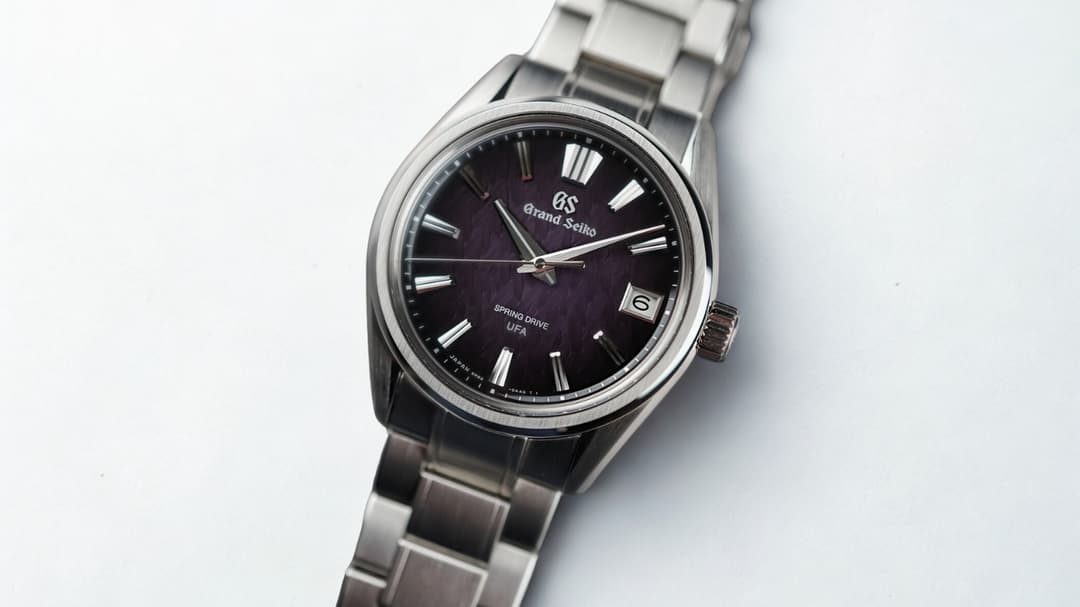
The SLGB005 UFA is arguably the most significant release Grand Seiko has made from a pure watchmaking achievement standpoint. The stainless steel limited edition houses the Spring Drive caliber achieving ±20 seconds per year accuracy. That is roughly 10 to 15 times more precise than the COSC chronometer certification Swiss brands celebrate as a standard of excellence.
Limited to 1,300 pieces globally and priced around €11,000 in the EU and roughly $11,100 in the U.S., the SLGB005 gives serious collectors entry to genuinely groundbreaking horology. That price band is a fraction of what Swiss brands charge for less technically accomplished references. The gap is difficult to rationalise once you have seen both side by side.
Grand Seiko SLGB005 UFA at a glance
- Retail: €11,000 EU / US$11,100
- Edition size: 1,300 pieces worldwide
- Movement: Spring Drive Calibre 9RB2
- Accuracy: ±20 seconds per year
- Power reserve: 72 hours
- Case: 37.0mm diameter, 11.4mm thick, 44.3mm lug-to-lug
- Water resistance: 10 bar
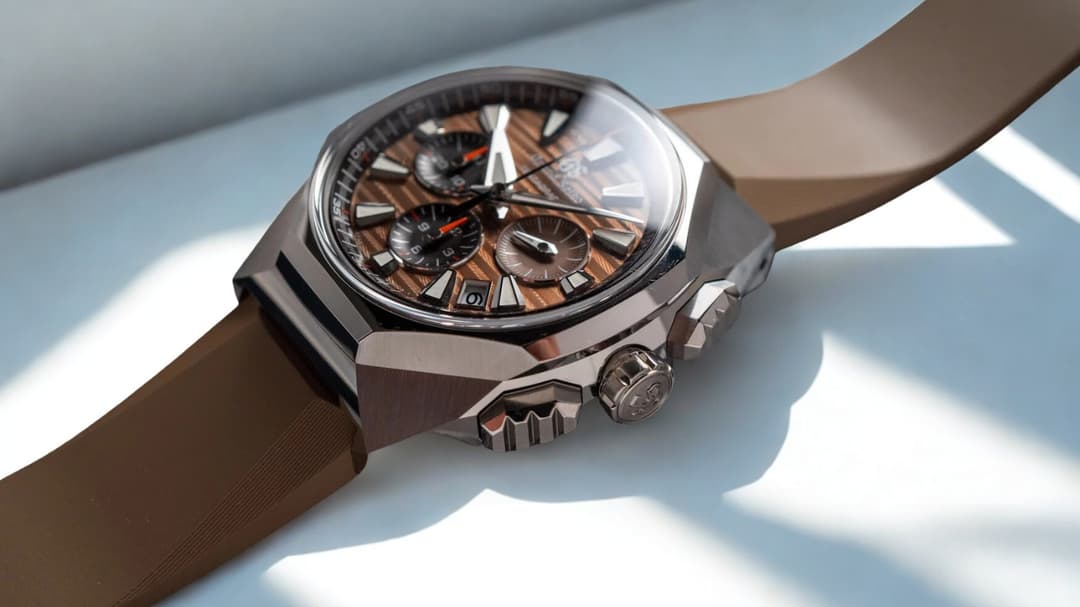
The Tokyo Lion SLGC009 and the mechanical chronograph case
The SLGC009 Tokyo Lion, priced around €17,500 in the EU and roughly $16,900 in the U.S., takes a different approach. The reference prioritises a high-beat mechanical movement and chronograph complication over the Spring Drive hybrid. The piece celebrates Grand Seiko's Tokyo manufacturing facility with design elements that reference the city's energy and the brand's lion emblem in ways that read as considered rather than decorative.
What matters for collectors is that the watch shows Grand Seiko applying its high-beat expertise to chronograph work. Maintaining accuracy and power reserve at elevated frequencies is a significantly harder engineering problem. The 9SC5 Tentagraph calibre solves it here with quiet confidence: 10 beats per second, 72-hour power reserve even with the chronograph running, 200 metres water resistance in brilliant hard titanium.
The watch proves the brand can compete across very different horological approaches. That breadth is what separates a manufacture from a specialist, and it matters for collectors weighting the long-term credibility of the catalogue.
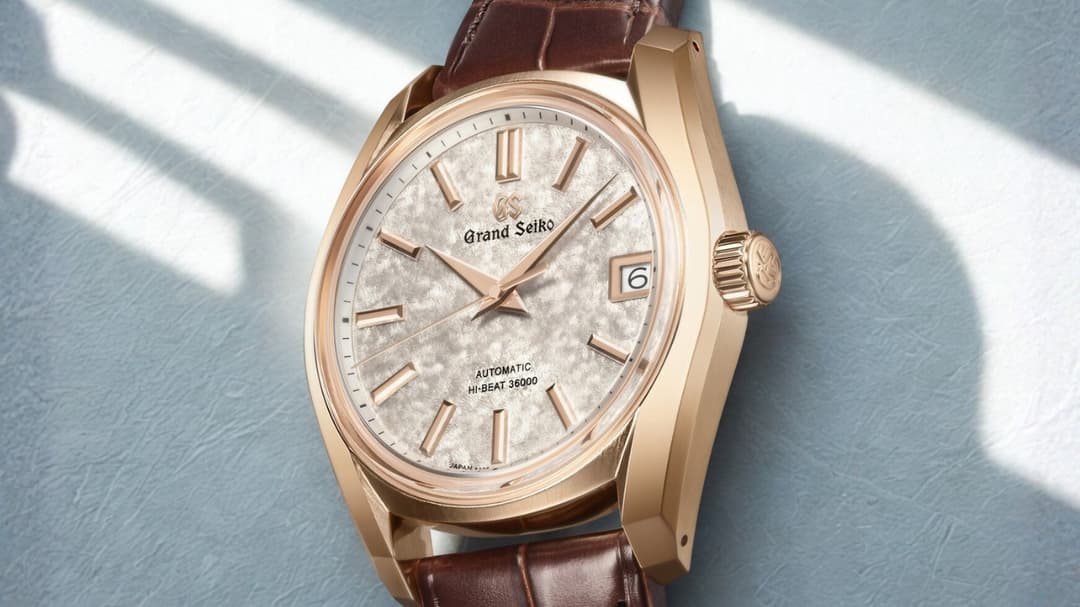
The Sakura Kakushi SBGH368 and the rose gold dress register
The SBGH368 Sakura Kakushi moves into different territory entirely. The reference is a high-end dress watch in 18k rose gold. The name translates loosely to cherry blossoms hidden in plain sight, a philosophy reflected in subtle dial textures that reveal full complexity as light shifts across the surface.
This is Grand Seiko's direct answer to classic Swiss dress watches. Positioned around €33,500 to compete with Patek Philippe Calatrava and Vacheron Constantin Patrimony references, the watch uses Japanese design language and high-beat mechanics rather than copying Geneva aesthetics. Choosing the 9S85 Hi-Beat 36,000 movement over Spring Drive in this context shows strategic thinking about what serious collectors expect in a gold dress watch.
For buyers who appreciate Japanese aesthetic sensibility and want Grand Seiko's hand-finishing at this level, the Sakura Kakushi makes the strongest statement the brand has yet delivered. The reference belongs in the same conversation as Geneva's finest watchmakers on the strength of its execution alone.
How Grand Seiko prices compare to Swiss watches at the same quality tier
The price-to-quality ratio is where Grand Seiko's value proposition becomes genuinely difficult to dismiss. The SLGB005 stainless steel UFA at roughly €11,000 delivers finishing standards and accuracy that would demand $20,000 to $40,000 from Swiss brands attempting similar execution. No Swiss watch at $10,000 offers ±20 seconds per year accuracy.
The Spring Drive hybrid engineering achieves what purely mechanical or purely electronic regulation cannot match at any comparable price.
The hand-finishing on the case, the dial textures referencing Mt. Iwate's topography, and the Zaratsu polishing technique that creates distortion-free mirror surfaces all match what you would find on watches at multiples of the Grand Seiko's retail. You are not making a compromise. You are making a different choice.
At the top end, the Sakura Kakushi comparison gets sharper because it competes in a segment where heritage pricing often drives the numbers more than craft alone. A €33,500 rose gold dress watch sits in a world where Swiss peers frequently open higher and can climb far beyond that depending on brand and configuration. That gap is not always explained by finishing or movement execution.
Much of it reflects the cost of Swiss brand perception accumulated over decades.
Why Grand Seiko earns the trinity comparison now
Grand Seiko's real challenge is not proving it can finish a watch at this level. It is earning the instinctive trust that Swiss brands collect automatically. What strengthens the case is that the craftsmanship story extends beyond movement finishing into decorative execution that reads as distinctly Japanese rather than a polished imitation of Swiss aesthetics.
Zaratsu polishing produces a visual crispness that hits you immediately under good lighting, a quality photographs never quite capture.
The dial artistry built around natural motifs offers a real alternative to familiar Swiss patterns and repeating design conventions. Collectors get something culturally specific rather than globally generic. Grand Seiko also tends to deliver unusually high exterior finishing on steel cases, not only on precious metal references.
That reflects a different manufacturing philosophy and cost structure.
If you are thinking about the broader Seiko collecting universe, limited Grand Seiko releases have shown periods of relatively strong retention. Many have held a meaningful share of retail value compared to the deeper depreciation that hits a wide range of Swiss brands outside the most liquid prestige sports models.
What this means for collectors
The collecting case does not ask you to believe Grand Seiko will overtake Rolex or Patek Philippe in prestige anytime soon. It asks you to recognise that the brand now offers technical execution and finishing quality that match elite Swiss standards at prices that leave room for upside if perception continues to improve. The Financial Times has tracked growing institutional interest in watches as collectible assets, and Japanese haute horlogerie is increasingly part of that conversation.
When buyers pay real premiums for limited editions they missed at retail, it usually signals genuine collector pull rather than passing brand awareness. The post-correction watch market does not reward that kind of premium across typical Swiss pricing the way it once did. Grand Seiko is now drawing it.
For collectors who prioritise watchmaking craft over pure brand cachet, the 2026 Grand Seiko releases make a credible argument for serious allocation toward Japanese haute horlogerie. The window where these pieces are undervalued relative to their quality may not stay open indefinitely. We last reviewed this analysis in May 2026.

Stefanos Moschopoulos
Stefanos Moschopoulos founded The Luxury Playbook in Athens and has spent the better part of a decade following the auction calendar, the en primeur releases, and the watchmakers, gallerists, and shipyards the magazine covers. He writes the field guides and listicles that anchor the Connoisseur section — pieces built on Phillips and Christie's results, Liv-ex movements, and conversations with collectors he has met across Geneva, Bordeaux, Basel, and Monaco. His own collecting habits sit closer to watches and wine than art, and it shows in the level of detail in the magazine's coverage of those categories. Under his direction, The Luxury Playbook now publishes long-form field guides, market-defining year-end listicles, and the Voices interview series with the founders behind the houses and the brands.