
The global art market conversation remains fixated on extremes that generate headlines but rarely generate sustainable returns. Media coverage obsesses over speculative buys under $50,000 that might explode in value and trophy sales above $10 million that set auction records, yet if you examine where substantial, repeatable value actually gets created, the action has quietly concentrated somewhere most investors overlook: the $50,000 to $1 million mid-market segment.
While trophy collectors chase eight-figure masterpieces that might take years to sell and speculative buyers gamble on emerging artists who could disappear entirely, mid-market buyers access the same blue-chip names hanging in major museums, just at sizes, mediums, or periods that avoid the casino dynamics defining the market’s extremes.
According to the Art Basel & UBS Global Art Market Report 2025, overall art sales fell 12% to $57.5 billion in 2024, even as the number of transactions rose 3% to 40.5 million.
This split between declining values and rising transaction volumes signals that the market is trading more actively but at lower and mid-level price points rather than trophy levels. More tellingly, works over $10 million got hit hardest, with sales in this ultra-high tier dropping 45% in 2024 after already falling 40% in 2023.
Against that backdrop of collapsing trophy markets and speculative chaos at the entry level, the $50,000 to $1 million band is emerging as the most rational part of the art market for anyone treating purchases as investments rather than pure consumption or status signaling.
Table of Contents
Key Takeaways
Navigate tabs- The $50,000–$1 million mid-market has become the most stable and efficient segment in global art investing, generating around $8 billion in auction sales in 2024 — roughly one-third of total auction value from just 4% of lots sold.
- While ultra-high-end works above $10 million fell 45 percent in value, the mid-market proved far more resilient, with drawdowns of only 21–31 percent, confirming its defensive role during downturns.
- This segment captures museum-level artists such as Warhol, Kusama, Hockney, and Lichtenstein, giving collectors blue-chip quality without trophy-level risk or illiquidity.
- Institutional players — from private banks to family offices — are increasingly integrating mid-market art into diversified alternative portfolios, recognizing its liquidity, scalability, and lower volatility.
- With an estimated total market size of $16–24 billion when private sales are included, mid-market art is emerging as the core of sustainable art investing, bridging cultural prestige with financial discipline.
- Who:
- Private collectors, family offices, and next-generation investors seeking tangible assets with both cultural relevance and financial upside.
- What:
- The mid-market art segment between $50,000 and $1 million, where blue-chip names trade at rational valuations and strong liquidity persists.
- When:
- Rapidly expanding in relevance between 2023 and 2025, as trophy and speculative segments suffered double-digit corrections.
- Where:
- Concentrated in major auction houses and mid-tier galleries in London, New York, Paris, and Hong Kong, where institutional and private buyers actively transact.
- Why:
- Because mid-market art offers repeatable value creation — institutional-quality artists, measurable risk–return balance, and a defensive profile in a market otherwise driven by speculation and status signaling.

The $8 Billion Market Segment Generating One-Third of Auction Value
The clearest evidence of mid-market importance comes from the 2025 Deloitte Private & ArtTactic Art & Finance Report, which Maddox Gallery’s mid-market analysis summarizes with striking precision.
Works priced between $50,000 and $1 million generated approximately $8 billion in auction sales during 2024, representing roughly one-third of total auction value. What makes this concentration remarkable is that those sales came from just 4% of lots offered, meaning a very small slice of works proved responsible for a disproportionately large share of value creation.
Breaking down the mathematics reveals the segment’s unusual efficiency. Only about 16,000 of the 400,000 artworks sold at auction in 2024 fell into the $50,000 to $1 million range, yet they still accounted for nearly one-third of all auction turnover globally.
That efficiency ratio, 4% of volume generating 33% of value, represents pricing power and genuine scarcity that the trophy market increasingly struggles to demonstrate despite far higher absolute prices.
When you layer these auction figures onto broader market totals showing $57.5 billion in global art sales for 2024, the mid-market’s structural importance becomes undeniable. Mid-market auctions alone at roughly $8 billion already form a major pillar of the trade, comparable in scale to entire national art markets or specialized collecting categories.
If you assume dealer and private sales mirror auction activity at similar multiples, Deloitte’s data suggests the total mid-market including both public and private channels likely reaches $16 billion to $24 billion annually.
This scale matters enormously for institutional adoption and market development. The segment is large enough to accommodate meaningful portfolio allocations from family offices and wealth managers without moving prices through their own buying, yet still selective enough that quality and connoisseurship actually influence outcomes rather than getting drowned in pure momentum trading or celebrity hype cycles that dominate both trophy and entry-level segments.
The mid-market’s behavior during corrections provides the most compelling evidence of its structural advantages over seemingly more prestigious trophy collecting.
Victoria Burns’ 2025 market review, drawing on Art Basel, UBS, and Artnet data, shows dramatically different drawdown patterns across price tiers during the recent market softness. Works priced $50,000 to $250,000 saw auction values decline 21%, while the $250,000 to $1 million band fell 31%. By contrast, works above $10 million collapsed 45%, nearly double the decline rate of the lower mid-market tier.
This pattern reveals that ultra-high-end volatility concentrates at the top where trophy hunting, ego dynamics, and changing fashion drive pricing more than fundamental artistic merit or historical importance. The mid-market absorbs the same macroeconomic shocks and sentiment shifts but demonstrates shallower drawdowns combined with ongoing transaction volume that maintains liquidity even during challenging periods.
That defensive characteristic is exactly what wealth managers prioritize when seeking art exposure without tying substantial capital into single eight-figure objects that might require years to exit at acceptable prices.
Deloitte and ArtTactic explicitly flag this resilience in their 2025 Art & Finance Report, describing mid-market works as a “rare bright spot” that has shown greater stability than the $1 million-plus tier and is increasingly getting integrated into wealth strategies alongside other alternative assets like vintage cars, wine, and watches. The institutional recognition represents a fundamental shift from art being treated purely as passion collecting toward serious consideration as a portfolio diversifier with measurable risk-return characteristics.
Museum-Quality Names Without Trophy-Level Risk
One of the most persistent misconceptions about the $50,000 to $1 million segment is that it consists primarily of “nice but secondary” material from lesser artists or minor works from major names that serious collectors should avoid. The actual composition data tells a completely different story that reshapes how investors should think about quality and opportunity at this price level.
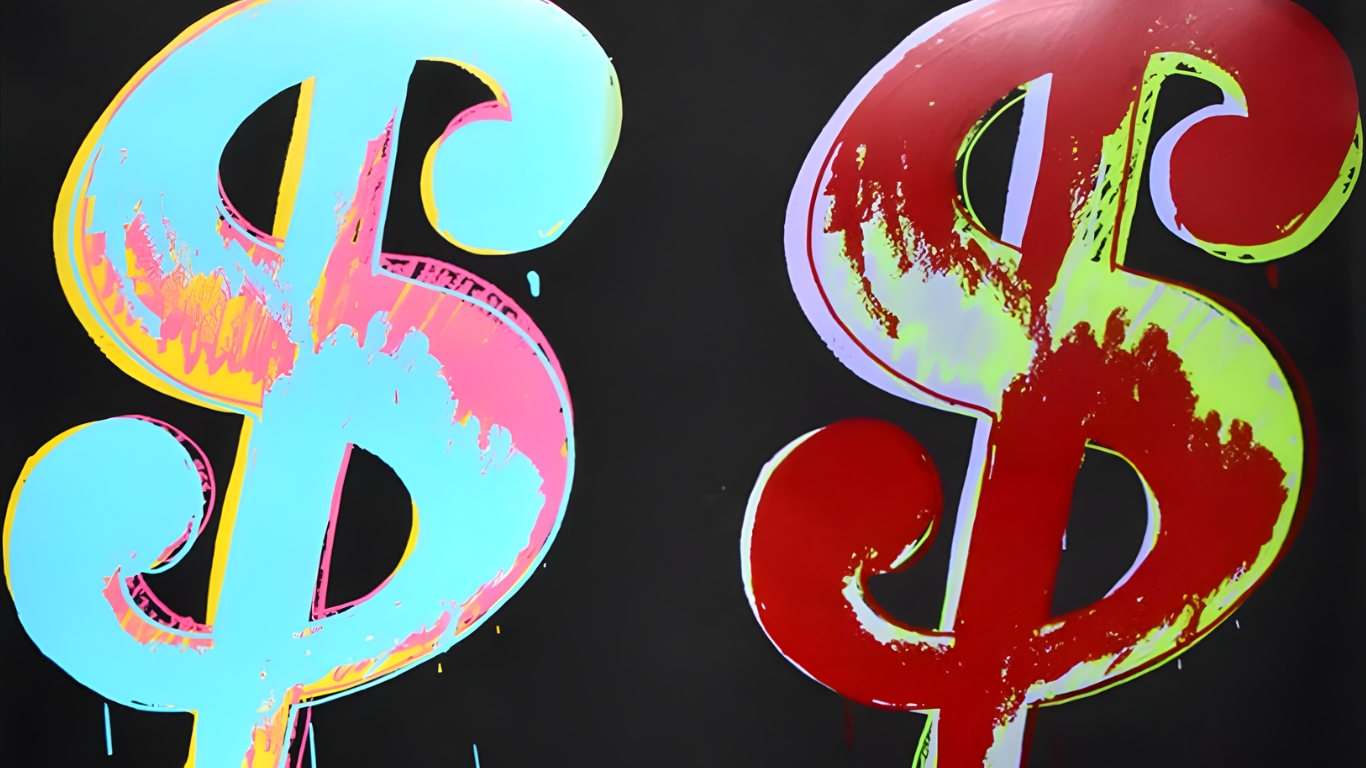
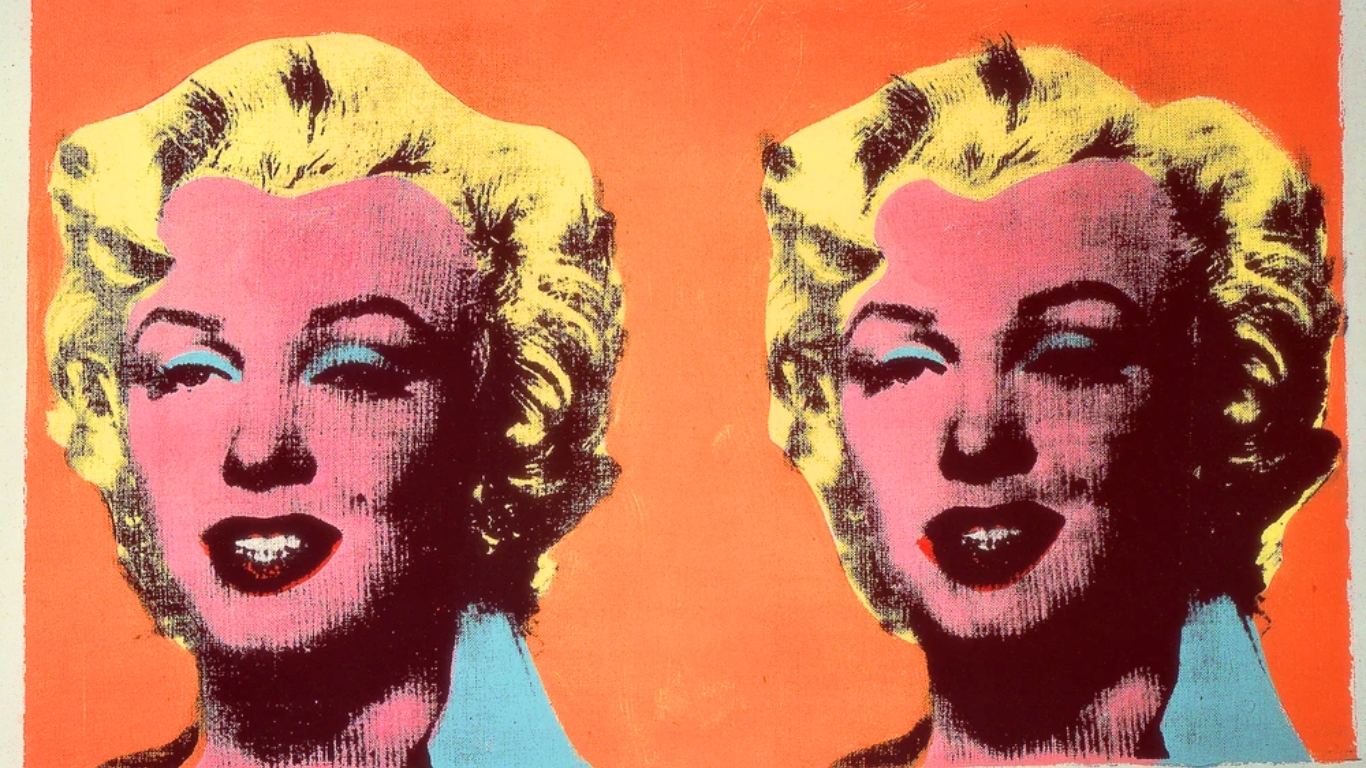
The Deloitte-based Maddox analysis emphasizes that “museum-level artists without extreme volatility” frequently transact within this band, specifically naming Andy Warhol, Roy Lichtenstein, Yayoi Kusama, and David Hockney among blue-chip artists whose works regularly trade between $50,000 and $1 million.
The segment’s internal composition provides natural diversification that helps explain its relative stability through market cycles. Roughly half of mid-market activity concentrates in Contemporary art, while roughly half sits within Modern art according to data compiled by Deloitte and Maddox.
This built-in split between two collecting categories that rarely move in perfect synchronization creates ballast during corrections that pure Contemporary or pure Modern portfolios can’t achieve.
The defensive value of this diversification became particularly evident during the recent Contemporary market correction. Contemporary auction sales fell 36% while works from the last twenty years specifically dropped 43% versus 2021 peaks, representing severe drawdowns that devastated collectors concentrated in ultra-contemporary names.
Yet mid-market investors holding balanced Modern and Contemporary positions experienced far gentler declines because Modern and Post-War segments provided stabilizing ballast when Contemporary cooled sharply.
Share of Lots Sold and Total Value at Global Fine Art Auctions by Price Segment 2024
Distribution analysis of global fine art auction sales reveals a stark contrast between transaction volume and monetary value across price segments. The sub-$5,000 segment dominates with 76% of all lots sold yet accounts for just 4% of total value. Meanwhile, ultra-high-end artworks above $10 million represent a mere 0.02% of lots but capture 18% of total auction value, demonstrating the market’s concentration at the top end. The $1-10 million segment emerges as the value leader with 31% of total sales.
Volume and Value Distribution Across Price Segments (%)
Why Institutions Are Paying Attention
Several independent data sources point toward accelerating institutional and professional interest in the mid-market band, driven by characteristics that align with portfolio management priorities rather than pure collecting passion.
The Art Basel & UBS Global Art Market Report 2025 reveals that dealers operating in the mid-market turnover band of $500,000 to $1 million were the most optimistic cohort about 2025 prospects, with 51% expecting rising sales compared to roughly one-third expressing similar confidence a year earlier.
Deloitte's Art & Finance Report 2025 explicitly identifies mid-market artworks as increasingly important within private banking and family office strategies, particularly for next-generation clients who seek cultural impact alongside financial returns rather than treating art purely as wealth display or tax-advantaged storage.
From pure portfolio construction logic, the appeal becomes straightforward once you map mid-market characteristics against institutional investment criteria. The $50,000 to $1 million entry point sits in a range where sophisticated buyers can build diversified positions across multiple artists, periods, and styles without concentrating excessive risk in single objects.
A $5 million art allocation can acquire fifty to one hundred mid-market pieces or perhaps three to five trophy works, with the former approach offering far superior diversification and rebalancing flexibility.
In practical terms, mid-market works function as "ballast with optionality" within diversified portfolios. They demonstrate tendencies to hold value better than speculative ultra-contemporary works during downturns, providing defensive characteristics when broader markets correct.
Yet they still offer meaningful upside potential through artist re-evaluation, museum retrospectives, and shifting curatorial trends, especially within under-researched Modern sub-sectors that Deloitte and ArtTactic specifically flag as candidates for future repricing as scholarship catches up to quality.