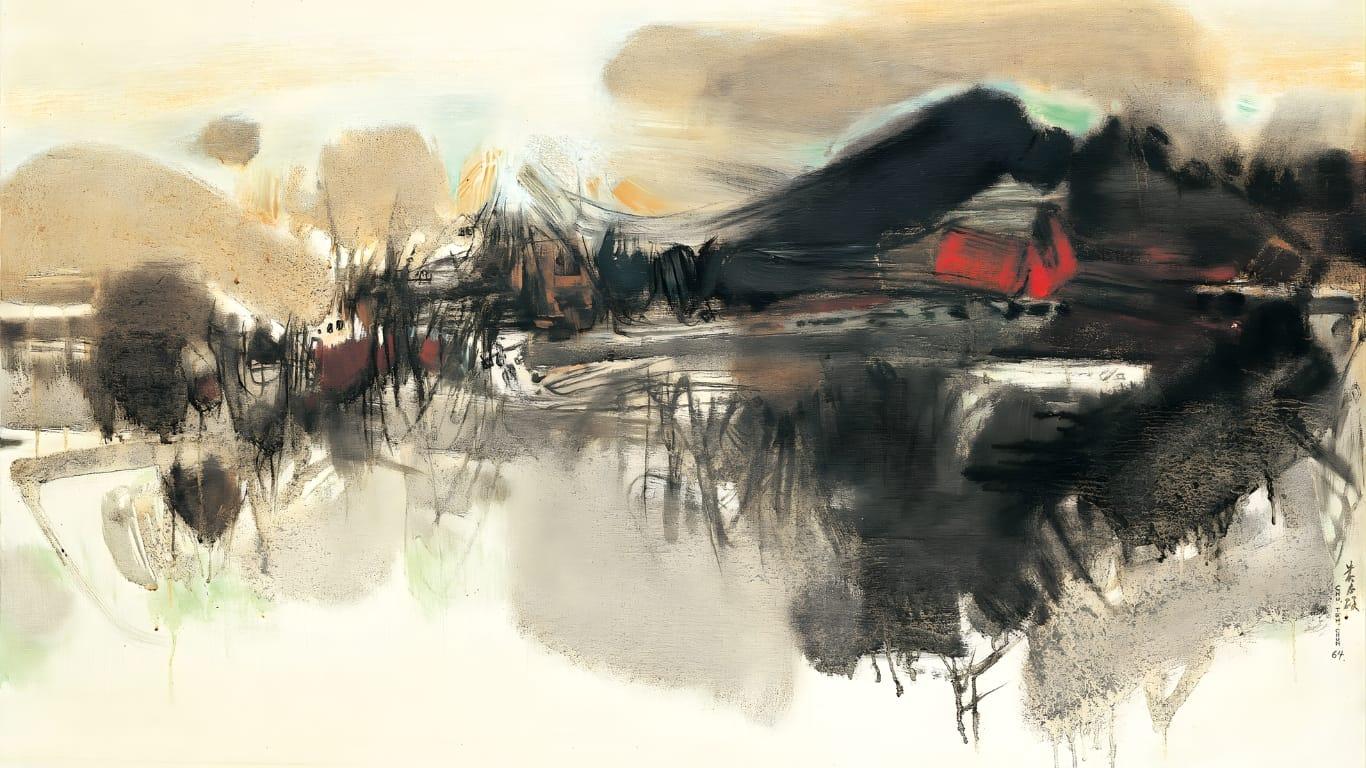
Capital has flooded back into the Chinese art market across 2024 and 2025, and the prices in certain segments have moved beyond the underlying institutional and scholarly support.
Sotheby's, Christie's, and Poly Auction Hong Kong sale results across the past four seasons make the pattern visible: aggressive estimates clearing on thin comparables, single-buyer concentration on specific cohorts, and a primary-market dynamic that has decoupled from the secondary depth that would normally validate it.
The structural dynamic is familiar in market history. A capital surge into a relatively narrow market segment produces a steep price reset upward, and the rerating then either consolidates around durable demand or unwinds when the speculative tier withdraws. The Chinese contemporary segment has been through the cycle before; the current iteration is being watched closely by the trade for the same reason.
- Capital has flooded back into the Chinese art market across 2024 and 2025, and prices in certain segments have moved beyond the underlying institutional and scholarly support.
- Sotheby’s, Christie’s and Poly Auction Hong Kong have seen aggressive estimates clearing on thin comparables, with single-buyer concentration on specific cohorts.
- The Chinese contemporary cohort that emerged in the 2008 to 2014 cycle, including Zhang Xiaogang, Yue Minjun, Zeng Fanzhi, Liu Wei and Liu Ye, has seen renewed activity.
- A new generation of Chinese painters with strong institutional support from the Long Museum, the Yuz Museum and M Plus has rerated sharply on primary-market discipline.
- Zao Wou-Ki’s Juin-Octobre 1985 sold at Sotheby’s Hong Kong in October 2018 for five hundred and ten point four million Hong Kong dollars, roughly sixty-five million dollars.
- Sanyu’s Quatre Nus sold at Sotheby’s Hong Kong in July 2020 for two hundred and fifty-eight point two million Hong Kong dollars, roughly thirty-three million dollars.
- Who is this for?
- Collectors, advisors and observers of the global art market interested in how capital is currently flowing into the Chinese art market and where the prices have decoupled from secondary depth.
- What is happening?
- An editorial read on capital flooding the Chinese art market while prices defy reality, covering the rerated cohorts, the institutional anchors and the historical precedent.
- When did this emerge?
- Most relevant around the Hong Kong evening sales at Sotheby’s, Christie’s and Poly Auction and during major Long Museum, Yuz Museum and M Plus exhibition cycles.
- Where is this happening?
- Centred on the Hong Kong salesrooms and the Mainland Chinese gallery and museum network, with institutional reference points across Paris, the Pompidou and the Musee Guimet.
- Why does it matter?
- Reading the Chinese market correctly matters because the speculative pattern is familiar and the unwind, when it comes, will reshape Asian collecting for at least a cycle.
What has actually rerated
Three principal segments. First, the Chinese contemporary cohort that emerged in the 2008-2014 cycle, Zhang Xiaogang, Yue Minjun, Zeng Fanzhi, Liu Wei, Liu Ye, has seen renewed activity across the 2024 and 2025 calendars, with several lots clearing materially above estimate.
Second, the new generation of Chinese contemporary painters, the cohort that emerged after 2018 with strong institutional support from the Long Museum, the Yuz Museum, and the M+ in Hong Kong, has rerated sharply on primary-market discipline and selective secondary activity.
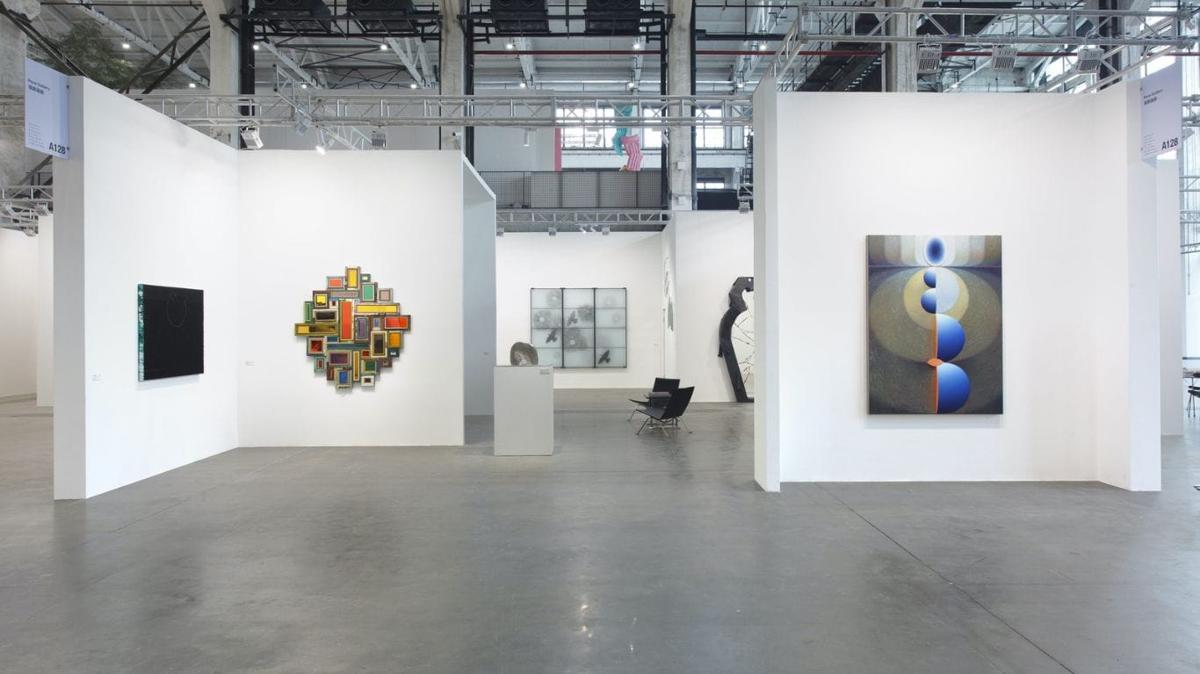
Third, the modernist and early-20th-century Chinese masters, Zao Wou-Ki, Chu Teh-Chun, Sanyu, Lin Fengmian, Wu Guanzhong, have been the segment's most reliable cohort across two decades and continue to anchor the upper register of Chinese sale results.
The Zao Wou-Ki and Sanyu anchor
Zao Wou-Ki remains the cohort's most actively traded artist at the trophy tier. His "Juin-Octobre 1985" sold at Sotheby's Hong Kong in October 2018 for HK$510.4M (roughly $65M), and the artist's market has held with depth across multiple subsequent cycles.
Sanyu is the other reliable anchor. His "Quatre Nus" sold at Sotheby's Hong Kong in July 2020 for HK$258.2M (roughly $33M), and the cohort of his works that has surfaced since has continued to draw strong institutional and private bidding.
The structural feature distinguishing these artists from the more speculative cohorts is the institutional infrastructure. The Pompidou, the Musée Guimet, the Long Museum, and the M+ all hold meaningful Zao Wou-Ki and Sanyu material, and the scholarly literature on both is mature.
The new generation question
The cohort that emerged after 2018, with primary-market prices that have moved sharply upward across the past three years, is where the trade reads the most decoupling from underlying secondary-market depth. Several artists in the cohort transact at primary-market prices that the secondary-market comparables do not yet support.
The pattern is consistent with prior speculative cycles. Capital concentrates on a relatively narrow roster, primary-market discipline tightens around wait-list buyers, and the secondary-market data takes longer to validate the rerating. The 2026 calendar will provide the first sustained test.
The Mainland-Hong Kong dynamic
The Mainland Chinese collector base, which had narrowed during the 2022-2023 regulatory tightening, has returned to the Hong Kong sale calendar in meaningful volume across 2024 and 2025. Sotheby's Hong Kong and Christie's first Hong Kong evening sale at the new headquarters both drew measurable Mainland participation.
The return is concentrated in specific cohorts. The Chinese modernists, Zao Wou-Ki, Sanyu, Chu Teh-Chun, and the senior post-1989 contemporary cohort, draw the most consistent Mainland bidding. The Western contemporary cohort that anchors Hong Kong evening sales draws meaningful but more selective participation.
Poly Auction and China Guardian, the major Mainland houses, have run their own active calendars across Beijing and Shanghai. The cross-border dynamic between Hong Kong, Beijing, and Shanghai is the most important structural feature of the segment to track.
The historical precedent
The 2010-2014 cycle is the relevant comparison. That cycle saw substantial capital flow into Chinese contemporary art, sharp rerating across multiple cohorts, and a subsequent multi-year unwinding as the speculative tier withdrew. The senior cohort, Zao Wou-Ki, Sanyu, Chu Teh-Chun, held up materially better than the contemporary cohorts that were the focus of the speculative inflow.
The pattern from that cycle is the framework for reading the current one. The cohorts with institutional depth and mature scholarly support, the modernist masters in particular, are more likely to sustain their rerated prices than the cohorts whose institutional infrastructure is still developing.
For broader context on how cycles like this unfold, our coverage of market trends sets out the structural framework.
The Western reception
Western institutional reception of the Chinese contemporary cohort has matured significantly across the past decade. The M+ in Hong Kong, the Long Museum and Yuz Museum in Shanghai, and the broader Chinese institutional infrastructure have built scholarship and exhibition history that the Western institutions, the MoMA, the Pompidou, the Tate, are increasingly engaging with.
The bridge cohorts, the artists whose practice draws on both Chinese and Western traditions, have benefitted most from this reception. The rerating of the cohort has been more sustained than the purely speculative segments, and the trade reads the institutional support as the durable feature.
Our piece on expressionism and neoclassicism covers the Western traditions that the bridge cohort draws on.
What the trade is watching
Three structural questions will define the next cycle. First, whether the Mainland Chinese collector base continues to participate at the volume seen across 2024 and 2025, or whether regulatory or economic factors narrow the cohort again. Second, whether the institutional support for the new generation of contemporary painters builds the secondary-market depth that would validate the current primary-market prices.
Third, whether the senior modernist cohort, Zao Wou-Ki, Sanyu, Chu Teh-Chun, continues to anchor the upper register with the depth it has shown across two decades.
For collectors interested in the broader segment, our coverage of how to network with the experts sets out the framework for engaging with the cohort, and our RISE 2026 coverage covers the broader institutional infrastructure.
The collector's read
For serious collectors, the Chinese segment offers genuine institutional depth at the modernist tier and potential opportunity at the contemporary tier, but it also offers material speculative risk in the segments where capital has flooded fastest. The discipline is the same as in any speculative cycle: focus on artists with institutional support and scholarly infrastructure, walk past the cohorts where the secondary-market depth has not yet caught up to the primary-market prices.
The senior modernist cohort, Zao Wou-Ki, Sanyu, Chu Teh-Chun, Lin Fengmian, Wu Guanzhong, remains the segment's most durable entry point. The recent rerating of certain contemporary cohorts will eventually consolidate or unwind, and the collectors who emerge well-positioned are the ones holding the artists with durable infrastructure.
What this means for collectors
The Chinese art market is structurally important, increasingly institutional, and, in specific segments, currently overheated. The collectors who navigate it well are the ones distinguishing the cohorts with mature scholarly and institutional support from the cohorts where the capital surge has temporarily decoupled price from the underlying market depth.
The cycle is not the first of its kind in the segment, and the senior modernist cohort that held up through the 2010-2014 cycle is likely to hold up through this one. The newer contemporary cohorts will face the test of secondary-market validation across the next two to three calendar dates, and the trade will be reading the results carefully.
We last reviewed this analysis in May 2026.
Frequently Asked Questions
Which Chinese artists anchor the segment at auction?
The modernist cohort, Zao Wou-Ki, Sanyu, Chu Teh-Chun, Lin Fengmian, and Wu Guanzhong, anchors the upper register and has the deepest institutional and scholarly support. Zao Wou-Ki's "Juin-Octobre 1985" sold at Sotheby's Hong Kong in October 2018 for HK$510. 4M, and Sanyu's "Quatre Nus" sold at Sotheby's Hong Kong in July 2020 for HK$258.
2M.
Why has capital flooded the Chinese art market?
The Mainland Chinese collector base returned to the Hong Kong sale calendar in meaningful volume across 2024 and 2025 after a thin 2022-2023 period. The institutional infrastructure, the M+ in Hong Kong, the Long Museum and Yuz Museum in Shanghai, has matured, and Western institutional reception of the cohort has deepened. Capital has concentrated on specific contemporary cohorts in addition to the established modernist segment.
Are Chinese contemporary prices sustainable?
The modernist cohort is structurally durable and likely to sustain. The new generation of contemporary painters that has rerated sharply across the past three years faces a test of secondary-market validation that the 2026 and 2027 calendars will provide. The pattern is consistent with the 2010-2014 cycle, where the senior cohort held up and the more speculative contemporary segments unwound across multiple seasons.
How should collectors approach the Chinese market?
Through the senior modernist cohort first, where the institutional and scholarly support is mature. The contemporary cohorts offer genuine opportunity but also material speculative risk, and the discipline is to focus on artists with institutional infrastructure and scholarly engagement rather than those where the capital surge has decoupled price from secondary-market depth.