The Thessaloniki real estate market in 2025 is entering a strategic growth phase, marked by rising capital values, accelerated infrastructure development, and a sharp uptick in international investor interest. Long considered a secondary market to Athens, Thessaloniki is increasingly attracting attention for its affordable price points, high rental yields, and expanding urban footprint—particularly among buyers priced out of the capital.
As Greece’s northern commercial and cultural hub, Thessaloniki offers investors a rare combination of value, liquidity, and long-term growth potential within the Eurozone.
Throughout the past year, Thessaloniki led all Greek cities in residential price growth, with values increasing by 11.19% year-over-year as of Q2 2024. The city has now logged eight consecutive quarters of positive appreciation, driven by growing demand for both owner-occupied and income-producing properties. Central districts such as Ano Poli, Vardaris, and Toumba continue to attract attention from local developers and foreign investors alike.
From an income perspective, average rents have reached €8.32 per square meter per month, with key neighborhoods pushing into the €10–12 range for renovated units. The rental market is buoyed by a stable mix of students, digital nomads, expats, and domestic professionals—many of whom are drawn to the city’s expanding metro network and proximity to Balkan and Eastern European trade corridors.
Table of Contents
Overview of The Thessaloniki Real Estate Market
As of Q2 2025, the Thessaloniki real estate market continues to deliver strong capital growth, driven by a resurgence in domestic buying, sustained foreign investor interest, and infrastructure projects reshaping demand patterns across the city. With average prices rising faster than the national average, Thessaloniki has positioned itself as one of the most dynamic residential markets in Greece.
The average asking price for residential properties in Thessaloniki currently stands at €1,957 per square meter, reflecting a 11.19% year-over-year increase, the highest among all major Greek cities.
This growth has been especially concentrated in central and university-adjacent districts, where investor demand for renovation-ready apartments remains high.
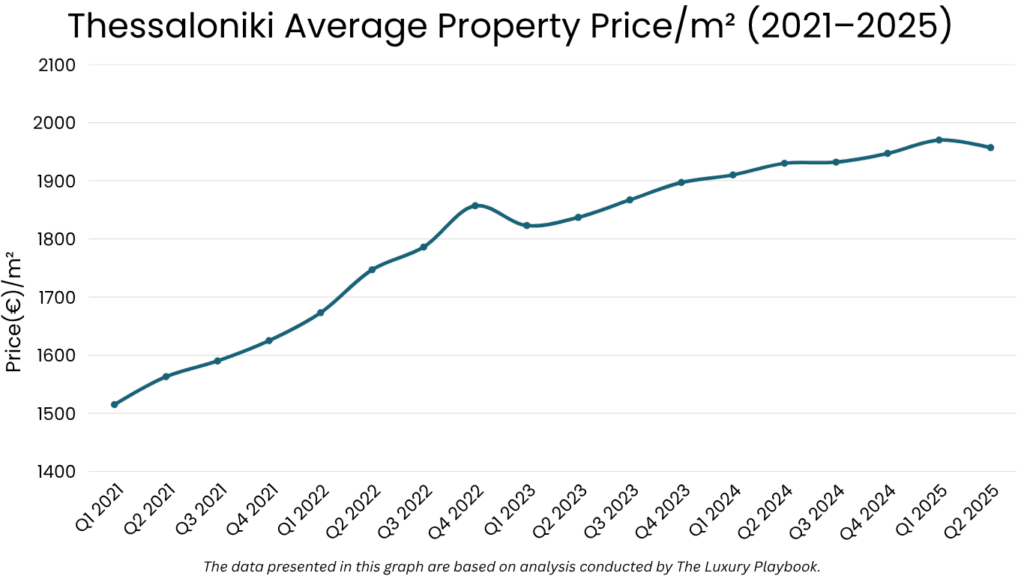
Median listing prices range from €140,000 to €220,000, depending on size, condition, and location. Renovated two-bedroom apartments in city-center areas such as Rotunda, Vardaris, and Ano Poli often command higher prices and faster turnaround—frequently selling within 45 to 60 days of listing.
Sales volumes have remained robust, with demand fueled by both local owner-occupiers and international investors targeting either short-term tourism accommodation or long-term rental income.
Foreign interest has increased sharply, especially from German, Israeli, and Balkan buyers, many of whom are targeting sub-€250,000 units to maximize yield while avoiding the Golden Visa threshold recently raised in Athens and Thessaloniki.
Inventory levels remain relatively tight. While new developments are underway in areas such as Kalamaria and Thermi, central zones are largely reliant on resale stock—much of which requires renovation. This imbalance has led to upward pressure on prices and competition for move-in-ready properties.
- Average prices at €1,957/sqm, with 11.2% annual growth.
- Most active price band between €140K–€220K, especially for renovated two-bedroom units.
- Properties selling within 45–60 days in central districts.
- Increased foreign buyer activity, especially under €250K.
- Inventory constrained in key zones, particularly for modernized listings.
In summary, the Thessaloniki housing market in 2025 is defined by fast-paced appreciation, tightening supply, and investor-driven competition. For buyers seeking value in a Eurozone city with rising liquidity and strong rental fundamentals, Thessaloniki offers strategic entry with both short- and long-term upside.
Neighborhood Analysis
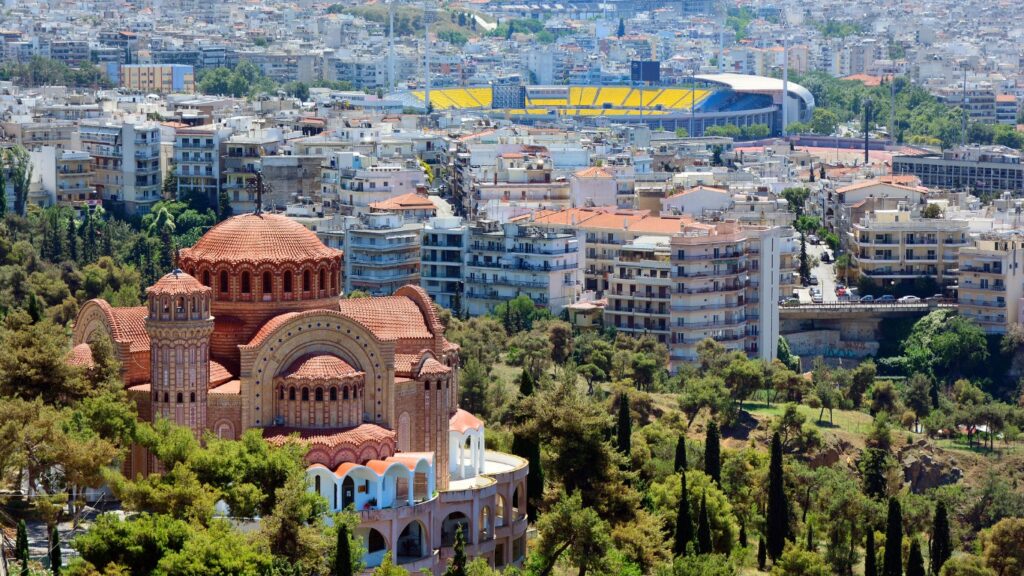
Thessaloniki offers a mix of historic city-center districts, coastal residential zones, and rapidly developing suburban areas—each with distinct pricing dynamics and investment profiles. The city’s layout and urban density create sharp contrasts between micro-markets, making neighborhood selection essential for targeting specific yield or capital growth objectives.
Ano Poli
Ano Poli, the Upper Town, is Thessaloniki’s most historic neighborhood, known for its traditional architecture, panoramic views, and UNESCO-protected sites. It attracts investors seeking short-term rental opportunities and long-term appreciation through heritage value.
The median home price in Ano Poli is approximately €2,150 per square meter, with a 9.8% year-over-year increase. Many buildings require renovation, but refurbished apartments with balconies and views command premium prices.
Ano Poli offers strong potential for boutique investments, particularly in Airbnb-ready units targeting tourists and digital nomads.
Vardaris
Vardaris is a central, rapidly gentrifying neighborhood that has seen a surge in investor interest due to its proximity to the train station, port, and university zones. Once industrial, the area now offers some of the most competitive pricing for centrally located apartments.
The median home price in Vardaris is €1,680 per square meter, with values rising 11.2% over the past year. Renovation-ready apartments under €150,000 are being quickly absorbed by investors focused on mid-term rentals and student housing.
Vardaris is one of the highest-yielding areas in the city for those comfortable with modest capex and value-add strategies.
Kalamaria
Located southeast of the city center, Kalamaria is Thessaloniki’s most affluent suburb. With coastal access, modern residential buildings, and family-friendly infrastructure, it attracts both local professionals and foreign lifestyle buyers.
The median home price in Kalamaria is €2,450 per square meter, up 8.1% year-over-year. Apartments in modern buildings range from €250,000 to €400,000, while villas exceed €600,000 in prime locations.
Toumba
Toumba is a well-established middle-income neighborhood with strong rental demand due to its proximity to major universities, hospitals, and transportation corridors. It appeals to families, students, and young professionals.
The median home price in Toumba is €1,850 per square meter, with a 9.4% increase since Q2 2024. Two-bedroom apartments under €180,000 remain popular among landlords targeting year-round local leases.
Thermi
Thermi is an emerging suburb located near Thessaloniki Airport and major business parks. It is gaining popularity with developers and buyers seeking new construction, larger plots, and quieter residential settings.
The median price in Thermi is €1,920 per square meter, rising 7.6% year-over-year. New builds dominate the market, with pricing for family-sized homes ranging from €230,000 to €400,000 depending on amenities and plot size.
Neighborhood Median Prices and Price per Square Meter
Thessaloniki Rental Market Overview
The Thessaloniki rental market in 2025 continues to perform strongly, supported by a mix of domestic tenant demand, international students, digital nomads, and long-term expats. With rental stock tightening in key neighborhoods and price growth driven by both tourism and urbanization, landlords across the city are capitalizing on rising lease rates and reduced vacancy periods.
Average asking rents across Thessaloniki currently stand at €8.32 per square meter per month, translating to roughly €640/month for an average 78-square-meter apartment. In city-center and university-adjacent districts, rental rates are even higher, particularly for renovated or furnished units targeting young professionals and students.
Average Rent Prices by Unit Type
- Studio Apartments: €400–€480/month
- 1-Bedroom Apartments: €550–€650/month
- 2-Bedroom Apartments: €700–€850/month
- 3-Bedroom Apartments: €850–€1,050/month
- 4-Bedroom Apartments/Villas: €1,200+/month
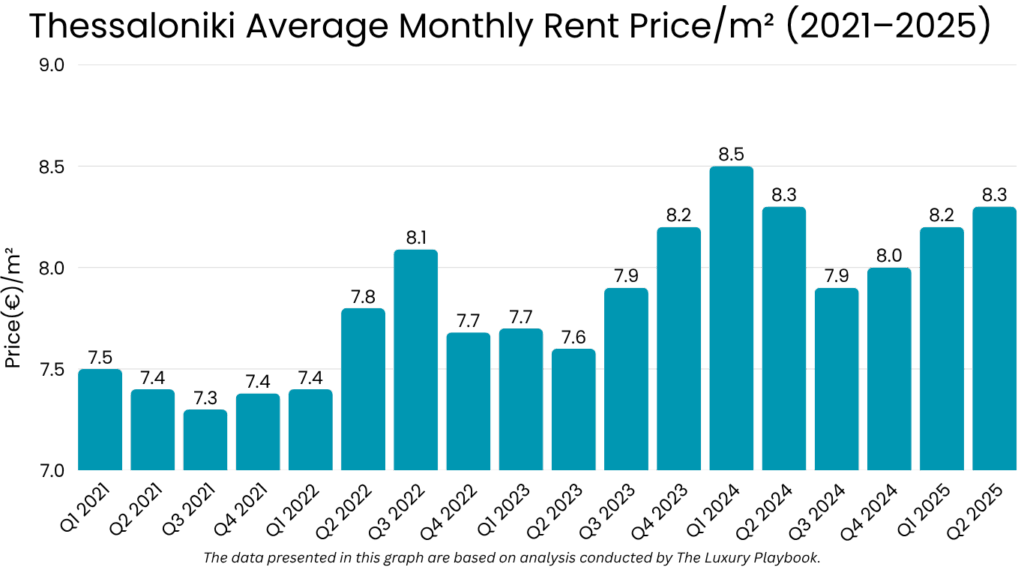
Lease durations are typically 12 months, although furnished apartments near the universities or city center often attract shorter stays with premium pricing. Strong seasonal demand from incoming students continues to tighten availability in early autumn.
Rent by Neighborhood
- Ano Poli: Studios lease for €450–€550/month due to high short-let demand and tourist footfall.
- Vardaris: One-bedroom units average €500–€600/month, popular with students and professionals.
- Kalamaria: Two-bedroom apartments rent for €900–€1,050/month, especially near the coast and parks.
- Toumba: High turnover student rentals fetch €650–€750/month for renovated two-bedroom units.
- Thermi: Larger suburban homes rent for €1,000–€1,300/month, often targeting families and foreign professionals.
Vacancy and Leasing Trends
Thessaloniki’s rental vacancy rate is currently estimated at 4.1%, with tighter supply in central and university districts. Leasing velocity remains strong for modernized units, especially those equipped for short-term stays. The shift toward higher-quality housing is encouraging landlords to upgrade inventory in order to justify rental premiums.
Due to demand exceeding supply in many segments, renters often commit quickly, particularly in the €500–€850/month range. Landlords in central zones are increasingly selective, prioritizing longer-term tenants with reliable payment history.
Investor Perspective
Thessaloniki remains one of the most yield-efficient rental markets in Greece, with gross rental yields ranging from 6.5% to 9%, depending on location, unit condition, and tenant strategy. Investors targeting student housing, short-term furnished rentals, or multi-unit buildings in city-center zones are especially well-positioned to benefit from low vacancy and rising lease rates.
In summary, Thessaloniki’s rental market offers stable income generation across multiple asset classes, from compact city apartments to large suburban homes. With rent growth outpacing inflation in core zones and sustained demand across all price levels, the city continues to appeal to yield-focused investors seeking balanced risk and return.
Factors Influencing The Thessaloniki Housing Market
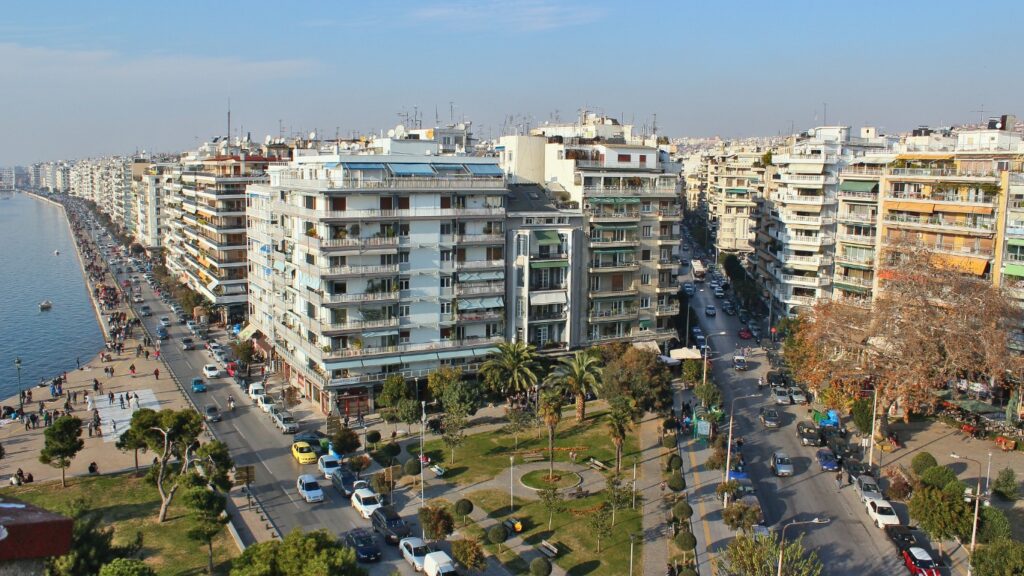
The Thessaloniki housing market in 2025 is being shaped by a mix of local infrastructure developments, national policy shifts, and evolving investor behavior. These forces are defining both short-term pricing dynamics and long-term investment positioning across the city’s residential segments.
- Foreign Investment and Golden Visa Spillover: Following regulatory changes in Athens, more foreign investors are now targeting Thessaloniki to benefit from lower entry thresholds and comparable urban appeal. Buyers from Israel, Germany, Cyprus, and the Balkans are increasingly active in the sub-€250,000 space, focusing on value-rich neighborhoods like Ano Poli, Vardaris, and Neapoli.
- Infrastructure and Metro Expansion: The long-awaited Thessaloniki Metro project, set to partially open in late 2025, is already impacting real estate values along the planned stations. Areas like Analipsi, 25 Martiou, and Sintrivani are experiencing price premiums and rising investor attention. Improved transportation will boost livability and rental demand, especially in neighborhoods currently underserved by public transit.
- Short-Term Rental Demand from Tourism and Students: The city’s dual appeal as a tourist destination and university hub keeps short-term leasing activity high. High-performing neighborhoods like Rotunda, Ano Poli, and Ladadika consistently draw strong interest from visitors and student tenants. This supports both rental yields and liquidity in small-unit apartment investments.
- Rising Renovation Costs: Older apartment stock dominates Thessaloniki’s central zones. While this creates opportunities for value-add strategies, construction inflation and regulatory delays have made renovations more costly and time-consuming. Investors are increasingly favoring partially updated units or newer buildings to limit upfront capital expenditures.
- Demand for Modernization and Energy Efficiency: Tenant preferences are shifting toward newer or fully renovated homes with energy certifications, double glazing, and modern heating systems. Units lacking these features are leasing slower and often at a discount. This trend is encouraging landlords to upgrade stock or risk falling behind on rental competitiveness.
- Financing Access and Domestic Affordability Pressure: Mortgage availability has improved, but lending remains cautious. Many purchases are still made with cash, especially among foreign investors. Meanwhile, rising prices are beginning to outpace wage growth, putting pressure on local first-time buyers and shifting more demand into the rental market—especially in affordable zones like Toumba and Sykies.
Thessaloniki Housing Market Forecast for 2026
Looking ahead to 2026, the Thessaloniki housing market is expected to maintain its upward trajectory, although the pace of price growth may moderate slightly as affordability constraints begin to surface. Core fundamentals remain strong—limited new supply, continued foreign interest, and improving infrastructure will continue to drive demand across key segments.
While double-digit growth may ease, Thessaloniki is forecast to remain one of Greece’s most investable and resilient residential markets.
Property prices in Thessaloniki are projected to increase by 5% to 7% over the next 12 months. With the current average around €1,957 per square meter, this would place citywide values between €2,070 and €2,110/sqm by early 2026. Districts with metro access, tourism infrastructure, or strong university housing demand—such as Vardaris, Rotunda, and Toumba—are expected to outperform.
Price ceilings may begin to emerge in the premium segment, particularly in suburban zones like Kalamaria and Panorama, where new construction is pushing up inventory and overall listing prices. However, centrally located resale apartments with modern upgrades are expected to remain liquid and in demand.
New supply will remain modest. While developers are expanding in outer districts like Thermi and Oreokastro, construction timelines and zoning restrictions continue to limit large-scale delivery in central Thessaloniki. This dynamic will likely preserve price strength in established neighborhoods.
Modernized or newly built properties near metro lines, universities, and waterfront zones are forecast to see the highest occupancy and price appreciation.
Rental prices are also expected to increase by 3% to 5%, driven by a tight leasing market and a rising tenant base of students, remote workers, and local residents priced out of ownership. One-bedroom units could reach €670/month, while renovated two-bedrooms in central districts may average €850–€900/month, depending on furnishings and amenities.
Vacancy rates are likely to remain under 5%, with leasing velocity favoring renovated stock. Suburban homes will attract longer-term leases, while the city center will remain popular for furnished and student housing strategies.
Greece’s stable macroeconomic outlook, continued Golden Visa inflows, and ongoing metro development all suggest further urban integration and investor momentum. With limited downside and well-established rental demand, Thessaloniki is poised to attract more mid-cap institutional and retail capital in the next cycle.
Is It Worth Buying a Property in Thessaloniki?
Buying property in Thessaloniki in 2025–2026 presents a viable opportunity for investors seeking rental income, mid-term capital appreciation, or a foothold in an emerging Eurozone market. However, as the city becomes increasingly competitive, success depends on navigating its structural limitations, regulatory framework, and localized supply dynamics.
On the positive side, Thessaloniki offers strong rental yields—typically ranging from 6.5% to 9%, especially in value-rich central neighborhoods and student-oriented areas. With limited new construction and consistent demand, landlords benefit from stable occupancy and upward rent pressure. Renovated city-center apartments under €250,000 remain particularly attractive for buy-to-let strategies.
The city’s improving infrastructure—especially the upcoming metro system—is expected to further boost accessibility and real estate values along transit corridors. Additionally, Thessaloniki’s popularity among international students, digital workers, and expats supports a diversified tenant base, helping mitigate vacancy risk.
However, investors should also be aware of potential constraints. Older building stock often requires costly renovation, and rising labor and material costs can erode margins. Legal complexity around co-ownership and permitting can delay transactions, particularly in older apartment blocks. Moreover, tightening Golden Visa rules may eventually reduce some foreign capital inflow in high-demand districts.
Liquidity is also uneven. While central zones enjoy fast sales cycles, suburban and premium areas can be slower to transact. For short-term investors or those seeking rapid resale, these pockets may prove more challenging.
In conclusion, Thessaloniki is well-suited to long-term investors with a clear strategy, renovation flexibility, and a tolerance for moderate bureaucratic friction. For those focused on strong rental income and gradual value growth, it offers a compelling alternative to higher-priced Southern European cities—provided asset selection and due diligence are approached carefully.
Other Market Forecasts & Overviews
Athens Real Estate Market Overview & Forecast
Mykonos Real Estate Market Overview & Forecast
Santorini Real Estate Market Overview & Forecast
FAQ
Is Thessaloniki a good city for real estate investment?
Yes, especially for investors seeking strong rental yields and urban capital growth in a Eurozone market.
Which areas in Thessaloniki offer the best investment potential?
Top-performing areas include Ano Poli, Vardaris, Kalamaria, Toumba, and Thermi, each offering unique value depending on strategy.
Are rental yields high in Thessaloniki?
Yes. Gross rental yields typically range from 6.5% to 9%, with lower-risk profiles in central and university-adjacent districts.
Is now a good time to buy property in Thessaloniki?
Yes, if you’re targeting rental income and long-term appreciation. However, careful neighborhood selection is key.