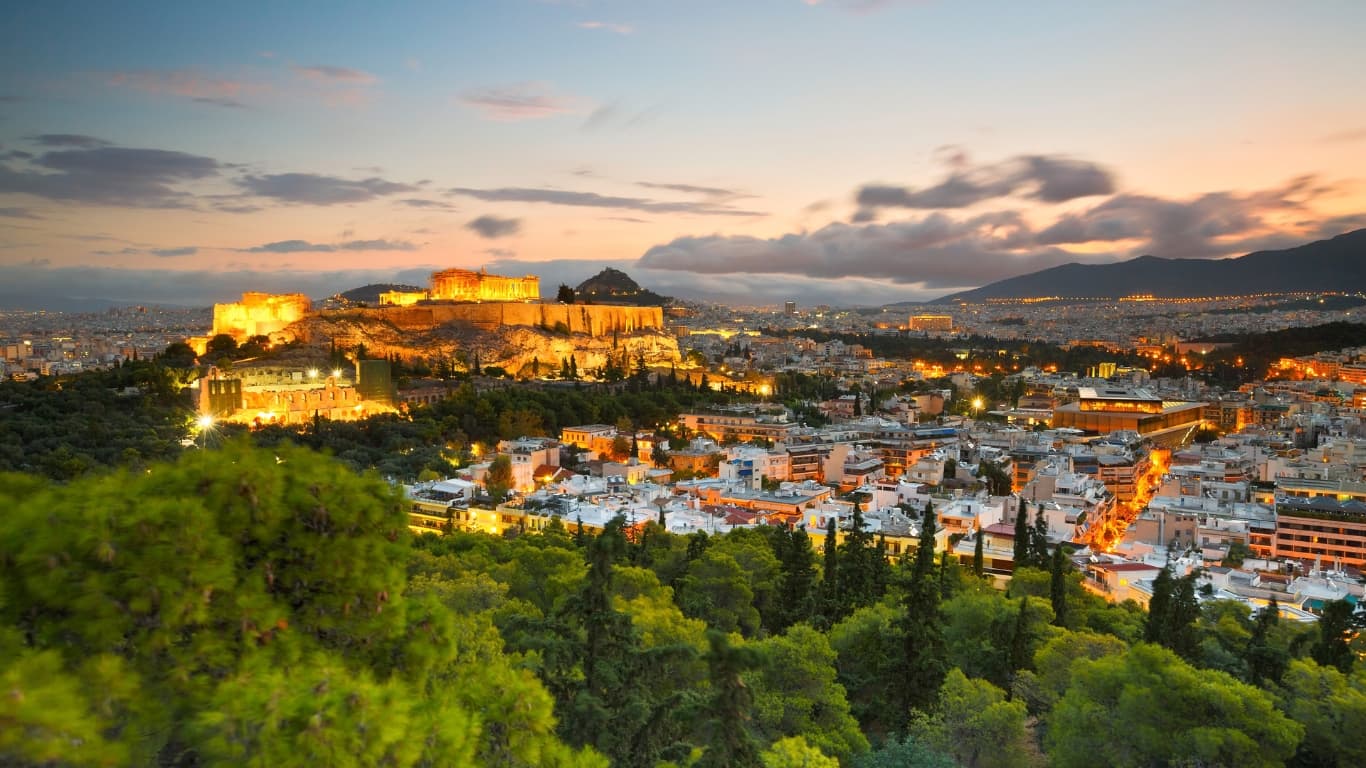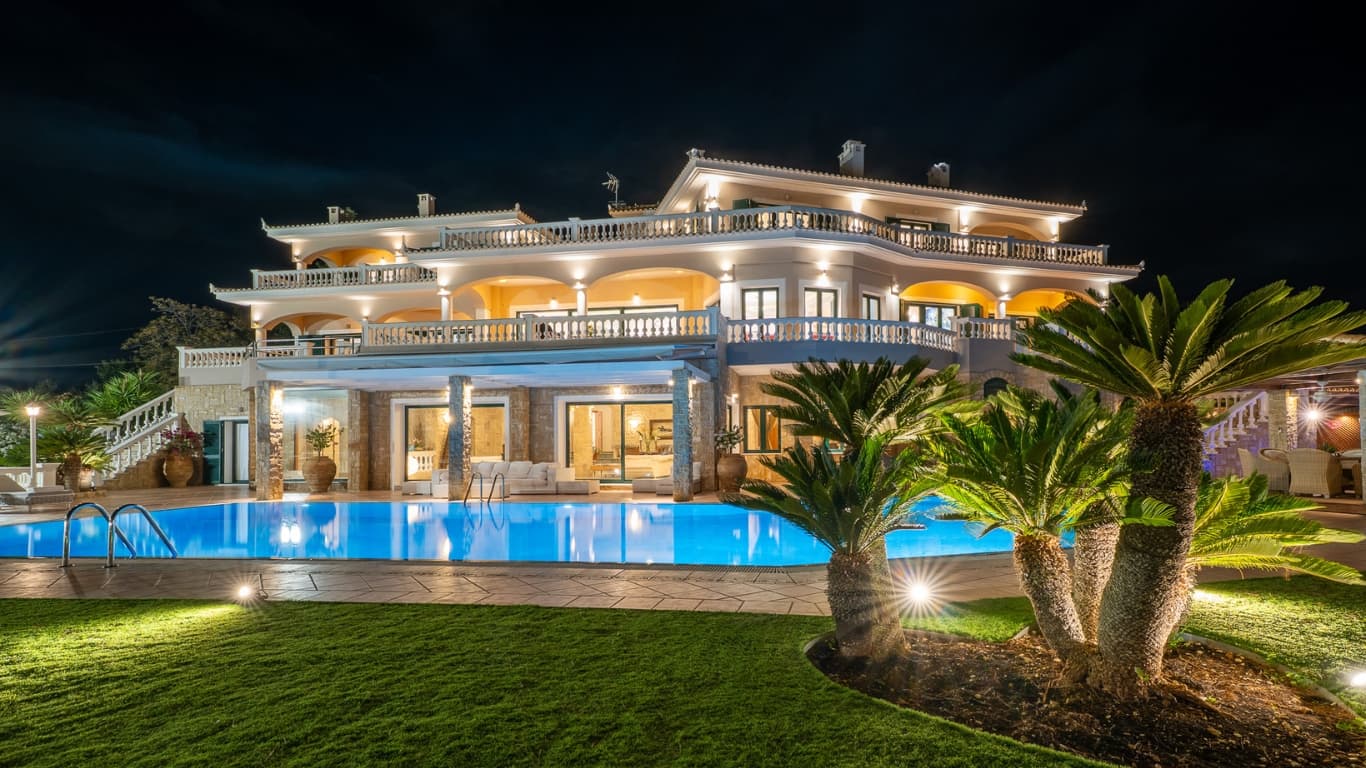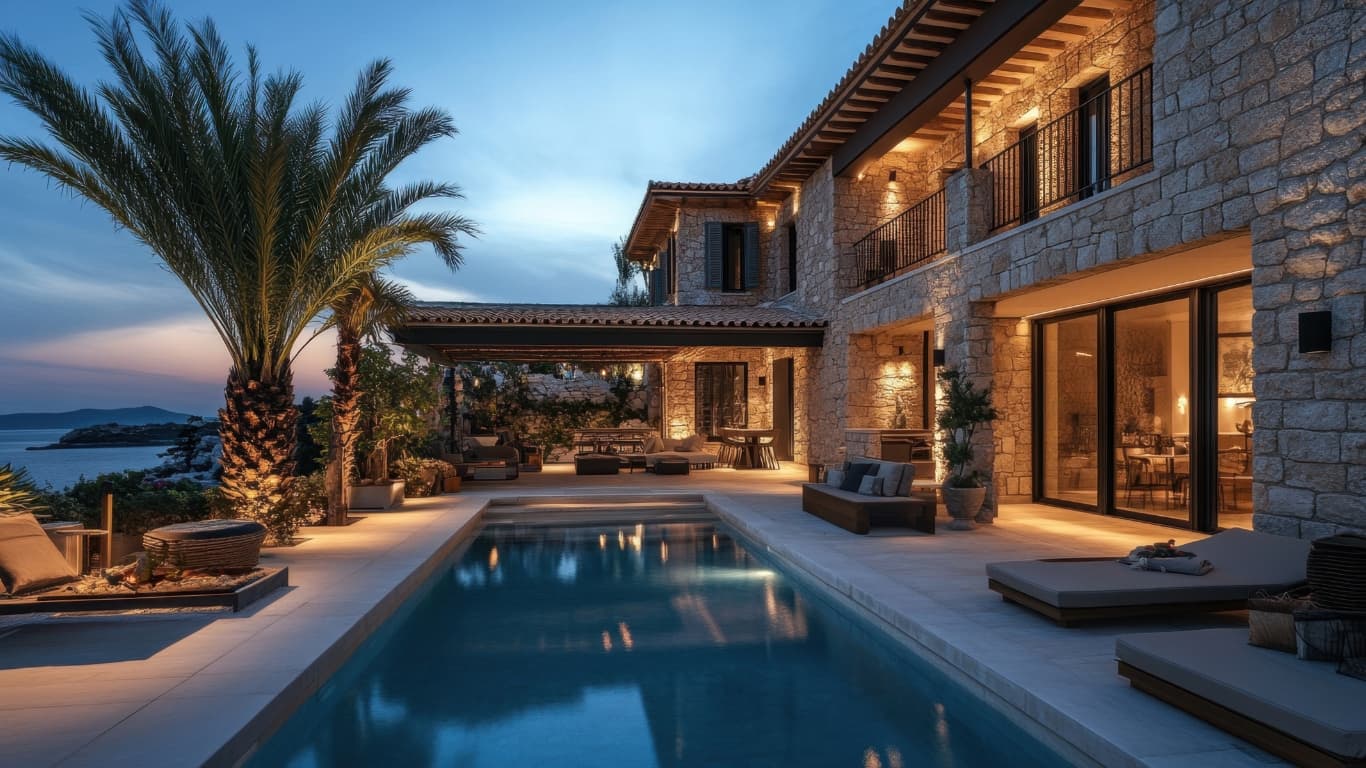
Glyfada is a coastal suburb tucked into the southern edge of Athens, and if you know Greece well, you already know its reputation. Upscale, sun-drenched and quietly cosmopolitan, it sits at the crossroads of big-city convenience and genuine seaside living. The beaches, the dining scene and the residential texture make it the Athens Riviera's most-asked-about address.
Knight Frank's 2025 Greek market dispatch and Mansion Global's continuing Athens coverage have both tracked Glyfada's reset across the past three years. Below, our read on whether the suburb is worth a serious look.
- Glyfada anchors the southern end of the Athenian Riviera, with proximity to the Hellinikon project supporting steady residential appreciation across recent cycles.
- We see prime Glyfada stock attracting strong international buyer interest, with the established lifestyle infrastructure and seafront access supporting the price premium.
- Bank of Greece and Hellenic Property Federation data shows Glyfada pricing among the more dynamic in the Athenian Riviera, with the Hellinikon adjacency effect adding to broader market tailwinds.
- Yields on well-located Glyfada rental stock remain attractive, particularly for short-term rentals in the more central and seafront-adjacent locations.
- Greek Golden Visa eligibility for Glyfada stock sits at the higher EUR 800,000 band, reflecting the desirability of the broader Athenian Riviera under the current regulatory framework.
- For most considered Greek buyers we view Glyfada as one of the better-positioned Athenian Riviera neighbourhoods for combined lifestyle and investment exposure.
- Who is this for?
- International and Greek diaspora buyers considering Glyfada acquisition, alongside the advisers, brokers and family office staff serving the Athenian Riviera market.
- What is happening?
- A practical read of buying property in Glyfada, covering prices, statistics, the Hellinikon adjacency effect, yields and the Golden Visa framework.
- When did this emerge?
- The article reflects 2026 market conditions through Bank of Greece, ELSTAT and Hellenic Property Federation data alongside our own observations.
- Where is this happening?
- The piece focuses on Glyfada, with reference to the broader Athenian Riviera including Voula and Vouliagmeni and the Hellinikon project dynamics.
- Why does it matter?
- Glyfada combines lifestyle quality with strong appreciation drivers, which is why the area deserves explicit attention in any Athenian Riviera consideration set.
The property market and the price texture
Property prices in Glyfada have climbed steadily. As of 2025, the average price per square meter sits at around €4,500, though premium pockets of the suburb can push well past €6,500 per square meter. The market breaks down into three broad zones worth knowing about.
The coastal strip commands the highest prices, with seafront product running from €6,000 to €10,000 per square meter. The central area, popular for the dining and shopping districts, sits between €4,000 and €6,500 per square meter. Upper Glyfada, the quieter residential zone with views of the Saronic Gulf, generally falls between €3,000 and €4,500 per square meter.
Prices across Glyfada have risen by an average of 8% per year over the past three years. That growth comes from a tight supply of quality stock, strong local and international demand and a buyer pool that spans Europe, the Middle East and the United States. Engel & Völkers' Athens Riviera desk reports clearance times under 60 days on the strongest streets.
The rental conversation
For owners considering long-term rental holdings, Glyfada delivers a consistent buyer-and-renter field. Average rental yields for residential properties run between 3. 5% and 4.
5%, and in the most sought-after spots along the coast and near the centre, those numbers can climb higher. The combination of consistent demand and strong rental rates supports both long-term holdings and shorter-stay rotational lets, particularly in the Cycladic-summer band.
You can explore tips for investing in commercial real estate across the Athens Riviera for a wider read on the Greek commercial layer. The Financial Times has tracked the surge in foreign interest in the Greek prime market across multiple reports.
Christie's International Real Estate's Greek affiliate runs a separate book for the upper-tier furnished rental segment. Sotheby's International Realty's Athens desk reports the upper band clears in well under 30 days.
The Hellinikon catalyst
The Hellinikon redevelopment, on the site of the former Athens international airport just inland from Glyfada, is one of the largest urban-regeneration projects in Europe. The Lamda Development masterplan covers a marina, a luxury hotel pipeline, branded residences (the Mandarin Oriental and the One&Only are confirmed), retail, parks and a mixed-use residential layer. The first phases delivered through 2024 and 2025.
The full masterplan extends through 2030. The nearby Hellinikon development has already reset Glyfada's adjacency value. Knight Frank's 2025 figures showed Glyfada residential pricing accelerating ahead of the wider Athens Riviera benchmark.
The architects on the masterplan and the named branded-residence components include Foster + Partners, Bjarke Ingels Group and Joshua Florquin Architecture. Lamda has been deliberate about commissioning, which has reset the architectural register of the entire Athens Riviera band.
Lifestyle and the operational layer
Glyfada's lifestyle texture is the suburb's defining commercial argument. The seafront cafés and bars along Voula and Vouliagmeni avenues, the boutique-and-design retail axis through the centre, the Mediterranean-climate gardens of the residential streets and the proximity to the Astir Beach club have made the address a coherent year-round residential proposition. The Athens Riviera tram extension connects Glyfada to Piraeus and the city centre cleanly.
The international school layer is genuinely deep. The American Community Schools (ACS Athens), the St Catherine's British School and the German School of Athens all operate within easy reach. Mansion Global's 2024 Glyfada dispatch noted that school access has become a structural driver of the family-buyer field, particularly for Western European and North American owners landing on the Riviera.
Healthcare provision in the suburb is similarly deep. The HYGEIA Hospital, the Metropolitan Hospital and the Mitera maternity-and-paediatric centre anchor a private healthcare cluster that operates at international standards. The operational layer has stopped being a question mark for international owners.
The Golden Visa and the buyer field
The Greek Golden Visa complete guide covers the residency-by-investment framework in detail. The €800,000 threshold for prime Athens addresses (including Glyfada) was introduced in 2023 and continues to anchor the upper buyer field. The framework remains tractable for buyers who acquire residential property at the qualifying level.
The buyer profile has rotated meaningfully across the past three years. Where Glyfada's earlier cycle leaned heavily on Greek and Russian buyers, the 2024-2025 cycle has absorbed waves of British, German, Israeli, Lebanese and American owners. Robb Report has covered the Athens Riviera luxury boom in some detail.
The non-domiciled tax regime (the flat €100,000 annual tax on worldwide income for qualifying new tax residents) has reinforced the buyer pivot. Glyfada sits alongside the most-asked-about international addresses in Knight Frank's 2025 cross-border buyer survey.
The wider Athens recovery and the macro backdrop
Glyfada's appreciation cycle has tracked Greece's broader economic resurgence across the past decade. The country's investment-grade credit rating restoration in 2023, the broader equities-market rebound and the structural improvement in fiscal indicators have all flowed back into the property layer. The Athens Riviera has been the most direct beneficiary.
The architectural commissioning across the suburb has thickened. Cypriot and Greek practices including Divercity Architects, KLab Architecture and the Athens desks of OPA (Office Practice Architecture) have built residential books that include serious Glyfada work. The vocabulary leans contemporary-Mediterranean: stone, lime, terracotta, oak, with deep terraces and shaded courtyards.
What this means for buyers
For owners considering an Athens Riviera address in 2026, Glyfada does serious work. The price points sit below Knightsbridge or Mayfair but at credible Mediterranean prime levels. The lifestyle texture is genuine, the operational layer (schools, healthcare, transport) has matured and the Hellinikon catalyst is still flowing through the wider band.
The buyer infrastructure (Engel & Völkers, Christie's International Real Estate, Sotheby's International Realty, the senior Athens-focused agencies) is deep enough to support international transactions cleanly. The architectural depth has thickened, and the named villa-and-apartment product is increasingly indistinguishable in quality from the wider European prime band.
Glyfada has earned its place on the Athens Riviera prime conversation. For buyers landing on the suburb in 2026, the work is choosing the band (seafront, centre or upper) and committing to a multi-year holding horizon. We last reviewed this analysis in May 2026.

Frequently Asked Questions
- What is the average property price in Glyfada?
- The average property price in Glyfada is around <strong>€4,500 per square meter</strong>, with variations depending on the specific area, property type, and amenities. Coastal areas can reach up to <strong>€10,000 per square meter</strong> for premium properties.<br /><br />

Savvas Agathangelou
Savvas Agathangelou co-founded The Luxury Playbook and has spent years reporting from the prime postcodes the magazine covers — Mayfair, Knightsbridge, the Athens Riviera, Dubai's Palm crescents, and the southern Mediterranean coastlines where the world's wealthy keep coming back. His background is in international hospitality, and that frame shapes how he writes about property: the developer's choices, the architect's signature, the agency's bench of named brokers, the building's service standard once the buyer moves in. He files developer spotlights, agency profiles, and the seasonal "Properties That Defined" listicles, and he hosts the magazine's founder-and-leadership interviews on the Voices side.