The conversation around where international buyers are looking in 2026 reads as one of the more interesting moments in cross-border residential real estate. Knight Frank's Wealth Report, the Sotheby's International Realty Luxury Outlook and Mansion Global's coverage of cross-border buyer migration all describe the same picture. A more intentional, design-led and architecturally literate cohort of international buyers is concentrating attention on a recognisable set of markets.
What follows is an editorial read on the international markets actually drawing cross-border buyers right now. We draw from the senior brokerage networks, the architectural studios most active in international residential commissioning, the Savills World Cities Prime tracker and the cultural-infrastructure indicators that the Knight Frank Wealth Report tracks carefully.
The accessibility framing matters. Mayfair sits around GBP 30,000 to GBP 40,000 per square metre. Monaco prime trades near EUR 55,000 per square metre.
Dubai Marina prime sits closer to AED 22,000 per square metre, around EUR 5,500. The cities below operate across a wide pricing arc.
- International buyer attention in 2026 continues to concentrate on the established European, Gulf and Americas prime markets, with selected emerging destinations gaining structured interest.
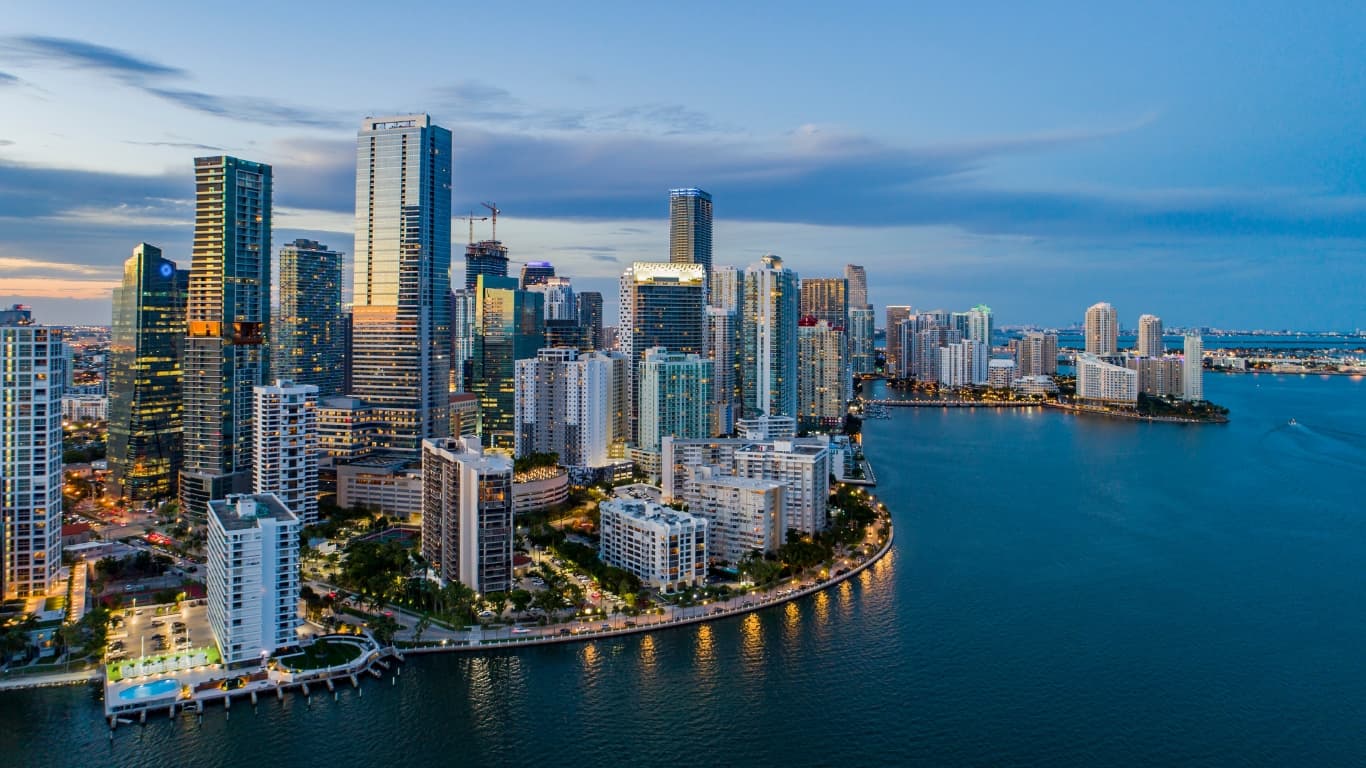
- We see Dubai, Miami, London, Madrid and Paris absorbing the bulk of cross-border ultra-high-net-worth acquisition flows, with comparable benchmarks across the major capitals.
- Knight Frank Wealth Report data shows sustained international capital flows into prime residential, with the buyer mix continuing to diversify across origin geographies.
- Mediterranean leisure markets including Mykonos, Mallorca, Marbella and the Cote d'Azur continue to attract sustained trophy asset interest from the major wealth centres.
- Currency dynamics, tax framework variation and residency-by-investment programmes continue to shape cross-border allocation decisions at the margin.
- For most considered international buyers we view market selection as primarily driven by lifestyle priorities and access patterns rather than abstract relative-value arguments alone.
- Who is this for?
- International ultra-high-net-worth buyers tracking global allocation patterns, alongside the advisers, brokers and family office staff framing those cross-border decisions.
- What is happening?
- A read of where international buyers are looking in 2026, covering Dubai, Miami, London, Madrid, Paris and the major Mediterranean leisure markets.
- When did this emerge?
- The article reflects 2026 market conditions through Knight Frank Wealth Report, JLL Global Cities and our observations across the major prime markets.
- Where is this happening?
- The piece covers the global prime market complex, including Dubai, Miami, London, Madrid, Paris and the major Mediterranean leisure destinations.
- Why does it matter?
- International buyer flow patterns shape pricing at the upper end, which is why understanding the dynamics matters for anyone tracking the global prime market.
Dubai
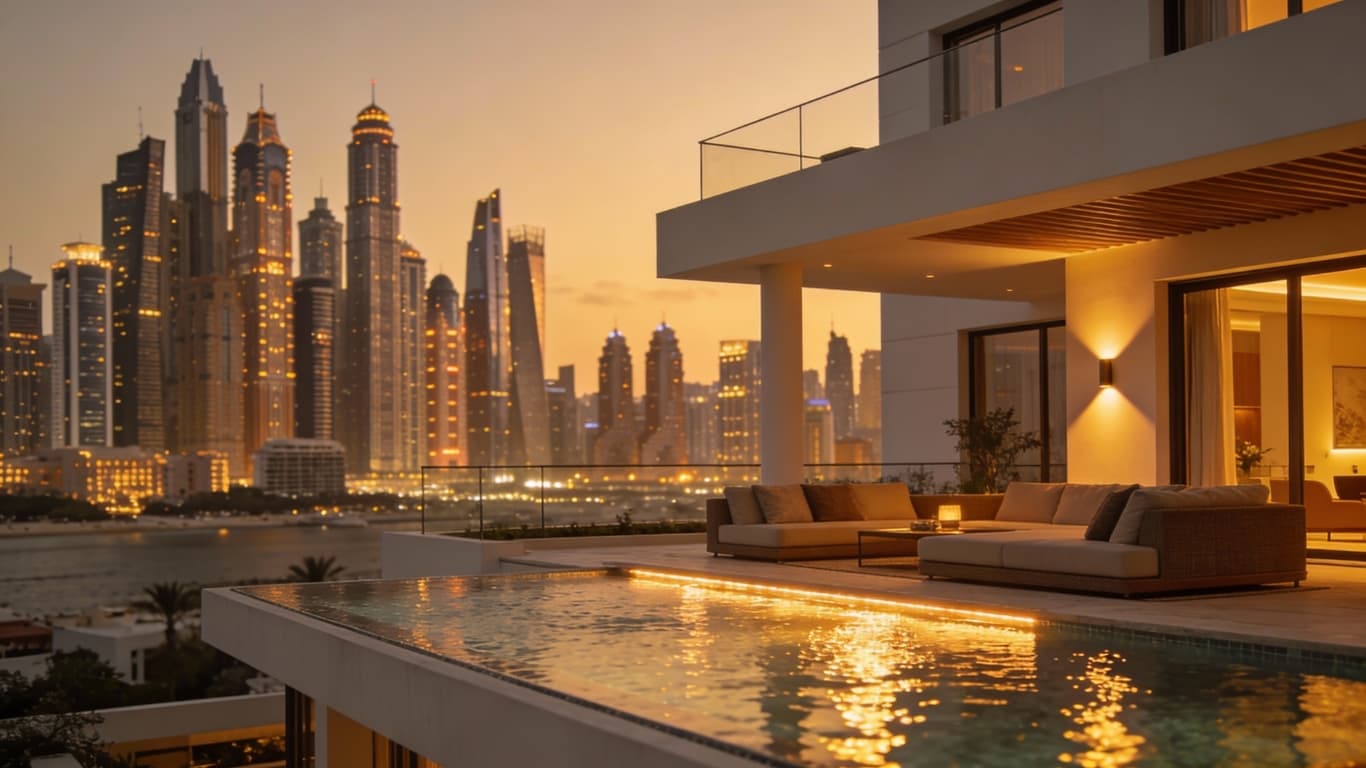
Dubai's prime-residential picture has matured substantially over the past decade. Palm Jumeirah, the Burj Al Arab waterfront, Bluewaters Island, Emirates Hills, the Dubai Hills district and the Downtown Dubai towers anchor the prime conversation.
The architectural register has been deepening. Foster + Partners' multiple Dubai commissions, Zaha Hadid Architects' Dubai residential projects, the SOM-led tower work and the Atkins-designed Al Habtoor City. The international buyer pool draws particularly from South Asia, the Russian-speaking world, the broader Gulf and increasingly Western Europe.
The Dubai Land Department's standard 4 percent transfer fee and the Golden Visa programme (ten-year renewable residency for qualifying purchases above AED 2 million) are part of the institutional infrastructure of the segment. Dubai Marina prime at around AED 22,000 per square metre sits well below Mayfair and Monaco at the trophy line.
London
London prime (Mayfair, Belgravia, Knightsbridge, Kensington, Chelsea, the riverside regeneration corridors) remains one of the deepest international prime markets. The architectural register runs from the Cubitt Belgravia terraces through the Edwardian Mayfair stock to the contemporary commissions led by Foster + Partners, Renzo Piano (the Shard) and the Squire & Partners Battersea Power Station redevelopment.
Knight Frank's London prime quarterly and Beauchamp Estates' off-market activity tracking both register sustained interest from the Gulf, North America and East Asia. Foxtons, Knight Frank, Savills and the senior London brokers operate the institutional infrastructure.
Mayfair trophy pricing now sits around GBP 30,000 to GBP 40,000 per square metre according to Savills's World Cities Prime tracker. The UK Tier-1 Investor visa closed in February 2022; primary-residence buyers face stamp duty surcharges for non-UK-resident purchasers and second homes.
New York
Manhattan prime, Brooklyn's brownstone neighbourhoods, the Hamptons compound segment and the Hudson Valley estate market each operate on their own register. The architectural inheritance of the prewar Manhattan apartments (Rosario Candela, Emery Roth, J.E.R. Carpenter) anchors the deepest segment.
Mansion Global's coverage of off-market trades and the Compass / Douglas Elliman / Sotheby's International Realty prime teams operate the senior brokerage infrastructure. Ken Griffin's USD 238 million 220 Central Park South purchase remains the canonical example of the segment's depth.
Manhattan prime sits at USD 16,000 to USD 20,000 per square metre at the trophy line, broadly comparable to Knightsbridge.
The Algarve and Comporta, Portugal
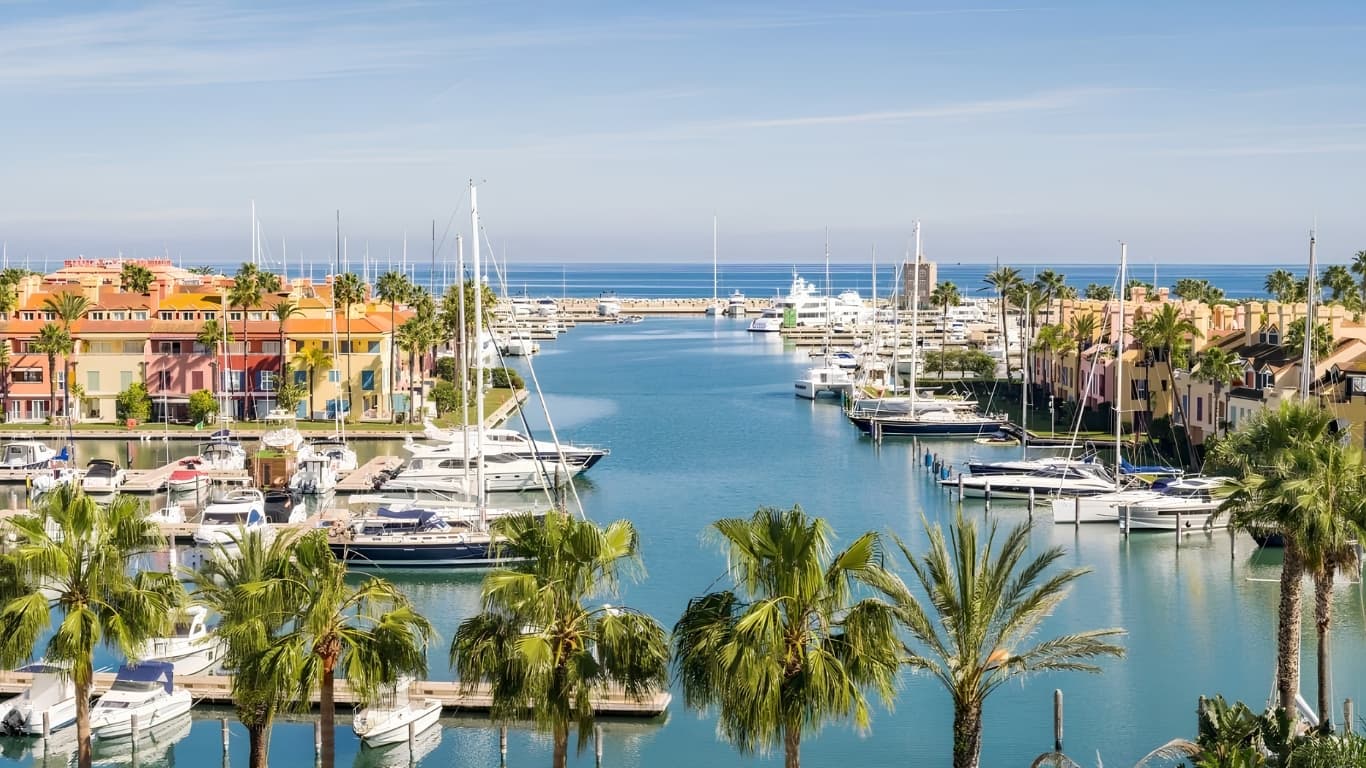
The Algarve (Albufeira, Vilamoura, Tavira, Monchique, Lagos) combines climate, architectural heritage and golf and beach infrastructure that has anchored substantial international buyer migration. Comporta, on the Atlantic coast south of Lisbon, has become one of the most architecturally interesting recent destinations.
Studio KO and Vincent Van Duysen have led significant commissions in Comporta. The Portuguese Golden Visa programme removed the direct-property purchase pathway in October 2023 but retained venture-capital fund and other non-property routes (current threshold around EUR 500,000 for qualifying fund investment).
Montenegro
Montenegro (Budva, Herceg Novi, Tivat with the Porto Montenegro marina development) has become a serious player in the European Mediterranean property market over the past decade. The Adriatic-coast scenery, the relatively accessible pricing and the residency permit available to property owners have anchored international buyer interest.
The Citizenship by Investment programme closed at the end of 2022. The residency pathway remains active.
Shanghai
Shanghai's prime-residential market (the French Concession, the Bund-adjacent areas, the Pudong financial district waterfront) operates on a different register from the major European and North American prime markets. The architectural inheritance is unusually layered, combining 1920s Art Deco with contemporary tower work.
The market has experienced material headwinds through 2023 to 2025 connected to the broader Chinese property cycle and the demographic transition. Many high-net-worth individuals in Shanghai have been quietly directing attention offshore. Mansion Global's coverage of Shanghai-origin buyers in Singapore, London, the Côte d'Azur and Vancouver reflects the pattern.
Sydney
Sydney's harbour-front prime (Point Piper, Vaucluse, Mosman, the Northern Beaches, Coogee) combines the architectural inheritance of the Federation-era waterfront houses with contemporary modernist commissions. Christie's International Real Estate's Sydney coverage has documented record-breaking trades.
The Aerotropolis development, the Western Harbour Tunnel and Sydney Metro West are reshaping connectivity across the city. The Inner West (Marrickville, Ashfield, Newtown) has emerged as a strong secondary market with active design-led buyer interest.
Singapore and Tokyo
Singapore's prime-residential (Orchard Road, Bukit Timah, Sentosa Cove, the Tanglin and Holland Road districts, the heritage shophouses of Tanjong Pagar and Joo Chiat) operates on the most institutionally sophisticated framework in Southeast Asia. The architectural depth runs from the heritage shophouses through to the contemporary towers by SCDA, Foster + Partners and OMA.
Foreign buyers face a 60 percent Additional Buyer's Stamp Duty on residential purchases (raised from 30 percent in April 2023), a meaningful structural cost that has reshaped buyer composition.
Tokyo's prime-residential (Shibuya, Shinjuku, Minato) combines tight supply with steady inward international buyer interest. The architectural register includes the post-war modernism of Tange Kenzō and Maki Fumihiko, the contemporary Tadao Ando work, and the SANAA and Sou Fujimoto commissions. The structural demographic transition Japan is navigating creates location-specific dynamics that require careful analysis.
Berlin
Berlin has held a leading position in the PwC and Urban Land Institute Emerging Trends in Real Estate Europe ranking for several consecutive years. The Mitte, Charlottenburg, Prenzlauer Berg, Friedrichshain and Kreuzberg districts each carry distinctive architectural inheritance.
Wilhelmine apartment blocks, contemporary commissions by David Chipperfield (the Neues Museum, the James-Simon-Galerie) and Sauerbruch Hutton, and the Altbau stock with original parquet and detailing together anchor the conversation. Roughly 85 percent of Berliners rent rather than own, which creates a particular structural dynamic.
The residency-by-investment context
Several of these markets carry residency-by-investment frameworks worth understanding. The Greek Golden Visa (EUR 250,000 in qualifying regions, EUR 800,000 in central Athens, Thessaloniki, Mykonos and Santorini from August 2024) and the Cyprus PR pathway remain among the more accessible active EU options.
Spain ended the property-based Golden Visa in April 2025. Portugal removed the direct-property pathway in October 2023 but retained fund-investment and other routes. Lex Koller restricts foreign property ownership in Switzerland in ways that shape the Geneva, Zurich and Basel prime conversations.
Dubai operates a ten-year renewable Golden Visa for qualifying purchases above AED 2 million. Singapore's Additional Buyer's Stamp Duty at 60 percent for foreigners reshapes the buyer composition substantially.
How these markets compare on pricing
The international cohort sits across a wide pricing arc. Monaco prime near EUR 55,000 per square metre and Mayfair trophy stock around GBP 30,000 to GBP 40,000 per square metre define the top tier.
Manhattan, Knightsbridge and central Singapore prime sit broadly in the USD 16,000 to USD 25,000 per square metre band. Lake Geneva prime, central London Zone 2 and Sydney Point Piper sit in the EUR 10,000 to EUR 18,000 band. Berlin prime around EUR 9,000 to EUR 11,000 per square metre, Dubai Marina prime at around EUR 5,500 and the affordable cohort covered in our ten-market analysis sit below that band.
What this means for buyers
The buyers who succeed in international property treat the acquisition as a long-term cultural and architectural commitment rather than a financial allocation. The architectural pedigree and locational specificity come first. The legal and tax structuring follows, in conversation with specialist counsel.
The lifestyle and design coverage on this page focuses on the architectural and cultural register that anchors the cross-border conversation. The deeper wealth-tier conversation covers the trophy-market positions in more detail.
We last reviewed this analysis in May 2026.
Frequently asked
Where are international buyers concentrating attention in 2026?
Dubai, London, New York, Berlin, Singapore and the Algarve and Comporta corridor are drawing the most consistent design-led international migration. Sydney, Tokyo, Shanghai and Montenegro form the secondary cohort.
Which residency-by-investment pathways remain active?
Greece (EUR 250,000 to EUR 800,000 depending on region), Cyprus PR, Malta, Dubai (AED 2 million) and several non-EU options. Spain ended its property-based Golden Visa in April 2025, and Portugal removed the direct-property pathway in October 2023.
How do these markets compare on pricing?
The cohort spans from Monaco prime near EUR 55,000 per square metre at the top tier to the affordable secondary cohort below EUR 5,000 per square metre. Mayfair, Manhattan and Singapore sit at the upper end. Berlin, Dubai Marina and Lisbon sit toward the more accessible tier. France's most coveted positions sit firmly in the upper tier alongside Mayfair and Monaco.
What unites the markets actually drawing buyers?
Architectural depth, cultural infrastructure, legal frameworks that protect property rights, active senior brokerage networks (Christie's International Real Estate, Sotheby's International Realty, Knight Frank Private Office), and the specific cultural calendar each destination offers.
What do successful international buyers prioritise?
The architectural pedigree and locational specificity come first. The legal and tax structuring follows. Speculative cross-border money tends to underperform; long-term cultural and architectural commitment tends to compound.


Savvas Agathangelou
Savvas Agathangelou co-founded The Luxury Playbook and has spent years reporting from the prime postcodes the magazine covers — Mayfair, Knightsbridge, the Athens Riviera, Dubai's Palm crescents, and the southern Mediterranean coastlines where the world's wealthy keep coming back. His background is in international hospitality, and that frame shapes how he writes about property: the developer's choices, the architect's signature, the agency's bench of named brokers, the building's service standard once the buyer moves in. He files developer spotlights, agency profiles, and the seasonal "Properties That Defined" listicles, and he hosts the magazine's founder-and-leadership interviews on the Voices side.