
Crypto-denominated wealth is now visible in the bid books of three property markets in particular: Dubai, London prime and Miami. The pattern is not anecdotal. Knight Frank's 2025 Wealth Report flagged crypto-derived capital as one of the fastest-growing source pools for cross-border luxury acquisitions, and the major auction houses' real estate divisions have started structuring deals to accommodate it.
The structural question is what crypto buyers actually want from real estate. The behaviour is consistent across the three cities: a freehold trophy asset, transparent title, a brokerage willing to handle the digital-asset documentation, and an exit liquidity profile that does not depend on the same market that produced the gains.
- Crypto-wealth buyers have meaningfully reshaped acquisition patterns in Dubai, London and Miami property markets, with new demand profiles influencing pricing at the top end.
- We see Dubai absorbing the bulk of crypto-related property flows, with regulatory openness and direct crypto-payment frameworks supporting the buyer pathway.
- London prime market crypto activity concentrates in selected Mayfair, Knightsbridge and Belgravia transactions, with conventional fiat-conversion typically preceding the legal completion.
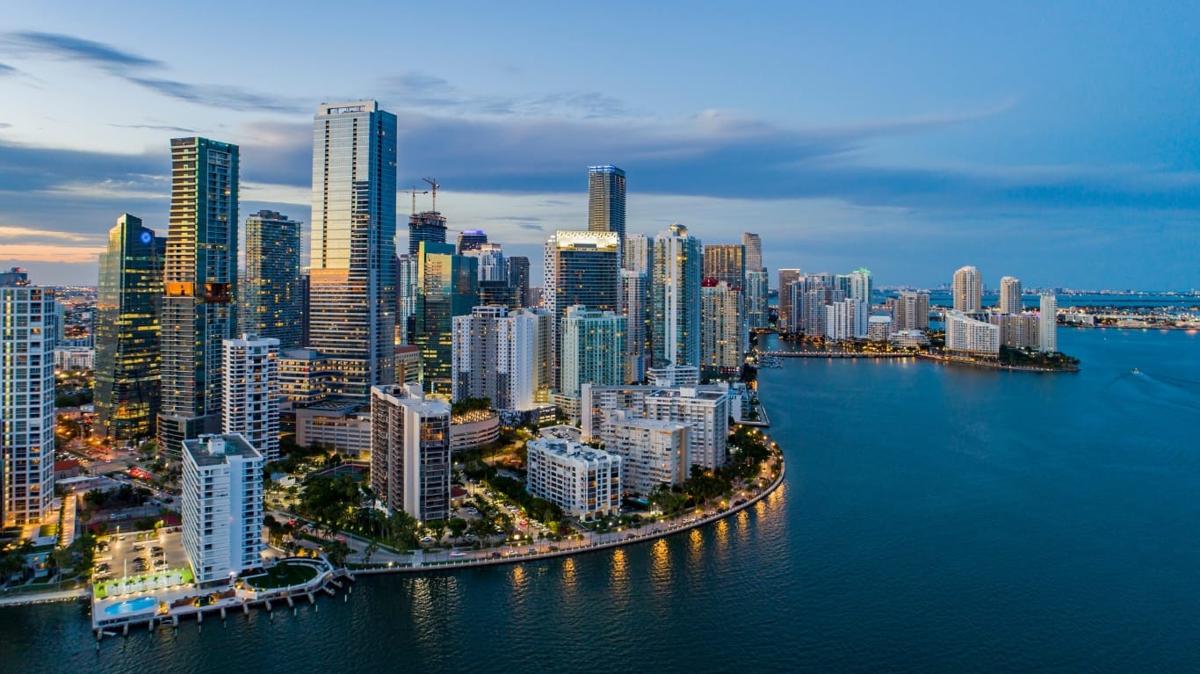
- Miami crypto buyer interest spans condo, single-family and selected commercial property, with the South Florida market emerging as a US crypto-wealth hub.
- Compliance frameworks including source-of-funds documentation continue to evolve, with jurisdictions varying meaningfully in their treatment of crypto-derived acquisition capital.
- For most considered observers we view crypto-buyer dynamics as a structural rather than cyclical feature of the global prime property market in 2026 and beyond.
- Who is this for?
- International buyers, advisers, brokers and compliance professionals tracking the crypto-wealth dynamic in the global prime property market.
- What is happening?
- A read of how crypto buyers are reshaping Dubai, London and Miami property markets, covering buyer patterns, payment frameworks and compliance considerations.
- When did this emerge?
- The article reflects 2026 market conditions, with reference to the multi-year evolution of crypto-wealth allocation patterns into prime real estate.
- Where is this happening?
- The piece focuses on Dubai, London and Miami, with reference to the broader global prime property market dynamics.
- Why does it matter?
- Crypto-buyer flows shape pricing and compliance practice at the top end of the market, which is why understanding the dynamics matters for any prime market participant.
Why Dubai Leads on Crypto Property Flows
Dubai's regulatory framework, set out by the Virtual Asset Regulatory Authority (VARA), is currently the cleanest in the world for converting crypto into property. Engel and Voelkers and Sotheby's International Realty's Dubai desks have both formalised crypto-acceptance protocols, with developer-level acceptance now standard for Emaar, Damac and selected luxury sponsors.
Mansion Global and FT Property have both flagged Dubai as the global capital of crypto-to-real-estate conversion. The product the bid clears against is concentrated in Palm Jumeirah, Downtown, Emirates Hills and Dubai Hills Estate. AED 30 million-plus inventory in branded residences has emerged as the favoured wrapper.
The Knight Frank Dubai desk reports that crypto-funded deals now account for an estimated 8 to 12 percent of high-end transaction count, with disproportionate concentration in off-plan and branded-residence product.
The London Prime Pattern Is Quieter But Real
London's framework is less crypto-native than Dubai's, but the bid book is real and increasingly visible. Mayfair, Belgravia, Knightsbridge, and Marylebone have all seen crypto-funded transactions through 2024 and 2025, generally structured through professional intermediaries who convert digital assets into sterling for the closing.
Knight Frank's PCL desk and the WSJ's London property coverage have flagged the same pattern. The buyer cohort is heterogeneous: U.S.-based founders, Asia-based principals with EU or U.K. residency, and a growing population of Eastern European crypto-derived wealth that prefers the London regulatory perimeter to other safe-haven options.
The friction in London comes from anti-money-laundering documentation that is materially heavier than Dubai's. That friction is also, from the buyer's perspective, the feature - the regulatory permanence is what makes London a credible long-cycle hold.
Miami: The American Crypto Hub By Default
Miami's positioning has been deliberately cultivated since the 2021-2022 cycle, and the result is the deepest U.S. crypto-property bid by a meaningful margin. Sotheby's International Realty's Miami coverage and Christie's International Real Estate's Florida desk have both reported crypto-derived buyer flows that exceed what New York, Aspen or Los Angeles have absorbed.
The product is concentrated in the Miami Beach prime market, the Coconut Grove waterfront band and the Bal Harbour/Sunny Isles condominium inventory. Bloomberg and FT Property have both flagged the depth of the Miami crypto bid as a structural support beneath the headline pricing.
The interesting tension is that Miami's broader market shows some bubble characteristics, while the prime crypto-bid is one of the supports holding the headline up. That dynamic is what we've previously flagged in our Miami coverage.
The Product Crypto Buyers Actually Want
The behaviour across the three cities is convergent. Branded residences (Bulgari, Mandarin Oriental, Aman, Four Seasons, Armani Casa) account for a disproportionate share of the crypto-to-property bid. The reason is straightforward: institutional management, transparent service charges, easier resale into a global brand-driven secondary market.
Direct freehold trophy houses in established neighbourhoods are the second-largest bucket. Off-plan inventory in Dubai sits as a tactical exposure for a subset of buyers prepared to accept developer risk in exchange for amplified leverage to the city's macro story.
What crypto buyers are not concentrating in: rental income product, multi-family yield plays or value-add restoration. The asset is being treated as a wealth-preservation conversion vehicle, not an operational allocation.
The Tax and Structuring Pattern
The tax footprint of crypto-to-property conversions is now a primary structuring question. Mansion Global and Bloomberg's Wealth desk have both flagged the proliferation of UAE and Singapore-resident holding vehicles as the dominant wrapper, with the property purchase landing inside that structure.
The U.S. capital-gains exposure for U.S.-resident crypto holders is the most active workaround conversation. We've seen Puerto Rico Act 60 structures, Wyoming LLC layering and the use of crypto-backed mortgage products that defer the realisation event entirely.
None of this is unique to crypto wealth. It is the same pattern UHNW capital has used for cross-border real estate for decades, just with a different asset on the source side.
The Cycle Risk the Bid Book Now Carries
The principal risk to the crypto-to-property thesis is a correlated drawdown in crypto markets that compresses the bid book at exactly the moment the property cycle softens. We've covered the wider question in our piece on Is Dubai Still the Safe Harbor for Luxury Property? and the same logic applies in London and Miami.
The cohort is not as price-insensitive as the early-2021 narrative suggested. Crypto buyers compare prices, model exit liquidity and now structure deals with the same discipline as long-tenured family-office capital. That is itself a maturation signal.
What This Means for Buyers
Sellers of trophy product in Dubai, London prime and Miami should expect the crypto-derived bid to be a meaningful share of the active buyer pool. Brokerages with deep digital-asset documentation experience now command a premium, and that premium is justified by transaction throughput.
Buyers using crypto-derived wealth should expect the cleanest path in Dubai, a heavier documentation requirement in London and a mature but tax-attention-needed environment in Miami. Christie's International Real Estate, Sotheby's International Realty, Engel and Voelkers and the major U.S. luxury brokerages all have the infrastructure to handle the conversion.
For collectors of cross-border trophy property, the asymmetry currently favours the crypto-derived buyer: thin competition in the documentation-heavy markets, deep optionality in Dubai. We last reviewed this analysis in May 2026.