
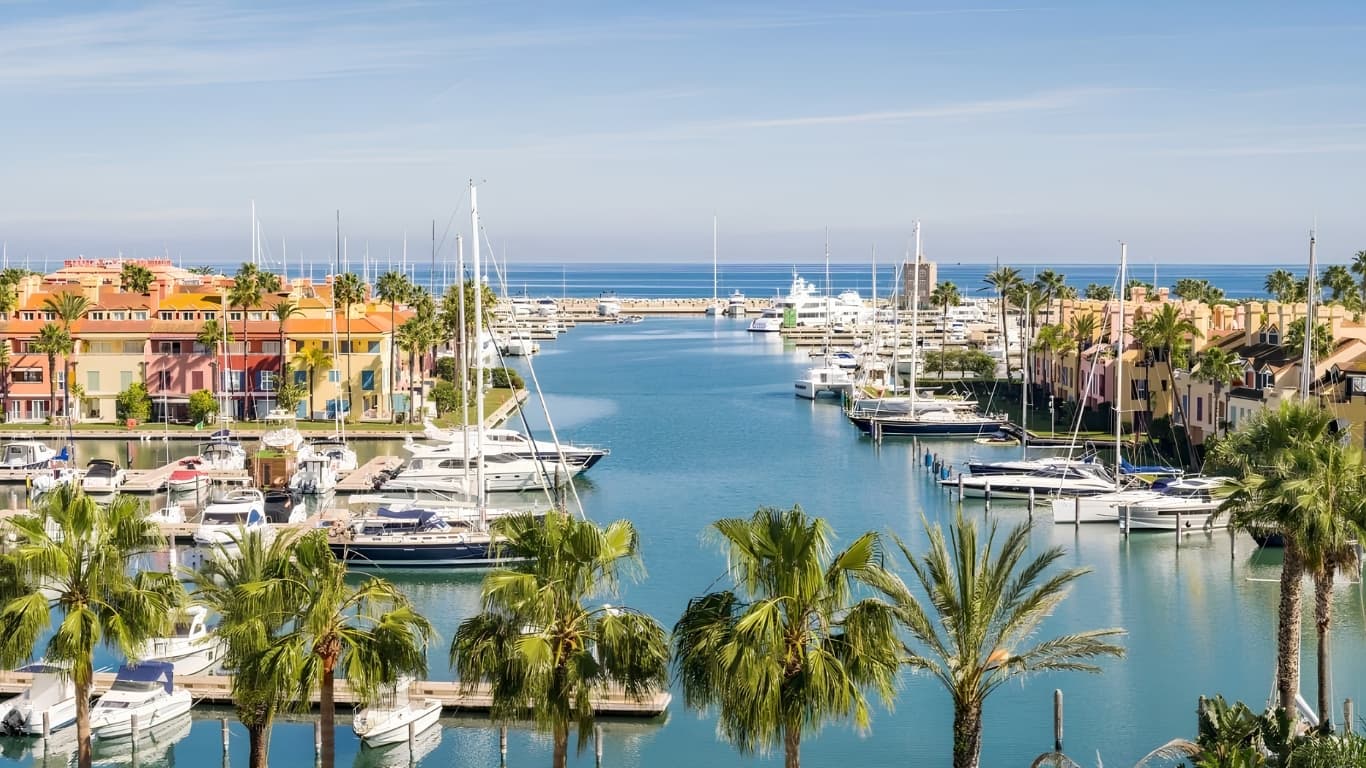
Spain's most expensive residential addresses are not in Marbella, and they are not on the islands. They sit twenty minutes east of Gibraltar, inside a 1962-planned community that has spent six decades politely refusing to behave like the Costa del Sol around it. Sotogrande is the quietest prime postcode in southern Spain, and on a per-square-metre basis at the top of the market, it is also the most expensive.
Knight Frank's recent Spain coverage has flagged Sotogrande's prime tier as the country's strongest residential outperformer over the last three cycles, with several agencies tracking double-digit price growth in Kings and Queens and La Reserva while broader Costa del Sol indices flattened. Engel & Völkers Sotogrande and Sotheby's International Realty both describe a buyer pool that has been quietly Northern European, increasingly Gulf, and almost never seen at the door of a Marbella nightclub.
What follows is our editorial read of the address: what Sotogrande actually is, the zones that matter, the sporting infrastructure that built the place, the buyer mix that keeps it discreet, and what we are seeing in the current prime market.

Key Takeaways & The 5Ws
- Sotogrande sits in San Roque, Cádiz province — twenty minutes from Marbella, thirty from Gibraltar's airport, ninety from Málaga — and was founded in 1962 as a planned, sporting-first residential community by Filipino-American developer Joseph McMicking.
- The trophy zones are Kings and Queens (the original 1960s low-density estates), La Reserva (newer contemporary villas), La Marina (canal-front), Sotogrande Costa and Sotogrande Alto, plus The Seven, the new Marriott Autograph residences cycle.
- Kings and Queens classic villas trade in the €5–15M band; top La Reserva trophies reach €15–25M and above; off-market sales of €25–35M have been reported through Engel & Völkers Sotogrande, Holmes Sotogrande, and Sotheby's International Realty.
- Real Club Valderrama (Ryder Cup 1997 host, regular DP World Tour stop), Real Club de Golf Sotogrande, La Reserva Club, Santa María Polo Club and the deep-water marina are not amenities — they are the structural reason the address exists.
- The buyer pool is traditionally British, then Belgian, Scandinavian, Spanish, German and Swiss, with a clear post-2022 lift in Middle Eastern and US families. Compared with Marbella, turnover is lower, hold periods are longer and the address stays out of the gossip cycle.
- Who is this for?
- UHNW buyers exploring Spain for a primary or second residence, Northern European and Gulf families with multi-decade horizons, and the polo and golf set who already orient their calendar around the August tournament window and the Valderrama event circuit.
- What is it?
- Our editorial profile of Sotogrande as a discreet Andalusian trophy market — the planning, the zones, the sporting infrastructure, the buyer mix and the current pricing band — read through the lens of the address itself rather than the wider Costa del Sol.
- When does it matter most?
- Now. The post-2022 buyer mix has visibly shifted toward Gulf and US families, the prime tier has outperformed broader Spanish coastal pricing over three cycles, and The Seven hotel and residences project has added a contemporary inventory layer the address had been missing.
- Where does it apply?
- Sotogrande's named zones inside the original planned community: Kings & Queens, La Reserva, La Marina, Sotogrande Costa, Sotogrande Alto and The Seven — all within the gated, sporting-led footprint south of San Roque.
- Why consider it?
- Because the address combines polo, championship golf, a deep-water marina and quietly outperforming prime pricing in a way Marbella, for all its visibility, simply does not.
What Sotogrande Actually Is
Sotogrande is not a town. It is a privately planned residential community of roughly 2,000 hectares, laid out in 1962 by Joseph McMicking, a Filipino-American developer who had spent the previous decade building the Makati district in Manila. He came to the southernmost stretch of Cádiz province looking for somewhere quieter than the Riviera and warmer than the Algarve, and bought a coastal estate that ran from the foothills of the Sierra Almenara down to the Mediterranean.
What he laid out next was unusual for the Spain of the early 1960s. Rather than build apartments along the beach, McMicking master-planned a low-density estate around two anchors that did not yet exist on this coast: a championship golf course, designed by Robert Trent Jones Sr. and opened in 1964, and a deep-water marina cut inland from the sea. The original residential lots — what later became Kings and Queens — were sold to a buyer pool that was disproportionately British, drawn by the aviation link through Gibraltar.
That planning DNA still defines the address. Sotogrande was conceived sport-first and residential-second. The streets curve around the courses, the marina sits at the heart of the lower estate, and the original villa plots are large enough that you can stand on most of them and see no neighbour. Six decades on, that is rarer in southern Spain than the price tags suggest.
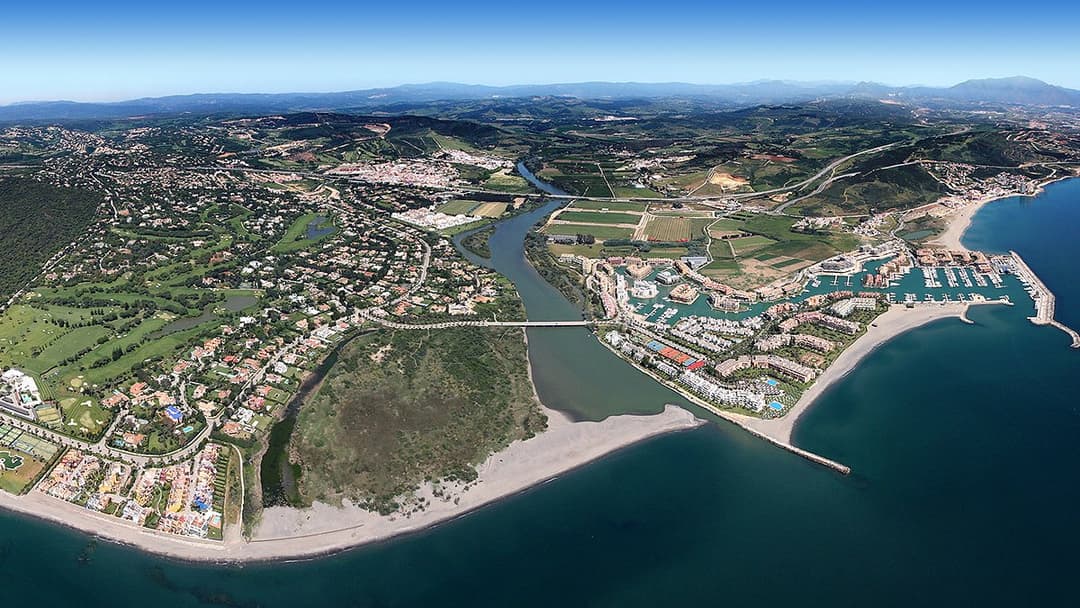
Photo: Sotogrande aerial view via Wikimedia Commons (CC BY-SA)
The Zones Kings And Queens La Reserva La Marina The Seven
Sotogrande is best read as a layer cake of named zones, each with its own inventory profile.
Kings and Queens is the original 1960s lower estate, the streets named for British and Spanish royalty. The plots are the largest in the community, the architecture is mid-century low-slung Andalusian, and the houses themselves often need work. Classic Kings and Queens villas listed at €5–15M trade with regularity through Holmes Sotogrande, Engel & Völkers and Noll Sotogrande; the headline trophies — the original McMicking-era estates on the largest plots — pass off-market in a band that Sotheby's International Realty has described privately as €25–35M.
La Reserva is the contemporary trophy zone, set on the higher ground above La Reserva Club Golf, with a tighter density of new-build villas in a clean modernist register. Standard La Reserva villas trade €3–8M; the top La Reserva trophy houses, several of which have been delivered as new-builds in the last three years, list at €15–25M and above.
La Marina is the canal-front zone — the network of inland waterways cut from the original marina, with houses opening directly onto private mooring. Sotogrande Costa and Sotogrande Alto fill out the older inventory between the two.
The newest layer is The Seven, the redeveloped luxury hotel and branded residences project at the entrance of the community, operated under the Marriott Autograph Collection. Residences there list in a €4–12M band and have given the address a contemporary inventory layer it had been missing, with buyers using them as a primary or as a lock-up-and-leave alongside an older Kings and Queens estate.
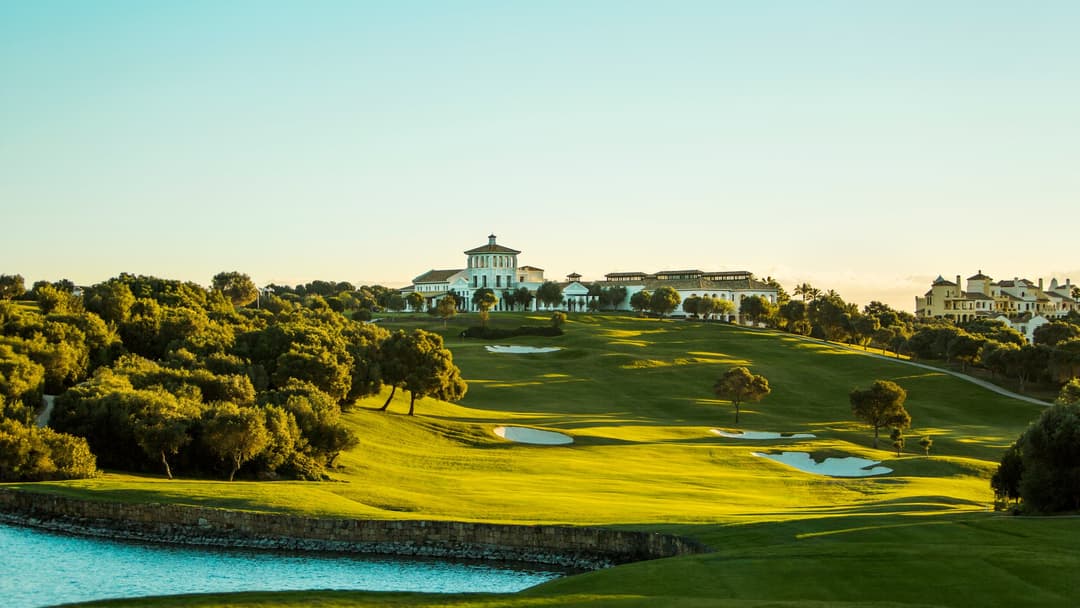
Photo: La Reserva at Sotogrande via Wikimedia Commons (CC BY-SA)
The Sporting Infrastructure That Defines The Address
Sotogrande does not have sporting amenities. It is sporting infrastructure with houses next to it.
Real Club Valderrama, opened in 1974 and remodelled by Robert Trent Jones Sr., hosted the 1997 Ryder Cup — the first ever played in continental Europe — and remains a regular stop on the DP World Tour. It is consistently ranked the leading golf course in continental Europe and is the single most cited reason serious golf buyers acquire here. Real Club de Golf Sotogrande, the original 1964 Trent Jones Sr. layout, sits across the community and remains the senior club. Almenara and La Reserva Club Golf complete the four-course constellation.
Santa María Polo Club hosts the International Polo Tournament every August, regularly listed among the top three high-goal tournaments in the world alongside Argentina's Palermo Open and the British high-goal season. The August polo window is to Sotogrande what August is to the Hamptons. Sotogrande Hippica covers the equestrian side of the calendar.
Puerto de Sotogrande, the marina cut inland in the original 1960s plan, holds deep-water berths capable of receiving yachts up to roughly 50 metres. The combination — championship golf, top-three polo, deep-water marina, all inside a single gated community — does not exist anywhere else in southern Europe.
For context on how foreign buyers are reading the wider Spanish market into 2026, our note on why foreign buyers are moving on Spanish property in 2026 sits alongside this profile.
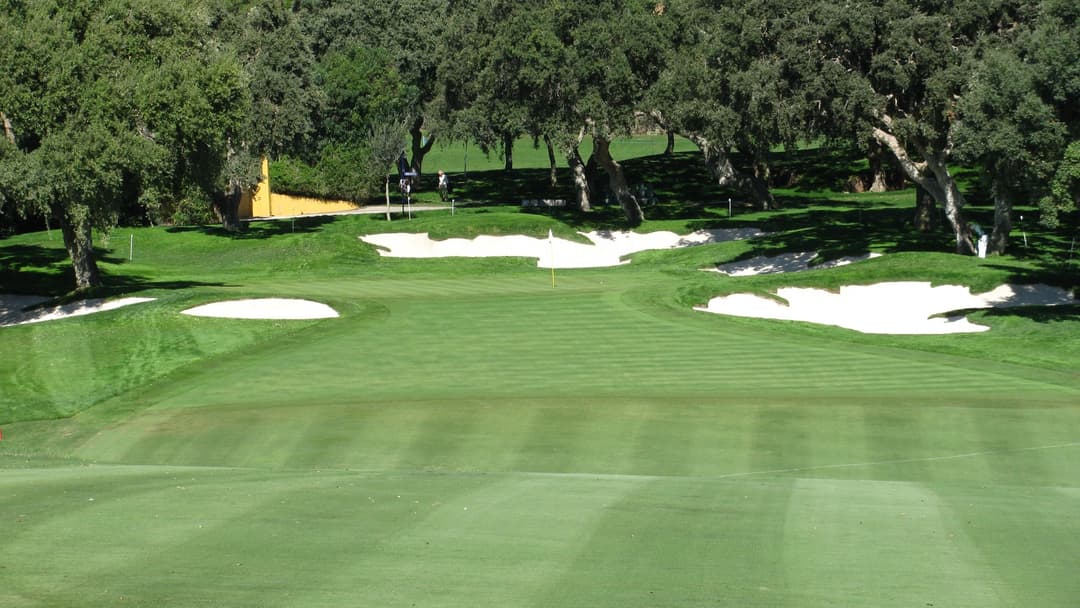
Photo: Real Club Valderrama via Wikimedia Commons (CC BY-SA)
The Buyer Mix And Why It Stays Discreet
The original Kings and Queens buyer pool was overwhelmingly British. McMicking's marketing in the mid-1960s ran through London, the Gibraltar air link made arrival straightforward, and the senior British buyer base from that first wave still owns through second and third generations. Belgian, Scandinavian and Spanish families layered in through the 1980s and 1990s, with German, Dutch and Swiss buyers steady through the 2000s.
The shift the agencies have flagged most clearly over the last three years is the post-2022 lift in Middle Eastern buyers — Gulf families primarily, often arriving via Marbella but settling in Sotogrande for the privacy — alongside a notable US presence that had been almost absent before the pandemic cycle. Holmes Sotogrande, Engel & Völkers Sotogrande and Lucas Fox Sotogrande all report longer due-diligence windows on these buyers and, once committed, longer hold periods than the wider Costa del Sol average.
The discretion is structural. Sotogrande does not have Marbella's club scene, does not have the Puerto Banús superyacht parade, does not have the paparazzi presence. The community is gated, the streets are quiet, and the addresses do not appear in tabloid coverage. That has held the buyer mix stable through cycles that have churned Marbella's pool repeatedly.
For wider framing on how long prime buyers actually stay once they buy, our piece on how long property buyers actually hold is the natural companion.
Reading The Current Prime Market
Knight Frank's Spain Wealth Report coverage places Sotogrande's prime tier ahead of the Costa del Sol average in price growth over the last three years, with La Reserva and Kings and Queens leading the index. Engel & Völkers Sotogrande and Sotheby's International Realty have been consistent in their public commentary: stock at the top is tight, hold periods are long, and the genuine trophy inventory rarely reaches the open market.
The current pricing benchmarks read as follows. Kings and Queens classic villas: €5–15M for the run of the zone, with the original largest-plot McMicking-era estates passing off-market in a €25–35M band. La Reserva contemporary villas: €3–8M for standard new-build, €15–25M and above for the headline trophies. La Marina canal-front: similar to La Reserva on a per-square-metre basis, with a premium for direct mooring. The Seven residences: €4–12M, with a small number of penthouses above that band. Sotogrande Costa and Sotogrande Alto fill in the broader inventory underneath.
Our read for buyers entering the address now: the contemporary layer that The Seven and the newer La Reserva villas have added has not displaced the original Kings and Queens market — it has segmented it. Buyers wanting turnkey contemporary acquire at La Reserva or The Seven; buyers wanting the original low-density 1960s plot acquire in Kings and Queens and accept a renovation cycle. The off-market band sits above both, and remains the genuine top of the Spanish residential market.
Sotogrande has spent sixty years being the quietest serious address on the Costa del Sol. The buyer pool has rotated several times; the planning, the courses, the marina and the discretion have not. That is the address's edge, and it is why we expect the prime tier here to continue setting the benchmark for Spanish trophy property well into the next cycle.
Frequently Asked Questions
- Where is Sotogrande and what makes it different from Marbella?
- Sotogrande sits in San Roque, Cádiz province, about twenty minutes east of Marbella, thirty from Gibraltar's airport and ninety from Málaga. Unlike Marbella, it is a single privately planned community founded in 1962 by Joseph McMicking, with no public town centre, no club scene and a sporting-first DNA built around championship golf, top-tier polo and a deep-water marina. The result is lower turnover, longer hold periods and a markedly more discreet buyer profile than the wider Costa del Sol.
- Which zones inside Sotogrande are the trophy addresses?
- Kings and Queens — the original 1960s low-density estate with the largest plots — sits at the top of the heritage market, with classic villas in a €5–15M band and original McMicking-era estates passing off-market in a €25–35M band. La Reserva is the contemporary trophy zone, with standard new-build villas at €3–8M and top trophies at €15–25M and above. La Marina offers canal-front houses with private mooring, while The Seven, the new Marriott Autograph residences cycle, lists in a €4–12M band.
- Who is buying in Sotogrande in 2026?
- The historic base is British, with a senior layer of Belgian, Scandinavian, Spanish, German and Swiss families holding through generations. The visible shift over the last three years is a lift in Gulf and US buyers, flagged consistently by Engel & Völkers Sotogrande, Sotheby's International Realty, Holmes Sotogrande and Lucas Fox Sotogrande. The buyer profile remains markedly more discreet than Marbella's, with longer due-diligence windows and longer hold periods than the Costa del Sol average.
- What does prime Sotogrande property cost?
- Kings and Queens classic villas typically trade in a €5–15M band, with original largest-plot estates passing off-market at €25–35M. La Reserva contemporary villas list at €3–8M for standard new-build and €15–25M and above for trophy houses. The Seven residences are listed in a €4–12M band, while La Marina canal-front houses price in line with La Reserva on a per-square-metre basis, with a premium for direct mooring. Sotogrande Costa and Sotogrande Alto fill out the inventory beneath.

Savvas Agathangelou
Savvas Agathangelou co-founded The Luxury Playbook and has spent years reporting from the prime postcodes the magazine covers — Mayfair, Knightsbridge, the Athens Riviera, Dubai's Palm crescents, and the southern Mediterranean coastlines where the world's wealthy keep coming back. His background is in international hospitality, and that frame shapes how he writes about property: the developer's choices, the architect's signature, the agency's bench of named brokers, the building's service standard once the buyer moves in. He files developer spotlights, agency profiles, and the seasonal "Properties That Defined" listicles, and he hosts the magazine's founder-and-leadership interviews on the Voices side.



.jpg)