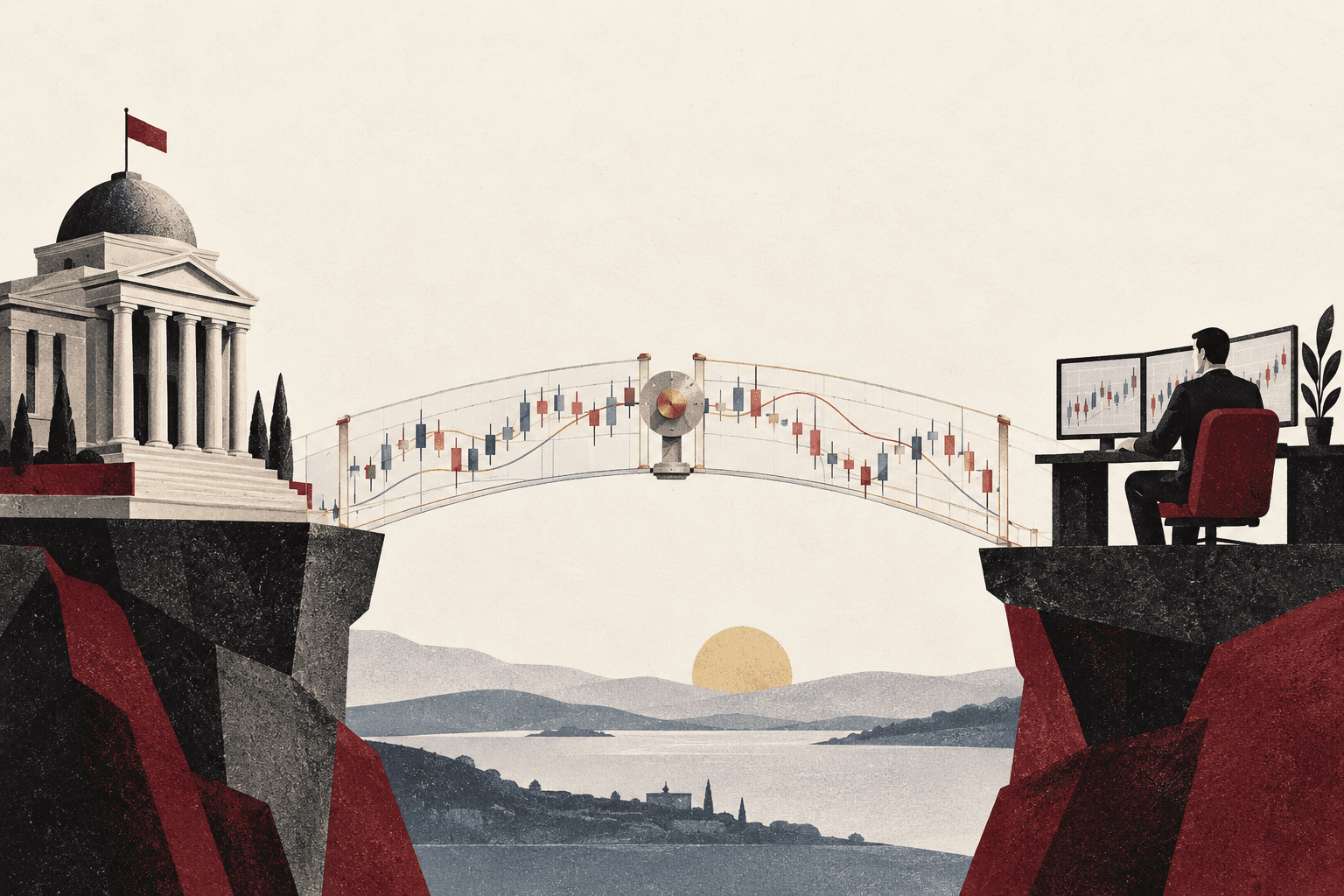
Did you know Greece posted an average annual growth of 7.7% between 1950 and 1973? That put it second only to Japan on the global stage. When you consider what Greece had just been through, that number is extraordinary.
Per capita income had collapsed from 62% of France’s level in 1938 to around 40% by 1949, driven down by the devastation of World War II and the brutal Greek Civil War that followed.
Yet by the 1950s, Greece was regularly posting growth rates above 10%, putting it in the same conversation as today’s fastest-moving tiger economies. Several forces came together to drive that resurgence. Marshall Plan aid played a major role, as did sharp foreign policy choices and a wave of social and cultural shifts that reshaped the country from the ground up.
Massive infrastructure builds and bold reforms led by figures like Prime Minister Konstantinos Karamanlis added further fuel. Yes, rapid growth widened the wealth gap. But Greece’s GDP still surged past 10% through much of the 1950s and 1960s.
And even when headwinds hit later, the broader story held firm. Greece recorded GDP growth in 54 of the 60 years following the conflict. That kind of consistency is hard to argue with.
- Greek equities have produced one of the strongest multi-year runs in European markets after a decade of post-crisis underperformance.
- The rally has been underwritten by fiscal stabilisation, sovereign credit upgrades and the return of foreign institutional inflows.
- Banking sector recapitalisation has anchored the index recovery, with credit growth re-accelerating after a long deleveraging cycle.
- Tourism, energy transition and shipping continue to drive the underlying earnings story behind the index move.
- Valuations remain reasonable against developed-market peers, though selective stock picking is increasingly important from here.
- The risk case centres on global rates, eurozone politics and the speed of further structural reform inside the Greek economy.
- Who is this for?
- European equity investors, emerging-Europe specialists and HNW allocators rotating into recovery markets after the post-crisis decade.
- What is happening?
- We are examining the drivers behind the Greek equity market’s strong multi-year performance and the durability of the rebound.
- When did this emerge?
- The current up-cycle has unfolded across the post-pandemic recovery, accelerated by Greece’s return to investment-grade status.
- Where is this happening?
- The story is centred on Athens-listed equities, with the macro tailwinds reaching the broader Greek and southern European economy.
- Why does it matter?
- Greece offers one of the cleanest case studies of a post-crisis market recovery and a useful template for evaluating future turnaround opportunities.
The Historical Context of Greece’s Economic Growth
We cross-reference the Greek growth narrative against country reports from the IMF and the OECD, which both flag the structural reforms underpinning the post-bailout recovery. Reading the two side by side gives us a tighter sense of momentum than any single dataset would.
Sovereign ratings from S&P Global and Moody's provide a useful real-time gauge of how international investors are pricing Greece's risk profile. We watch their commentary closely whenever we evaluate a Hellenic position.
When World War II ended, Greece was in rough shape. Infrastructure was shattered, the economy was battered, and income per capita had dropped from 62% of France’s in 1938 to around 40% by 1949. Getting back on track was going to take more than goodwill.
It demanded a serious, sustained recovery effort.
Post-World War II Recovery
The recovery Greece pulled off between 1950 and 1973 was genuinely transformative. The economy averaged 7.7% annual growth across that period, trailing only Japan worldwide. That performance didn’t come from luck.
It was built on Marshall Plan funding, a strategic devaluation of the drachma, and a deliberate push to attract foreign capital. Together, those moves laid the groundwork for the industrial expansion that defined the 1960s.
Those early gains set the tone for everything that followed. Industrial output surged, confidence grew, and Greece began to look less like a war-damaged economy and more like a country with serious momentum.
The Greek Civil War and Early Economic Challenges
Just as the dust settled from World War II, the Greek Civil War arrived to compound the damage. Recovery became even harder, and the path forward more complex. Still, Greece pushed through a series of policy shifts and social reforms in the post-civil war years.
The Marshall Plan was central to that effort, delivering the grants and loans needed to start rebuilding in earnest.
Between 1953 and 1973, Greece experienced what many economists now call an economic miracle, with growth rates frequently clearing the 10% mark. That said, the boom didn’t reach everyone equally. Rising economic disparity fueled political divisions, which in turn pushed the conversation toward social reform throughout the 1960s.
That whole journey, from postwar wreckage to double-digit growth, is one of the more compelling chapters in modern economic history. It shows you what the right mix of policy, external support, and national resolve can actually achieve when the conditions align. Greece’s recovery wasn’t just about money.
It was about strategy, and it worked.

The Role of the Marshall Plan in Greece’s Economic Miracle
The Marshall Plan’s influence on Greece was central to the country’s postwar comeback. Without that critical injection of capital, the scale and speed of Greece’s reconstruction simply wouldn’t have been possible. It gave the country the financial oxygen it needed to breathe again.
Capital Influx and Reconstruction Initiatives
Marshall Plan funding came in at exactly the right moment. Between 1950 and 1973, Greece’s economy grew at an annual average of 7.7%, second only to Japan. Industrial production was expanding at around 10% per year through the 1960s.
That capital pushed major infrastructure projects forward and supercharged sectors like chemicals and tourism, while also driving meaningful urban renewal across the country.
Impact on Infrastructure and Development
The infrastructure transformation Marshall Plan funding enabled was on a different level. By 1973, Greece had compounded annual GDP growth of 7.7% over more than two decades. Exports of goods and services grew by 12.6% during the same stretch.
Inflation was a persistent issue, peaking near 20%, but the reforms of the 1990s eventually brought that under control and stabilized the broader economy.
From upgraded roads to modernized ports to entire new industrial sectors, the Plan’s contributions were foundational. Paired with smart economic policy reforms, those investments set the stage for what became known as the Greek economic miracle, a period that produced some of the highest GDP growth rates in all of Europe, with peak annual rates touching around 7%.
Modern Revival: Greece’s Path to Economic Resurgence
Greece’s transformation over recent years has been striking. The country that was synonymous with financial crisis just over a decade ago is now one of the eurozone’s stronger performers. GDP growth of 2.4% projected for 2024 beat the EU’s own forecast of 1.4%, and that gap tells you something important about the direction of travel and the renewed confidence building around the Greek economy.
| Indicators | 2023 | 2024 | 2025 |
|---|---|---|---|
| GDP growth (%, yoy) | 2.0 | 2.2 | 2.3 |
| Inflation (%, yoy) | 4.2 | 2.8 | 2.1 |
| Unemployment (%) | 11.1 | 10.3 | 9.7 |
| General government balance (% of GDP) | -1.6 | -1.2 | -0.8 |
| Gross public debt (% of GDP) | 161.9 | 153.9 | 149.3 |
| Current account balance (% of GDP) | -5.8 | -5.2 | -4.8 |
After losing a staggering share of its GDP, Greece exited its third bailout program in 2018 having absorbed €289 billion in financial aid. That exit marked a turning point. Unemployment dropped from a peak of 27.8% down to 16.6%, a meaningful shift that reflected genuine structural improvement rather than just headline optimism.
Financial markets noticed. Greece’s 10-year bond yield fell to just 0.9% in February 2019, a signal that investor confidence had returned in a real way. The European Commission’s growth estimate of 2.2% for 2024 added more weight to that positive read on the country’s trajectory.
The 2019 election brought in a new government that moved quickly on reform. Tax cuts, deregulation, and a business-friendly agenda under Prime Minister Mitsotakis triggered a wave of positive economic momentum. Foreign investment followed, and Greece’s reputation as a serious destination for capital began to take hold in a way it hadn’t before.
Greece’s shipping industry has been a quiet constant through all of this, adapting to international standards like the IMO2020 regulations while keeping its place as a core pillar of the national economy. And when you step back and look at the full picture, what you see is a country that has moved with purpose from crisis to comeback. Every sector has played a part, and the cumulative result is a story worth paying attention to.
Key Policy Reforms Fueling Market Confidence in Greece
Greece has made real strides in reshaping its policy environment over recent years. The changes have been deliberate, and the market reaction has been telling. Regulatory processes are leaner, the business climate is cleaner, and both domestic and international operators are finding Greece a far more appealing place to work and invest.
Government Initiatives and Fiscal Resilience
The Greek government has pushed forward a serious agenda around fiscal resilience. That work has included engagement with the OECD’s Regulatory Reform program, which assessed Greece’s framework and called for sharper competition policy and greater market openness. Greece took those recommendations seriously.
The result has been a measurable reduction in red tape for businesses, with licensing and customs procedures streamlined in ways that actually make a difference on the ground. For global investors looking for an entry point into the region, that shift matters.
Those government-led initiatives have done more than tidy up the rulebook. They’ve built a foundation of economic stability and transparency that foreign direct investment tends to follow. And follow it has.
Standardization efforts have pulled major multinationals into Greece across sectors like telecommunications, energy, and automotive. That kind of corporate interest doesn’t just generate activity in the short term. It anchors long-term growth and signals to other investors that the environment is worth trusting.
Investment Opportunities in Greece
Coverage from Reuters and the Financial Times consistently maps the deal flow returning to Athens. For category-wide context we keep an eye on our own stock market investing coverage.
Greece is in a sweet spot right now for investors with an eye for timing. Tourism is thriving, real estate across key Greek markets is gaining serious momentum, and government policy is actively courting foreign capital. The combination makes the country’s investment scene more compelling than it has been in years.
Tourism and Real Estate Boom
Tourism has become one of Greece’s most powerful economic engines, generating jobs directly and indirectly across the country. Visitor spending flows into the broader economy and lifts adjacent sectors, real estate being the most visible. Construction activity is up, with new developments targeting everything from boutique tourist accommodation to premium commercial space, all of it reflecting strong investor conviction in Greece’s near-term outlook.
Attracting Multinational Companies
Greece’s push to bring in major global corporations is gaining traction. Companies like Microsoft and Pfizer have put real money into the country, drawn by its business-friendly regulatory environment, strategic location between Europe, the Middle East, and North Africa, and a workforce with genuine depth and capability. These investments don’t just add economic weight.
They seed a culture of innovation and job creation that compounds over time.
Economic Indicators Signaling Greece’s Rebound
When you want to understand where a country’s economy is genuinely headed, you look past the headlines and into the data. Greece’s key economic indicators right now tell a clear story, and that story is one of sustained recovery with real momentum behind it.
GDP Growth and Employment Trends
Greece’s GDP growth has been a standout story. The economy is expanding at roughly twice the eurozone’s average rate, and that gap has been consistent enough to be meaningful rather than a statistical blip. Unemployment has dropped to its lowest point in over a decade.
Given that Greece saw its GDP fall by 26% between 2008 and 2013, the scale of the recovery deserves more attention than it typically gets.
The crisis years hammered jobs, wages, and household spending power across the board. But the recovery since then has been real and broad-based. Employment trends are pointing in the right direction, consumer confidence is rebuilding, and economic activity is picking up in ways that reinforce themselves over time.
Stock Market Performance in Comparative Perspective
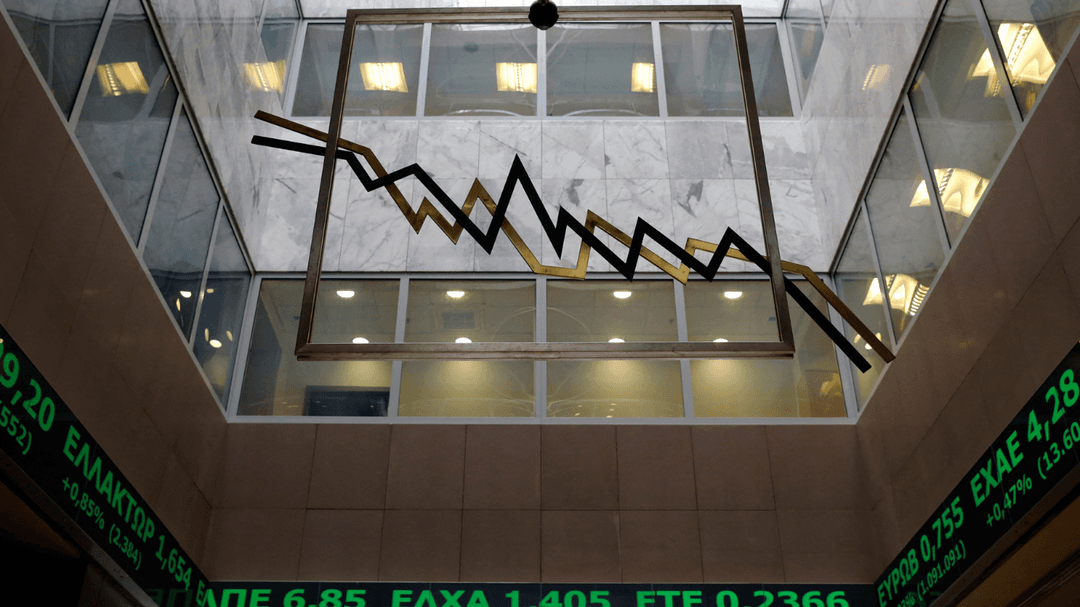
Greece’s stock market revival is one of the more compelling investment stories in Europe right now. The Athens Stock Exchange has put up strong numbers, driven by an improved economic outlook and credit rating upgrades that have changed how international money views Greek assets. Put it next to most of its European peers and the performance stands out clearly.
You can read more on how the Greek stock market has been beating expectations.
| Economic Indicators | 2008-2013 | 2014-2024 |
|---|---|---|
| GDP Growth | -26% | Twice eurozone average |
| Unemployment Rate | Soured | Lowest in over a decade |
| Stock Market Performance | Struggled | Robust growth |
Strong stock market performance does something beyond just generating returns. It rebuilds the investor confidence that a crisis destroys. Greece’s government has followed through on enough of its reform commitments that the negative trends from the crisis years are fading.
What’s replacing them is a track record of stability and a forward outlook that more investors are taking seriously.
Greece’s Debt Crisis Turnaround and Market Recovery
Greece’s journey from near economic collapse to genuine market recovery is worth understanding in detail if you’re thinking about the country as an investment destination. At the height of the crisis, unemployment hit 27.8% and GDP was in freefall. Three successive bailout programs totaling €289 billion provided the financial floor.
Then Prime Minister Kyriakos Mitsotakis came in with a clear agenda, tax cuts, deregulation, and structural reform, and started building on it.
The recovery signals came through clearly after the third bailout wrapped up in 2018. GDP growth turned positive by 2017 and outpaced the EU average in 2019 with a 2.2% increase. Greece’s 10-year bond yield dropped to 0.9%, a number that would have seemed unthinkable a few years earlier and one that reflects a fundamental repricing of Greek risk by international markets.
One of the cleaner milestones in the recovery story was the removal of capital controls in 2019. That single step signaled a return to normalcy that had a psychological impact well beyond its technical implications. Add the shipping industry’s compliance with IMO2020 environmental regulations and you start to see a country aligning itself with international standards across the board.
Unemployment continued its descent toward 16.6%, and market confidence followed.
Consumer sentiment has shifted alongside those hard numbers. Foreign investment is flowing in at a higher rate, and the banking sector restructuring has created a lending environment that actually supports growth rather than constraining it. When you look at the full sweep of indicators, the shift from financial turmoil to a stable and growing economy is hard to dispute.
| Indicator | Pre-Turnaround | Post-Turnaround |
|---|---|---|
| GDP Growth | Negative | 2.2% (2019) |
| Unemployment Rate | 27.8% | 16.6% |
| EU Average GDP Growth | 1.4% | 2.4% |
| 10-Year Bond Yield | Above 4% | 0.9% |
The Impact of Eurozone Financial Resurgence on Greece
Greece hasn’t been recovering in isolation. The broader Eurozone financial recovery has created tailwinds that Greece has been well positioned to capture. The country posted 2.0% GDP growth in 2023, with a further 2.2% projected for 2024, both figures ahead of the eurozone average.
That consistent outperformance is a meaningful signal for anyone tracking the region.
Recovery Funds and Economic Stability
Recovery funds directed at Greece are expected to top €55 billion by 2027, and that capital is functioning as a primary engine for sustainable long-term growth. Those funds have been instrumental in pulling Greece’s public debt below 100% of GDP, a threshold that carries real significance for sovereign credit assessments. Government forecasts pointed toward a further reduction to 97.9% of GDP by 2023, alongside a primary surplus of 0.7% of GDP.
Unemployment has come down to 10%, a level Greece hadn’t seen since 2011. And the improvement hasn’t been evenly spread in a bad way. Strong employment growth among young people and women has been a particularly encouraging feature of the recovery, pointing to a broader base of economic participation than Greece has had in years.
Resolution of Banking Sector Challenges
Fixing Greece’s banking sector was never going to be optional. A healthy economy needs a functional banking system behind it, and the work done to clean up balance sheets and strengthen the regulatory framework has paid off. Greek banks are now better positioned to support growth through increased lending and investment activity, which feeds directly back into the real economy.
Challenges around poverty and inequality are real and ongoing, but the combination of recovery fund deployment and banking sector reform has put Greece on a trajectory that looks genuinely durable. For investors paying attention, that’s a foundation worth building on. You can explore popular locations for international property investments to see how Greece compares against other markets competing for your capital right now.
We last reviewed this analysis in May 2026.


Stefanos Moschopoulos
Stefanos Moschopoulos founded The Luxury Playbook in Athens and has spent the better part of a decade following the auction calendar, the en primeur releases, and the watchmakers, gallerists, and shipyards the magazine covers. He writes the field guides and listicles that anchor the Connoisseur section — pieces built on Phillips and Christie's results, Liv-ex movements, and conversations with collectors he has met across Geneva, Bordeaux, Basel, and Monaco. His own collecting habits sit closer to watches and wine than art, and it shows in the level of detail in the magazine's coverage of those categories. Under his direction, The Luxury Playbook now publishes long-form field guides, market-defining year-end listicles, and the Voices interview series with the founders behind the houses and the brands.