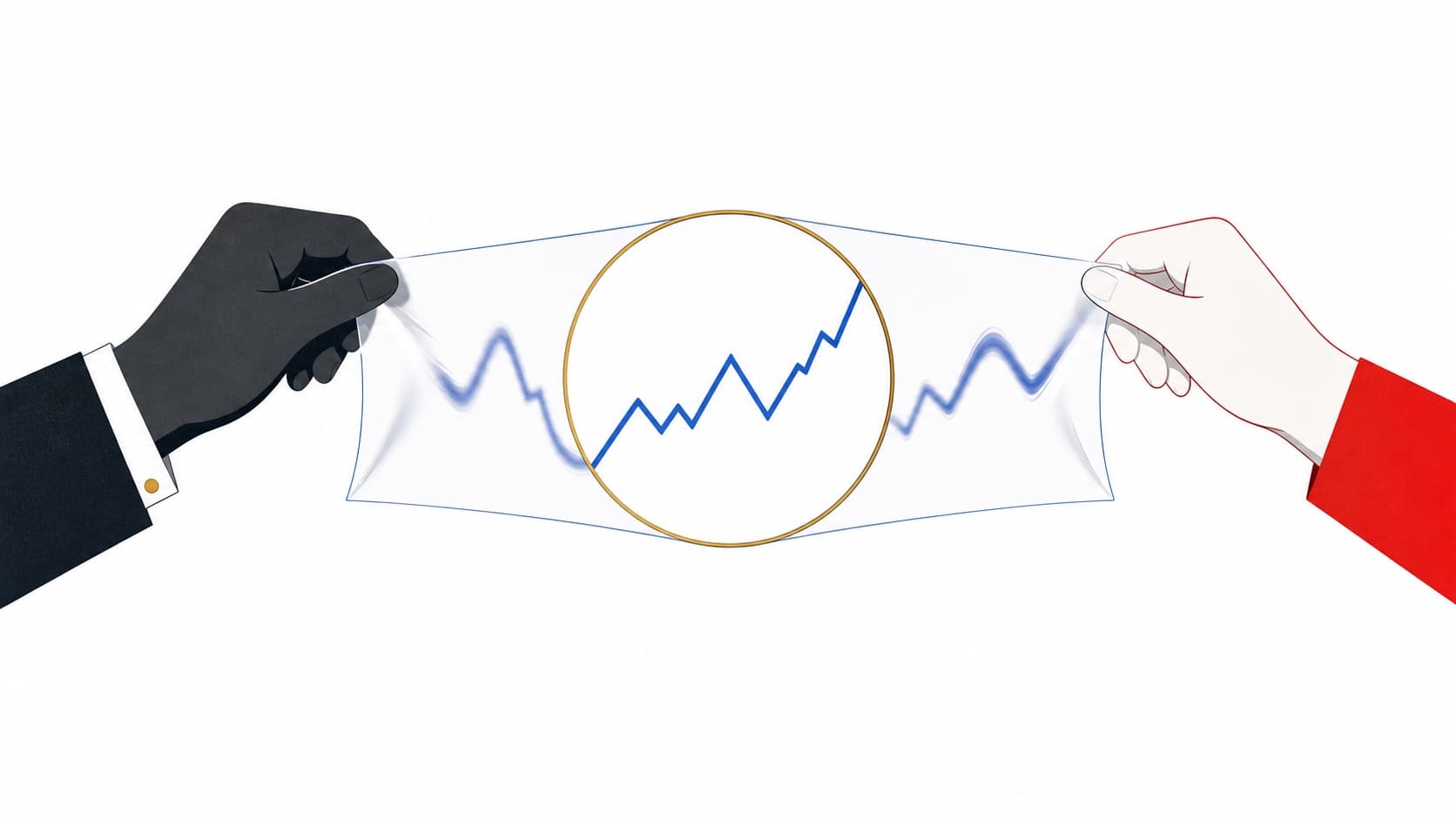

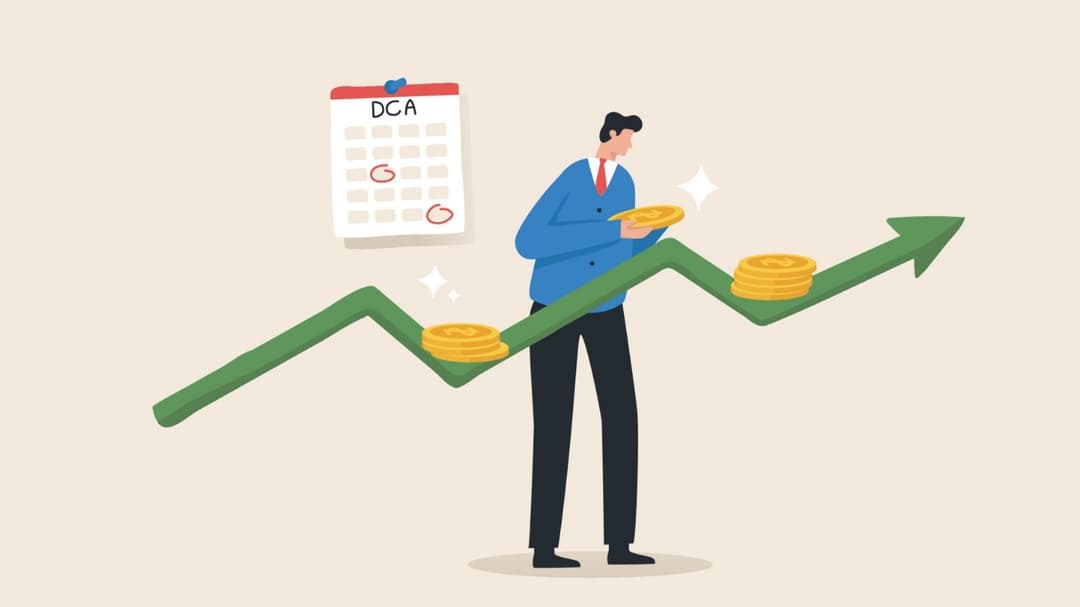
Dollar-cost averaging, or DCA, is one of the most reliable ways to build a serious portfolio without losing sleep over market swings. The idea is simple. You invest a fixed amount into a chosen asset at regular intervals, regardless of what the price is doing.
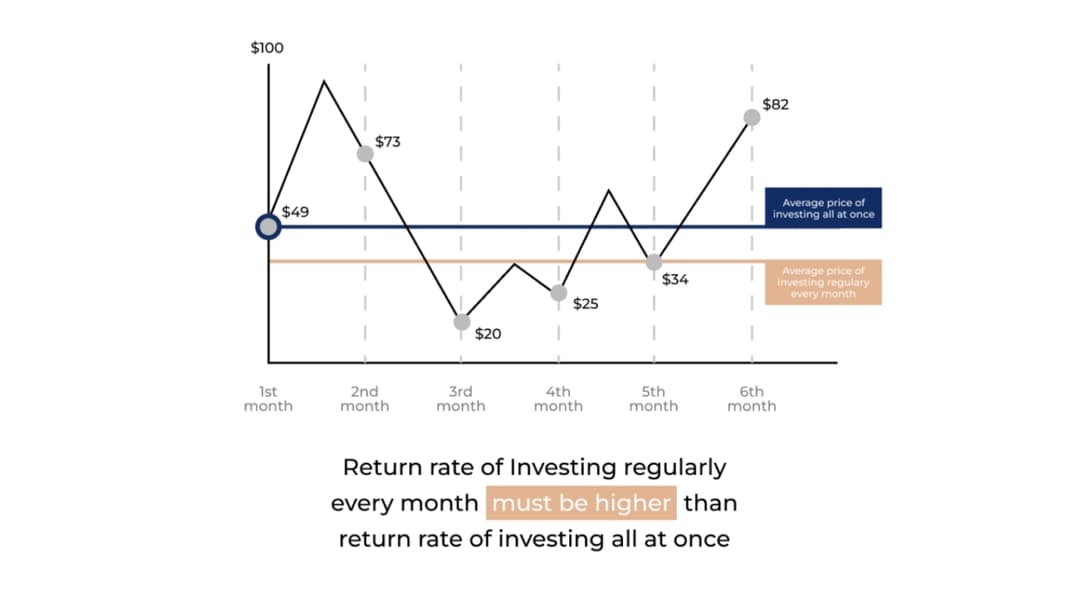
When markets are climbing, you buy fewer shares. When they dip, your money stretches further and picks up more. The result is a smoother average cost over time, and far less exposure to the kind of short-term volatility that rattles even seasoned investors.
Whether you are just starting out or you have been allocating capital for years, DCA takes the guesswork out of timing and turns investing into a disciplined, automatic habit.
The real power of this approach shows up in your average cost per share. Because you are buying consistently through both up and down markets, you naturally accumulate more shares when prices are low and fewer when they are high. That discipline tends to pay off over time. Mutual funds and ETFs are ideal vehicles for this strategy, since they offer built-in diversification and easy automation. Research from Charles Schwab has shown that consistent, scheduled investing through DCA frequently outperforms attempts to time the market.
For long-term wealth accumulation, that consistency is hard to beat.
- Dollar-cost averaging means investing fixed amounts at regular intervals regardless of market conditions, smoothing entry prices across full market cycles.
- The approach reduces the impact of poorly timed lump-sum investments and removes the cognitive burden of trying to identify market tops and bottoms.
- It tends to outperform lump-sum investing when markets are choppy or declining but typically underperforms during sustained bull markets historically.
- Automating contributions to retirement accounts, brokerage accounts and ETF portfolios is the most reliable way to apply the strategy with real discipline.
- Combining dollar-cost averaging with broad-market index funds historically captures most of the long-term equity premium without requiring market timing skill.
- The strategy works best when paired with clear written rules and regular rebalancing, turning consistent saving into a powerful compounding machine over decades.
- Who is this for?
- Long-term retail investors and savers building wealth steadily over time who want a disciplined approach that removes the emotional difficulty of timing markets correctly.
- What is happening?
- A practical guide to dollar-cost averaging, covering the mechanics, the behavioural benefits and the situations where this approach genuinely improves outcomes versus alternative strategies.
- When did this emerge?
- Most useful when investors are building portfolios from regular income streams, particularly during volatile periods when single lump-sum investments feel emotionally difficult.
- Where is this happening?
- Applicable across global equity and bond markets, with the cheapest implementation available through low-cost index ETFs and mutual funds on US and European platforms.
- Why does it matter?
- Dollar-cost averaging neutralises one of the largest sources of investor underperformance, which is consistently buying high and selling low based on emotional reactions to recent price action.
What Is Dollar-Cost Averaging
The dollar-cost-averaging framework is documented in detail by the major asset managers. Vanguard's research team has published long-running studies comparing DCA against lump-sum investing across multi-decade horizons, and Fidelity covers the behavioural advantages from the investor-coaching angle.
The regulator perspective rounds out the picture. The SEC's investor-education materials highlight DCA as one of the foundational disciplines for new investors, and Morningstar's behavioural-finance research shows how systematic investing reduces the gap between fund returns and investor returns.
Dollar-cost averaging means committing to invest a fixed sum at regular intervals, no matter what the market is doing that week or month. When prices drop, your fixed contribution buys more shares. When prices rise, it buys fewer.
Over time, this evens out your cost basis and takes emotion almost entirely out of the equation. You are not chasing peaks or panicking at dips. You are simply building, steadily and deliberately, across assets like mutual funds, ETFs, and diversified index products.
Key Benefits of Dollar-Cost Averaging
The main advantages of dollar-cost averaging are worth understanding before you commit to the strategy.
- Risk Management: DCA dilutes the risk of investing big sums at once by extending the buy-in over time.
- Consistency: Making investments at regular intervals fosters discipline, minimizing emotional investment choices.
- Accessibility: It allows investors to begin with modest sums, facilitating steady investment rhythm.
- Automation: Numerous platforms provide automatic investing, making it easier to stick to the strategy.
How Does Dollar-Cost Averaging Work?
The mechanics are straightforward. Instead of deploying a lump sum all at once, you spread your investment across a set timeframe. Picture putting $10,000 to work in $1,000 monthly increments over ten months. Some months your $1,000 buys more shares, some months fewer, depending on where prices sit. But across the full period, your average cost per share will almost always come out lower than if you had tried to pick the perfect entry point. It is a clean, rational approach to managing portfolio risk over the long term.
Consider an example where an investor divides $10,000 into four equal portions in a volatile market.
| Month | Investment Amount | Price Per Share | Shares Purchased |
|---|---|---|---|
| January | $2,500 | $50 | 50 |
| April | $2,500 | $40 | 62.5 |
| July | $2,500 | $30 | 83.33 |
| October | $2,500 | $50 | 50 |
A lump-sum investment made at the wrong moment can leave you holding fewer shares at an inflated price. DCA smooths that out. You end up with a well-rounded position built across different price levels, and you spend far less energy worrying about short-term noise.
That peace of mind is part of what makes the strategy so effective.
Key Considerations for Investing with Dollar-Cost Averaging (DCA)
For deeper context, the breakdown in how DCA reinforces a long-term investing approach is worth reading alongside this analysis.
Discipline is Essential
DCA only works if you stick to it. The entire premise rests on investing consistently, no matter what the market is doing. That sounds easy until prices start falling and every headline is warning you to pull back.
Many investors feel the urge to stop contributing when markets drop, which is the exact opposite of what the strategy calls for. Pausing or stopping your regular investments during a downturn quietly destroys the edge DCA gives you.
The same logic applies on the upside. When markets are running hot, you might feel the pull to throw more money in and ride the wave. But doing that means buying more shares at elevated prices, which pushes your average cost higher and undermines the whole point of spreading out your purchases over time.
Selecting the Right Investment is Crucial
DCA simplifies the process of investing, but it does not fix a bad investment choice. If you are pouring money into a consistently underperforming asset, doing it on a schedule just means losing money with more discipline. Most investors who use DCA pair it with a passive strategy built around broad-market index funds.
These products cut down on the research burden and keep costs low, which is exactly what you want when you are committing to a long-term, hands-off approach. That said, some thought still needs to go into what you are actually buying.
Mind the Transaction Costs
Frequent investing means frequent transactions, and those can quietly eat into your returns if you are not careful. Each trade has the potential to carry a fee, and over months and years those costs add up. The fix is simple.
Focus on low-cost, passively managed index funds. Their fee structures are lean compared to actively managed alternatives, and that difference compounds in your favor over time. It is a detail many investors overlook early on, but it matters more than most people realize.
Additional Considerations
- Long-Term Commitment: DCA works best over a long time horizon. It’s designed to reduce the impact of short-term market volatility by averaging out the cost of investments over time. This makes it particularly suitable for retirement accounts or other long-term financial goals.
- Volatility and DCA: DCA can be particularly effective in volatile markets. By investing a fixed amount regularly, you buy more shares when prices are low and fewer when prices are high. This can potentially lower your average cost per share over time.
- Automated Investments: Many brokerage platforms offer the option to automate your DCA strategy. This ensures that you remain disciplined, as the investments are made automatically, reducing the temptation to time the market.
How to Dollar-Cost Average
Step 1: Choose Your Investment
Your first move is picking the right vehicle for your DCA strategy. Individual stocks, ETFs, and mutual funds each come with their own risk and reward profiles, so the choice matters.
Individual stocks tend to be more volatile than fund-based options. Prices can move sharply in short windows, which cuts both ways. On top of that, not every brokerage lets you automate stock purchases, so you may need to manage those trades manually.
If you go this route, plan to stay closely involved and be comfortable with price swings that can be significant.
ETFs and mutual funds are generally a better fit for DCA because they offer built-in diversification across hundreds of companies and sectors. A classic choice is a fund that tracks the S&P 500, giving you broad exposure to the US economy in one clean position. Products like the Vanguard 500 Index Fund or the SPDR S&P 500 ETF Trust have long track records and low fees, making them a natural starting point for investors who want steady, long-term growth without overcomplicating things.
Step 2: Contact Your Broker
Once you know what you want to invest in, find out whether your broker supports automatic purchase plans for that specific asset.
For mutual funds, brokers like Fidelity and Vanguard make it easy to set up automatic contributions on a recurring schedule. You define the amount and the frequency, and the rest runs on autopilot. No manual trades, no decisions to second-guess.
Stocks and ETFs are a slightly different story. Some brokers do not support automatic purchases for these asset types, so it is worth checking before you commit. If your current broker falls short, opening a second account with one that does is a straightforward fix. Understanding how brokerage accounts work before you set this up can save you time and frustration.
Platforms like Charles Schwab offer solid automation tools and a wide range of investment options.
Step 3: Determine Your Investment Amount
With your account set up and ready for automatic trading, the next question is how much to commit on a regular basis.
Start by taking a clear look at your monthly budget and identifying what you can genuinely afford to put away. Before you allocate anything to investments, make sure you have an emergency fund in place. The money you invest through DCA should be capital you will not need to touch for at least three to five years.
That time buffer is what allows your portfolio to ride out short-term volatility and recover from dips without you being forced to sell at the wrong moment.
Starting small is no longer the obstacle it once was. Most major brokers have eliminated commissions on stock and ETF trades, which means even modest contributions work in your favor from day one. Compound growth does the heavy lifting over time, and getting started matters more than the size of your initial amount.
Step 4: Schedule Your Automatic Plan
The final step is setting the whole thing in motion through your brokerage account.
To get started, pull up the ticker symbol of your chosen stock or fund, enter the amount you want to invest, and select how often you want the trade to execute, whether that is weekly, bi-weekly, or monthly. The exact steps vary by platform, but the core inputs are the same across the board.
If your investment pays dividends, take a close look at enrolling in a dividend reinvestment plan, commonly called a DRIP. With DRIP activated, every dividend payment automatically goes back into buying more shares, including fractional ones. Over time, that compounding effect can make a real difference to your overall returns without any extra effort on your part.
We last reviewed this analysis in May 2026.


Alex Tzoulis
Alex Tzoulis is Co-Owner and Markets Analyst at The Luxury Playbook, specializing in equities, crypto, forex, and global financial markets. His work focuses on analyzing macroeconomic trends, geopolitical developments, and monetary policy, translating them into actionable insights across both traditional and digital asset classes. He leads the platform's financial market coverage, providing structured analysis across stock market investing, trading strategies, and cryptocurrency markets. His expertise strengthens the publication's authority in financial markets and capital allocation, bridging traditional finance with emerging digital investment ecosystems.