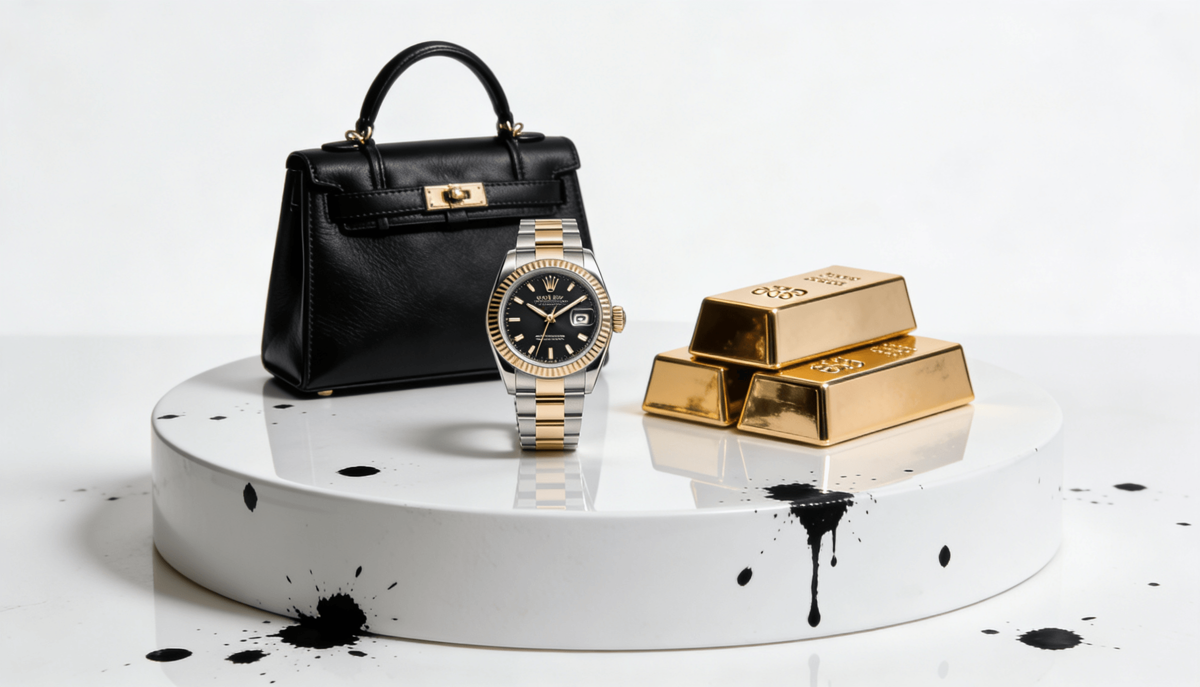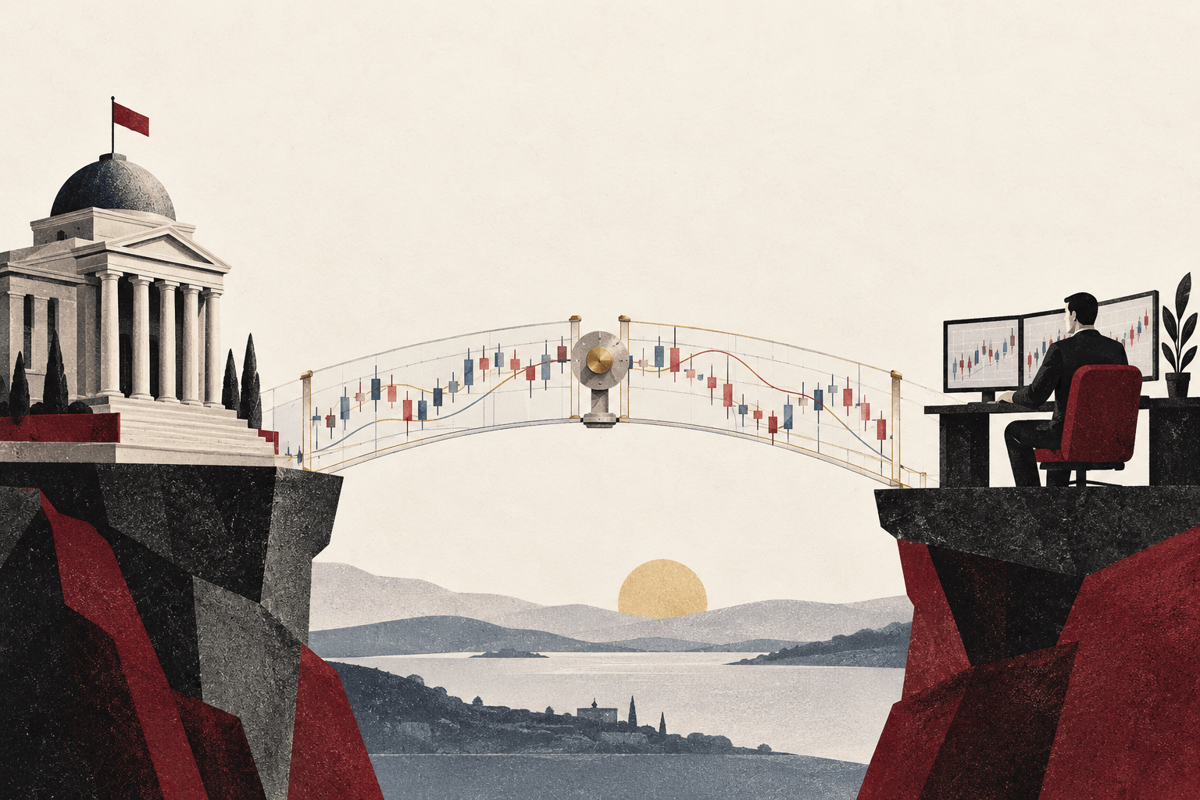
Sixty million consumers exited the luxury market between 2022 and 2025. Not gradually, not imperceptibly, but in a contraction that Bain and Company described as the industry's most significant since the Great Recession. The brands responsible for that exit are, in most cases, the same ones that spent two decades engineering the conditions that made it inevitable.
This is the aftereffect of deceptive luxury. Understanding it is now the most consequential analytical exercise in the industry.
Key Takeaways & The 5Ws
- Sixty million consumers exited the luxury market between 2022 and 2025, the steepest contraction the industry has faced since the Great Recession.
- Deceptive luxury distributed the symbols of exclusivity to an aspirational mass while quietly industrialising the rarity those symbols were meant to represent.
- McKinsey attributes 80% of luxury growth between 2019 and 2023 to price increases rather than creativity, craftsmanship, or genuine value creation.
- Bain's 2025 study finds 63% of consumers believe mass products perform as well as their luxury equivalents, a verdict on lost defensible distance.
- Mirror luxury answers a different question: not what is new, but what is singular, irreplicable, and capable of articulating the holder's identity.
- Who is this for?
- Operators, strategists, and serious clients trying to understand why the luxury industry has contracted and what comes next at the top of the market.
- What is it?
- An analysis of deceptive luxury, the strategic miscalculation that hollowed the industry's promise, and the mirror luxury logic now replacing it.
- When does it matter most?
- Now. The exit is structural rather than cyclical, and the UHNW stratum has already withdrawn from conventional brand channels.
- Where does it apply?
- Across every serious acquisition category, from fashion and watches to art, antiques, and the broader market for singular objects.
- Why consider it?
- Because the gap between being seen and being understood is where the next era of luxury will be decided, and most infrastructure was built for the opposite.
What Deceptive Luxury Actually Was
Deceptive luxury was not a conspiracy. It was a strategic miscalculation repeated across the industry at scale, dressed in the language of democratisation, accessibility, and growth.
For two decades, the most powerful luxury conglomerates operated on a single flawed premise: that the symbols of exclusivity could be distributed to an expanding mass of aspirational buyers without destroying the exclusivity those symbols represented. They expanded aggressively into new price points, new geographies, and new demographics. They multiplied product lines, opened flagship stores on every major commercial thoroughfare, and built aspirational marketing ecosystems designed to make luxury feel simultaneously attainable and elite.
The contradiction at the heart of that model was never addressed. It was accelerated.
In two decades of client conversations, the inflection point was rarely a dramatic strategic mistake. It showed up in a slide deck. A distribution target. A decision to enter one more market. The logic, each time, seemed defensible. The cumulative effect was not.
What made it deceptive was not the ambition. It was the silence around the fundamental trade-off being made. Clients at every level of the market were being sold the idea of belonging to something rare while the industry was quietly industrialising that rarity out of existence. The promise of luxury, uncompromising quality, singular craftsmanship, and the genuine distance between an object and its lesser alternatives, was being hollowed from the inside while the exterior remained immaculate.
The art world, operating on entirely different principles, offered a quiet counterargument throughout. Governed by provenance, connoisseurship, and the irreducible authority of the singular object, it never attempted to distribute its rarity. It understood something the luxury industry forgot: that rarity, once distributed, is no longer rare. The work of figures profiled in our conversation on art, strategy, and soul illustrates the point: serious collecting has always answered a different brief than mass aspiration.
The Mechanics of the Deception
The numbers tell the story with uncomfortable precision. According to McKinsey, price increases accounted for 80% of all luxury market growth between 2019 and 2023. Not creativity. Not craftsmanship. Not the kind of genuine value creation that justifies a premium in any serious category. Prices rose because the industry had exhausted its other levers, and because an aspirational consumer base, intoxicated by post-pandemic spending freedom, did not yet push back.
That tolerance has expired.
Bain's 2025 Luxury Study found that 63% of consumers now believe mass products perform as well as their luxury equivalents. That figure is not a measure of mass market improvement. It is a measure of luxury's failure to maintain a defensible and legible distance between itself and the categories beneath it. That distance was the product. The industry stopped protecting it.
When a buyer cannot articulate why one object is worth ten times another beyond the name it carries, the deception has been named, even if not consciously understood.
The industry's response compounded the problem. McKinsey identified the mechanism with precision: rapid expansion led to overexposure that weakened exclusivity, creativity, and the core value proposition. Brands failed to adapt their creative strategies to meet the demands of new scale and in doing so broke the fundamental promise luxury makes to its clients. Raising prices while contracting creative ambition and expanding distribution simultaneously was not a strategy. It was something more damaging: a confirmation, repeated season after season, that the promise had already been quietly abandoned.
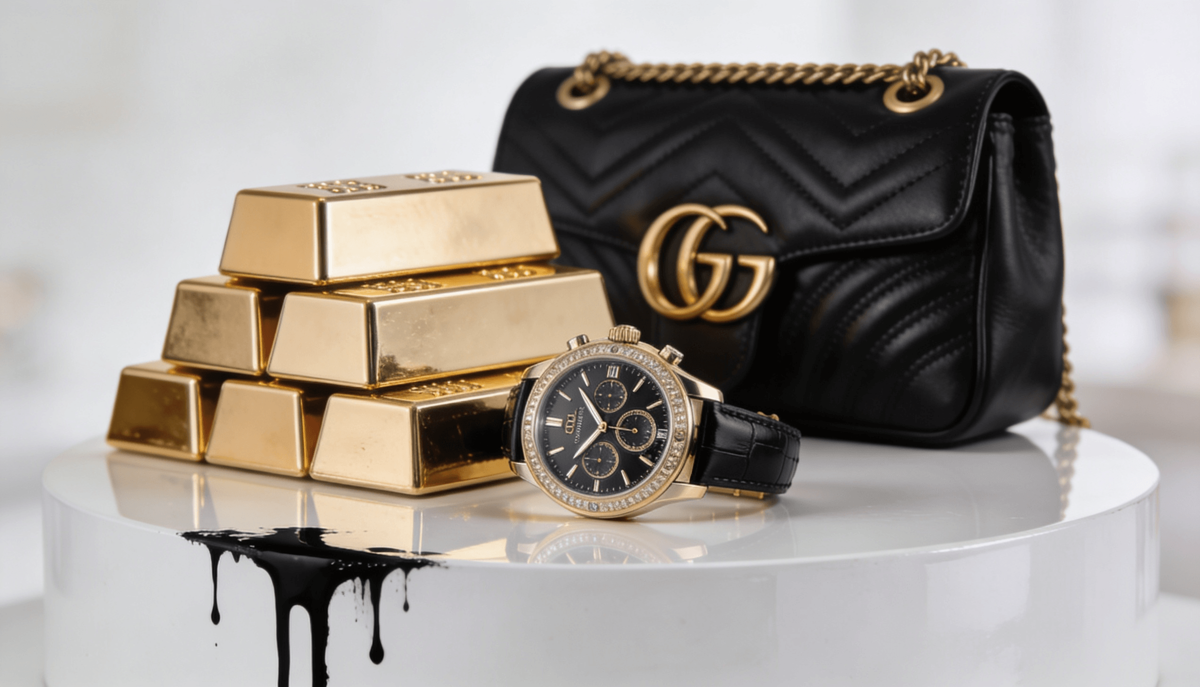
The Exit
The consequences are now structural rather than cyclical. The luxury consumer base contracted from 400 million in 2022 to 340 million in 2025. Active luxury shoppers fell from 60% of the total addressable market to between 40 and 45%. New customer acquisition declined 5% in a single year. Only one third of luxury brands recorded positive growth in 2024, down from two thirds the year before.
The aspirational tier, the buyers who were never the intended custodians of luxury but were courted aggressively as a growth engine, has retreated first and fastest. But the more significant exit is quieter and harder to quantify. The UHNW stratum, the buyers whose cultural authority and spending gave luxury its directional logic for generations, has withdrawn into opacity. They did not leave loudly. They simply became unfindable through conventional brand channels. Anyone who has spent serious time advising at that level will recognise the shift. The conversations changed before the data did.
Brands constructed to be seen are now navigating a market whose most important participants have chosen not to be.
What Comes After Deceptive Luxury
Art has always understood what luxury forgot.
A serious collector does not acquire a work because it signals membership of a category. They acquire it because it reflects something irreducibly true about their inner world, their aesthetic intelligence, their cultural positioning, and the values they choose to stand behind. The relationship between a collector and a significant work of art is not transactional. It is biographical.
The buyers who matter most are no longer asking what is new. They are asking what is singular, what cannot be replicated, what belongs to them alone. Most luxury systems are still configured to answer a different question. This is the same logic that has quietly turned categories such as the right antique outperforming stocks and fine art into serious stores of meaning rather than mere ornament.
Mirror luxury extends that logic across every category of serious acquisition. It is not a product tier or a price point. It is a relational architecture in which the object functions as a precise reflection of the individual who holds it rather than a collective signal directed outward. Relevance replaces aspiration. Personalisation, genuinely individual rather than merely customised, replaces distribution. Meaning replaces volume, though that particular transition is harder to execute than it sounds. The direction is not complicated. The difficulty is that most brands have spent twenty years building infrastructure designed for exactly the opposite.
The UHNW stratum never abandoned this standard. What they abandoned was the pretence that the luxury industry was still operating by it. A new generation of culturally literate, economically serious buyers is now making the same demand at every level of the market, not for objects that announce their wealth, but for objects that articulate their identity.
Deceptive luxury spent two decades building visibility. Scaling the same model more precisely solves the wrong problem. Mirror luxury builds recognition, which is a different discipline entirely. That gap, between being seen and being understood, is where the next era of luxury will be decided.
The connoisseur always arrives before the market. The market is arriving now.