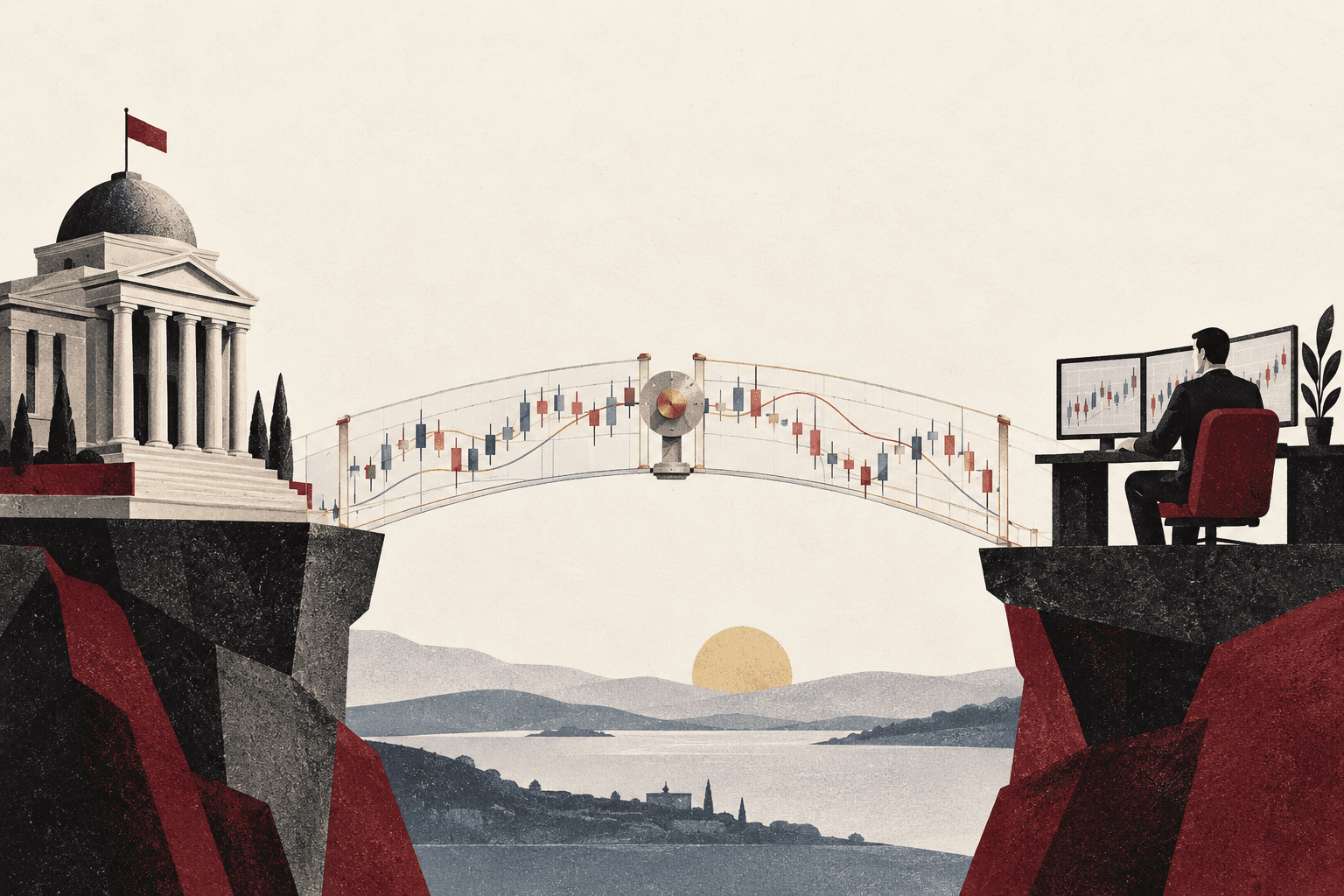
For generations, the conversation about wealth has centered on financial capital. Assets, ownership, and economic resources defined success and, with it, influence. More recently the focus has widened to cultural capital: the education, taste, experience, and social fluency that shape how a person reads a room and creates opportunity. Yet a third dimension shapes both of those and receives almost none of the attention it deserves. Call it commercial sensibility.
Commercial sensibility is the recognition that value is communicated long before it is exchanged. Perception, trust, and desirability are not produced by a single interaction. They are the cumulative result of hundreds of small decisions: the environments a person creates, the partnerships they pursue, the way they communicate, the standards they hold, and the way they make other people feel. Each of those choices becomes a signal, and the signals decide how someone's judgment, credibility, and potential are read.
This is why the most effective leaders, investors, and tastemakers feel so consistent. Their influence does not rest on charisma, and it is not sustained by exposure. Every touchpoint reinforces the same message. Their communication reads as clear. Their surroundings look deliberate. Their relationships reflect discernment. Their presence carries confidence without performance. Almost nothing feels accidental, because almost nothing is.
Key Takeaways
- Wealth has long been read first through financial capital, then through cultural capital. A third factor, commercial sensibility, shapes both and receives far less attention.
- Commercial sensibility is the discipline of orchestrating the forms of capital a person already holds so that every touchpoint reinforces the same message.
- Value is communicated long before it is exchanged. Trust and desirability are built from hundreds of small signals, not from any single interaction.
- Pierre Bourdieu's four forms of capital, economic, cultural, social, and symbolic, explain why two people with similar resources can end up with very different influence.
- Visibility is not influence. Attention creates awareness, and awareness without trust produces very little that lasts.
- As information and production grow cheaper to copy, judgment and trust become the scarce advantages, and both compound slowly over time.
- Who: Leaders, investors, founders, and tastemakers whose influence depends on how their judgment is perceived.
- What: Commercial sensibility, the skill of aligning the forms of capital you already hold so every touchpoint tells the same story.
- When: Now, as technology drives down the cost of information and production and raises the premium on judgment.
- Where: Across the environments, relationships, and interactions where reputation is quietly formed.
- Why: Because trust is the hardest asset to manufacture, and it is what turns attention into lasting enterprise value.
Table of Contents
- Bourdieu's Four Forms of Capital
- What Commercial Sensibility Actually Is
- The Invisible Signals That Build Trust
- Why Visibility Is Not the Same as Influence
- What Luxury, Hospitality, and Travel Reveal
- Why Commercial Sensibility Compounds
Bourdieu's Four Forms of Capital
The French sociologist Pierre Bourdieu mapped this territory in his 1986 essay "The Forms of Capital," where he argued that influence and opportunity depend on far more than money. People accumulate several kinds of capital, he wrote, and together those forms determine how a person moves through society and how their value is recognized.
Economic capital is the obvious one: financial resources, assets, and ownership. Cultural capital covers knowledge, education, taste, and the experiences that let someone read and operate inside different social worlds. Social capital is the web of relationships and connections that creates access. Symbolic capital is the recognition, credibility, and prestige that others grant once the first three forms become visible and acknowledged.
The framework still holds because it explains why money alone has never decided influence. Two people can command similar financial resources and end up in very different places, because their knowledge, relationships, reputation, and social fluency differ. What they own may look alike. How those assets are expressed and recognized can be worlds apart.
In an economy where intangible assets increasingly drive enterprise value, Bourdieu's model deserves to be carried into commercial life. Economic, cultural, social, and symbolic capital each create potential, but potential guarantees nothing. Its worth depends on how well it is expressed, aligned, and turned into trust, differentiation, demand, and opportunity. That translation is the work commercial sensibility does.
What Commercial Sensibility Actually Is
Commercial sensibility is the ability to orchestrate the forms of capital a person or organization already holds so that they reinforce one another. Expertise has to be communicated. Relationships have to be cultivated. Reputation has to be protected. Environments have to reflect the standards their owner claims to represent. Held in isolation, each form of capital underperforms. Aligned, they multiply.
This is, in a sense, the asset the luxury industry discusses least, even though its best operators run on it. Value is communicated long before it is exchanged, and that communication happens through accumulation. A hundred small decisions, most of them invisible in the moment, settle into an impression of judgment and credibility that no single gesture could produce on its own.
The Invisible Signals That Build Trust
Most of commercial sensibility works through signals people never consciously register. We are rarely judged on expertise or accomplishment alone. We are read through countless small cues that add up to trust. A carefully written email communicates precision. A well-prepared meeting room communicates seriousness. A thoughtful introduction communicates generosity. Style communicates context and respect. Hospitality communicates anticipation. Even restraint communicates confidence.
On their own, these moments look trivial. Together, they become reputation. That is the part most people miss, because each signal is small enough to dismiss and the effect only appears in aggregate.
Why Visibility Is Not the Same as Influence
This is where influence is so often misread. The modern economy rewards attention, but attention has never guaranteed commercial success. Visibility creates awareness, and awareness without trust produces very little that lasts. Some of the most commercially successful people in the world keep remarkably low profiles, while others command enormous audiences without ever building anything durable. The difference is not exposure. It is commercial sensibility. The people who quietly decide what counts, the layer that reads signals long before a word is spoken, tend to trade almost entirely on trust rather than on being seen.
Commercial sensibility treats every interaction as part of a larger system rather than an isolated event. A client dinner is not only hospitality; it is a statement of values. A website is not only marketing; it is an extension of judgment. An office is not only a design decision; it shapes how confidence and professionalism are experienced. A personal introduction is not only a connection; it is a chance to show discernment. None of these touchpoints stands alone. Each one reinforces or undermines the others.
What Luxury, Hospitality, and Travel Reveal
Useful commercial insight rarely comes from studying one industry in isolation, because the principles that shape human behavior stay consistent across categories. Luxury retail shows how an environment can shape desire before a product is ever touched. Hospitality shows how anticipating a need builds loyalty and emotional connection. Personal presentation shows that style is less about appearance than about communicating identity, awareness, and context. Travel shows how different cultures express trust, generosity, and status through their own rituals while answering the same human needs.

These disciplines look unrelated, yet they all circle the same question: what shapes human perception and decision-making? The psychology that keeps someone lingering in a beautifully designed boutique is a close cousin to the psychology that makes a guest feel welcomed in a private home, a client feel respected in a boardroom, or an investor feel confident in a founder. The settings change. Comfort, clarity, anticipation, belonging, confidence, and trust keep steering the decision.
Whether by design or by instinct, sophisticated operators think past products, services, and transactions. They think in sequences, emotions, environments, and relationships. They know that people rarely remember the details of an interaction, but they remember how it made them feel, and that feeling shapes the next decision in ways ordinary metrics tend to miss.
Why Commercial Sensibility Compounds
As technology keeps lowering the cost of information and production, commercial advantage will depend less on access to knowledge and more on the ability to apply judgment. Products can be copied. Information can be commoditized. Attention can be bought. The ability to understand people, recognize patterns, anticipate needs, and build experiences that mean something cannot be copied so easily. Trust, above all, stays extraordinarily hard to manufacture.
Trust is earned slowly, through the alignment between what a person claims to value and what every interaction quietly says. This is why trained judgment and taste compound the way capital does: each consistent signal builds on the last, and the returns accrue over years rather than moments. Accumulating capital has always mattered. Aligning and activating it is what produces lasting influence.
Commercial sensibility, then, is not one more business skill. It is the discipline of making sure every touchpoint contributes to the same narrative. It is where cultural awareness meets execution, where taste meets judgment, and where influence stops being a matter of attention and becomes enduring enterprise value.
Related reading on how carefully built signals can erode over time can be found in How Luxury Spent Twenty Years Quietly Undermining Itself.
We last reviewed this analysis in July 2026.


Irina Volfson
Irina Volfson is an entrepreneur, innovation strategist and experience architect specializing in luxury, hospitality, consumer products, and emerging business ecosystems. As founder of Magnatist, she advises organizations on growth strategy, commercialization, customer experience, and the development of products, services, and ventures designed for long-term value creation. Her work has also spanned private client advisory, luxury travel, lifestyle experiences, and affluent consumer behavior, providing a unique perspective on the evolving relationship between wealth, consumption, and culture. At The Luxury Playbook, she writes about wealth, luxury, business, consumer trends, hospitality, real estate, and the industries shaping the future of affluence.