
A collector showed me a single object last spring in a room off a private library and never mentioned what it cost. He spoke about who had made it, what he had asked for, how long the maker had refused him and what the object had required the maker to abandon in order to create it. Twenty minutes passed without a figure entering the conversation.
When I asked afterwards what it might fetch, he answered that he had bought it so that nobody would ever have to know.
That exchange explains a shift taking place at the highest level of collecting. In a market built around auction records, indices and visible scarcity, the objects attracting the most sophisticated buyers are increasingly those for which no reliable market price can be formed at all.

Key Takeaways
- Luxury indices can measure categories only when enough comparable objects trade publicly and often enough to establish a price pattern.
- A unique private commission can sit outside that machinery because no comparable example or repeatable route to acquisition exists.
- For some major collectors, illiquidity is not a defect. It protects an object from the financial and social pressures created by a visible valuation.
- Art Basel and UBS found that 37% of wealthy collectors surveyed had commissioned works directly and that collectors with more than $50 million in assets allocated an average of 28% of wealth to art.
- True singularity depends on the circumstances of creation and acquisition, not merely on a limited edition or a claim of exclusivity.
- The greatest risk is that unpriceability becomes another marketing performance, offered commercially as soon as the market learns to desire it.
- Who: Serious collectors, family offices and advisers responsible for culturally significant private holdings.
- What: An examination of sovereign objects whose value cannot be established through indices, auction comparables or ordinary resale markets.
- When: As public auction records coexist with a growing appetite for private commissions and objects that never reach an open market.
- Where: Inside private collections and direct relationships between patrons, artists, makers and a small number of trusted intermediaries.
- Why: Because the absence of a public price can preserve control, continuity and meaning in ways that conventional investment logic cannot measure.
Table of Contents
- An Index Needs Comparable Objects
- When Illiquidity Becomes the Premium
- The Sovereign Object
- Why Private Acquisition Matters
- Why Luxury Houses Cannot Follow Quickly
- Where Unpriceability Becomes Theatre
- What Collectors Should Examine
An Index Needs Comparable Objects
In November 2025, Gustav Klimt's Portrait of Elisabeth Lederer sold for $236.4 million. Sotheby's described it as the highest auction price for a work of modern art. The result was extraordinary, but it also demonstrated something easy to overlook. However rare the painting may be, it still belonged to a class of object that could be offered publicly, described by specialists and assigned a number.
The Knight Frank Luxury Investment Index closed 2025 down 0.4%, even as major auction results helped stabilise parts of the market. Its watch measure rose 5.1%, with demand concentrated in established names including Rolex and Patek Philippe. These figures are useful because they reveal direction, liquidity and the behaviour of recognised categories.
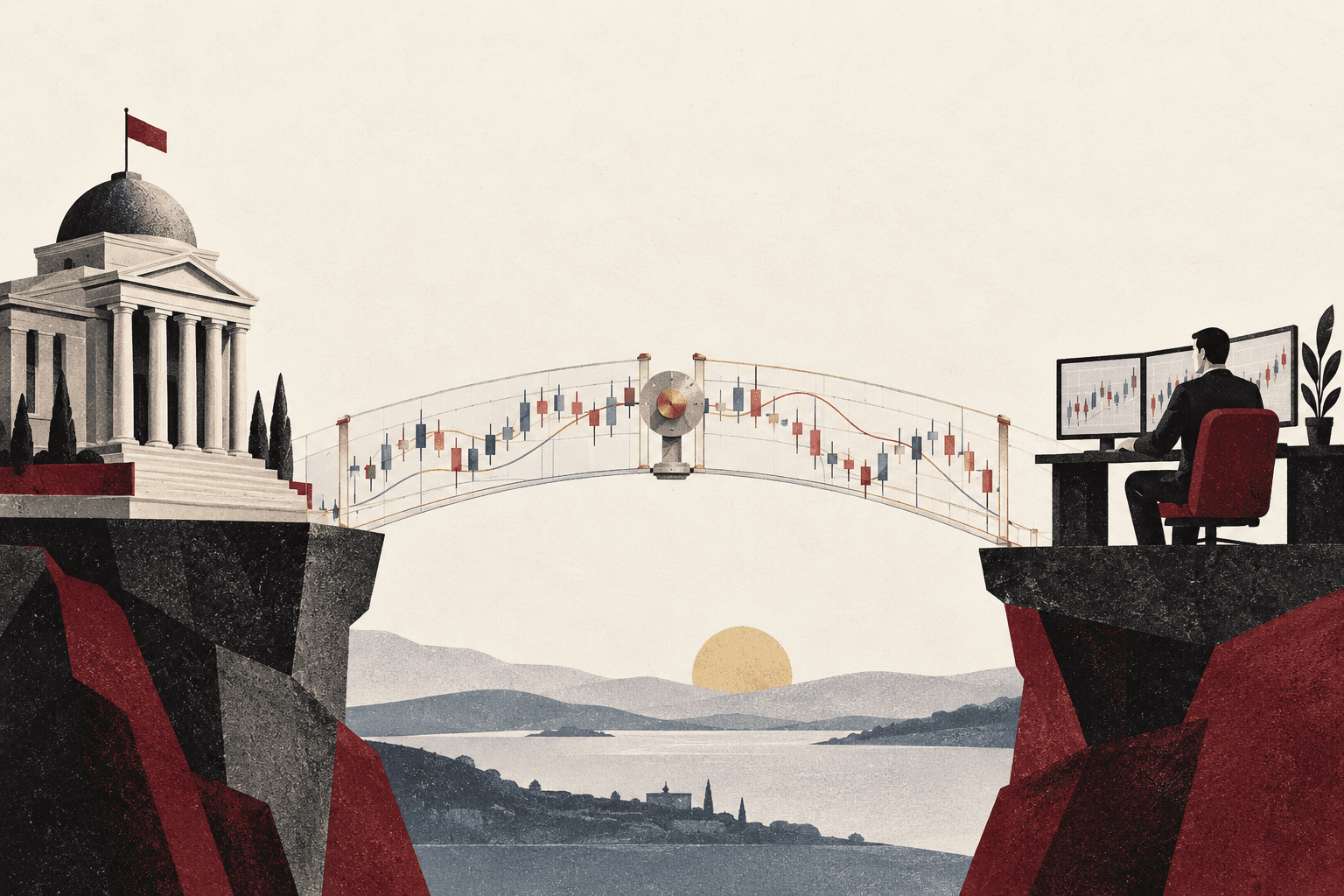
Yet an index is ultimately a machine for finding comparables. It works when enough similar objects change hands often enough to draw a meaningful line through them. The line can tell us what a market is willing to pay. It cannot tell us whether an object is culturally singular or whether its owner has any interest in selling it.
Withdraw the comparable and the machinery stops. A commission made once for one holder under circumstances that will not recur produces no curve. It produces a provenance and a sum paid, and those are different instruments entirely.
Most of the market reads that silence as risk. The collector in the library reads it as the absence of an authority he never accepted.
When Illiquidity Becomes the Premium
Finance prices illiquidity as a penalty. You accept less because exit is difficult. Above a certain level of wealth, that arithmetic can reverse for reasons that have little to do with financial return.
The Art Basel and UBS Survey of Global Collecting 2025 found that collectors with more than $50 million in assets allocated an average of 28% of their wealth to art. It also found that 37% of respondents had commissioned works directly and 43% had bought from artists' studios. The figures do not prove that wealthy collectors reject markets. They show that direct relationships and personal conviction occupy a substantial place alongside auctions and dealers.
Consider what a published valuation can do inside a family. It may allow a bank to lend against the holding and therefore to call it. It hands an executor a figure, a court a figure and a beneficiary with no interest in the object a defensible reason to sell. Against that, the family member who understands what the thing is may have nothing to offer but judgement and sentiment. Sentiment often loses.
I have watched two significant collections dismembered within eighteen months by valuations commissioned for entirely reasonable purposes. This is where the argument stops being aesthetic. An object with no external mark is harder to divide by arithmetic. It passes whole or it does not pass at all, and the decision remains closer to the person who understands it.
This is not a universal estate planning strategy. A lack of valuation can create insurance, tax and succession problems that require professional advice. The point is narrower. For a collector who values continuity more than liquidity, a visible price can introduce pressures that ownership was intended to resist.
The Sovereign Object
I have come to call this class the sovereign object, meaning one that answers to no external authority for its worth.
Sovereignty here is a property of how the thing came into being. One example created under conditions that will not recur. A record of one person's judgement rather than a general standard of taste. No conventional channel through which a second buyer could have obtained it, whatever capital they were prepared to place on the table.
That final condition excludes almost everything the luxury industry currently describes as exceptional. A limited series can be scarce and highly desirable, but it remains a series. Once several examples trade, the market begins to establish a hierarchy of condition, provenance and price. The object becomes legible.
A sovereign object is different because the relationship that produced it cannot be repeated. Its scarcity is biographical rather than numerical. It records a particular meeting of patron, maker, timing and trust.
This is close to the deeper logic of the connoisseur investor, whose advantage lies less in access to public information than in the ability to recognise significance before a consensus forms around it.
Why Private Acquisition Matters
Global art sales rose 4% to an estimated $59.6 billion in 2025. Public auction sales increased by 9%, while reported private sales declined by 5% to just under $4.2 billion. That is a useful account of the visible market and its reported private segment. It cannot measure objects that were commissioned privately and never offered for resale.
The distinction matters because the public record is not the entire market. It is the portion of the market capable of being recorded. The most private holdings leave few data points and therefore have little influence on an index, even when they may carry extraordinary cultural weight.
This is also why the invisible billionaire layer is so difficult for brands to reach. The relevant acquisition may not resemble a normal sale. It may begin with years of conversation, a refusal, a shared project or an introduction that no marketing budget can reproduce.
Why Luxury Houses Cannot Follow Quickly
A house that has spent twenty years manufacturing desirability is fluent in one instrument: restricting supply against known demand. Waiting lists. Allocation. A series of two hundred.
A series of two hundred will eventually price, will be indexed and may trade at a discount everyone can see. Its commercial value depends on enough people understanding the object in approximately the same way.
The sovereign commission offers the house none of that. One object is never repeated. It generates no secondary data, supports no allocation strategy and teaches the commercial director little that can be used next season. Very few organisations are structurally prepared to do it.
The obstacle is not craft, which remains abundant. The obstacle is that the commercial architecture depends on the object remaining legible to a market the client may already have left.
Where Unpriceability Becomes Theatre
The moment unpriceability becomes a claim, it becomes a market.
There is already a class of object being offered on the argument that it cannot be valued. Scarcity was performed for twenty years and the performance gradually consumed the thing it advertised. Singularity is entering the same corridor now. It will be performed by houses that have acquired the vocabulary and none of the discipline beneath it.
The difference may not be visible in the object. It will be visible in the conduct of the acquisition. A genuine sovereign commission is difficult to obtain, unhurried, frequently refused and never justified to the buyer in commercial terms. The counterfeit will be available, and it will be described as unavailable.
Collectors should be particularly cautious when singularity arrives with a valuation forecast, an immediate resale narrative or a familiar tiered allocation system. Those devices may support a successful luxury product. They do not create sovereignty.
What Collectors Should Examine
The first question is not whether an object is unique. Many things are unique by accident. The more useful question is whether the conditions that produced it carried judgement, sacrifice and a relationship that could not simply be purchased from a catalogue.
The second question concerns provenance. A singular object without a documented history can become unintelligible to the next generation. The same privacy that protects it can weaken it if the reasons for its significance disappear with the original owner. Our examination of why serious collectors begin with provenance explains why documentation and discretion are not opposites.
The third question is whether the family wants the object to remain outside ordinary financial logic. If the answer is yes, ownership structures, insurance, succession and the archive around the work must be designed accordingly. Singularity does not remove the need for governance. It changes what good governance is trying to preserve.
By 2040, some of the finest holdings in private hands may be those no index was ever permitted to reach. They will not appear in any report, including the ones I write. That will not be a failure of measurement. It will be the condition of their survival, arranged deliberately before the wider market understood what was being protected.
Last reviewed September 2026. This article is general analysis and does not constitute investment, legal, tax or valuation advice.

Shahzad Haider
Shahzad Haider is a futurist curator shaping discourse at the intersection of art, luxury and connoisseur culture. As President of The Future Connoisseurs and former Chairman of the Board of The Fragrance Foundation Arabia for over 12 years, his work examines the forces redefining desirability, cultural influence and affluent behavior across the United States, Europe, the Middle East and Asia. He is the author of three books, with The Future of Luxury 2025–2050 launching soon. At The Luxury Playbook, he offers analysis on emerging luxury paradigms, cultural capital and the future architecture of global connoisseurship.