
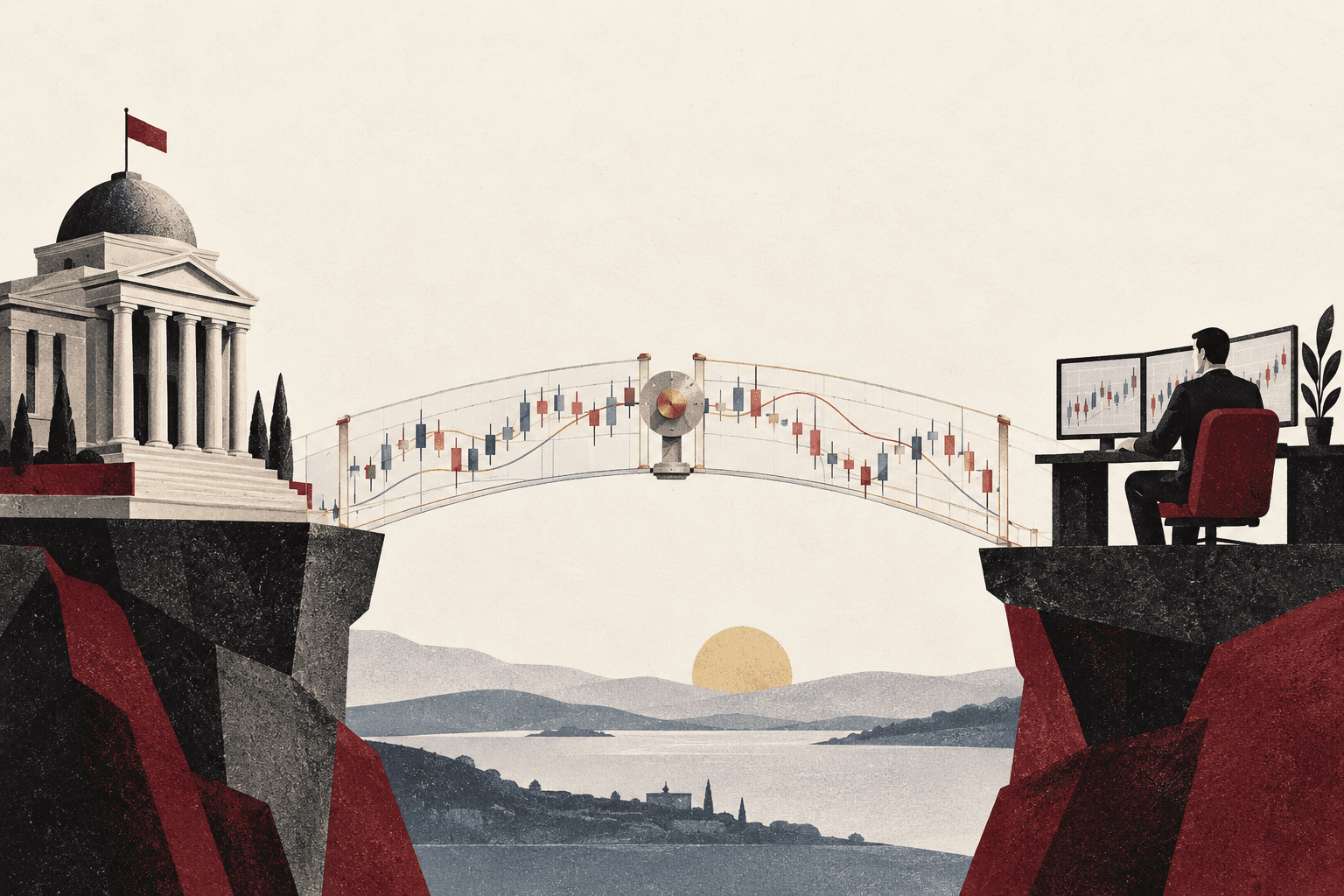
A recent Cyprus Business Review investigation into how forex broker chief executives are rebuilding trust raises a question that deserves a wider answer. If regulation is stronger, client protections are clearer and brokers disclose more than they did a decade ago, why does trust remain so fragile?
The answer is that regulation and trust are related, but they are not the same thing. A licence establishes that a firm has crossed a legal threshold. It does not tell a trader how the platform will behave during a violent market move, whether a withdrawal will be handled without friction, or how clearly the broker will communicate when something fails.
This distinction matters in a market of extraordinary scale. Final data from the Bank for International Settlements put average daily over the counter foreign exchange turnover at $9.5 trillion in April 2025. That figure describes the global institutional market rather than retail broker activity, but it captures the environment in which brokers operate. Currency markets absorb political shocks, monetary policy changes and shifts in risk sentiment almost immediately. When volatility arrives, trust stops being a marketing idea and becomes an operational test.

Key Takeaways
- A regulatory licence establishes a minimum legal standard, but it does not prove execution quality, pricing clarity or operational resilience.
- Trust becomes measurable through spreads, slippage, order handling, withdrawals, platform availability and the quality of incident communication.
- Volatile markets expose the difference between a broker that has prepared for pressure and one that relies on reassuring language.
- European supervisors are paying closer attention to conflicts of interest, remuneration and the way digital platforms influence retail decisions.
- Credible communications should make genuine operational strengths discoverable without attempting to replace the evidence behind them.
- The strongest broker brands treat trust as a system that connects governance, technology, client service and public accountability.
- Who: Forex and CFD broker executives, compliance teams, traders and investors assessing the credibility of a platform.
- What: An editorial analysis of why regulation alone no longer creates durable trust in online brokerage.
- When: Trust matters most during volatility, platform disruption, withdrawal requests and regulatory scrutiny.
- Where: Across regulated retail trading markets, with particular relevance to Cyprus and the wider European investment firm sector.
- Why: Because clients judge a broker through observable behaviour, not through licence language or brand promises alone.
Table of Contents
- Regulation Is the Starting Point
- Execution Is Where Trust Becomes Visible
- Volatility Tests the Quality of Communication
- Digital Platforms Create New Conflicts
- Turning Credibility Into Visibility
- What Broker Leaders Should Make Public
- Trust Is an Operating System
Regulation Is the Starting Point
A serious broker must begin with authorisation, capital requirements, governance, client asset protections and appropriate controls. In Cyprus, national measures for retail contracts for difference include leverage limits based on the underlying asset, margin close out requirements and negative balance protection. The Cyprus Securities and Exchange Commission describes these measures as investor protections for high risk speculative products.
These protections matter. They reduce particular forms of harm and establish rules that firms must follow. Yet they are shared obligations, not a unique reason to trust one broker over another. A regulated firm should not present compliance with baseline rules as though it were evidence of exceptional conduct. It is the admission price for operating in the market.
This is also why a licence should never end an investor's research. As our analysis of what happens when a forex broker gives up its licence explains, the meaning of a regulatory change depends on the legal entity, the jurisdiction, the clients affected and the arrangements that follow. The presence of a licence matters, but so does the behaviour that sits behind it.
Execution Is Where Trust Becomes Visible
Traders experience a broker through execution. They see the spread available when an order is placed, the price at which it is filled, the frequency of rejection or requoting, the stability of the platform and the speed with which funds can be withdrawn. These are not abstract brand qualities. They are observable events.
A broker that wants to make a credible claim about execution should therefore publish evidence that a client can understand. Average execution speed may be useful, but it is not sufficient on its own. Averages can hide the periods that matter most. More valuable disclosure would show the distribution of execution times, the proportion of orders receiving positive or negative slippage, the treatment of orders during fast markets and the methodology used to calculate the figures.
This evidence led approach is particularly important in contracts for difference, where leverage can magnify losses and where the relationship between a broker and a client may involve conflicts that are not obvious to a first time trader. That is why the distinction examined in our review of CFD trading and industry transparency remains important. A loss is not proof of fraud, but regulation is not proof that every commercial practice deserves confidence.
Volatility Tests the Quality of Communication
Every broker can communicate clearly when markets are calm. The real test arrives when prices move quickly, liquidity thins, systems slow down or clients believe that an execution outcome was unfair. At that moment, silence creates its own narrative.
Good incident communication does not require a firm to speculate before it has verified the facts. It requires a disciplined sequence. Acknowledge what clients are experiencing. Explain which services are affected. Provide a realistic time for the next update. Preserve the records needed for investigation. Once the incident is resolved, explain the cause, the remedy and how client complaints will be reviewed.
This is why volatility makes trust measurable. The broker either has a prepared process for difficult moments or it does not. The market discovers the answer in real time.
Digital Platforms Create New Conflicts
Trust also depends on how a platform shapes behaviour. In December 2025, the European Securities and Markets Authority announced a 2026 supervisory action focused on conflicts of interest in the distribution of financial instruments. Its stated priorities include staff remuneration, inducements, the role of digital platforms in directing investors towards products and the tension between a firm's profits and a client's interests.
That focus is significant because many of the most influential decisions in online trading are now embedded in interface design. The order in which products appear, the prominence of risk warnings, the use of notifications and the framing of account status can all influence behaviour. A platform may satisfy formal disclosure requirements and still create an environment that encourages urgency or excessive activity.
For broker leaders, the governance question is therefore broader than whether the compliance text is present. They must ask what behaviour the complete client journey encourages. If a firm earns more when clients trade more frequently, the design choices surrounding prompts, education and product visibility deserve board level attention.
Turning Credibility Into Visibility
The Cyprus Business Review investigation makes another useful distinction. A broker can invest in governance, controls and execution quality, yet receive little reputational benefit if prospective clients cannot find credible evidence of that work. Traders often encounter search results, comparison pages, reviews and media coverage before they reach a broker's own regulatory disclosures.
This is the space in which Financial Markets Media operates. The agency provides search optimisation, content, digital public relations and online reputation services for financial companies, including forex and trading businesses. Its role illustrates the communications side of the trust equation: helping legitimate credentials and expertise become visible across the channels where clients research firms.
Visibility cannot repair weak governance, and communications should never be used to obscure unresolved problems. The sequence matters. Compliance, execution and client treatment create the evidence. Communications make that evidence understandable and discoverable. When the order is reversed, reputation work becomes fragile because the public claim has no durable operating reality beneath it.
The same principle applies to reviews. A strong rating can be useful, but it should not replace deeper assessment of the legal entity, pricing model, withdrawal process and regulatory record. Our examination of why sophisticated investors no longer rely on five star ratings alone reaches the same conclusion from a different direction. Reputation is valuable when it compresses real evidence, not when it substitutes for it.
What Broker Leaders Should Make Public
A modern broker does not need to disclose every internal control or commercially sensitive detail. It should, however, make the evidence needed for an informed decision easier to find.
- Entity and jurisdiction clarity: Clients should be able to identify the company holding their account, the regulator responsible for it and the protections that apply.
- Complete pricing context: Spread claims should be accompanied by commissions, account conditions and a realistic description of how pricing changes during volatile periods.
- Execution evidence: Methodologies and distributions are more informative than isolated averages or exceptional best case results.
- Withdrawal standards: Expected processing times, verification requirements and escalation routes should be visible before a client deposits.
- Incident communication: Firms should explain how they notify clients, review disputed orders and report after a significant disruption.
- Conflict governance: The board should understand how remuneration, product placement and interface design may influence client behaviour.
Trust Is an Operating System
Forex brokers often speak about trust as though it were the result of brand familiarity. In reality, trust is produced by a chain of decisions that begins long before a campaign reaches the public. It is present in the legal structure, the execution model, the design of the platform, the handling of withdrawals, the response to incidents and the honesty of the communications that follow.
The most important lesson from the Cyprus Business Review investigation is not that marketing has become more important than regulation. It is that neither can perform the other's function. Regulation establishes the minimum. Operations create the experience. Communication determines whether credible evidence can be found and understood.
Broker leaders who connect those functions have a chance to build trust that survives volatility. Those who treat them as separate files may discover that a licence can keep a firm in the market while doing very little to keep clients confident in it.
This article is for general informational and editorial purposes only. It does not constitute investment, legal or regulatory advice. Trading forex and contracts for difference involves substantial risk and may not be suitable for every investor. Always verify the legal entity, regulatory status and product terms that apply to your account.

Stefanos Moschopoulos
Stefanos Moschopoulos founded The Luxury Playbook in Athens and has spent the better part of a decade following the auction calendar, the en primeur releases, and the watchmakers, gallerists, and shipyards the magazine covers. He writes the field guides and listicles that anchor the Connoisseur section — pieces built on Phillips and Christie's results, Liv-ex movements, and conversations with collectors he has met across Geneva, Bordeaux, Basel, and Monaco. His own collecting habits sit closer to watches and wine than art, and it shows in the level of detail in the magazine's coverage of those categories. Under his direction, The Luxury Playbook now publishes long-form field guides, market-defining year-end listicles, and the Voices interview series with the founders behind the houses and the brands.