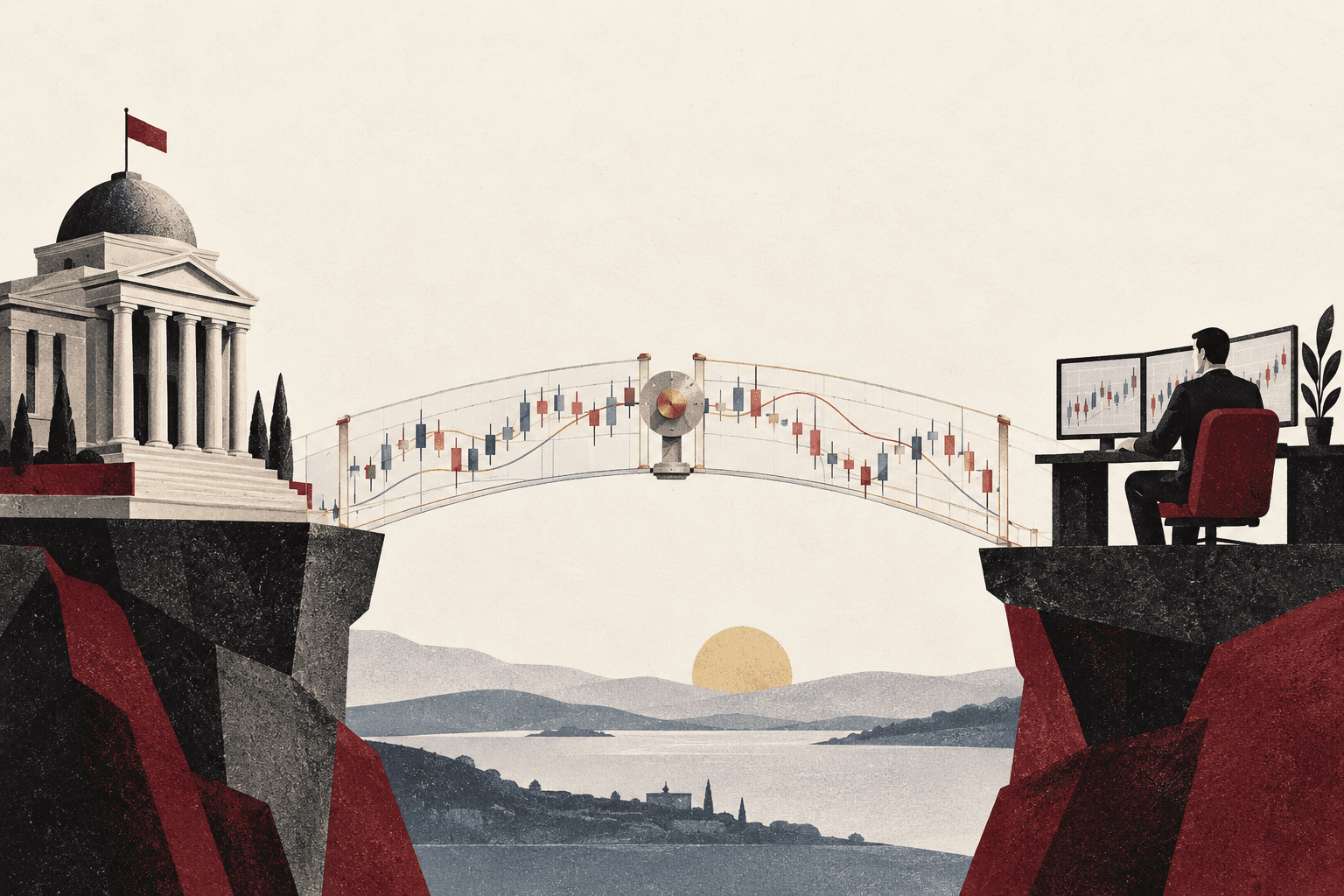
Stocks, options, foreign exchange, futures and crypto can all appear on the same trading screen, but they are not interchangeable versions of the same market. Each represents a different legal and economic relationship. Each has its own trading hours, liquidity, leverage, costs and failure modes.
A beginner who chooses a market only because it moves quickly or is widely discussed starts with the wrong question. The useful question is what exactly is being traded, what obligations exist and what kind of risk must be managed.
Understanding those differences is the foundation of multi asset trading education.
Key Takeaways
- Stocks represent ownership, while options and futures are contracts and forex trades the relative value of currencies.
- Crypto assets trade through a distinct custody and venue structure that can add operational and counterparty risk.
- Leverage appears differently across margin accounts, options, futures, forex and crypto derivatives.
- Liquidity is specific to the instrument, contract, venue and time, not simply the market label.
- Market hours shape gap risk, monitoring demands and the speed at which information is reflected in price.
- Beginners should choose a market only after understanding its mechanics, costs and worst credible loss.
- Who: Traders and self directed investors comparing stocks, options, forex, futures and crypto.
- What: A practical guide to ownership, contracts, leverage, liquidity, hours, complexity and common uses.
- When: Before opening an account, choosing a strategy or moving from one asset class to another.
- Where: On securities exchanges, derivatives exchanges, over the counter currency markets and crypto trading venues.
- Why: Because the same price movement can create very different consequences depending on the instrument used.
Table of Contents
- Stocks and Company Ownership
- Options and Conditional Rights
- Forex and Currency Pairs
- Futures and Standardised Contracts
- Crypto and Digital Asset Markets
- How the Markets Compare
- Volatility and Leverage
- Liquidity and Market Hours
- Risk and Complexity
- What Beginners Should Understand
- Chart Academy and Multi Asset Education
Stocks and Company Ownership
A stock is a security that gives its holder a share of ownership in a company. The owner may benefit from price appreciation, dividends and voting rights, depending on the class of shares. The SEC's Investor.gov describes stocks as equities and notes that common shareholders are last in line if a company is liquidated.
Stock traders analyse businesses as well as price. Earnings, margins, debt, management, industry conditions and valuation can influence the long term case. Short term traders may focus more heavily on liquidity, news, momentum and market structure.
The basic instrument does not expire. A fully paid share can be held indefinitely, although its value can fall substantially or reach zero. Leverage enters when shares are bought on margin, sold short or used as the underlying exposure for a derivative.
Typical uses: long term ownership, dividend income, tactical trading, hedging and expressing a view on a company or sector.
Options and Conditional Rights
An option is a derivative contract. A call gives its buyer the right to buy an underlying asset at a specified price within a defined period. A put gives the buyer the right to sell. The seller of the option takes on the corresponding obligation if the contract is exercised.
Options introduce dimensions that a stock does not have. Time to expiration, implied volatility, strike price and the movement of the underlying asset all influence value. A trader can be correct about direction and still lose because the move happens too slowly or because volatility falls.
The buyer can lose the premium paid if the option expires without value. Certain uncovered option writing strategies can expose the seller to much larger losses. The Investor.gov options bulletin notes that some writers may face unlimited potential loss.
Typical uses: hedging, income strategies, defined risk speculation, volatility trading and gaining conditional exposure with less initial capital than buying the underlying shares.
Forex and Currency Pairs
Foreign exchange trades one currency relative to another. A EUR/USD position is not a claim that the euro will rise in isolation. It is a view that the euro will strengthen or weaken relative to the US dollar.
The global market is largely over the counter and runs through a network of banks, dealers, brokers and electronic venues. According to the Bank for International Settlements, average daily turnover in global spot and derivatives foreign exchange reached $9.5 trillion in April 2025. That scale supports deep liquidity in major currencies, but retail execution and costs still depend on the pair, broker and time.
Retail forex is commonly leveraged. A small deposit can control a much larger position, which increases both capital efficiency and the speed of loss. The CFTC's forex advisory urges traders to examine leverage, registration, withdrawals and counterparty claims before funding an account.
Typical uses: hedging currency exposure, macro trading, short term speculation and expressing views on interest rates or relative economic conditions.
Futures and Standardised Contracts
A futures contract is a standardised agreement to buy or sell an underlying asset at a future time under exchange rules. Futures cover equity indexes, interest rates, currencies, energy, metals, agriculture and other markets.
Unlike shares, futures expire or transition toward settlement. Contract size, tick value, delivery terms and expiration must be understood before trading. Many traders close or roll positions before settlement, but that does not remove the need to understand the contract.
Futures use performance bond margin rather than requiring the trader to pay the full notional value. This makes them efficient and highly leveraged. The CFTC Futures Market Basics guide identifies contract terms, clearing, margin, expiration and settlement as core subjects for beginners.
Typical uses: commercial hedging, portfolio management, macro exposure, price discovery and speculation across global asset classes.
Crypto and Digital Asset Markets
Crypto markets include digital assets, tokens, spot exchanges, derivatives and decentralised protocols. A buyer may hold an asset directly, hold it through a custodian or trade a contract that references its price. Those structures produce different rights and risks.
Many crypto venues operate continuously. That can provide flexibility, but it also removes the natural pause created by a market close. Liquidity may be substantial in leading assets and thin elsewhere. Custody, private keys, platform solvency, cybersecurity and regulatory status can matter as much as the price chart.
The CFTC warns that crypto prices can be highly volatile and that leverage amplifies the underlying risk. Investor.gov also highlights volatility, illiquidity, platform failure and the possibility that a crypto asset may cease trading.
Typical uses: direct ownership, network participation, speculative trading, diversification experiments and hedging or relative value strategies through derivatives.
How the Markets Compare
| Market | What You Trade | Hours | Leverage | Main Complexity |
|---|---|---|---|---|
| Stocks | Company ownership | Exchange sessions with extended trading | Optional through margin | Business and valuation risk |
| Options | Rights and obligations linked to an underlying asset | Exchange sessions | Embedded and strategy dependent | Expiration, volatility and payoff structure |
| Forex | One currency relative to another | Nearly continuous on weekdays | Common in retail accounts | Macro drivers, dealer structure and leverage |
| Futures | Standardised contracts | Extended exchange sessions | Built through performance bond margin | Contract value, ticks, expiration and settlement |
| Crypto | Digital assets or related contracts | Often continuous | Varies widely by product and venue | Custody, venue risk, volatility and regulation |
The table is a starting point rather than a ranking. A liquid stock can be easier to trade than a thin option. A major currency pair can behave differently from an emerging market pair. A regulated futures contract differs materially from a perpetual crypto derivative on an offshore venue.
Volatility and Leverage
Volatility describes the scale and speed of price movement. Leverage describes how much exposure is controlled relative to the capital committed. The two should never be considered separately.
A highly volatile unleveraged asset can create large losses. A less volatile asset can become equally dangerous when leverage is excessive. Options add another layer because their sensitivity changes with price, time and volatility. Futures and retail forex can create large notional exposure from a comparatively small margin balance.
Traders should calculate the cash consequence of a plausible adverse move, not only the percentage margin required to open the position. Our guide to liquidity risk also explains why losses can grow when an exit becomes difficult or expensive.
Liquidity and Market Hours
Liquidity is the ability to transact without causing a substantial change in price. It affects the bid ask spread, slippage and the reliability of exits. It is not constant.
Stocks concentrate activity around exchange sessions and company events. Options liquidity varies by underlying asset, strike and expiration. Major forex pairs are active across global financial centres, but conditions can thin around daily transitions and holidays. Futures follow exchange schedules with maintenance breaks. Crypto may trade continuously while depth changes sharply across venues.
Market hours also change behavioural demands. A continuous market can tempt constant monitoring. A market with a close can create overnight gap risk. Education should teach when the instrument is most liquid and how the trader will manage exposure when they are not watching.
Risk and Complexity
There is no universally safest or best market. Risk depends on instrument, size, leverage, holding period, liquidity and the trader's understanding.
Stocks may be conceptually familiar but can still fall to zero. Options can define a buyer's loss at the premium while introducing expiration and nonlinear pricing. Forex offers deep liquidity in major pairs but retail leverage can be severe. Futures are transparent and standardised but control substantial notional exposure. Crypto offers continuous access while adding venue, custody and regulatory uncertainty.
Complexity should be earned gradually. A trader who cannot explain how a position gains, loses, expires, settles and exits does not yet understand the product well enough to trade it.
What Beginners Should Understand Before Choosing a Market
Before selecting a market, a beginner should be able to answer:
- What legal or contractual interest am I buying or selling?
- Can the instrument expire or require settlement?
- How much notional exposure will I control?
- Can losses exceed the initial amount committed?
- When is the market open and when is it most liquid?
- What are the spread, commission, financing and data costs?
- Who holds my assets or stands on the other side of the transaction?
- What event would invalidate the trade and how would I exit?
The answers should lead to a narrow starting point. Learning one liquid instrument deeply is usually more useful than moving between markets whenever attention shifts. Broader exposure can be added once the trader understands how differences in structure require differences in method.
Chart Academy and Multi Asset Trading Education
Chart Academy is a free trading education platform offering structured education from professional traders across stocks, options, futures, forex, crypto and trading psychology. That multi asset scope is useful because it allows learners to compare markets inside one educational framework rather than assuming a strategy transfers unchanged.
Its published masterclass range includes instructors associated with stocks and options, futures, forex, crypto and psychology. The platform also describes its material as step by step and combines lessons with downloadable resources. In principle, this can help a learner move from common foundations such as risk and execution into the mechanics of a chosen market.
The value of a multi asset platform depends on maintaining clear boundaries. A forex lesson should explain currency pairs and dealer structure. An options lesson should address expiration and volatility. A futures lesson should explain notional value, margin and settlement. Breadth becomes education only when those differences remain visible.
The final lesson is simple. Markets may share charts, but they do not share the same contract. The modern trader should understand the instrument first, then decide whether its opportunities and obligations fit their capital, temperament and process.
Sources and Further Reading
- Chart Academy platform and asset class overview
- Chart Academy instructor directory
- Investor.gov guide to stocks
- Investor.gov introduction to options
- BIS review of global foreign exchange markets
- CFTC Futures Market Basics
- CFTC advisory on crypto asset trading risks
This article is for educational and informational purposes only. It does not constitute investment, financial or trading advice. Trading involves substantial risk of loss and may not be suitable for every person. Readers should assess products, providers and risks independently and seek appropriately qualified advice where necessary.

Stefanos Moschopoulos
Stefanos Moschopoulos founded The Luxury Playbook in Athens and has spent the better part of a decade following the auction calendar, the en primeur releases, and the watchmakers, gallerists, and shipyards the magazine covers. He writes the field guides and listicles that anchor the Connoisseur section — pieces built on Phillips and Christie's results, Liv-ex movements, and conversations with collectors he has met across Geneva, Bordeaux, Basel, and Monaco. His own collecting habits sit closer to watches and wine than art, and it shows in the level of detail in the magazine's coverage of those categories. Under his direction, The Luxury Playbook now publishes long-form field guides, market-defining year-end listicles, and the Voices interview series with the founders behind the houses and the brands.