Most traders do not fail because they have never heard of support, resistance, earnings or interest rates. They fail because knowledge arrives at the moment of decision and competes with fear, greed, impatience and the desire to be right.
Trading psychology is the study of how emotion, cognitive bias and habit affect decisions made under market uncertainty. It matters because a trader can understand a strategy and still abandon it when a loss becomes uncomfortable, a price accelerates without them or a recent profit makes caution feel unnecessary.
Discipline does not make market knowledge less important. It is the mechanism that allows knowledge to survive contact with a live position.
Key Takeaways
- Trading psychology concerns the decisions made when money, uncertainty and emotion are present.
- Fear and loss aversion can cause premature exits or prevent a trader from accepting a planned loss.
- Greed, fear of missing out and overconfidence often increase risk precisely when discipline is most necessary.
- Revenge trading attempts to repair an emotional injury through a financial decision, usually by abandoning normal rules.
- A repeatable process reduces the number of choices that must be made while pressure is high.
- Review should judge decision quality separately from profit because a good trade can lose and a bad trade can win.
- Who: Traders in any market who need to make consistent decisions while outcomes remain uncertain.
- What: An examination of fear, greed, loss aversion, overconfidence and the habits that support disciplined execution.
- When: Before, during and after every trade, especially following a large gain, a frustrating loss or a missed opportunity.
- Where: Across discretionary and systematic trading in stocks, options, futures, forex and crypto.
- Why: Because a strategy has value only when a trader can apply it consistently and keep risk within predetermined limits.
Table of Contents
- What Is Trading Psychology?
- Fear and Loss Aversion
- Greed and Fear of Missing Out
- Overconfidence After Success
- Revenge Trading After Loss
- Thinking in Probabilities
- Build a Repeatable Process
- Chart Academy and Psychology Education
- Discipline as an Operating System
What Is Trading Psychology?
Trading psychology describes the mental and emotional forces that influence market decisions. It includes obvious emotions such as fear and excitement, but also less visible biases such as overconfidence, loss aversion, recency bias and confirmation bias.
These forces do not affect only inexperienced traders. Knowledge can sometimes make overconfidence more sophisticated. A trader may use advanced language to justify a decision that began as an impulse. The test is not how convincing the explanation sounds. It is whether the decision followed the process that existed before the outcome was known.
Psychology also includes the environment in which decisions are made. Position size, sleep, time pressure, recent results and constant exposure to social commentary can all alter behaviour. That makes psychology a design problem as well as a personal one. A good process should make the desired action easier and the impulsive action harder.
Fear and Loss Aversion
Fear is useful when it draws attention to genuine risk. It becomes destructive when it changes the plan without new evidence. A trader may exit a valid position because normal volatility feels threatening, refuse a suitable setup after a recent loss or move a stop because closing the trade would make the loss real.
Loss aversion helps explain the last behaviour. People often experience the pain of losing more strongly than the pleasure of an equivalent gain. In trading, this can create an asymmetry: small profits are taken quickly to preserve relief, while losses are allowed to grow because acceptance is delayed.
The practical response is to define risk when the trader is calm. Entry, invalidation and size should be decided together. Once a trade is open, a change should require market evidence, not a change in comfort. This is one reason our guide to stop loss placement focuses on where the trading idea becomes invalid rather than where the loss merely feels unpleasant.
Greed and Fear of Missing Out
Greed is not simply wanting profit. Every commercial decision seeks a return. The problem begins when the desire for more overrides the conditions that made the trade acceptable.
Fear of missing out is closely related. A rapidly moving market creates the impression that delay is more dangerous than poor preparation. The trader enters late, accepts a worse price or increases size because the opportunity appears to be disappearing. Social media can intensify that pressure by displaying other people's gains without their full risk, losses or timing.
FINRA has warned that emotional reactions such as fear of missing out can lead investors away from sound principles. The defence is not superior willpower in the middle of a price surge. It is a rule established beforehand. A trader might require a minimum reward relative to planned risk, refuse entries outside a defined price area or accept that missing a trade is less damaging than forcing one.
Overconfidence After Success
A sequence of winning trades can improve confidence, but it can also blur the distinction between skill and favourable conditions. The trader begins to increase size, relax entry criteria or treat risk limits as unnecessarily conservative.
Overconfidence is dangerous because it often feels like competence. It appears after evidence of success and can therefore seem rational. The mistake is assuming that recent outcomes reveal more about the next trade than they actually do.
The strongest response is procedural. Position size should rise only under predefined conditions supported by a meaningful sample, not because the trader feels unusually certain. Risk limits should remain in force after wins as well as losses. The article Why the Best Investors Are Duller Than the Stories About Them explores the same broader principle: durable results usually come from repeatable behaviour rather than dramatic conviction.
Revenge Trading After Loss
Revenge trading occurs when a trader tries to recover money, pride or emotional balance immediately after a loss. The next trade is no longer judged on its own merits. It becomes a vehicle for repairing the previous outcome.
Common signs include increasing size, entering without full confirmation, trading outside normal hours or taking a market the trader would usually ignore. Speed becomes part of the problem because the desire to erase the loss leaves little room for reflection.
A mandatory pause is one of the simplest protections. So is a daily loss limit that ends trading regardless of the next apparent opportunity. The rule removes the burden of making another judgment while the trader is least equipped to make it.
Thinking in Probabilities
Markets do not reward a trader for being certain. They reward decisions whose potential outcome is favourable relative to the risk taken, repeated over enough observations. That requires probabilistic thinking.
A single trade cannot prove a strategy. A winning trade may have violated every rule and benefited from luck. A losing trade may have been sized correctly, executed properly and invalidated exactly as planned. When outcome becomes the only measure of quality, traders learn the wrong lessons from both.
Probabilistic thinking changes the question from “Will this trade win?” to “Does this trade meet the criteria, what can it cost and how does it fit within the wider set of opportunities?” That shift reduces the need to defend a prediction and makes it easier to accept being wrong.
How to Build a Repeatable Trading Process
A repeatable process places decisions into three stages.
Before the trade
- Define the setup and the evidence required for entry.
- Identify the price or condition that invalidates the idea.
- Calculate position size from the planned loss.
- Check correlated exposure, relevant events and market liquidity.
- Write the management plan before placing the order.
During the trade
- Follow the planned exit unless new market information changes the original thesis.
- Do not increase exposure simply because the position is losing.
- Record emotional intensity when it becomes strong enough to invite intervention.
- Use alerts and predetermined orders to reduce constant monitoring where appropriate.
After the trade
- Judge execution before judging profit.
- Separate normal strategy loss from avoidable process error.
- Record screenshots, context and deviations.
- Review patterns across a series of trades rather than reacting to one result.
This process turns discipline into observable behaviour. A trader can identify exactly where a decision departed from the plan and what safeguard might prevent a recurrence.
Chart Academy and the Rise of Psychology Education
Chart Academy is a free trading education platform offering structured education from professional traders across stocks, options, futures, forex, crypto and trading psychology. Its decision to treat psychology as a distinct field is important because many trading courses place it at the end as a motivational extra.
The platform's current instructor roster includes Rande Howell, identified as a trading psychologist, and Jared Tendler, identified as a mental game coach. Their inclusion reinforces a more professional view of psychology: not positive thinking, but the study and training of decision making under pressure.
That positioning also makes sense within a structured curriculum. Technical instruction can define what a trader is meant to do. Psychology instruction can examine why the person repeatedly fails to do it. When the two are taught together, the learner can connect a behavioural weakness to a specific part of the trading process.
Chart Academy states that its masterclasses are free and funded by brands rather than students. As with any education provider, users should evaluate the curriculum, the educators and the disclosure of commercial relationships independently. The relevant point for the industry is that specialist psychology education is becoming part of the core offer rather than a footnote.
Discipline as an Operating System
Discipline is often described as a personality trait. That makes improvement sound like a matter of character. In practice, discipline is better understood as an operating system made from rules, limits, routines and review.
A trader who depends on feeling calm will be inconsistent because calm cannot be guaranteed. A trader who defines risk before entry, limits daily losses, uses a checklist and reviews deviations has created a structure that still functions when confidence changes.
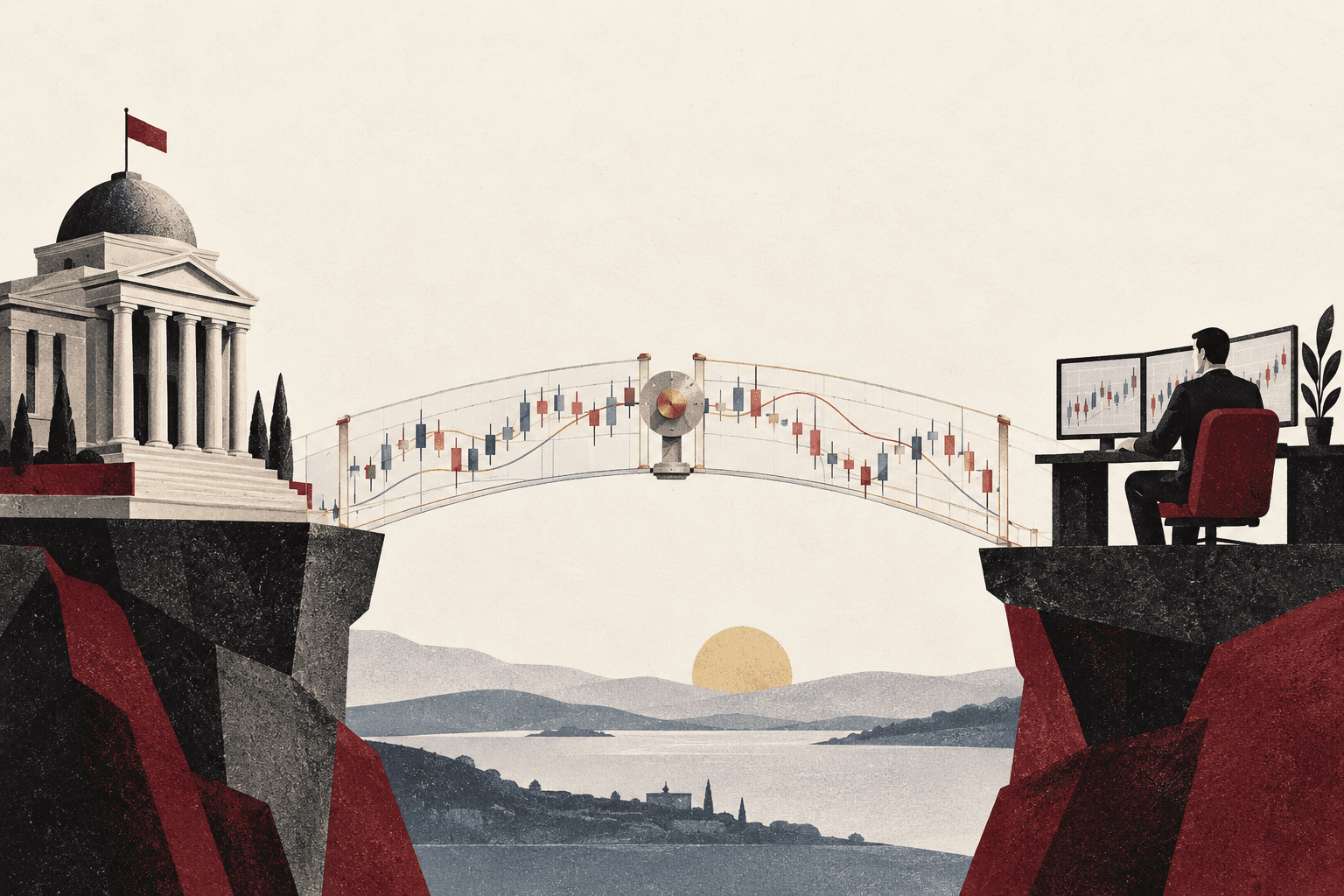
Market knowledge supplies possibilities. Psychology determines how those possibilities are handled. The trader who can combine both is not emotionless and does not need to be. They are simply less likely to let a temporary feeling rewrite a permanent rule.
Sources and Further Reading
- Chart Academy platform overview
- Chart Academy instructor directory
- FINRA discussion of emotional reactions and fear of missing out
- FINRA discussion of emotion and regret in investment decisions
- CFTC education on leverage and complex markets
This article is for educational and informational purposes only. It does not constitute investment, financial or trading advice. Trading involves substantial risk of loss and may not be suitable for every person. Readers should assess products, providers and risks independently and seek appropriately qualified advice where necessary.

Stefanos Moschopoulos
Stefanos Moschopoulos founded The Luxury Playbook in Athens and has spent the better part of a decade following the auction calendar, the en primeur releases, and the watchmakers, gallerists, and shipyards the magazine covers. He writes the field guides and listicles that anchor the Connoisseur section — pieces built on Phillips and Christie's results, Liv-ex movements, and conversations with collectors he has met across Geneva, Bordeaux, Basel, and Monaco. His own collecting habits sit closer to watches and wine than art, and it shows in the level of detail in the magazine's coverage of those categories. Under his direction, The Luxury Playbook now publishes long-form field guides, market-defining year-end listicles, and the Voices interview series with the founders behind the houses and the brands.