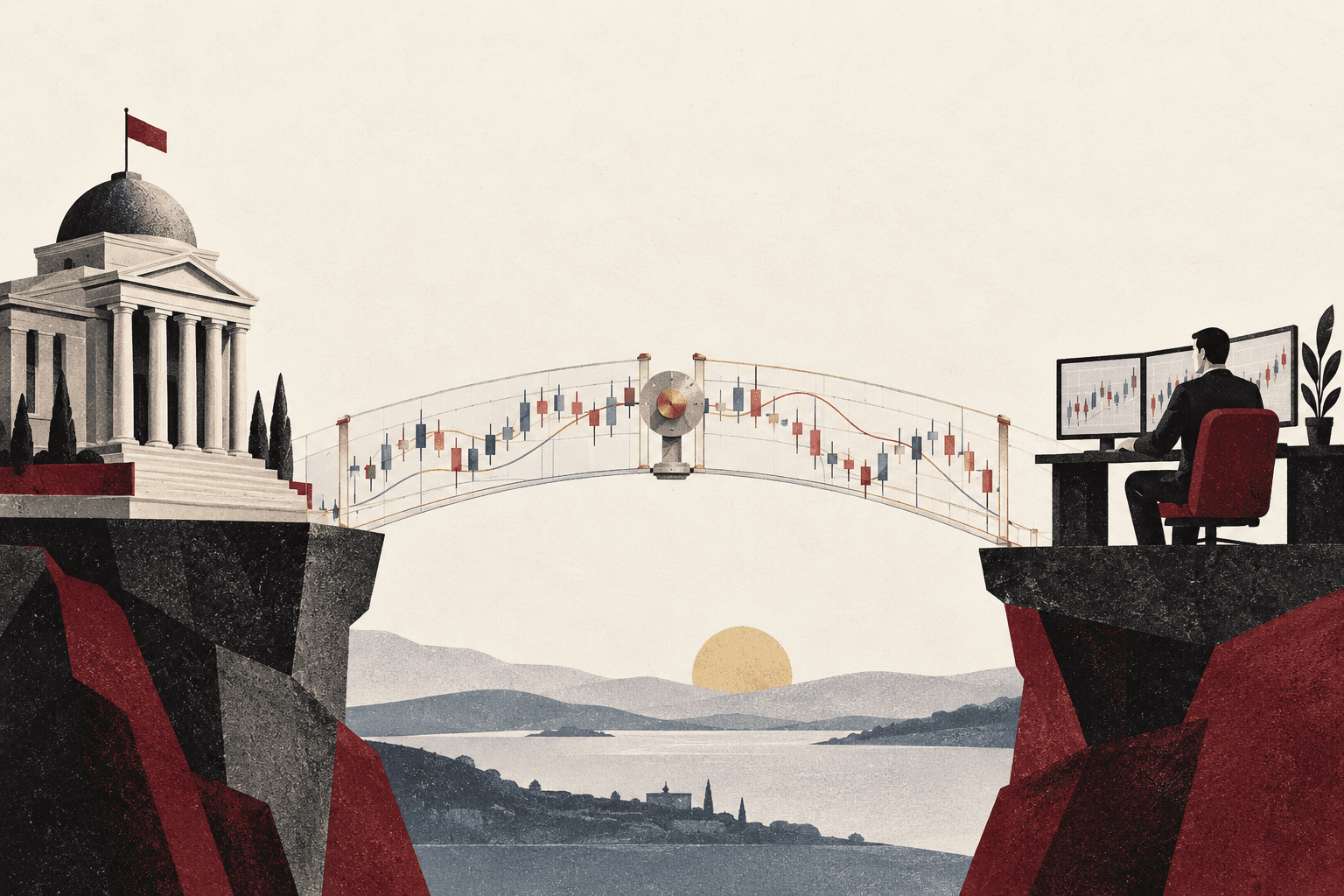

Luxury media sells access, drama and the exceptional call. Real investing is mostly the opposite, and the gap between the two is where a great deal of money is quietly lost.
The investors who appear in magazines tend to be exciting. They made the bold call, entered the impossible deal, saw what the crowd missed and were vindicated in style. It is good copy, and there is nothing wrong with admiring it. The difficulty is that the portrait is selected for drama rather than for representativeness, and drama is a poor guide to what actually compounds.
The investors who quietly do best across decades make, on the whole, terrible copy. They are patient to the point of dullness, they decline far more than they accept, and most of their best decisions look, from the outside, like doing nothing at all.
Key Takeaways
- Financial stories are selected for drama rather than for how representative they are, and a steady diet of them teaches readers to associate good investing with activity and boldness. The association runs almost exactly backwards.
- Charles Ellis argued that professional investing had stopped being a winner’s game decided by brilliant shots and had become a loser’s game decided by who makes fewer unforced errors.
- In a loser’s game, the exciting move is the dangerous one. The bold bet is remembered when it works and quietly disappears from the record when it fails, so survivorship makes boldness look like the cause of success.
- Patience is rare because it is psychologically expensive. Doing nothing while others act and are praised for acting feels like negligence, and the reward arrives slowly and out of sight.
- Much professional activity exists because activity looks like work, and work looks like value, even when the most valuable decision available was to leave the position alone.
- Treat your own excitement about an investment as information rather than as confirmation. The most impressive investors tend to look faintly underwhelmed by the story everyone else is breathless about.
- Who: Private investors, family offices and the advisers around them, along with the financial media that shapes how all three think about skill.
- What: Why the investors who compound most reliably across decades are the ones least likely to appear in a profile, and why that is not a coincidence.
- When: Continuously, but the distortion sharpens in periods when a single exciting theme dominates coverage and restraint looks like underperformance.
- Where: In portfolios rather than in headlines, and in the decisions not taken rather than the ones announced.
- Why: Because the evidence, gathered over decades, keeps pointing the same uncomfortable way. Activity is closer to a cost than a skill.
Table of Contents
- A Loser’s Game Won by Not Losing
- Why Boring Is the Hard Part
- The Dull Competence That Compounds
- Treating Excitement as Information
- Frequently Asked Questions
This creates a quiet distortion in anyone who consumes financial stories for entertainment, which is most people with money. The mind absorbs a steady diet of decisive action rewarded and begins, reasonably and wrongly, to associate good investing with activity, boldness and the well timed move. The association is almost exactly backwards. The evidence, gathered over decades, keeps pointing the same uncomfortable way. Activity is closer to a cost than a skill.
A Loser’s Game Won by Not Losing
Charles Ellis, who spent a career observing professional money management at close range, framed the matter with a sporting analogy that has aged well. Amateur tennis, he noted, is not won by hitting brilliant winners. It is won by the player who simply makes fewer unforced errors, who keeps the ball in play and lets the opponent self destruct.
Professional investing, he argued in the Financial Analysts Journal in 1975, had become the same kind of game. Not a winner’s game decided by spectacular shots, but a loser’s game decided by who makes fewer mistakes.
In a loser’s game, the drama is the danger. The exciting shot is the one that hands your opponent the point.
Most of the visible glamour in finance belongs to the winner’s game that no longer reliably exists. The bold concentrated bet, the brilliant piece of timing, the heroic contrarian stand are wonderful when they work and selectively remembered when they do, because the identical boldness that failed simply disappears from the record.
We see the survivors and infer that boldness was the cause, when boldness was merely the common ingredient in both the triumphs we celebrate and the disasters we never hear about. That asymmetry is the whole problem. Nobody writes the profile of the manager whose conviction bet was equally bold, equally well argued and simply wrong.
Why Boring Is the Hard Part
If patience and restraint are so effective, the obvious question is why almost nobody practises them. The answer is that they are psychologically expensive in a way that activity is not.
Doing nothing, while others act and are praised for acting, is one of the most uncomfortable things an investor can do. It feels like negligence. It earns no stories at dinner. It provides none of the satisfaction of having taken decisive command of the situation. The boring investor pays a continuous tax in foregone excitement and social standing, and collects the return only slowly, mostly out of sight, in sums that compound where no one is watching.
There is also the matter of justifying a fee, an existence, a sense of usefulness. A great deal of activity in professional finance occurs because activity feels like work and work feels like value, even when the most valuable thing on offer was to leave the position alone. The temptation to do something, to be seen earning your keep, is relentless, and it runs directly against the discipline that actually serves the client.
The quiet edge is partly the willingness to look idle while being right. That is a harder position to hold when a portfolio is also carrying the weight of how it looks to other people, which is a cost most investors never price.
The Dull Competence That Compounds
None of this is an argument for passivity disguised as wisdom, or for never acting. The point is sharper. The actions that matter are few, and the skill lies mostly in resisting the many that do not, in sitting through the stretches where the correct move is to wait, and in being faintly bored by the newest exciting thing because you have met its ancestors before and watched how they ended.
The most impressive investors often seem underwhelmed by the story everyone else is breathless about. That is not weariness. It is pattern recognition wearing a calm face.
It also explains why serious capital tends to be slower than the coverage around it suggests. The decision to wait out an expensive market rather than participate in it reads as inaction from the outside. Inside a well run portfolio it is the position.
Treating Excitement as Information
So the next time an investment arrives wrapped in genuine excitement, with a thrilling narrative and a sense that something rare is happening, it is worth treating the excitement itself as information, and not the flattering kind.
Markets are not theatre, though they are relentlessly marketed as theatre, because theatre sells subscriptions and dull competence does not.
The work that actually preserves and grows capital is repetitive, unglamorous and mostly invisible. It will never be the story. It is, all the same, the thing the story is quietly built on top of, and usually fails to mention.
Related thinking on why the most effective financial behaviour tends to look unremarkable from the outside can be found in Behavioral Arbitrage and the Hidden Skill Behind Modern Wealth Preservation.
Frequently Asked Questions
What is the loser’s game in investing?
The loser’s game is Charles Ellis’s description of a contest decided by who makes fewer mistakes rather than by who produces the most brilliant moves. He drew the comparison from amateur tennis, where points are typically lost through unforced errors rather than won through spectacular shots. Applied to investing, it means the reliable path to a good long term result is error avoidance, cost control and patience, not a run of exceptional calls.
Why do the best long term investors appear so inactive?
Because the decisions that matter most are few and the majority of available actions subtract value once costs, taxes and timing errors are counted. An investor who has already positioned a portfolio correctly has very little left to do in most quarters, so competence looks like idleness from the outside. The visible inactivity is the strategy working rather than the strategy stalling.
Does trading more frequently improve investment returns?
The long running body of evidence points the other way. Higher turnover adds transaction costs, spreads and tax events, and it introduces more opportunities for timing errors. Activity can feel like diligence, particularly for a professional who needs to demonstrate effort, but the effort itself is not what compounds. Restraint is the harder and more valuable discipline.
Why is financial media a poor guide to good investing?
Coverage is selected for narrative interest rather than for how representative a story is. Bold calls that succeeded are profiled; identically bold calls that failed vanish from the record. Readers therefore see a filtered sample in which boldness always appears to be the cause of success, and they draw a conclusion the underlying data does not support.
Source: Charles D. Ellis, Winning the Loser’s Game, first articulated in the Financial Analysts Journal in 1975 and expanded into the book of the same name, on investing as a game won by avoiding unforced errors rather than by making brilliant moves.
We last reviewed this analysis in July 2026.


Daniel Jark
Daniel Jark is an asset and wealth manager, author, and active angel investor whose work sits at the intersection of practical portfolio management and behavioral finance. He is the founder of FinCoTech AB, the company behind Behavioral Arbitrage, an educational platform dedicated to the psychology of money and better financial decision-making. His background spans 15+ years in asset and wealth management, with a strong focus on high-net-worth and ultra-high-net-worth individuals. Alongside this, he has built a long-standing body of published work on behavioral economics and financial literacy across major educational platforms. At The Luxury Playbook, he writes about behavioral finance and the psychology of money, examining the cognitive biases and decision errors that shape investor outcomes and offering practical ways readers can recognize and correct them in their own financial lives.