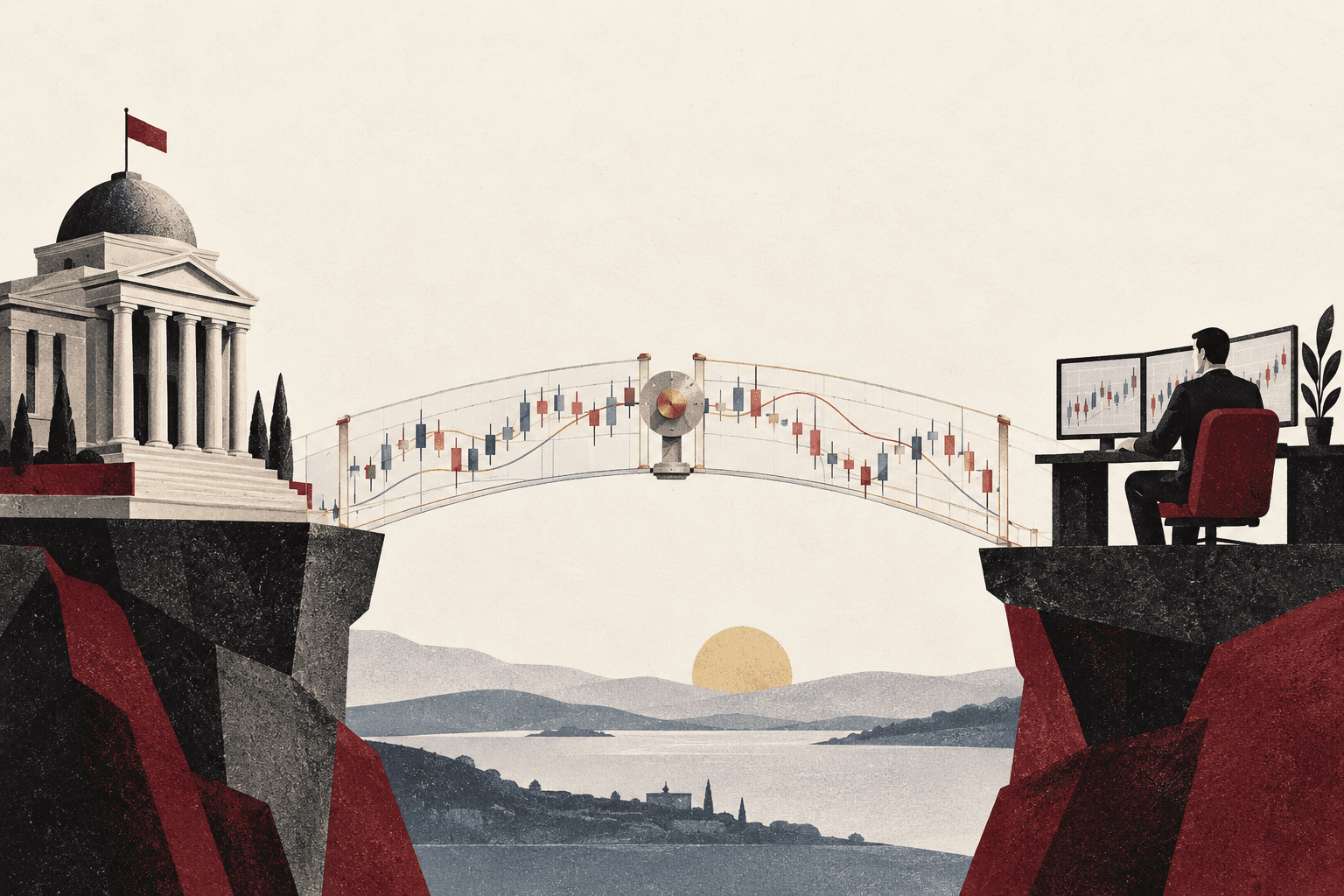
Access, diversification and clever structures protect a fortune only so far. What carries it across decades is harder to buy: the quality of the decisions made when the future is genuinely unknown.
Ask most people how a large fortune protects itself and you will hear about machinery. The private bank. The family office. Assets spread across currencies and jurisdictions. The trusts and holding companies that expensive advisers assemble with real skill. All of it is true, and all of it matters. But notice what it leaves out. The machinery holds whatever you place inside it. It does not tell you what to place there, when to hold your nerve, or when the most prudent-looking option in the room is the one quietly bleeding capital.
After enough years around private wealth, you stop being surprised by a particular pattern. Two families begin in almost the same position. Same access, same calibre of advice, similar opportunities crossing the desk. A generation later they are nowhere near each other. The gap rarely traces back to the products they were sold. It traces back to how each of them behaved when the future was genuinely uncertain, which is to say, when it counted.

Key Takeaways & The 5Ws
- The machinery of wealth — private banks, family offices, trusts, diversification — holds capital but never tells you what to do with it; judgment under uncertainty does.
- Behavioral arbitrage is the gap between how investors act under stress and how they would act calm and unhurried; preparing for that gap in advance is a durable edge.
- The wealthy are often more exposed, not less: success breeds overconfidence, and a large cushion hides costly mistakes for years so the lesson never lands.
- The fix is not more information but structure — a written record of why each major decision was made, and a fixed waiting period before any large reallocation.
- Morningstar’s Mind the Gap research keeps finding the average investor earns less than the funds they hold, because of the timing of their own buying and selling.
- Who is this for?
- Private wealth holders, family-office principals, advisers, and serious long-term investors who already have access and structure but want their fortune to last.
- What is it?
- An editorial argument that wealth preservation is a behavioral discipline — managing your own psychology across cycles — rather than a product you buy.
- When does it matter most?
- At the decisions that actually move the needle: after a sharp loss or a sudden windfall, when the crowd leans one way, or when a choice supposedly cannot wait.
- Where does it apply?
- Inside family offices, private banks, and any portfolio where emotion — not structure — is the binding constraint on long-run returns.
- Why consider it?
- Because the gap between your calm self and your panicked self is predictable, preparable, and compounds quietly across generations once you close it.
The arbitrage hiding in plain sight
In markets, an arbitrage is a gap between price and value that a disciplined hand can capture. Behavioral arbitrage points at a different gap, one that sits inside the investor rather than on the screen. It is the distance between how people are built to act under stress and how they would act if they were calm, rested and unhurried. That distance is stubbornly stable. Wealth does not close it. More often it widens, because money adds stakes, identity and an audience that a beginner never has to manage.
The useful thing about the gap is that it is predictable. We know, more or less precisely, the conditions that corrode judgment: a sharp loss, a sudden windfall, a crowd all leaning the same way, a decision that supposedly cannot wait. None of these is a surprise. Which means each can be prepared for, though not in the moment, when feeling already has both hands on the wheel. The preparation happens earlier, in the quiet and frankly tedious work of deciding in advance how you intend to behave when the test arrives. Do that, and you are trading the difference between your calm self and your panicked self, and keeping the spread.

Why the wealthy are more exposed, not less
There is a comforting idea that experience inoculates. Someone who built a company, survived a long career and accumulated real capital surely learned to govern his impulses along the way. Sometimes. But success quietly installs its own hazard. It persuades people that their judgment was the cause of the outcome, when timing and luck often did the heavy lifting in the dark. That belief hardens into overconfidence, and overconfidence is the most expensive thing a portfolio can carry, because from the inside it feels exactly like skill.
Money also distorts the feedback. A modest investor who makes a poor call feels it quickly, and the sting corrects him. A wealthy one can carry the same error for years, the damage absorbed by the cushion around it, the lesson never delivered. The behaviour survives because nothing forced it to change. I have sat in family office meetings where the structure on the table was genuinely excellent, drafted by serious people, and the decision feeding into it was sentimental: anchored to a holding someone’s father had loved, that no one in the room quite wanted to be the one to question. The architecture was sound. The thinking running through it was not. The most revealing conversations in this work are rarely about returns. They are about control, fear, loyalty and patience.
Building an edge against yourself
The fix is not more information. People at this level already drown in it. The fix is structure around the handful of decisions that actually move the needle. Some of the steadiest investors I know keep a written note of why they made each major commitment, not for the accountant but for themselves, so that later they can tell a good decision apart from a lucky one. Others build in deliberate friction, a fixed waiting period before any large reallocation, on the sound theory that urgency is usually a symptom of emotion rather than evidence of opportunity.
These habits look thin next to the vocabulary of access and exclusivity that surrounds private wealth. That is precisely why they work. The advantage is real because it is boring, and durable because almost nobody can be bothered to practise it. Morningstar’s long-running Mind the Gap research keeps arriving at the same uncomfortable finding: the average investor earns noticeably less than the very funds they hold, and the shortfall traces back to the timing of their own buying and selling. Markets do not reward excitement. They move money, year after year, from the impatient to the patient and from the reactive to the deliberate, in sums that compound out of sight.

A discipline, not a product
Seen this way, preserving wealth is less something you buy than something you do, repeatedly, mostly in private. The structures still earn their keep and the advisers still earn their fees, but they sit downstream of the real work, which is managing your own psychology across cycles built to test it. The families that compound across generations tend to treat that skill as seriously as they treat asset allocation, having understood that the two are the same conversation. Allocation is just judgment with a number attached.
The most valuable thing money can buy turns out to be unglamorous. It is room. Room to decide slowly, to wait without flinching, to do nothing when nothing is the right move. Whether that room gets used well or squandered is the quiet variable behind every fortune that lasts. It never appears in the brochure. It is, all the same, the part doing the preserving.
Source: Morningstar, Mind the Gap (US edition) (morningstar.com/business/insights/research/mind-the-gap)
For readers who want to go deeper on why behaviour, more than access, shapes long-term outcomes, Behavioral Arbitrage examines the psychology of decision-making under uncertainty.
Frequently Asked Questions
- What is behavioral arbitrage?
- Behavioral arbitrage is the gap between how investors are wired to act under stress and how they would act if they were calm, rested and unhurried. Because that gap is predictable, disciplined investors can prepare for it in advance and effectively keep the spread between their panicked and composed selves.
- Why are wealthy investors often more exposed to behavioral mistakes, not less?
- Success can install overconfidence by crediting personal judgment for outcomes that timing and luck actually shaped. A large capital cushion also absorbs the damage from poor decisions for years, so the corrective sting never arrives and the bad behaviour survives because nothing forced it to change.
- How can investors build discipline against their own psychology?
- Not with more information, but with structure around the handful of decisions that move the needle: keeping a written record of why each major commitment was made so a good decision can later be told apart from a lucky one, and building in a fixed waiting period before any large reallocation to defuse the urgency that usually signals emotion rather than opportunity.
- What does Morningstar’s Mind the Gap research show?
- Morningstar’s long-running Mind the Gap research repeatedly finds that the average investor earns noticeably less than the very funds they hold, with the shortfall tracing back to the timing of their own buying and selling. Markets move money, year after year, from the impatient to the patient.

Daniel Jark
Daniel Jark is an asset and wealth manager, author, and active angel investor whose work sits at the intersection of practical portfolio management and behavioral finance. He is the founder of FinCoTech AB, the company behind Behavioral Arbitrage, an educational platform dedicated to the psychology of money and better financial decision-making. His background spans 15+ years in asset and wealth management, with a strong focus on high-net-worth and ultra-high-net-worth individuals. Alongside this, he has built a long-standing body of published work on behavioral economics and financial literacy across major educational platforms. At The Luxury Playbook, he writes about behavioral finance and the psychology of money, examining the cognitive biases and decision errors that shape investor outcomes and offering practical ways readers can recognize and correct them in their own financial lives.