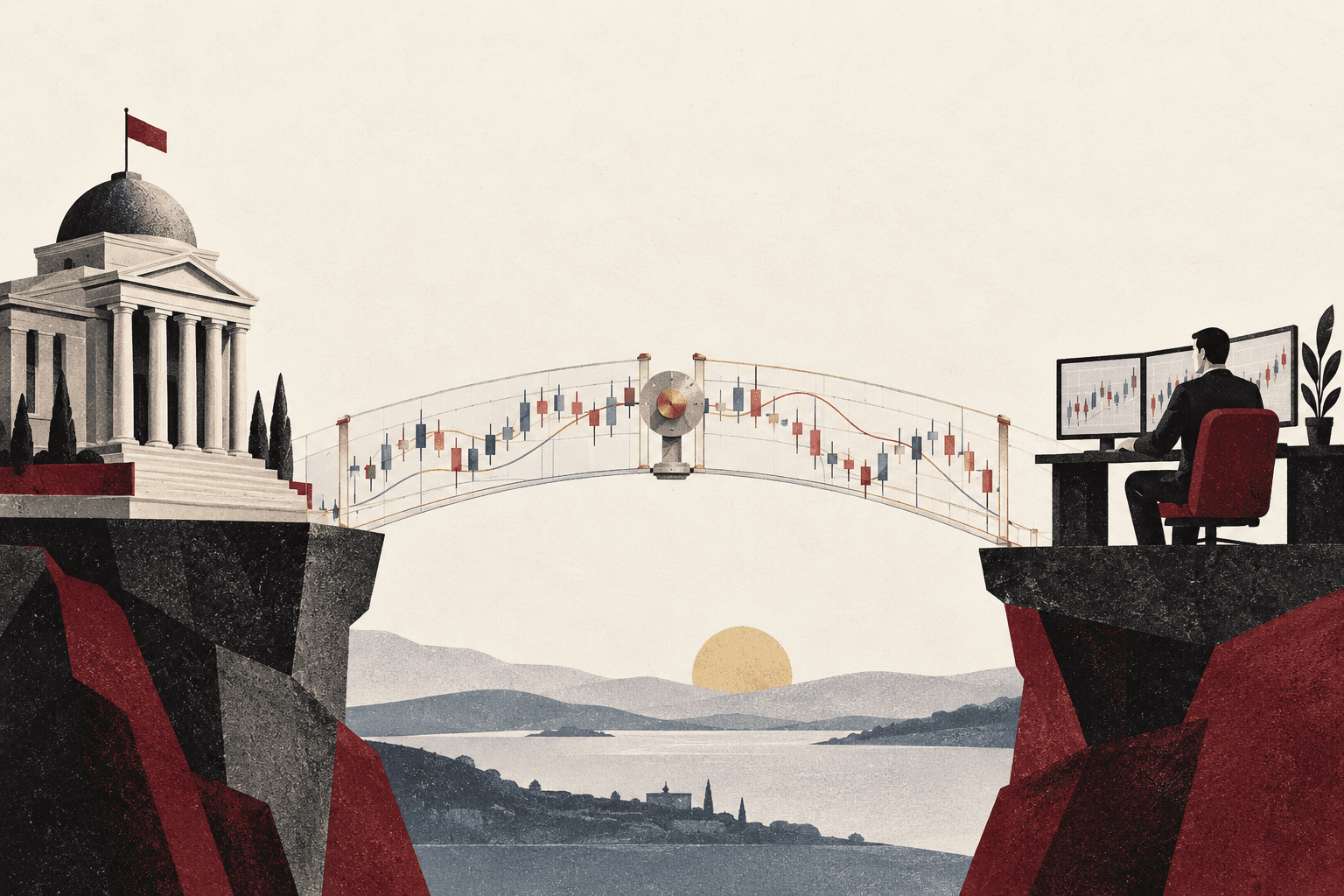
No category of cross border risk receives more attention than political risk. Berne Union members provide around $2.5 trillion in payment risk protection to banks, exporters and investors each year. In 2024, they supported $140 billion in long term capital flows into developing countries. Expropriation, currency transfer restrictions and political violence each have a policy, a premium and a paragraph in the investment committee memo. The machinery is sophisticated and well capitalised. Yet it is often aimed at risks that are less likely to end a deal than the human transition taking place behind it.
I have spent more than twenty years advising governments, sovereign linked institutions and family offices across more than thirty countries, with deep concentrations in the Gulf and sub Saharan Africa. I have seen deals collapse in Nigeria, Zambia, Ghana and markets far more developed than any of them. None of those collapses would have triggered a political risk policy. Every one failed during a transition of people. A founder aged out in the middle of a deal. A ministry changed hands. A successor inherited obligations he never made.
The risk most investors underprice has no line on the standard diligence checklist because it is larger than any single deal. It is a demographic event unfolding on every continent at once, and no family office is exempt. I call it the handover.

Key Takeaways
- Cross border diligence often prices political events carefully while underpricing the succession of founders, officials and family decision makers.
- The United States, the Gulf and Africa are all experiencing major generational transitions in capital, enterprise ownership and leadership at the same time.
- Contracts and capital can transfer formally, but personal standing, informal authority and trusted relationships do not transfer automatically.
- A founder led business can pass every conventional review while remaining dependent on decisions and controls that exist only in one person's hands.
- Investors should map who may be sitting across the table in year five, test whether obligations are institutional and build relationships with the next layer of leadership before capital is committed.
- The handover is also an opportunity. Investors who earn trust with both generations can establish relationships that become more valuable as leadership changes.
- Who: Family offices, private investors and advisers making long term commitments across borders.
- What: The succession risk created when founders, officials and capital owners change at the same time.
- When: During the coming decade as large wealth transfers and leadership transitions converge across major investment corridors.
- Where: Most visibly across the United States, the Gulf and Africa, though the underlying risk applies to any relationship driven market.
- Why: Because a sound agreement can still fail when the people who understood, sponsored or informally governed it leave the table.
Table of Contents
- Both Sides of the Table Are Changing Hands
- The Founder's Company and the Successor's
- What Does Not Transfer
- The Other Side of the Handover
- The Structure That Survives
- Diligence for a Handover Decade
- The Same Five Years
Both Sides of the Table Are Changing Hands
For the first time in modern economic history, both sides of many cross border tables are changing hands within the same decade.
In the United States, Cerulli Associates projects that $124 trillion will transfer through 2048, with $105 trillion flowing to heirs. Nearly 81 percent of the total is expected to come from Baby Boomers and older generations. Much of that capital will move through the same family offices now reallocating into Africa and the wider emerging market corridor, a movement I examined in Why Family Offices Are Quietly Reallocating Into Africa. The capital crossing the border increasingly belongs to people who did not build it.
In the Gulf, a PwC Middle East family business report estimated that $1 trillion would pass from one generation to the next within a decade. The same report described family businesses as contributing about 60 percent of regional GDP and employing roughly 80 percent of the workforce. The merchants and builders who helped construct the region's post oil economies are handing their companies to their children during the largest economic transformation the region has attempted.
In Africa, the generation that built much of the continent's modern private sector is reaching the end of its run just as the demographics tilt the other way. The United Nations puts the continent's median age at 19.7 years, making it the youngest in the world. The IMF projects that by 2035, the number of sub Saharan Africans reaching working age will exceed the rest of the world combined. The generation taking over African companies often has no history with the investors who made their agreements with the founders.
Both Sides of the Table Are Changing Hands
Three regions illustrate the scale of simultaneous transition in wealth, enterprise ownership and future leadership.
Projected wealth transfer through 2048
Estimated family business wealth transfer within a decade
Median age in years
Sources: Cerulli Associates 2024; PwC Middle East Family Business Survey 2019; United Nations Office of the Special Adviser on Africa 2024.
Put those facts side by side and the consequence is plain. A large share of the cross border agreements signed in this period will ultimately be carried out, revised or abandoned by someone other than the person who signed them. That is the risk, and few investors are pricing it explicitly.
The Founder's Company and the Successor's
Due diligence examines the company the founder built. The company you will actually work with may belong to whoever comes after the founder, and no data room can show that future company completely.
A founder led partner can produce clean financials, a credible board roster and a structure that satisfies every outside counsel review while every meaningful decision still runs through one desk. The informal controls that made the founder's company work do not transfer with the shares. You discover this the first time a payment requires a signature and the signatory is unreachable, or the first time the board turns out to convene at the pleasure of a single shareholder.
Most partnerships will encounter some version of that discovery. PwC's 2021 Global Family Business Survey found that only 30 percent of current generation leaders said there was a robust succession plan. Its 2025 survey found that 34 percent of family businesses globally said succession planning had affected them in the previous year.
On the public side, the same transition takes a different form. Ministers rotate. Governments change. Sovereign linked counterparties reorganise, and the director general who championed your project retires. The project survives if the relationship was institutional. It stalls if the relationship was personal.
The partnership record already carries the cost. McKinsey practitioners estimated that 40 to 60 percent of completed joint ventures underperformed their potential. Ankura reports that 31 percent of large and material joint ventures were terminated within five years. Not all of those failures were caused by succession, but leadership transitions often expose weaknesses that had been hidden by a founder's authority or an official's personal sponsorship.
The legal backstop is slower than the problem. The International Centre for Settlement of Investment Disputes registered 63 new cases in 2025, its second highest annual total on record. A favourable award may still have to be enforced against a counterparty at home, years and millions later.
What Does Not Transfer
Capital transfers. Contracts transfer. Relationships do not.
A deal introduction purchased through an intermediary is a claim on one person's standing, and the claim expires when that person leaves the table. This is the exposure the handover multiplies most brutally because an introduction and a relationship look identical until the transition arrives.
An introduction gets you the first meeting. A relationship gets you the phone call before policy changes, the honest answer about the licence and the patience of a counterparty in the month your side needs an extension. Only one of those survives a funeral, a retirement or an election.
This is also where developed market return expectations can cause damage. Investors arrive with familiar timing and familiar return curves. When returns take longer to materialise, they conclude that the market failed them and leave frustrated. In many cases, the market performed exactly as a market at that stage of development performs. What failed was the assumption that capital could substitute for standing. It cannot. In a handover decade, that assumption becomes more expensive because standing has to be earned with two generations at once.
The Other Side of the Handover
It would be easy to treat the handover purely as a threat, one more exposure to hedge. That reading misses what the handover can also be. It is the moment the table resets.
At Provenance Family Advisory, the firm I co founded to guide families through succession, sale and global expansion, we examine transition from the bottom up as well as the top down. In a decade this disruptive, the successor generation often sees where an industry is going while the structure above it was built for where the industry has been.
Across the Gulf and Africa, the generation preparing to take over is younger, more technically fluent and closer to the technologies reorganising its industries than the generation handing over. The investor who knows only the founder holds a depreciating relationship. The investor who also knows the successor may hold an appreciating one.
The handover punishes the first and can reward the second. The difference comes down to where the investor spent time before the transition arrived.
The Structure That Survives
In my earlier article, I described how I structure market entry at Phoenix Global: from the top down. If the most senior levels of government in a country are beyond direct reach, I decline the country. I presented that as an access model. In a handover decade, it becomes something more consequential.
A relationship anchored at the institutional summit can outlast the rotation of any office below it. The summit is also where the next generation appears first. In ministries, sovereign funds and family holding companies, succession is visible from the top years before it is announced. Entry at the top positions an investor to know the successor before the succession.
The inverse deserves stating just as plainly. Entering low can multiply the exposure because every intermediary between you and the decision maker is another relationship that may not survive the handover, often purchased from someone who may soon leave the table.
Diligence for a Handover Decade
Serious cross border diligence now starts with a question that appears on no standard checklist: who will be on the other side of this table in year five?
Map the succession inside the partner before capital is committed. Consider the age of the principal, the readiness of the successor and whether the obligations to you are institutional or personal. Sit with the second layer of leadership without the principal present and listen to how decisions actually travel. Ask who signs, who can override the signer and what happened the last time the two disagreed.
Test the banking rails with a small transaction before a large one depends on them. Spend real time in the country, including with the generation that has not yet taken over. None of this can be delegated entirely to a checklist. That is precisely why it can protect you.
The Same Five Years
In my first article, I wrote that the window for Western entry at the early stage is open now, with five years as the outer limit. The pace of deployment from the Middle East, China and India is a reason to shorten that estimate.
The window and the handover occupy the same five years. Investors who enter now can be present while the table resets, known to the generation signing and to the generation inheriting. Investors who wait may arrive to find the handover complete, the relationships formed and the successors already sitting across from someone else.
Political risk insurance will continue to cover the perils it was designed to cover. The advantage belongs to investors who also price the handover, and the first price of the handover is presence.
The handover has already begun. Presence cannot be bought after the fact.
Disclosure: Larisa B. Miller is the founder of Phoenix Global and co founder of Provenance Family Advisory, both of which are referenced in this article.
Last reviewed September 2026. This article is general analysis and does not constitute investment, legal or tax advice.
Larisa B. Miller
Larisa B. Miller is the Founder and Chief Executive of Phoenix Global, a specialised global advisory firm headquartered in Miami and operating across more than thirty countries. Phoenix Global advises family offices, governments, sovereign linked institutions and Fortune 500 corporations on infrastructure, investment and cross border development across emerging markets. Her career spans more than two decades across the Gulf, Africa, Europe and the Americas, including twelve years in the Middle East. She spent nearly five years as Head of Business Development and Investment for members of the Royal Family of Abu Dhabi before founding Phoenix Global as an independent firm. Through Provenance Family Advisory, which she co founded, she guides families through the transitions that decide whether their enterprises endure, including succession, sale and global expansion. At The Luxury Playbook, she contributes analysis on emerging market capital flows, sovereign linked investment and the strategic corridors connecting the Gulf, Africa and global wealth, with particular focus on how family offices and private investors can position across regions that most investment committees treat in isolation.