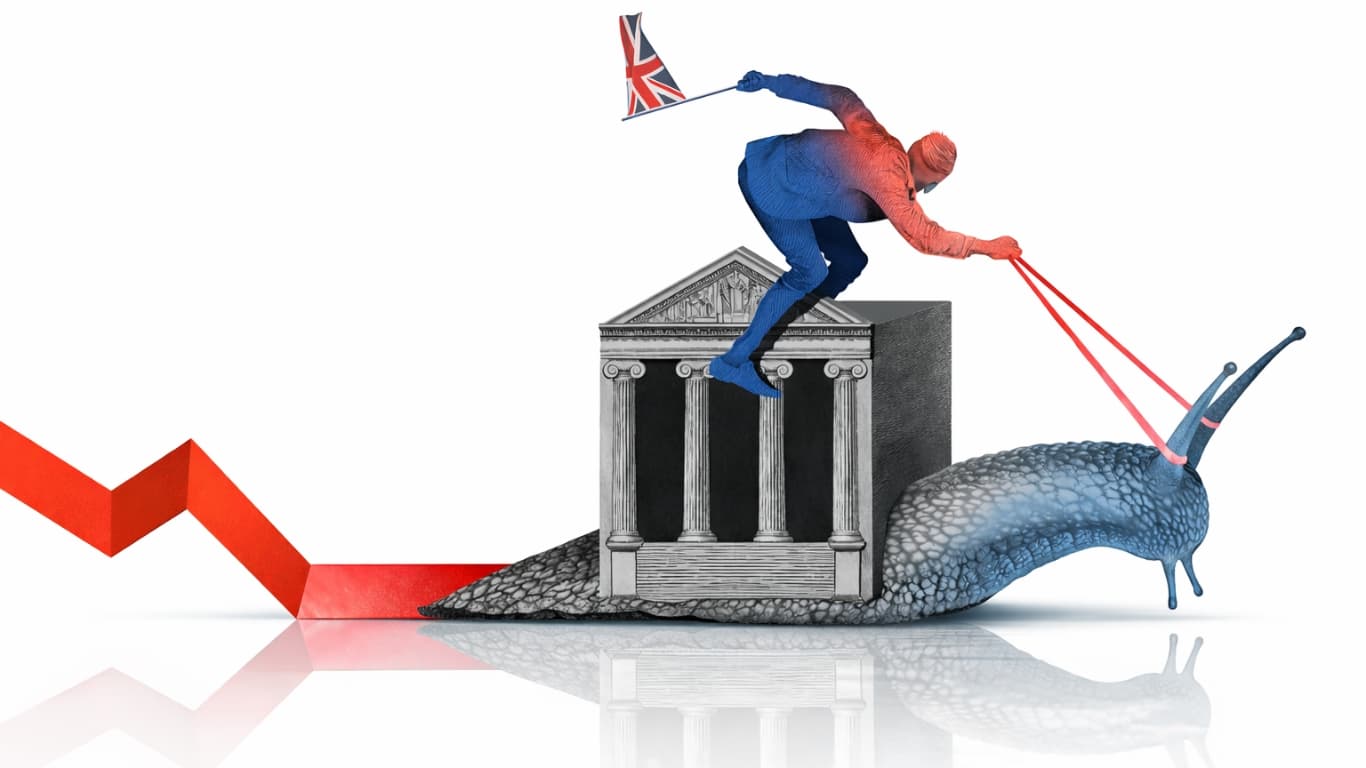
Greece’s stock market has pulled off one of the most dramatic turnarounds in modern financial history. A decade ago, it was on the verge of total collapse. Today, it’s one of the best-performing markets on the planet, and if you’ve been watching from the sidelines, you’ve already missed a serious move.
MarketWatch reports that FTSE Russell is set to reclassify Greece back to “developed market” status effective September 2026, following structural improvements and sovereign rating upgrades. That’s not just a label change. It validates that Greece has genuinely rebuilt the institutional foundations and market infrastructure that crumbled during the debt crisis.
The performance numbers tell you everything you need to know about where investor confidence stands right now. The MSCI Greece Index has vastly outperformed global markets, driven by sovereign credit upgrades and a flood of renewed trust from international capital that had written the country off entirely.
- The Greek stock market has staged a remarkable comeback, with the ASE General Index posting strong gains as investor confidence in Greek economic recovery has solidified.
- Greek banks have led the rally, benefiting from improved asset quality, higher interest rates and successful recapitalisations that strengthened balance sheets significantly.
- Sovereign credit upgrades back to investment grade by major rating agencies have unlocked institutional capital flows previously restricted from Greek government bonds.
- Tourism sector strength has supported earnings across hotels, airlines and consumer-facing businesses, with international arrivals reaching record levels in 2025.
- Structural reforms launched during the bailout period have improved Greek economic flexibility, supporting productivity gains and attracting foreign direct investment flows.
- For international investors, Greek equity exposure offers meaningful diversification within European allocations and represents one of the most successful sovereign recovery stories globally.
- Who is this for?
- International equity investors and tactical allocators who want to understand the Greek stock market comeback and evaluate whether current momentum can continue through 2026 and beyond.
- What is happening?
- An analysis of the Greek stock market comeback, covering banking sector dynamics, sovereign credit improvements, tourism recovery and the structural reforms underpinning the broader equity rally.
- When did this emerge?
- Most relevant during the current Greek equity outperformance cycle, particularly as investors evaluate whether momentum can continue and where additional opportunities exist in the local market.
- Where is this happening?
- On the Athens Exchange through the ASE General Index, with major listed Greek banks, infrastructure companies and consumer businesses providing the most liquid equity exposure available.
- Why does it matter?
- The Greek stock market comeback represents one of the most compelling sovereign and equity recovery stories of recent years, offering investors meaningful diversification and structural growth exposure.
Global Country ETF Performance Analysis
The Greek equity recovery has been mapped in detail by the institutional research community. MSCI still classifies Greece inside its frontier-to-emerging transition framework, and S&P Global tracks the sovereign-rating progression that underwrites foreign investor appetite.
The macro picture sits with the multilateral institutions and major financial press. The IMF publishes Article IV reviews on Greek growth and fiscal performance, while The Financial Times and Bloomberg have both tracked the foreign-buyer rotation back into Athens-listed names.
If you want to see where Greece stands in context, look at the year-to-date total returns for country-specific ETFs across 45 global markets. The data tracks investment performance across Europe, Asia, the Americas, the Middle East, Africa, and Oceania, covering both developed and emerging markets.
| Country ▼ | Ticker ▼ | Total Return YTD (%) ▼ |
|---|
In March 2026, Moody’s upgraded Greece to investment grade Baa3 from Ba1. Reuters documented how the agency cited faster-than-expected fiscal recovery and institutional improvements. That single move fundamentally changed how the global investment community prices Greek risk.
If you dismissed Greece as uninvestable just five years ago, you’re now facing a choice. Either you find vindication in the thesis that markets recover, or you sit with the uncomfortable lesson that writing off entire countries based on crisis-era assumptions carries a real opportunity cost.
For deeper context, the breakdown in how Greek exposure fits into a broader international stock allocation is worth reading alongside this analysis.
Key Takeaways
Navigate between overview and detailed analysisKey Takeaways
- Greece’s equity market has delivered one of the most impressive global performances, with the MSCI Greece Index gaining over 60% year-to-date and FTSE Russell confirming reclassification to developed market status by September 2026.
- Moody’s upgrade to investment grade (Baa3) marked a historic milestone, citing rapid fiscal consolidation, institutional reform, and restored market credibility after a decade of crisis-driven stagnation.
- Greek GDP growth near 2.3%, inflation around 2.4%, and a declining debt-to-GDP ratio at 163.9% have built the macroeconomic stability that underpins investor confidence and equity rerating.
- Banking stocks have spearheaded the rally, Alpha Bank up roughly 130%—as restructured balance sheets and revived credit growth signal full normalization of Greece’s financial system.
- The country’s market capitalization, still only about 50% of GDP, suggests valuations remain reasonable compared to mature markets, offering continued upside as global investors increase exposure ahead of the 2026 reclassification.
- Foreign inflows exceeding €11.5 billion, successful privatizations like the €785 million Athens International Airport sale, and Euronext’s €399 million bid for ATHEX confirm Greece’s reintegration into mainstream European capital markets.
The Five Ws Analysis
- Who:
- Greek banks, energy firms, and industrials, led by Alpha Bank, Metlen Energy & Metals, and major infrastructure assets, are driving the market’s resurgence, supported by institutional investors reentering the market.
- What:
- A full-scale market revaluation supported by credit upgrades, economic growth, and renewed investor trust, propelling Greek equities among the world’s best performers.
- When:
- The rally accelerated through 2024 and beyond as Greece regained investment-grade status and FTSE Russell confirmed developed market reclassification effective September 2026.
- Where:
- The Athens Stock Exchange (ATHEX) now serves as the focal point of regional investor attention, with trading volumes and market capitalization surging toward €130 billion.
- Why:
- A decade of fiscal repair, political stability, and EU-funded investment has restored confidence, transforming Greece from a symbol of crisis into one of Europe’s most compelling equity stories.
Greece’s Economic Comeback in Numbers
Greece has broken free from the stagnation that defined the post-crisis decade. The IMF projects 2.0% real GDP growth for 2026, while Greece’s own forecasts alongside EU projections push that figure closer to 2.3%, according to Economy and Finance and Bank of Greece sources. That’s not explosive growth, but for a country once labeled a basket case, it’s a powerful signal.
The Bank of Greece reports that Q1 2025 real GDP rose 2.2% year-over-year, demonstrating that these aren’t just forward-looking estimates but actual economic expansion happening now.
Inflation control adds another layer to the macro stability picture that markets demand before committing serious capital. The IMF expects around 2.4% inflation for Greece, a level that keeps price pressures manageable without forcing aggressive monetary tightening that could choke off growth. That combination of steady GDP expansion and benign inflation creates the Goldilocks environment that equity markets typically reward with multiple expansion.
The fiscal discipline story is where things get really interesting. Bank of Greece data shows that in 2024, Greece’s debt-to-GDP ratio fell to roughly 163.9%, continuing a downward trajectory from peaks that exceeded 200% during the worst crisis years. The direction of travel matters as much as the absolute number.
Even more telling, the primary fiscal surplus in 2023 reached 2.1% of GDP. Greece was running budget surpluses before interest payments rather than piling on new debt. For bond and equity investors alike, that kind of fiscal discipline reduces refinancing risk and frees up resources for growth rather than crisis management.
That’s exactly what you want to see.
Credit rating upgrades have followed in a cascade as agencies recognize what the data is showing. The U.S. Department of State’s 2026 Investment Climate report notes that Greece regained investment-grade credit ratings from all major rating agencies, ending years of junk bond status that had locked the country out of mainstream fixed income portfolios entirely.
Reuters also reports that S&P put Greek stocks on a watch list for upgrade to developed market status, running parallel to FTSE Russell’s reclassification move. When multiple index providers start moving in the same direction at once, you pay attention.
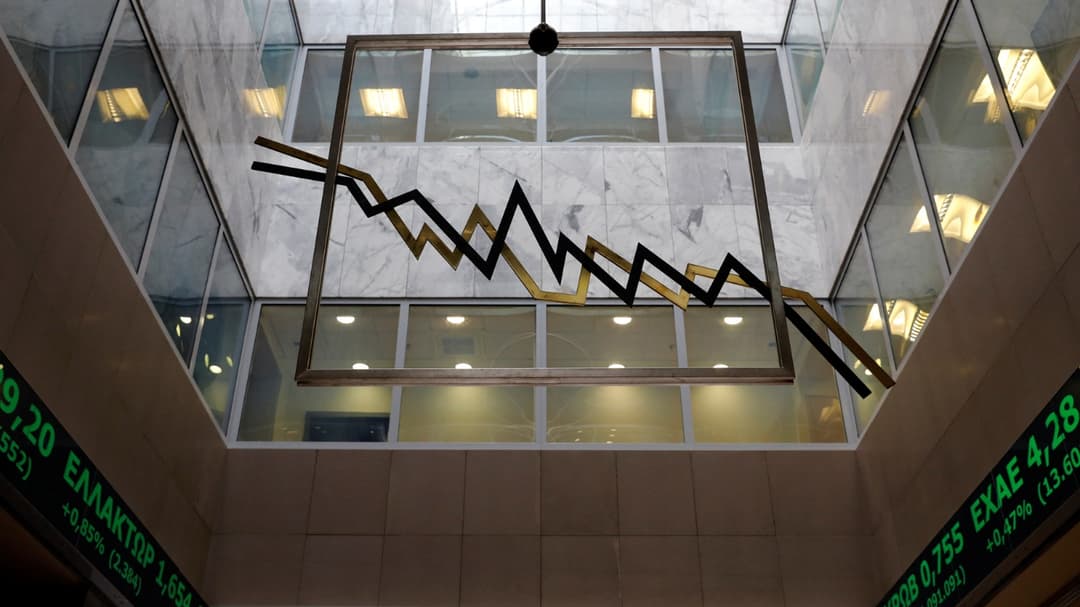
Greek Equities Are Outperforming Global Benchmarks
The year-to-date performance numbers for Greek equities border on extraordinary by European market standards. This isn’t a quiet, grinding rally. It’s been impossible to ignore for anyone watching global markets closely.
Tovima reports that Greek equities have gained roughly 43.5% in local currency and approximately 63% in U.S. dollar terms in 2025, returns that would be impressive for emerging markets but are nearly unheard of for European developed markets.
GlobalX takes the measurement even higher, showing the MSCI Greece Index returned 67.6% year-to-date through July 15, 2026. To put that in perspective, most developed market equity indices would celebrate a 15% year as exceptional.
These aren’t just index calculations sitting in a spreadsheet. They reflect real capital appreciation. CEIC Data shows the Athens Composite index closed at 1,607.8 points in February 2026, up from 1,549.3 points in January, demonstrating sustained momentum rather than a single sharp spike followed by a giveback.
Banking stocks have led the charge, and their performance reflects an almost complete recovery from near-death experiences during the crisis years. FirstOnline describes banking stocks as “superstars” with triple-digit gains, with Alpha Bank up roughly 130% year-to-date. If you know how to read an earnings report, the Greek banking sector’s transformation over the past three years reads like a masterclass in balance sheet repair.
Tovima also highlights banking’s strong 63% rise as a key driver of overall market performance. For investors who bought Greek bank stocks when they traded at fractions of book value, these gains are multi-year vindication of contrarian positioning done right.
The market capitalization context suggests there’s still room for further growth. Total market cap of Greek listed equities sits around €130 billion, roughly 50% of projected 2026 GDP of €240 billion. That market cap to GDP ratio stays well below developed market norms, where ratios often exceed 100%.
So even after the recent rally, Greek equities haven’t reached valuation levels that signal saturation or overheating.
Compare Greece against European and global benchmarks and it stands alone at the top. Visual Capitalist data puts Greece among the top-performing equity markets as of mid-2026, with the GREK ETF up approximately 32.7% against other country ETFs. That kind of outperformance doesn’t happen by accident.
Valuation metrics suggest the rally hasn’t pushed Greece into bubble territory despite the dramatic gains. World PE Ratio data shows Greece’s stock market P/E ratio at roughly 10.95, near its historical average and within typical ranges. You’re not buying into a frothy market here.
The fundamentals are doing real work.
This reasonable valuation, combined with strong earnings growth from restructured banks and reviving industrial companies, means the price appreciation reflects improving fundamentals rather than pure multiple expansion driven by speculation.
What’s Fueling the Market Rally
Government stability and reforms provide the political foundation that long-term capital requires before it moves. MarketWatch notes that reclassification efforts from FTSE and S&P depend on improved market accessibility, regulatory reforms, and a stable institutional environment, all elements of Greece’s recent reform program. Without that political bedrock, the rest of the story doesn’t hold together.
EU funding, through the Next Generation EU Recovery and Resilience Facility, is driving investment that had been completely absent during the austerity years. The IMF’s 2026 projections rely heavily on implementation of these RRF funds as drivers of investment across infrastructure, digital transformation, and green energy. That’s a multi-year tailwind, not a one-quarter bounce.
For equity investors, this EU money flow creates revenue opportunities for Greek companies while improving the country’s long-term competitiveness.
Bond market confidence is feeding directly through to equity valuations in ways that show how fixed income and equity markets reinforce each other. MarketWatch and Financial Times coverage details how sovereign bond yields and spreads have compressed following the credit upgrades, narrowing equity risk premiums and making stocks more attractive relative to bonds.
When Greek government bonds trade closer to German bund yields, it signals reduced country risk. And reduced country risk justifies higher equity multiples. That’s the transmission mechanism worth understanding if you’re positioning a portfolio here.
The revival in credit and bank lending rounds out the picture by showing that Greece’s financial system is functioning normally again after years of capital controls and a mountain of non-performing loan overhang. That normalization is easy to underestimate if you weren’t watching closely during the crisis years.
Bank of Greece reports that corporate bank credit expansion accelerated in 2024 and into 2026, household deposits are rising, and lending rates are declining. Greek companies can now finance expansion and consumers can borrow for purchases, creating the private sector growth dynamic that was simply absent during the crisis years when the banking system was essentially frozen solid.
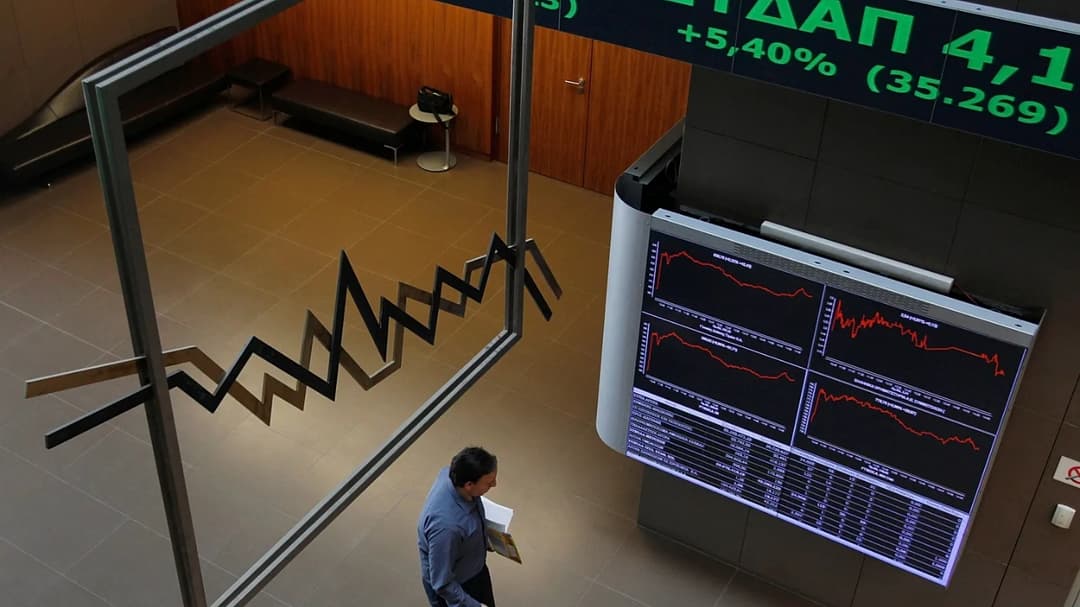
Foreign Investors Are Paying Attention Again
Capital inflows give you the most concrete evidence that international investors view Greece as a serious destination again rather than a crisis to avoid. Tovima reports that since early 2023, investors have poured €11.5 billion into Greek equities and €6.5 billion into government bonds. That’s not speculative positioning.
That’s conviction capital. And if you’re interested in putting money to work in Greece more broadly, understanding this inflow dynamic matters.
Privatization and IPO activity shows that Greece can execute major transactions that attract serious international capital. AP News reported that Greece sold a 30% stake in Athens International Airport in a high-demand offering that raised €785 million. That kind of deal only happens when global institutions have conviction in a country’s trajectory.
If you want to understand how to trade an IPO like this, the mechanics are worth studying before the next offering comes to market.
The strong demand for this privatization shows investors are willing to buy Greek assets at prices that value them as stable infrastructure rather than distressed opportunities.
Cross-border interest in Greek market infrastructure itself validates the transformation. Euronext has been in talks to acquire the Greek stock exchange ATHEX under an all-share deal valued at around €399 million. When a major European exchange operator wants to buy your stock exchange, you’re no longer a peripheral market.
When major European exchange operators want to own Greek market infrastructure, it signals confidence not just in current conditions but in long-term growth potential that makes the acquisition strategic rather than opportunistic.
Corporate performance underpins the equity rally with actual earnings growth, not just multiple expansion on hopes and sentiment. Wikipedia data shows Alpha Bank’s 2024 operating income reached roughly €2.219 billion with net income around €860.9 million. Greek banks are genuinely profitable again rather than just papering over losses with accounting creativity.
Metlen Energy and Metals, formerly Mytilineos, reported 2024 revenue of approximately €5,683 million, demonstrating that Greek industrial companies are operating at real scale in international markets. The story here goes well beyond banking. And if you’re looking at how equity market recoveries like this one fit into a broader view of markets rising despite macro fears, Greece is one of the clearest case studies you’ll find right now.
FAQ
Why are Greek stocks outperforming global markets in 2025?
Greek stocks are outperforming due to GDP growth around 2.3%, sovereign credit upgrades to investment grade, €11.5 billion in equity inflows since early 2023, and triple-digit banking sector gains. FTSE Russell’s September 2026 reclassification to developed market status is also driving demand.
Which sectors are driving Greece’s stock market growth?
Banking leads with Alpha Bank up approximately 130% year-to-date. Energy and industrial metals companies like Metlen contribute strong performance. Infrastructure assets including the Athens International Airport privatization and broad EU-funded projects across multiple sectors are also key drivers.
Is now a good time to invest in Greek equities?
Greek equities show reasonable valuations with a P/E ratio around 10.95 and market cap at only 50% of GDP versus 100%+ in developed markets. The September 2026 developed market reclassification will create index buying. Risks include geopolitical disruption, EU funding dependency, and potential sector overheating after strong 2025 gains.
We last reviewed this analysis in May 2026.


Alex Tzoulis
Alex Tzoulis is Co-Owner and Markets Analyst at The Luxury Playbook, specializing in equities, crypto, forex, and global financial markets. His work focuses on analyzing macroeconomic trends, geopolitical developments, and monetary policy, translating them into actionable insights across both traditional and digital asset classes. He leads the platform's financial market coverage, providing structured analysis across stock market investing, trading strategies, and cryptocurrency markets. His expertise strengthens the publication's authority in financial markets and capital allocation, bridging traditional finance with emerging digital investment ecosystems.