
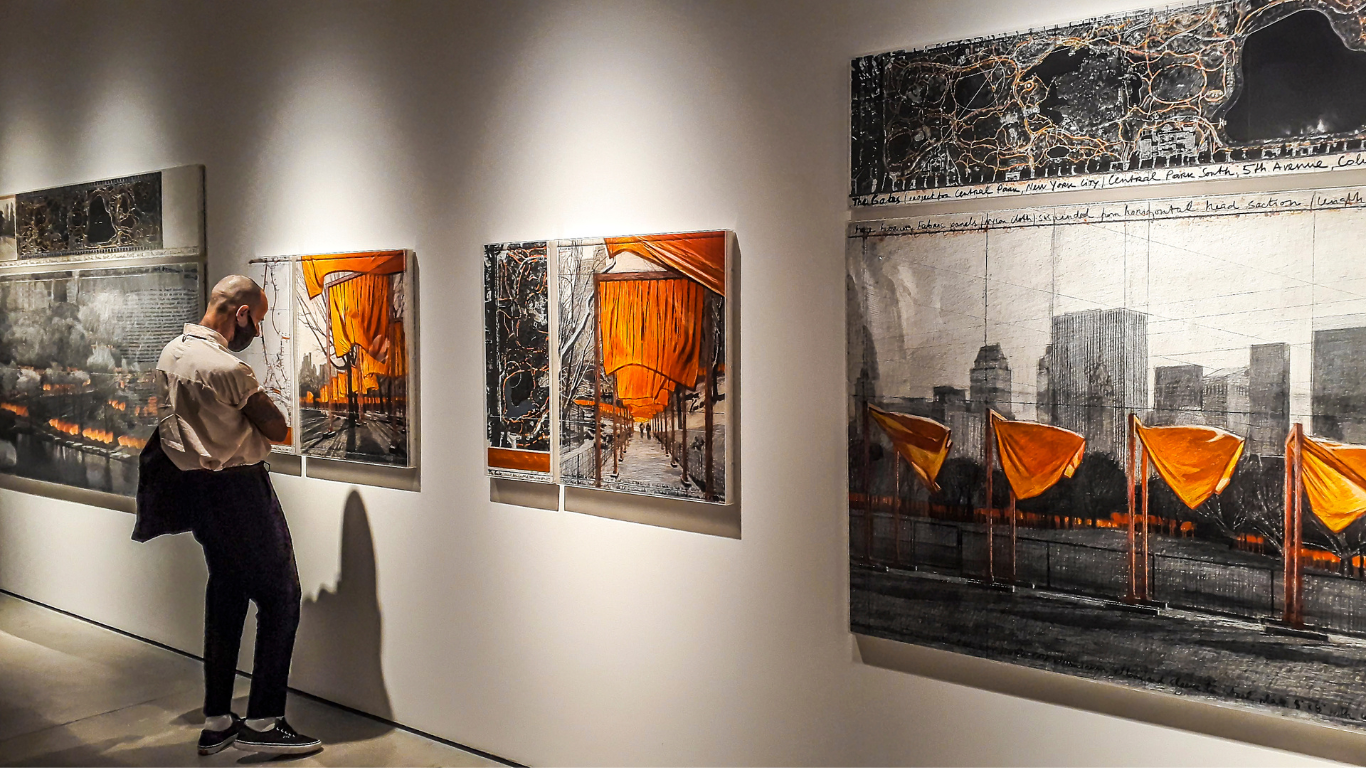

The art market is entering a new phase in 2026, shaped by technological advancements, shifting cultural perspectives, and evolving investment strategies. From the increasing dominance of contemporary and pop art to the rise of AI-generated pieces, the industry is witnessing transformations that are reshaping traditional collecting and trading practices.
Amid economic fluctuations and changing collector preferences, you have more ways than ever to capitalize on these trends. A growing number of transactions under $10,000 are redefining entry points into the market, while the decline of public auction sales is pushing serious buyers toward private transactions and online brokers. And if you haven’t looked at non-Western art yet, that’s where some of the most compelling diversification opportunities are right now.
As new players enter the market and established artists adapt to evolving dynamics, the key to profiting from these changes comes down to one thing: strategic decision-making on your part.
Table of Contents
Rise of Contemporary Art
Contemporary art is dominating the global art market, with surging demand from collectors, investors, and institutions alike. Defined as works created by artists from the late 20th century onward, contemporary art covers diverse mediums, innovative techniques, and socially relevant themes. Some of the highest auction records in recent years belong to contemporary artists, and that trend shows no sign of slowing.
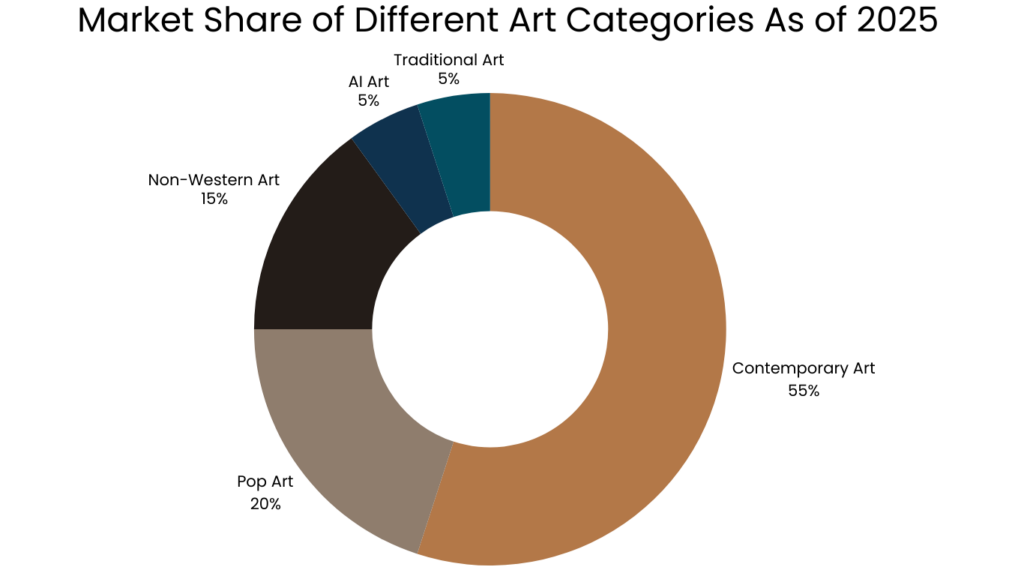
In 2024, contemporary art accounted for nearly 55% of total global art sales, marking its strongest presence ever in the industry. Younger collectors are driving this, particularly millennials and Gen Z, who are drawn to the modern aesthetics and conceptual depth of these works. The growing number of art fairs and biennials showcasing contemporary artists has amplified their visibility too, pushing up both primary and secondary market values.
From an investment standpoint, contemporary art offers you real upside potential. Unlike classical or modern masterpieces that are often locked away in museums or private collections, contemporary artworks are far more accessible, with new artists continually emerging. That fluidity creates genuine opportunities to acquire works at lower entry points and benefit from appreciation over time.
How You Can Benefit as an Investor
- Focus on blue-chip contemporary artists with strong market traction, such as Jean-Michel Basquiat and Yayoi Kusama, who have demonstrated consistent price growth.
- Track emerging artists whose work is gaining institutional recognition, as early investments can yield high returns if they gain long-term prominence.
- Pay attention to art funds and fractional ownership platforms, which provide access to high-value pieces with lower capital requirements.
The sustained demand for contemporary art, backed by institutional support and high-profile exhibitions, makes it one of the most compelling segments for your portfolio heading into 2026. If you want a deeper look at structuring your exposure, building a well-balanced art investment portfolio is a smart place to start.

Shift Towards Non-Western Art
One of the most important shifts you should be paying attention to right now is the global pivot toward non-Western artists. Historically, Western art from Europe and North America dominated sales and investment portfolios. But that dynamic has changed, and collectors who recognized the shift early have already seen strong returns.
In 2024, non-Western art sales accounted for roughly 20% of total global auction sales, up from just 10% a decade ago. That growth is being driven by heightened institutional support, the rise of art fairs dedicated to emerging markets, and the expanding wealth of collectors in those regions. Major auction houses like Sotheby’s and Christie’s have expanded their focus, hosting sales dedicated specifically to African, Middle Eastern, and Asian contemporary art.
A key force behind this trend is the cultural renaissance happening across many non-Western nations. Governments and private institutions are investing in art infrastructure, establishing museums, galleries, and biennials to put local talent on the global map. China, Nigeria, and the UAE have all become major players, with collectors actively seeking works rooted in their own cultural heritage.
From an investment perspective, non-Western art offers you high growth potential at relatively lower price points compared to established Western markets. While a Jean-Michel Basquiat or a Banksy commands millions, you can acquire high-quality works from emerging African or Southeast Asian artists at a fraction of that price and with serious appreciation potential on the horizon.
How You Can Benefit as an Investor
- Diversify portfolios by incorporating works from regions experiencing economic and cultural growth, such as China’s contemporary art scene or Middle Eastern calligraphy-inspired modern art.
- Explore niche markets with rising demand, such as contemporary African art, which has gained traction at international fairs like Art X Lagos.
- Follow institutional acquisitions, as museum interest often precedes price appreciation. When major institutions acquire works from specific artists or regions, their market value tends to rise.
Pop Art Domination
Pop Art is holding its ground as one of the most sought-after and commercially viable movements in the contemporary market. Originally emerging in the 1950s, its influence has proven remarkably durable, with works from pioneers like Andy Warhol, Roy Lichtenstein, and Keith Haring still achieving record-breaking sales decades later.
The trend has expanded well beyond those historical figures. A new generation of artists has embraced Pop Art’s bold, consumerist aesthetic, and names like KAWS, Takashi Murakami, and Mr. Doodle have transformed the movement into a modern investment category that bridges fine art and commercial culture. Their work, featuring recognizable imagery from cartoons, advertising, and mass media, has captured both established collectors and younger buyers entering the market for the first time.
The financial performance of Pop Art at auction makes a strong case for your attention. In 2024 alone, Pop Art sales exceeded $1.2 billion worldwide, with Warhol and Lichtenstein firmly among the top-selling artists. Contemporary Pop Art creators have seen their secondary market prices climb sharply too. KAWS’ pieces have appreciated by over 200% in the last five years, with some reaching seven-figure sums.
A big part of Pop Art’s appeal is its accessibility. Unlike some other contemporary movements, Pop Art is instantly recognizable, culturally relevant, and easy to connect with, making it attractive to seasoned investors and casual buyers alike. Its intersection with fashion, streetwear, and digital culture has led to broader commercialization, which keeps demand for collectible works consistently high.
How You Can Benefit as an Investor
- Focus on blue-chip Pop Art artists whose works consistently perform well at auction, such as Andy Warhol and Roy Lichtenstein. These artists have long-established records of appreciation.
- Monitor the secondary market for rising Pop Art figures, particularly those whose work is widely collected across multiple industries (e.g., KAWS’ crossover with fashion and branding).
- Invest in limited-edition prints and multiples, which offer a lower entry point but have historically shown steady appreciation over time.
With a strong track record, high liquidity, and continued relevance across both fine art and commercial culture, Pop Art stands out as one of the safer and more lucrative sectors for your investment strategy in 2026. You might also want to consider how mixing red chip and blue chip art can maximize your overall returns.
AI-Generated Art
Artificial Intelligence is reshaping the art market in ways that would have seemed far-fetched just a decade ago. AI-generated artworks have moved from niche experiments to mainstream collectibles, commanding real prices at auction and challenging traditional notions of authorship, creativity, and ownership. If you haven’t looked at this category seriously, now is the time.
One of the pivotal moments for AI art came in 2018, when the portrait Edmond de Belamy, created by Obvious using machine learning algorithms, sold for $432,500 at Christie’s, far surpassing its estimate of $10,000. Since then, the market for AI-generated art has grown exponentially, with both traditional and digital collectors viewing these works as viable investment assets.
A major driver of this trend is the expansion of AI-powered tools like OpenAI’s DALL·E, Google’s DeepDream, and independent generative models, which allow artists to create intricate, algorithmically designed compositions. Established contemporary artists like Refik Anadol and Mario Klingemann have pioneered the AI-art movement, with their works exhibited in prestigious institutions and fetching five to six-figure sums in the secondary market.
AI-generated art has also integrated seamlessly into the NFT sector, further boosting its investment appeal. Platforms like SuperRare, Art Blocks, and Foundation have facilitated the sale of AI artworks, with some fetching millions of dollars. While the broader NFT market has seen fluctuations, AI-generated pieces keep attracting strong demand, especially from collectors who value the fusion of technology and creativity. It’s also worth understanding how AI is reshaping investment categories more broadly before you allocate capital here.
From an investment perspective, AI-generated art presents both opportunities and real challenges. The upside for rapid appreciation is there, but this is a relatively new category with evolving regulations and market structures. That said, major auction houses including Sotheby’s and Christie’s have actively embraced AI-generated works, and that institutional confidence matters.
How You Can Benefit as an Investor
- Track auction house performance: AI-generated pieces that sell at top-tier auctions indicate strong market demand.
- Identify emerging AI artists: Investing early in artists who specialize in AI-generated works can yield substantial returns.
- Monitor NFT and blockchain platforms: AI art integrated with NFTs provides additional security, verifiability, and resale opportunities.
- Diversify with AI-related assets: Beyond artworks, consider investing in AI-powered platforms and marketplaces that facilitate the growth of this sector.
With rapid technological advancements and growing institutional interest, AI-generated art is no longer a speculative bet. It’s a legitimate category within the contemporary art market, and getting in early still gives you an edge.
Increased Transactions for Artworks Under $10,000
The art market has traditionally been associated with multimillion-dollar sales of blue-chip works, but the real momentum right now is at a very different price point. Demand for artworks under $10,000 is surging in 2026, driven by a growing base of new collectors, the expansion of online art sales, and investment strategies that prioritize liquidity over long-term holding.
Younger collectors are leading this shift. A 2024 report by Art Basel and UBS found that nearly 65% of millennial collectors preferred acquiring artworks priced below $10,000, drawn by the flexibility, affordability, and lower risk compared to blue-chip art. These buyers are active, engaged, and growing in number.
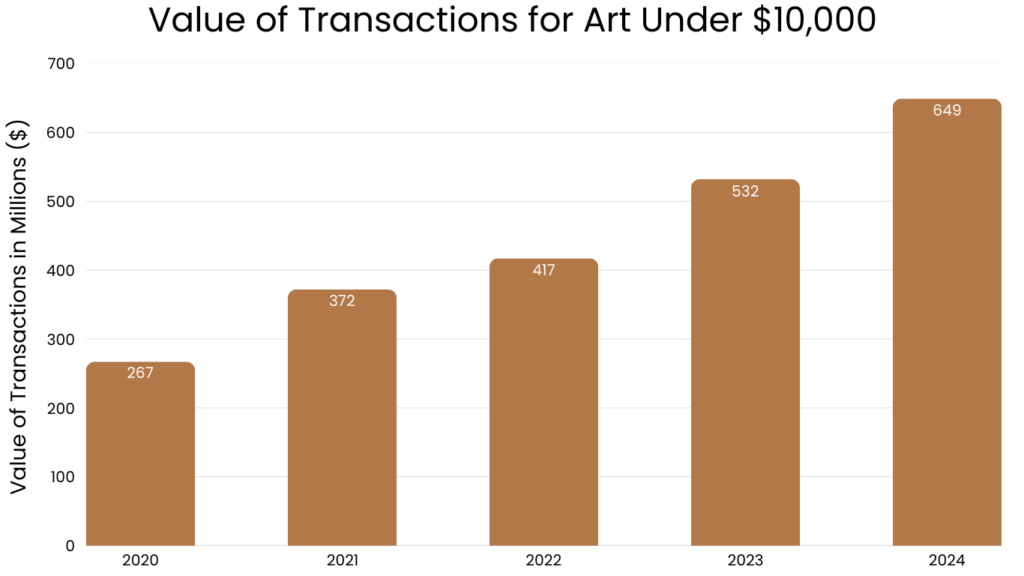
The expansion of online art platforms has made it easier for you to access lower-priced works without stepping foot in a gallery. Platforms like Artsy, Saatchi Art, and 1stDibs have transformed how art is sold, bringing pricing transparency and allowing buyers to discover emerging artists without the traditional barriers of the high-end gallery world. The result is a highly liquid market for affordable artworks where you can buy, sell, and trade with far greater frequency.
From an investment perspective, artworks in this price range offer lower entry barriers and faster appreciation cycles. Blue-chip art requires years, sometimes decades, to move the needle on value. But lower-priced works from emerging artists can experience sharp value spikes within much shorter timeframes, especially when those artists gain traction through social media and digital marketing.
The data backs this up. In 2024, Sotheby’s and Christie’s both reported a 20% year-over-year increase in sales of artworks under $10,000. Limited-edition prints and multiples by established contemporary artists have performed exceptionally well in this price category, often outpacing the appreciation rates of higher-end paintings.
How You Can Benefit as an Investor
- Focus on emerging artists with strong market momentum, as their works often experience rapid price appreciation.
- Leverage online platforms to track real-time sales trends and identify rising stars.
- Diversify investments by acquiring a mix of prints, photographs, and small-scale paintings that align with market demand.
- Monitor auction sales and resale performance to identify which artists are gaining traction in the sub-$10,000 category.
With a high turnover rate, strong collector interest, and lower financial risk, the sub-$10,000 art market is one of the smartest entry points available to you right now, whether you’re building your first collection or diversifying an existing portfolio in 2026.
Rise of Online Art Brokers
The art market has made a dramatic move toward digital platforms, and 2026 is shaping up to be a defining year for online art brokerage. Specialized platforms have transformed the way collectors, investors, and institutions buy and sell art, cutting out friction and opening up the market to a far wider audience.
Online art brokerage platforms like Artsy, Masterworks, and Artnet have grown sharply in popularity, giving you access to investment-grade art acquisition with a level of transparency that simply didn’t exist before. You can now access detailed data on historical price trends, artist market performance, and future valuation projections, making art investment feel far more structured and research-driven.
One of the most compelling developments is the fractional ownership model, pioneered by platforms like Masterworks. Instead of buying an entire multimillion-dollar work outright, you can buy shares in it. This has opened blue-chip art to a whole new class of investor, letting you hold a stake in works by Banksy, Picasso, or Basquiat without needing eight figures in your account. If you want to understand exactly how this works, fractional art investing and art shares is worth reading in full.
Blockchain technology is also reshaping how art transactions get secured. Blockchain-backed marketplaces like Artory and SuperRare offer greater transparency, provenance verification, and fraud prevention, so you know exactly what you’re buying. Smart contracts are taking this further, automating royalty payments to artists and making secondary-market trading far more seamless.
According to our analysts, online art sales grew by 18% year-over-year in 2024, surpassing $15 billion in global transactions. Collectors and investors are increasingly comfortable buying digitally, and online brokers have become indispensable for navigating the modern art market.
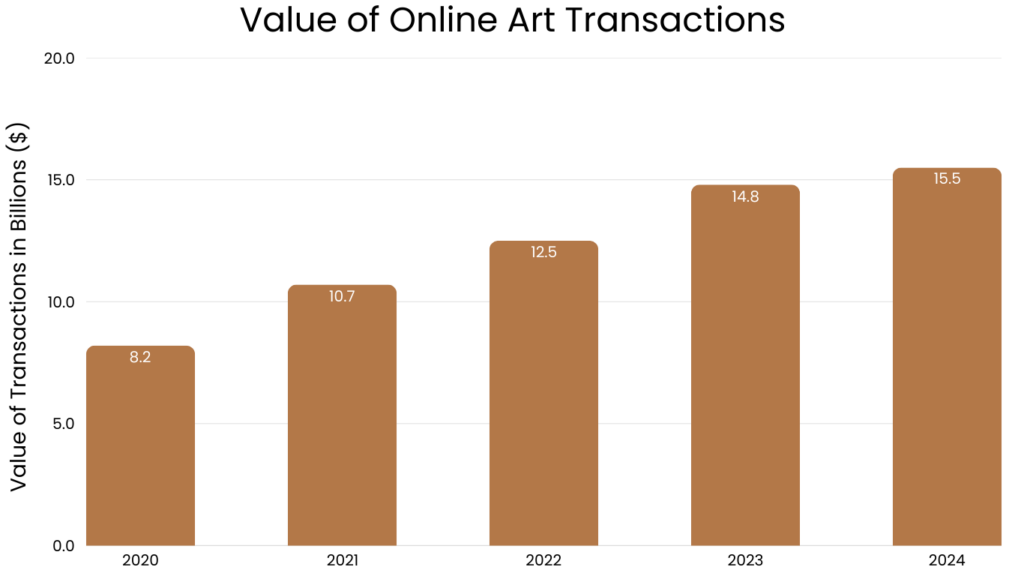
From an investment perspective, online brokers eliminate traditional barriers to entry, reduce transaction costs, and give you access to a broader range of opportunities. The ability to track price appreciation in real time, participate in fractional investing, and trade artworks with minimal friction makes online brokerage genuinely attractive for both seasoned collectors and first-time investors.
How You Can Benefit as an Investor
- Utilize online brokerage platforms to analyze market data and make informed investment decisions.
- Diversify art investments by exploring fractional ownership opportunities in blue-chip artworks.
- Leverage blockchain-backed marketplaces to ensure secure transactions and verifiable provenance.
- Stay ahead of digital auction trends, as online-exclusive sales continue to gain prominence.
As the art industry’s digitization accelerates, the role of online art brokers will only expand. For you as an investor, that means more access, more liquidity, and more efficiency in how you engage with the global art market.
Fall of Public Auction Sales
The traditional public auction model, once the dominant force in the art market, is losing ground fast. In 2026, this shift is accelerating as collectors and investors prioritize discretion, efficiency, and reduced transaction costs over the spectacle of in-person bidding wars. If you’ve been relying on public auctions as your primary buying channel, it’s worth rethinking that approach.
Historically, auction houses like Sotheby’s, Christie’s, and Phillips dictated the market, with record-breaking sales capturing global attention. But recent data tells a different story. According to our 2024 market report, public auction sales declined by 12% year-over-year, while private transactions surged by 18%, reaching an estimated $25 billion in global sales. Private art sales are becoming the preferred strategy for serious art investors, and the reasons are compelling.
Several key factors are driving this decline. High buyer’s premiums at public auctions can add 25% or more to the hammer price, eating into your returns before you even take the work home. Private sales offer greater pricing flexibility, confidentiality, and the ability to negotiate directly with sellers. And with online platforms providing real-time market data, buyers no longer need the auction room to benchmark value. The shift is structural, not cyclical, and the smart money has already moved. You can also compare how luxury assets are replacing stocks as the preferred playground of the elite to see how this fits into a broader investment picture.
- High Transaction Fees & Buyer Premiums: Auction houses typically charge seller commissions of 10-25% and buyer premiums of up to 20%, making them an expensive route for both sellers and collectors. High-net-worth investors are increasingly turning to private sales and online platforms to bypass these costs and secure better deals.
- Greater Privacy & Discretion in Private Sales: Ultra-high-net-worth collectors often prefer discreet transactions over the publicity of an auction setting. Private sales allow investors to acquire high-value pieces without market speculation influencing future valuations, leading to more controlled appreciation.
- Rise of Direct Sales & Private Galleries: Blue-chip galleries and art dealers are playing a more active role in brokering high-profile transactions outside of auction houses. Prestigious galleries, such as Gagosian, Pace, and Hauser & Wirth, now facilitate multi-million-dollar sales directly, often before artworks reach the open market.
- Online Marketplaces Offering Alternatives: The digital transformation of the art industry has eroded the exclusivity of public auctions. Online platforms such as Artsy, Sotheby’s Private Sales, and Masterworks provide investment-grade artworks with real-time pricing data, fractional ownership options, and lower transaction fees, making them more attractive to modern investors.