
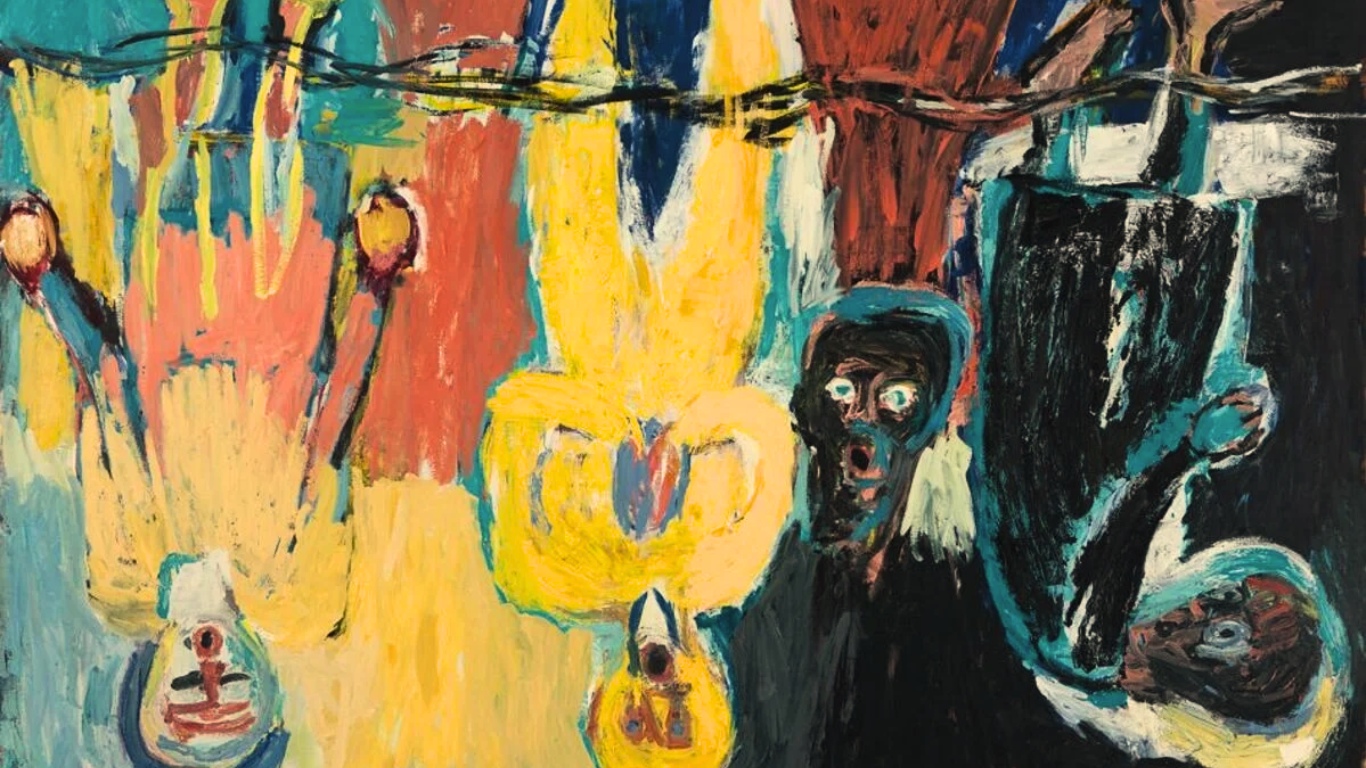

Neo Expressionism first exploded onto the scene in the late 1970s and 1980s as a sharp, deliberate break from the cool restraint of minimalism and conceptual art. Think vivid colors, bold gestures, and raw emotional force. It dragged painting back into the spotlight at a moment when many assumed the medium had run its course.
Artists like Jean-Michel Basquiat and Julian Schnabel became the faces of this movement, creating works that were unapologetic, magnetic, and deeply personal. Today, Neo Expressionism matters not just as an artistic revival but as a genuine market force drawing serious attention from collectors and investors who are done chasing the same old names.
On the other side of the spectrum sits what the market calls trophy art. Think Picasso, Monet, Rothko — masterpieces that regularly sell for tens or even hundreds of millions of dollars. For decades, these works stood as the pinnacle of collecting, symbols of wealth and prestige as much as cultural achievement. If you wanted to signal real taste and real money, a trophy canvas was the move.
Institutions and ultra-high-net-worth buyers treated them as the safest store of value the art world had to offer. In many rooms, they still do.
But the balance is shifting. According to Art Basel and UBS, sales of artworks above $10 million dropped by 44% across 2023 and 2024, a clear sign that the top tier is losing some of its shine. At the same time, a new generation of collectors is gravitating toward Neo Expressionism — art that feels more relevant, more accessible, and still packed with room to grow.

For investors, this is not just a shift in taste. It is a signal that the art market is opening new doors where cultural impact and financial opportunity meet — and you want to be paying attention before those doors swing fully open.
Table of Contents
What Trophy Art Means in the Modern Art Market
Trophy art has long occupied the upper tier of collecting, the works that instantly carry global recognition and historical weight. These are the paintings that auction houses build their entire evening sales around, often accompanied by record-setting headlines and the kind of drama that makes the front pages of the financial press.
For many years, they were considered almost untouchable. A place where the wealthiest collectors could deploy capital with confidence that demand would always show up when needed.
The dominance of this category was reinforced by its exclusivity. With only a handful of pieces by names like Rothko, Bacon, or Richter ever coming to market, scarcity alone kept valuations high. Institutions and private museums frequently competed with individual collectors, driving prices up and cementing the idea that these works were the most desirable assets in the art world. You could think of trophy art as the blue-chip stock of collecting, the kind of holding that practically sold itself.
What has changed is the mood. High-value works still attract attention, but they are no longer guaranteed the fierce bidding wars of the past. Some recent auctions have seen lots passed entirely or sold at the low end of their estimates — something that would have been genuinely surprising a decade ago.
This shift does not spell the end of trophy art’s importance. But it does show that collector priorities are broadening, and that the very top of the market may not be the only place to find strong returns anymore.

Why Collectors Are Moving Away From Trophy Art
The upper tier of the art market has started to feel less compelling to a growing number of serious buyers. The sheer cost of trophy works — often exceeding $20 million per piece — has created a real barrier, even for wealthy collectors who once dominated this space. Locking that much capital into a single painting is harder to justify, especially when global wealth managers are urging diversification across asset classes. You have to ask yourself whether one Rothko is really the best use of eight figures.
Instead of a single Monet or Basquiat at the very top, many collectors are asking whether the same sum could be spread across a wider range of mid-market works with higher growth potential and more room to move.
Liquidity has become a sticking point too. Scarcity supports long-term value, but it can make resale far more complicated than most buyers anticipate.
The 2024 Art Basel and UBS report showed that only 16% of works sold above $10 million changed hands within five years of purchase, compared to nearly 40% in the $1 to $5 million range. That means if you tie up capital at the very top end, you are likely facing longer holding periods and real difficulty realizing gains when the moment calls for it. For a generation used to faster and more dynamic markets, that lack of fluidity is a growing turn-off.
Millennials and Gen X collectors, who together are set to inherit over $80 trillion globally by 2045, tend to view art through a different lens than older generations. They are less drawn to traditional markers of prestige and more interested in work that feels emotionally powerful and culturally alive. You can see it in the way conversations around collecting have shifted at every major art fair in the past few years.
Neo Expressionism, with its raw energy and deep ties to icons like Jean-Michel Basquiat, resonates with these new buyers in a way that classic trophy works simply cannot match. The emotional pull is real, and it translates directly into buying decisions.
Auction data reflects this clearly. Sales of Neo Expressionist pieces rose 12% in 2024, even as the ultra-high-end segment was contracting. That is not a coincidence.
What we’re seeing is not the disappearance of trophy art but a market that is rebalancing. The works at the very top still hold their place as cultural icons, but they no longer monopolize collector interest. The spotlight is shifting toward movements that offer both resonance and opportunity, and Neo Expressionism is increasingly at the center of that conversation.
What Makes Neo Expressionism Attractive to Collectors
Part of the shift toward Neo Expressionism comes down to how these works connect with viewers on a gut level. Collectors are increasingly seeking art that feels urgent and alive, and the explosive brushwork, raw gestures, and vivid colors of the movement speak directly to that desire. You walk into a room with a major Neo Expressionist canvas and you feel it before you analyze it.
Unlike the controlled precision of earlier schools, these paintings embrace imperfection and intensity. Those are exactly the qualities that resonate with a generation of buyers who place a premium on authenticity and bold expression over polish and restraint.
While headline sales like Basquiat’s Untitled (1982), which achieved $110.5 million at Sotheby’s in 2017, capture the imagination, most Neo Expressionist works trade at far more accessible levels. In 2024, the majority of pieces sold at auction were priced between $100,000 and $5 million, creating a space where both seasoned collectors and younger investors can get serious skin in the game. That kind of range matters when you are building a collection with real strategic thinking behind it.
The result is a market with far more activity and liquidity compared to the ultra-rare trophy works that surface only occasionally. More transactions mean more price discovery, more momentum, and more opportunities to buy and sell at the right moments.
Cultural relevance is another engine keeping this movement visible. Basquiat’s imagery, Schnabel’s canvases, and the broader Neo Expressionist ethos are deeply woven into popular culture, showing up in streetwear, music, and digital art aesthetics in ways that keep these works in front of new audiences constantly.
That crossover into mainstream culture gives the works a durability that extends well beyond traditional collecting circles. When a movement influences the way people dress and the music they make, its staying power is hard to argue with.
Auction houses are paying attention. Christie’s reported that Neo Expressionism accounted for nearly 15% of contemporary evening sales in 2024, almost double its share a decade ago. That kind of growth in market share does not happen by accident.

How Neo Expressionism Performs as an Investment
As collectors turn their attention toward Neo Expressionism, the market data makes clear this is more than a taste shift. While the very top end of the art world has slowed, sales in this movement have been moving in the opposite direction, and the gap is getting harder to ignore.
In 2024, auction houses reported a 12% increase in transactions for Neo Expressionist works, even as multi-million-dollar trophy pieces lost momentum. That contrast highlights how demand is spreading into areas where collectors see both cultural relevance and genuine financial opportunity. Smart money does not chase headlines — it chases momentum.
The difference is especially clear when it comes to liquidity. Trophy works appear at auction only rarely, and finding the right buyer at the right price can take years. Neo Expressionist pieces trade far more actively, particularly in the $100,000 to $5 million range where most of the market sits today.
That level of activity creates a healthier flow for investors who want flexibility. More entry points, smoother exits, and less of the waiting game that comes with the ultra-elite tier. If you value being able to act decisively, this matters.
Pricing trends reflect the strength of this segment too. While Basquiat continues to set the benchmarks — his major works stay among the most expensive ever sold — it is the mid-market artists showing some of the strongest growth right now.
At Phillips and Christie’s in 2024, several Neo Expressionist canvases achieved 20 to 30% above their pre-sale estimates, a strong signal that demand is running ahead of supply. For investors, that kind of competitive bidding is often an early indicator of a market still on the rise.
The real draw is potential. Because Neo Expressionism is still developing as a collector category, there is meaningful room for upward movement across a broader range of artists. The play is not only about securing a Basquiat. It is about identifying the names that carry the same raw energy and cultural weight at a stage where their markets have not yet peaked. That is where the real opportunity lives.
As one New York dealer explained to our reporters recently, “Investors are no longer chasing the single most expensive canvas in the room. They are chasing momentum, and right now, that momentum is in Neo Expressionism.”
Key Neo Expressionist Artists to Watch in 2026
Much of the strength of Neo Expressionism as an investment category comes from the artists who defined the movement and those carrying its spirit forward today. Knowing which names to track — and at what stage of their market cycle — is where the real edge lies.
At the top of the market, Jean-Michel Basquiat anchors everything. His works dominate auction headlines, with major canvases continuing to sell for well over $50 million. For many collectors, owning a Basquiat is not just about financial return — it is about holding one of the most culturally significant names of the late 20th century. That kind of dual value is rare in any asset class.
Julian Schnabel, another of the movement’s central figures, has seen renewed attention in recent years. His ability to bridge painting, film, and cultural commentary has kept his works relevant across multiple generations of collectors. Auction sales in 2024 showed a noticeable uptick, with several pieces outperforming estimates — a sign that the market is re-engaging with his work in a serious way.
Beyond the established names, a new generation of artists is drawing heavily from Neo Expressionist aesthetics while building their own momentum. Robert Nava has been commanding strong results at major galleries and auction houses, with prices climbing steadily over the past three years. If you have not been tracking him, now is the time to start.
His bold, almost childlike compositions echo the energy of Basquiat while tapping into deeply contemporary themes, making him a natural favorite among younger collectors who want work that speaks their language.
Other names worth watching include Oscar Murillo and George Condo, who — though stylistically distinct — operate within the expressive, emotionally charged space that appeals to today’s buyers. Their markets are active, international, and still expanding. For investors, these names offer a genuine opportunity to enter at a level where growth potential stays strong without the nine-figure price tags that come with Basquiat. If you want a sense of how alternative collectibles can outperform traditional assets over time, this segment of the art market makes a compelling case.
Evaluating these artists takes more than following auction headlines. You want to be tracking gallery representation, inclusion in major institutional collections, and the frequency of secondary market sales. Those are the signals that separate lasting market strength from a short-term spike — and getting that read right is what separates serious collectors from everyone else.
The most successful investments will come from identifying artists who combine cultural resonance with a clear trajectory of institutional recognition.