
In 1993, a painting by Georges de La Tour sold at a Cologne auction house for €4.3 million, setting a new record for an artist who had been completely forgotten for over two centuries.
That sale marked the end of one of art history’s most dramatic comebacks, turning La Tour from an unknown provincial painter into a top-tier Old Master whose works now rival Caravaggio and Rembrandt in both critical praise and market value.
For art investors, La Tour’s rise offers valuable lessons about how forgotten masters can deliver exceptional returns when scholarly research meets collector interest. His journey from obscurity to museum walls and auction records shows exactly how long-term value grows in the Old Masters market. If you want to understand how serious collectors build wealth through art, this story is a masterclass.
Table of Contents
Who Was Georges de La Tour?
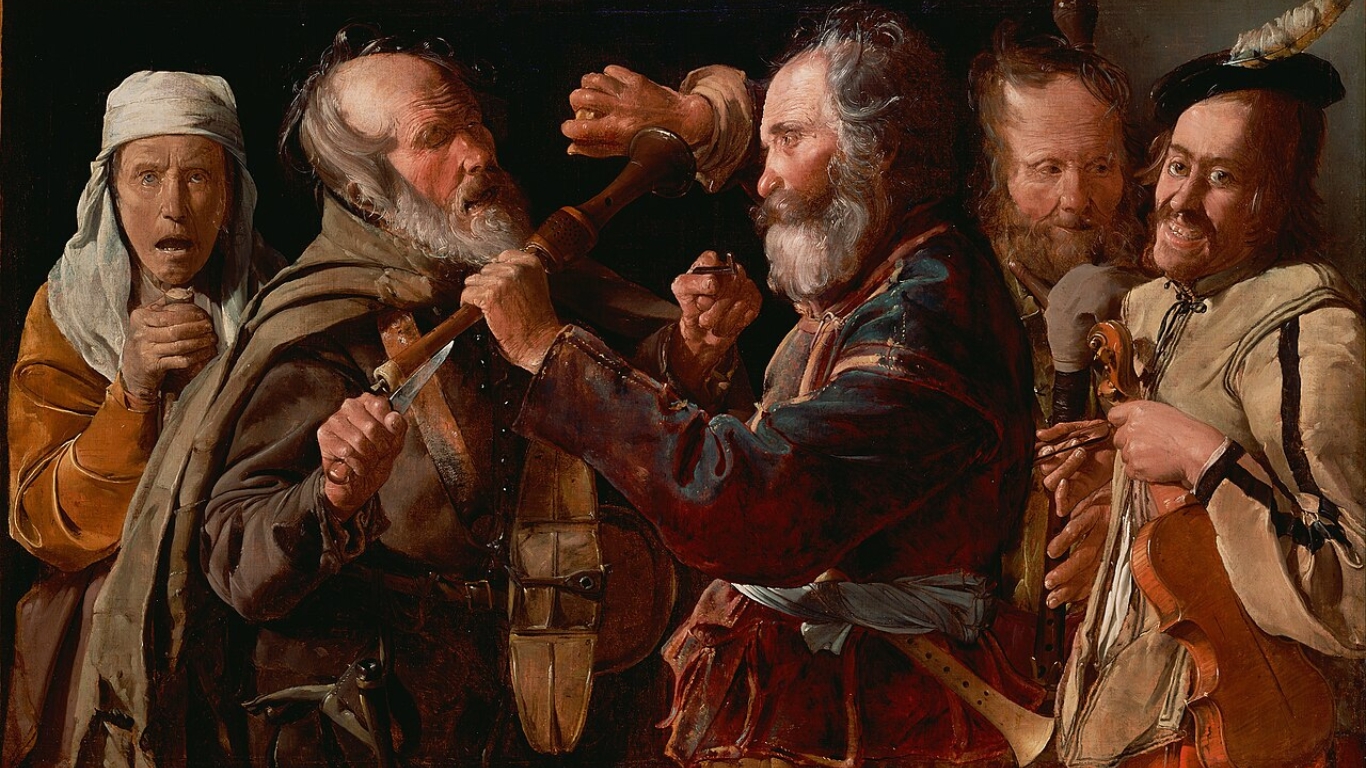
Georges de La Tour (1593 to 1652) worked in the Duchy of Lorraine during the peak of the Baroque period, creating a unique artistic style that combined Caravaggio’s dramatic light-and-dark technique with a distinctly French approach to human emotion and psychology.
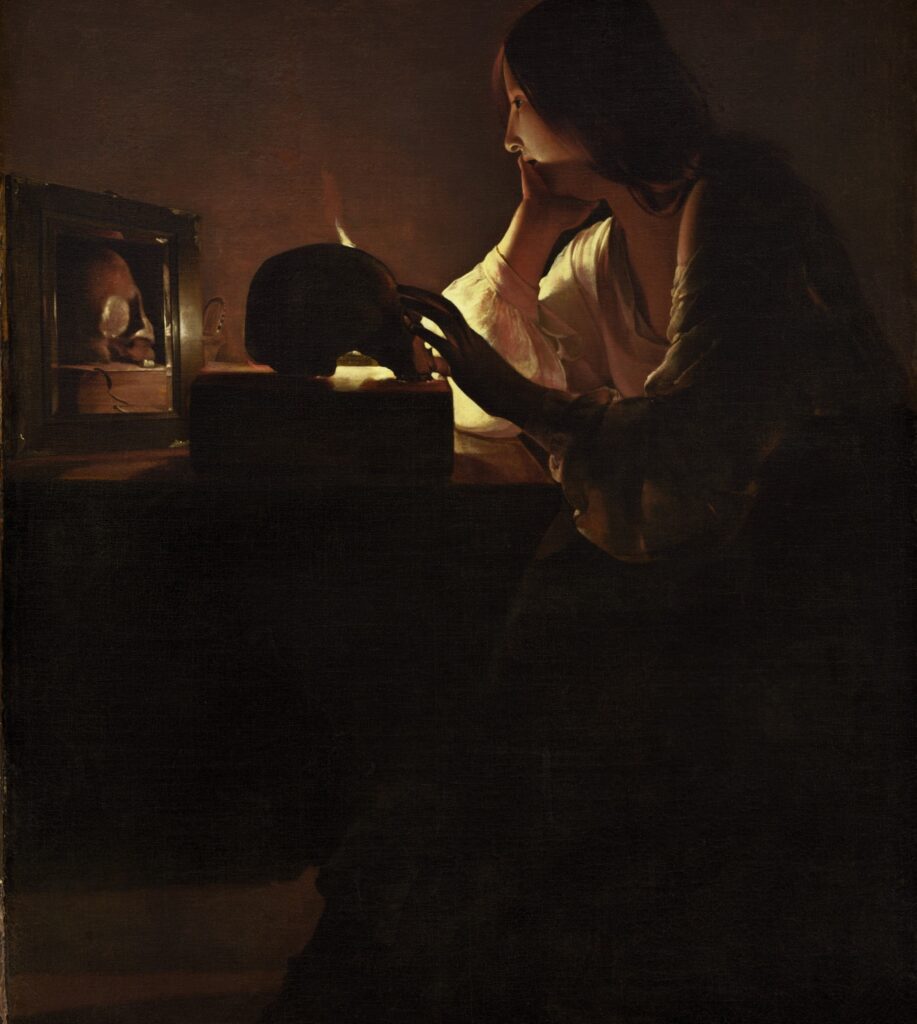
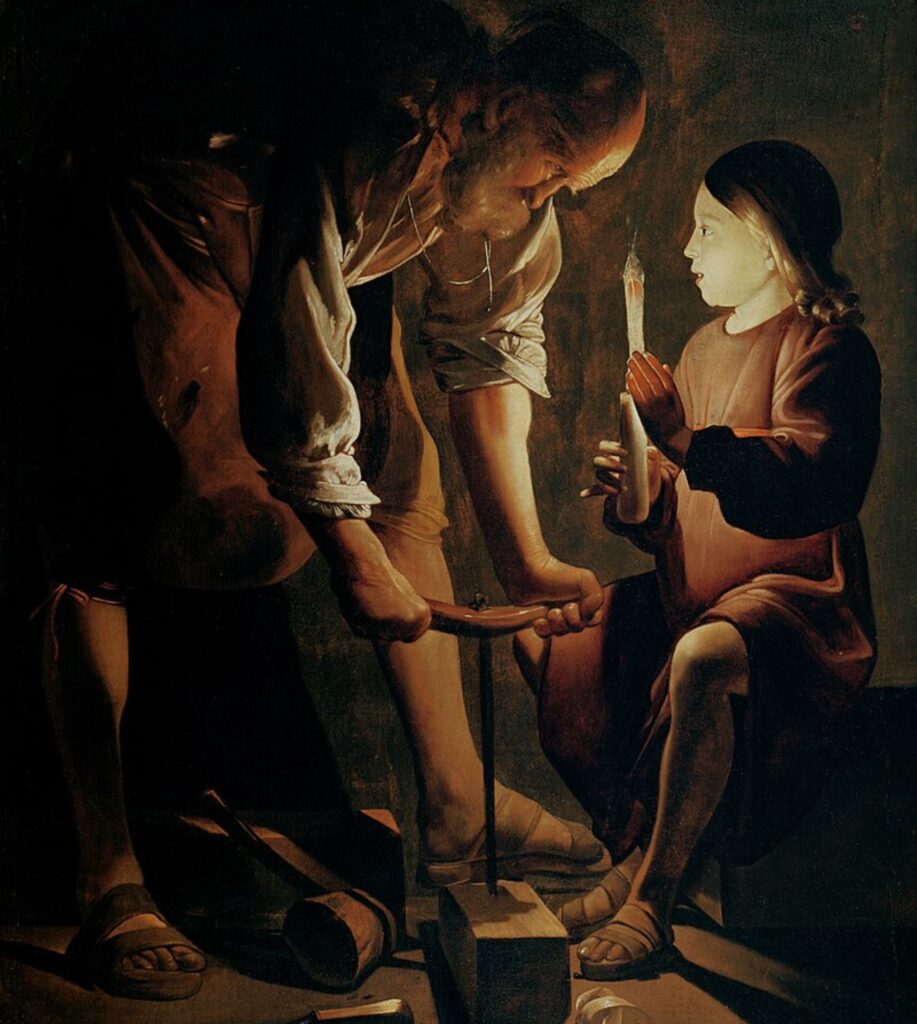
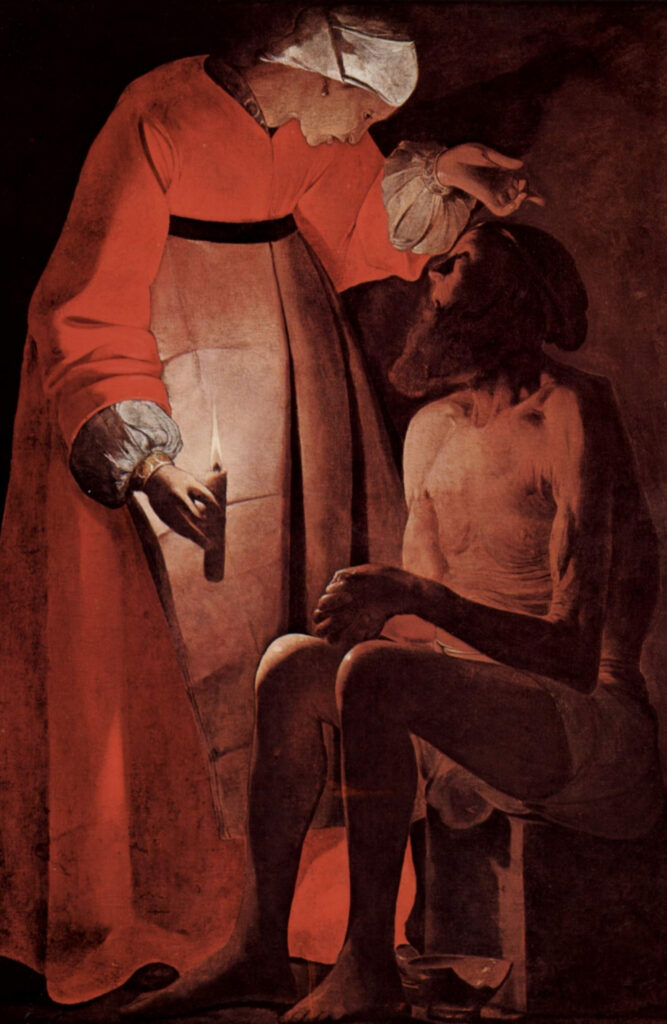
His paintings feature intimate home scenes and religious subjects lit by candlelight, where the play of light and shadow creates both visual drama and deep emotional impact.
Unlike Caravaggio’s often violent or theatrical subjects, La Tour preferred quiet, thoughtful moments. Fortune tellers, musicians, and religious figures painted with exceptional skill and psychological depth. The restraint is what makes him so compelling.
La Tour’s artistic success becomes even more impressive when you consider how completely he vanished from art history.
After his death in 1652, changing artistic tastes and the devastating effects of European wars caused his reputation to disappear entirely. His works were scattered, lost, or wrongly attributed to other artists, turning him from a successful court painter into a historical footnote.
By the 1700s, Georges de La Tour had vanished so completely from artistic memory that even art historians specializing in the period didn’t know his name. This total erasure lasted over 250 years, during which his masterpieces sold as anonymous works or wrong attributions, trading for tiny fractions of their eventual worth.
Rediscovery and Market Recognition
La Tour’s comeback began in 1915 when German art historian Hermann Voss identified “The Newborn” as the work of Georges de La Tour rather than a Caravaggio follower, as museums had previously labeled it. That single discovery sparked decades of scholarly detective work as historians carefully reconstructed La Tour’s body of work from scattered paintings in museums and private collections.
The process required extensive archive research, technical analysis, and careful stylistic comparison to separate genuine works from copies and wrong attributions. Painstaking work, but the payoff for early collectors who paid attention was enormous.
The breakthrough moment came in 1972 with the landmark exhibition “Georges de La Tour” at Paris’s Orangerie Museum. Curator Jacques Thuillier brought together 28 paintings definitively attributed to the master, giving the world its first complete view of La Tour’s achievement in over three centuries.
The exhibition drew 400,000 visitors and fundamentally changed art historical understanding of 17th-century French painting.
More importantly for the market, it provided institutional backing that transformed La Tour from an academic curiosity into a recognized Old Master whose works belonged in major collections. That kind of curatorial endorsement is worth more than almost any marketing campaign.
Museum response was immediate and lasting. The Louvre, the Metropolitan Museum of Art, the National Gallery in London, and other major institutions began actively buying La Tour works, creating the institutional support that underlies blue-chip status in the global art market.
That museum interest established a foundation of scholarly and curatorial backing that has only grown since. La Tour now appears in virtually every major survey of Baroque painting and features regularly in blockbuster exhibitions that introduce his work to new audiences of collectors and art lovers.
Auction Records and Price Performance
The market’s recognition of La Tour’s importance has led to steady price growth over five decades. The 1993 Cologne sale of “The Fortune Teller” at €4.3 million firmly placed La Tour among top-tier Old Masters, a dramatic leap from the modest amounts his works earned before scholarly recognition caught up with his talent.
That record held until Christie’s London achieved £4.28 million (around $5.5 million) for another La Tour work in 2019, showing sustained collector interest and price stability across very different market cycles. You can dig deeper into how major auction houses are reshaping the economics of buying art at the top end.
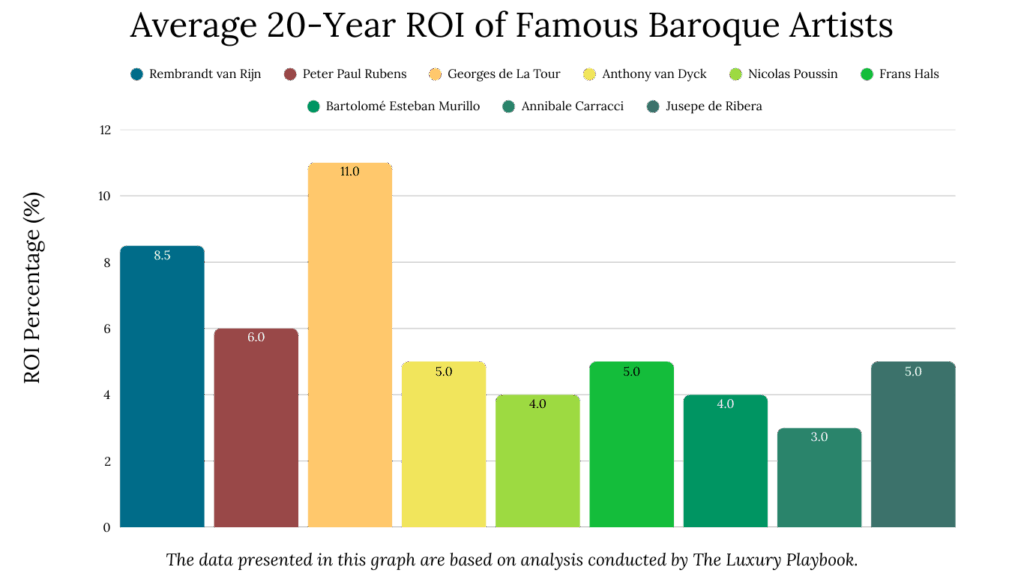
Data analysis shows compound annual growth rates of 8 to 12% for authenticated La Tour works between 1970 and 2026, performance that consistently beat traditional investments while delivering the additional benefits of cultural importance and aesthetic enjoyment.
Even during market downturns, La Tour’s prices have shown remarkable strength. They fall less severely than speculative contemporary works and recover more quickly as collectors recognize his enduring value. That kind of resilience is exactly what serious art investors look for.
Market comparison positions La Tour favorably against other Old Masters of similar historical importance. While Caravaggio works command higher absolute prices due to greater name recognition, La Tour’s price-per-square-inch ratios often exceed those of more famous contemporaries, suggesting the market still undervalues his contribution relative to his artistic achievement.
That pricing gap creates real opportunities for collectors who recognize quality before it achieves full market recognition. The smart money moves early.
Scarcity and Collectibility of La Tour’s Works
La Tour’s investment appeal rests on extreme rarity. Current scholarship recognizes only 40 to 45 paintings as definitively by the master’s hand, making each authenticated work extraordinarily scarce.
Compare that to more productive contemporaries. Rembrandt left over 300 surviving paintings, while even Vermeer, noted for his small output, produced 34 confirmed works. La Tour’s catalog is in a different league of scarcity entirely.
La Tour’s limited body of work means that every authenticated painting represents approximately 2.5% of his entire surviving artistic production.
The rarity equation gets even more compelling when you consider that fewer than 10 La Tour paintings remain in private hands, with the majority permanently housed in major museums. That institutional ownership removes works from circulation indefinitely, creating supply shortages that support long-term price appreciation.
When a La Tour does appear at auction, it generates international attention precisely because collectors understand such opportunities may not come around again for decades. Scarcity like this doesn’t happen by accident.
Authentication and ownership history are critical for any La Tour investment. The centuries of wrong attribution require extensive scholarly review, including scientific analysis, ownership research, and expert consensus building.
That process can be lengthy and expensive, but proper authentication is non-negotiable for protecting value. The most successful La Tour investments have been works with clear museum-quality ownership history and broad scholarly acceptance, factors that provide both market credibility and protection against attribution challenges down the line.
Why Collectors Value La Tour Today
La Tour’s appeal goes well beyond investment numbers. His technical mastery and unique artistic vision have earned consistent critical praise, with art historians regularly ranking him among the finest painters of the 17th century. That’s a consensus that has hardened over decades, not shifted with fashion.
Unlike contemporary artists whose reputations rise and fall with shifting tastes, La Tour’s historical importance and technical excellence look very secure. That stability is the foundation serious long-term collectors build on. If you want to understand how other art movements have built similar lasting value, the Impressionist market offers a useful parallel.
The global expansion of art collecting has opened new markets for La Tour’s work, especially among wealthy collectors in Asia and the Middle East who recognize that owning a La Tour delivers both cultural prestige and real portfolio diversification. Demand is no longer purely Western, and that matters for long-term pricing.
Each major museum exhibition reinforces his status while introducing his work to fresh audiences, creating a cycle of growing recognition that supports sustained demand. The marketing, in other words, takes care of itself.
Museum interest is exceptionally strong, with institutions worldwide actively seeking La Tour works for their collections. That institutional demand removes works from the market permanently while sending a clear signal to private collectors about where the value lies.
Investment Outlook for Georges de La Tour
From an investment perspective, La Tour presents compelling fundamentals built on scarcity, quality, and growing recognition. His limited output virtually guarantees the kind of supply constraints that support price appreciation, while his technical excellence and art historical importance provide stability during market fluctuations. According to Artprice’s global art market research, Old Masters with this combination of institutional backing and constrained supply consistently outperform broader market indexes over 10-year horizons.
The risk-adjusted returns on La Tour works have consistently outperformed traditional asset classes over the past three decades, with the added benefit of cultural significance and genuine aesthetic value. You’re not just holding a financial instrument. You’re holding a piece of history.
That said, La Tour investments carry specific risks that require careful thought. Authentication is crucial, as disputed attributions can severely impact value. The relatively small community of La Tour experts means building scholarly consensus can be time-consuming and expensive.
Budget for a comprehensive authentication process, including scientific analysis and ownership research. These can add costs, but they’re not optional. Skimping on due diligence on an eight-figure painting is not a risk worth taking. Bloomberg’s art market coverage has documented more than a few cases where authentication shortcuts destroyed value.
Liquidity considerations set Old Master investments apart from more liquid markets. La Tour works do sell successfully when properly marketed, but finding qualified buyers for eight-figure paintings requires patience and sophisticated handling through major auction houses or specialized dealers.
That makes La Tour more suitable for long-term collectors than short-term traders. But patient investors tend to benefit handsomely from the premium that genuine scarcity commands. The wait is usually worth it.
Market projections point toward continued appreciation for La Tour works, driven by several converging factors. Institutional demand is strong, with museums actively competing to acquire or upgrade their La Tour holdings. Supply, by definition, cannot grow.
The scholarly consensus around his importance keeps strengthening through ongoing research, while public recognition grows through regular museum exhibitions. Both of those forces put upward pressure on prices over time. The Financial Times arts desk has noted that blue-chip Old Masters with this profile of institutional demand and fixed supply are among the most defensible stores of wealth in the alternative asset space.
Conservative estimates suggest annual appreciation of 6 to 9% over the next decade, with potential for higher returns if new discoveries or major institutional acquisitions create additional market momentum. For the right collector with the right time horizon, La Tour is one of the most compelling names in the Old Masters market right now.