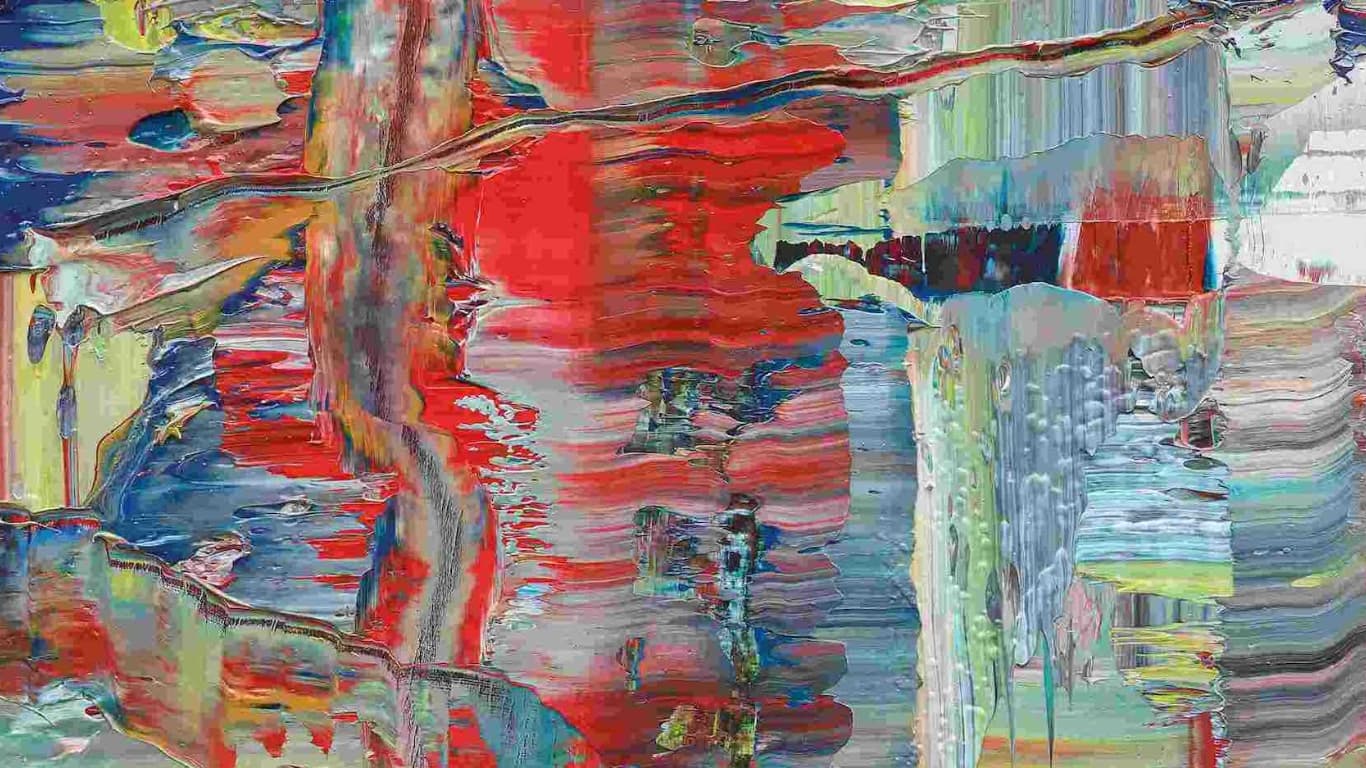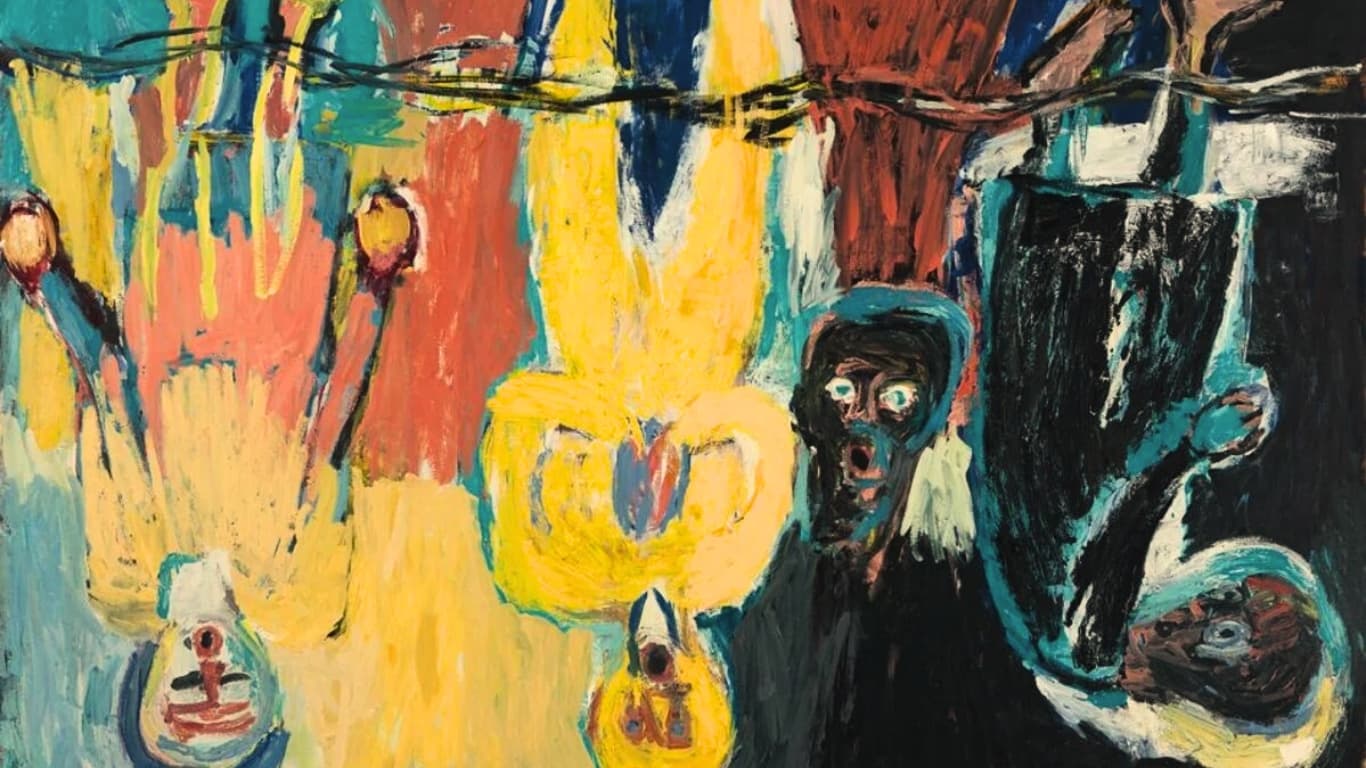
Collectors are turning to neo-expressionism over trophy art, and the auction record tells the story. Phillips, Sotheby's, and Christie's evening sales over the past three seasons have absorbed a steady rotation away from monumental, name-driven trophy lots toward the 1980s neo-expressionist cohort that built the market for emotional, surface-led painting.
The shift matters because trophy art is the segment that has carried the headlines for the past decade. Salvator Mundi at $450M (Christie's New York, November 2017), Modigliani's "Nu Couché" at $170. 4M (Christie's New York, November 2015), and Picasso's "Les Femmes d'Alger Version O" at $179.
4M (Christie's New York, May 2015) defined an era of one-painting evenings. The neo-expressionist turn signals an era where the collection, not the single lot, is the headline.
- Collectors are rotating from trophy art toward 1980s neo-expressionism, and the past three auction seasons at Christie’s, Sotheby’s and Phillips make the shift visible.
- Neo-expressionism is the early-1980s reaction against minimalism and conceptualism, with gestural figurative painting from Basquiat, Schnabel, Kiefer, Baselitz, Polke and Clemente at its core.
- The cohort has been transacting at the secondary level for forty years, with exhibition histories through the Whitney, Pompidou, Tate and MoMA and largely complete catalogues raisonnes.
- Trophy art has a buyer-concentration problem, with the handful of nine-figure lots each year transacting among a pool of perhaps two hundred ultra-high-net-worth bidders globally.
- Evening-sale hammer at the three houses fell roughly twenty-five percent in 2024 against the 2022 peak, with the largest contributor being thinner trophy-tier participation.
- Basquiat anchors the neo-expressionist segment at the trophy tier, with Untitled 1982 clearing one hundred and ten point five million dollars at Sotheby’s New York in May 2017.
- Who is this for?
- Contemporary collectors, advisors and curators tracking the rotation from trophy lots toward the deeper neo-expressionist cohort that built the market for emotional surface-led painting.
- What is happening?
- An editorial read on why collectors are turning to neo-expressionism over trophy art, covering the founding cohort, the trophy-tier correction and the structural depth of the mid-price segment.
- When did this emerge?
- Most relevant around the May and November evening sales at Christie’s, Sotheby’s and Phillips in New York and London and the major contemporary fairs across the year.
- Where is this happening?
- Centred on the New York and London salesrooms at the three major houses, with institutional support from the Whitney, MoMA, the Tate, the Pompidou and senior private foundations.
- Why does it matter?
- Reading the rotation correctly matters because the neo-expressionist segment is now where serious collectors are quietly building depth while the trophy tier remains thin and concentrated.
What neo-expressionism is, in market terms
The cohort is the early-1980s reaction against minimalism and conceptualism: gestural, figurative, emotionally direct painting that brought the studio surface back to the centre of the conversation. Jean-Michel Basquiat, Julian Schnabel, Anselm Kiefer, Georg Baselitz, Sigmar Polke, Jörg Immendorff, A.R. Penck, Francesco Clemente, Sandro Chia, and Enzo Cucchi are the canonical names.
Our expressionism collectors field guide sets out the broader expressionist tradition the cohort drew on, from Die Brücke to abstract expressionism. Neo-expressionism is the third movement in that lineage, and its market has matured into the most reliable mid-pricepoint segment in postwar and contemporary.
The structural appeal is provenance depth. The cohort has been transacting at the secondary level for forty years, exhibition histories run through the Whitney, Pompidou, Tate, and MoMA, and the catalogues raisonnés are largely complete. That is the opposite of the Ultra-Contemporary cohort, where the comparables are five years deep at most.
Why collectors are leaving trophy art
Trophy art has a buyer concentration problem. The handful of nine-figure lots that anchor the evening-sale calendar each year transact among a pool of perhaps two hundred ultra-high-net-worth bidders globally. When that pool tightens, as it did across 2023 and 2024, the trophy tier corrects sharply.
Christie's and Sotheby's evening sale total hammer prices fell roughly 25 percent in 2024 against the 2022 peak, with the largest single contributor being thinner participation at the $20M-and-above tier. The mid-pricepoint segment, where most neo-expressionism transacts, held up materially better.
The other dynamic is fatigue. Trophy lots photographed from the same angle in the same evening sale, year after year, lose narrative pull. Collectors who built positions on the trophy thesis through the 2010s are rotating toward depth: more works, more artists, more conversation across the collection.
The Basquiat anchor
Basquiat is the engine of the neo-expressionist segment. His "Untitled" 1982 at $110.5M (Sotheby's New York, May 2017) remains the cohort's record, and the artist has produced the most consistent evening-sale hammer above $20M of any postwar painter except Warhol.
The deeper market is more interesting than the records. Mid-priced Basquiat works on paper, smaller canvases, and collaboration pieces with Warhol transact regularly in the $1M to $15M band, and that depth supports the cohort around him.
Our piece on the Basquiat works that defined the market tracks the lots that built the floor under the segment.
Kiefer, Schnabel, and the European wing
Anselm Kiefer is the most consistent European neo-expressionist by hammer total. His monumental lead-and-straw works have absorbed institutional buying from the Pompidou, the Tate, and the Astrup Fearnley, which has kept the secondary market unusually orderly.
Schnabel's plate paintings have re-rated meaningfully across the past five years, with Christie's and Sotheby's both running sales that include strong representation. Baselitz, Polke, and Immendorff each anchor the lower end of the cohort's blue-chip tier, with prices typically in the $200K to $5M band.
Sigmar Polke's secondary market is the quiet story. The artist's late paintings have moved from a contested estimate band into reliable evening-sale material since the 2020 Tate Modern retrospective.
Where the rotation goes next
The Italian transavantgarde, Clemente, Chia, Cucchi, Mimmo Paladino, has the longest runway in the cohort's value tier. The work has been undervalued relative to the German and American neo-expressionists for fifteen years, and a series of recent institutional shows is closing the gap.
Penck and Lüpertz are the other names to watch on the German side. Both have transacted thinly relative to their critical reputation, and the catalogue work to support deeper secondary trading is well underway.
For collectors building exposure to the segment, the contemporary art collectors field guide sets out the dealers, fairs, and price brackets that anchor neo-expressionist trading today.
What this means for collectors
The trophy era is not over, but the centre of gravity in the auction calendar has moved. Collectors are buying neo-expressionism because the cohort offers what trophy art no longer reliably does: depth of comparables, institutional dialogue, and a price band that allows the collection to actually grow.
The discipline is to buy the studio practice rather than the single painting. Neo-expressionism rewards collectors who follow an artist through a decade. Trophy art does not need that patience, which is precisely why its market is more fragile than it looks.
We last reviewed this analysis in May 2026.
Frequently Asked Questions
What is neo-expressionism?
Neo-expressionism is the early-1980s movement that brought gestural, figurative, emotionally direct painting back to the centre of contemporary art after a decade of minimalist and conceptual dominance. The canonical cohort includes Basquiat, Schnabel, Kiefer, Baselitz, Polke, Clemente, Chia, Cucchi, and Immendorff. The movement is now the most reliable mid-pricepoint segment in postwar and contemporary auction sales.
Why are collectors moving away from trophy art?
Buyer concentration. The nine-figure tier transacts among roughly two hundred ultra-high-net-worth bidders globally, and that pool tightened across 2023 and 2024. Christie's and Sotheby's evening-sale totals fell roughly 25 percent from the 2022 peak, with the $20M-and-above tier driving most of the decline.
The neo-expressionist mid-pricepoint segment held up materially better.
Who are the strongest neo-expressionist artists at auction?
Basquiat anchors the segment with his $110. 5M record at Sotheby's New York in May 2017. Kiefer is the most consistent European, with steady institutional demand from the Pompidou, Tate, and Astrup Fearnley.
Schnabel, Baselitz, Polke, and the Italian transavantgarde, Clemente, Chia, Cucchi, round out the cohort.
Is neo-expressionism a good entry point for new collectors?
It is one of the strongest. The cohort has forty years of secondary-market history, complete catalogues raisonnés for most artists, and a price band, $200K to $15M, that allows a serious collection to grow without trophy-tier capital. The Italian transavantgarde in particular remains undervalued relative to its German and American peers.

Stefanos Moschopoulos
Stefanos Moschopoulos founded The Luxury Playbook in Athens and has spent the better part of a decade following the auction calendar, the en primeur releases, and the watchmakers, gallerists, and shipyards the magazine covers. He writes the field guides and listicles that anchor the Connoisseur section — pieces built on Phillips and Christie's results, Liv-ex movements, and conversations with collectors he has met across Geneva, Bordeaux, Basel, and Monaco. His own collecting habits sit closer to watches and wine than art, and it shows in the level of detail in the magazine's coverage of those categories. Under his direction, The Luxury Playbook now publishes long-form field guides, market-defining year-end listicles, and the Voices interview series with the founders behind the houses and the brands.